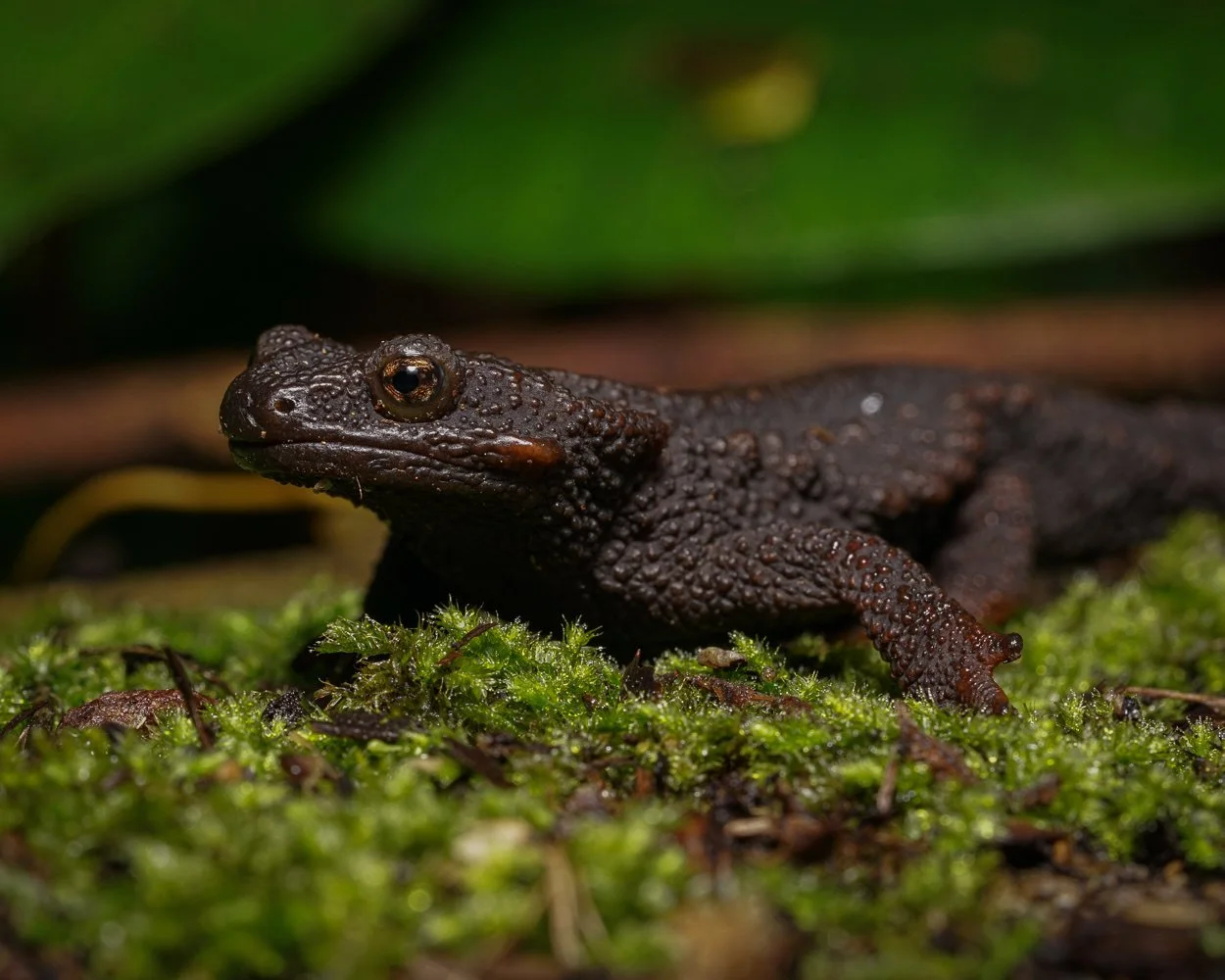
The ribs of Anderson's crocodile newt are untethered to any muscular attachments at their ends and jut into the skin along its back, giving it an armoured appearance. When threatened, it adopts an anti-predator posture — using its sharp rib tips to pierce the rows of bumps on its sides.
This newt is endemic to the Japanese Ryukyu Archipelago; found on the islands of Okinawa, Tokunoshima, Amami Ōshima, and a few of their small surrounding islands. It is an exceedingly rare creature. Several local names suggest that people were once quite familiar with this newt. However, people sharing its island home nowadays very rarely encounter it.
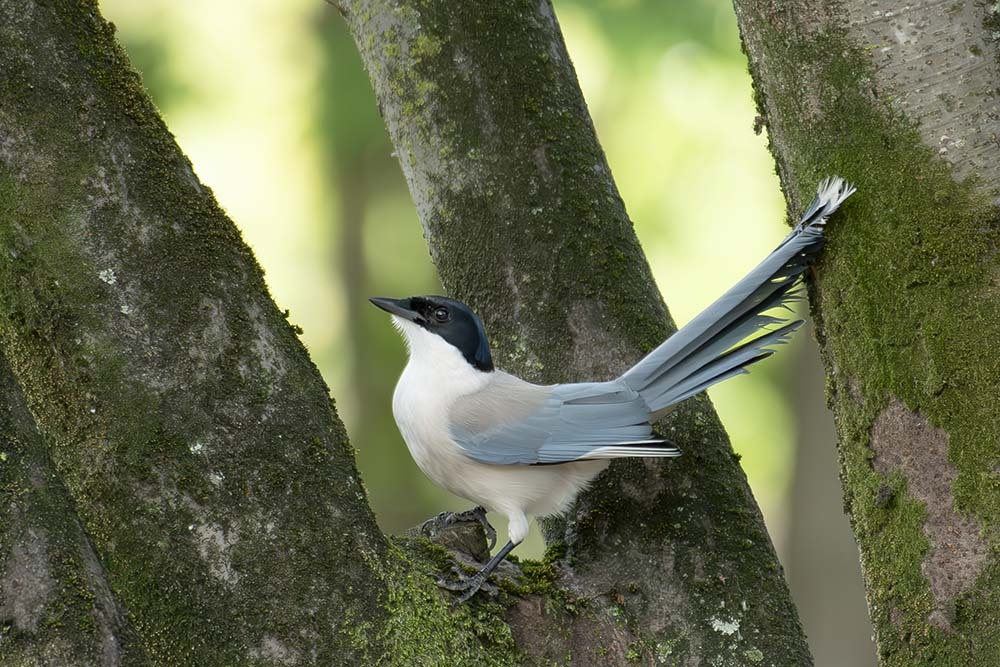
Azure-winged magpies gather in large flocks of up to 100 birds during their breeding season, where "helpers" assist couples in the feeding and raising of young, even in conditions of heavy snow. These magpies stash away acorns and seeds in loose soil for later, incidentally acting as gardeners, should the caches be forgotten.
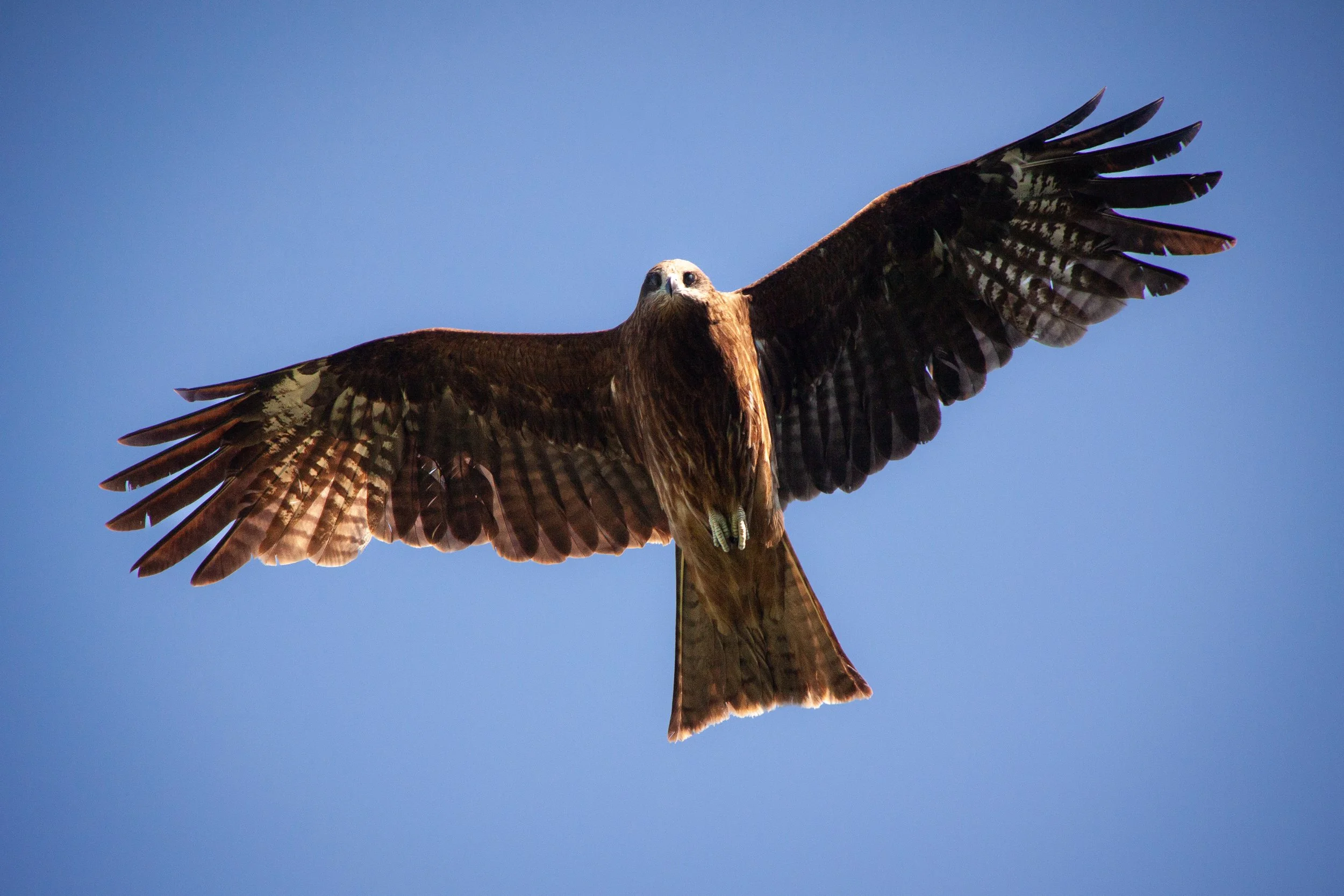
The black kite is Japan’s most ubiquitous raptor. You’ll spot it soaring along the coastlines of Toyama, above the farmlands of Toyooka, and amidst the skyline of Tokyo — anywhere from the northern tip of snowy Hokkaido to the tropical Ryukyu Islands in the south.
It ranges just as widely the world over and is actually the most abundant raptor in the whole world, with the population of mature black kites estimated to be between 4,000,000 and 5,700,000. So while definitely not rare, the sight of this fierce-looking bird, riding thermals over forested mountains and bustling cities, is still thrilling.
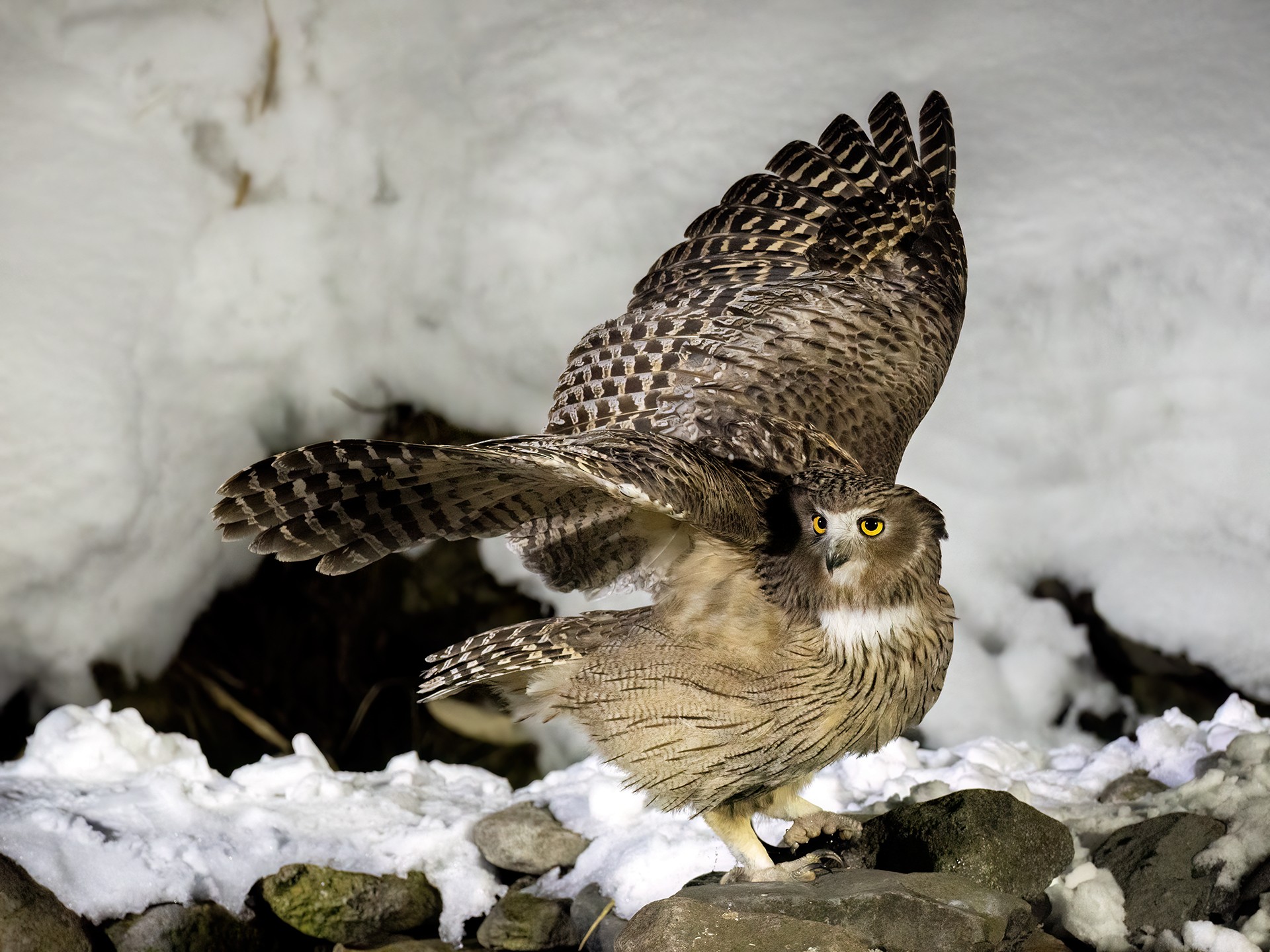
Blakiston’s fish owl is the largest owl species in the world by mass, with some females weighing up to 4.6 kilograms (10.1 lb) and sporting a wingspan of up to 2 metres (6.6 feet).
When hunting, Blakiston's fish-owl stands still at the edge of a river or wades in shallow water, then lunges to catch fish with its powerful talons. Its toes are bare, not feathered like most owls, and covered with rough spines to help it grip slippery prey.
In Japan, it is endemic to the northern island of Hokkaido.
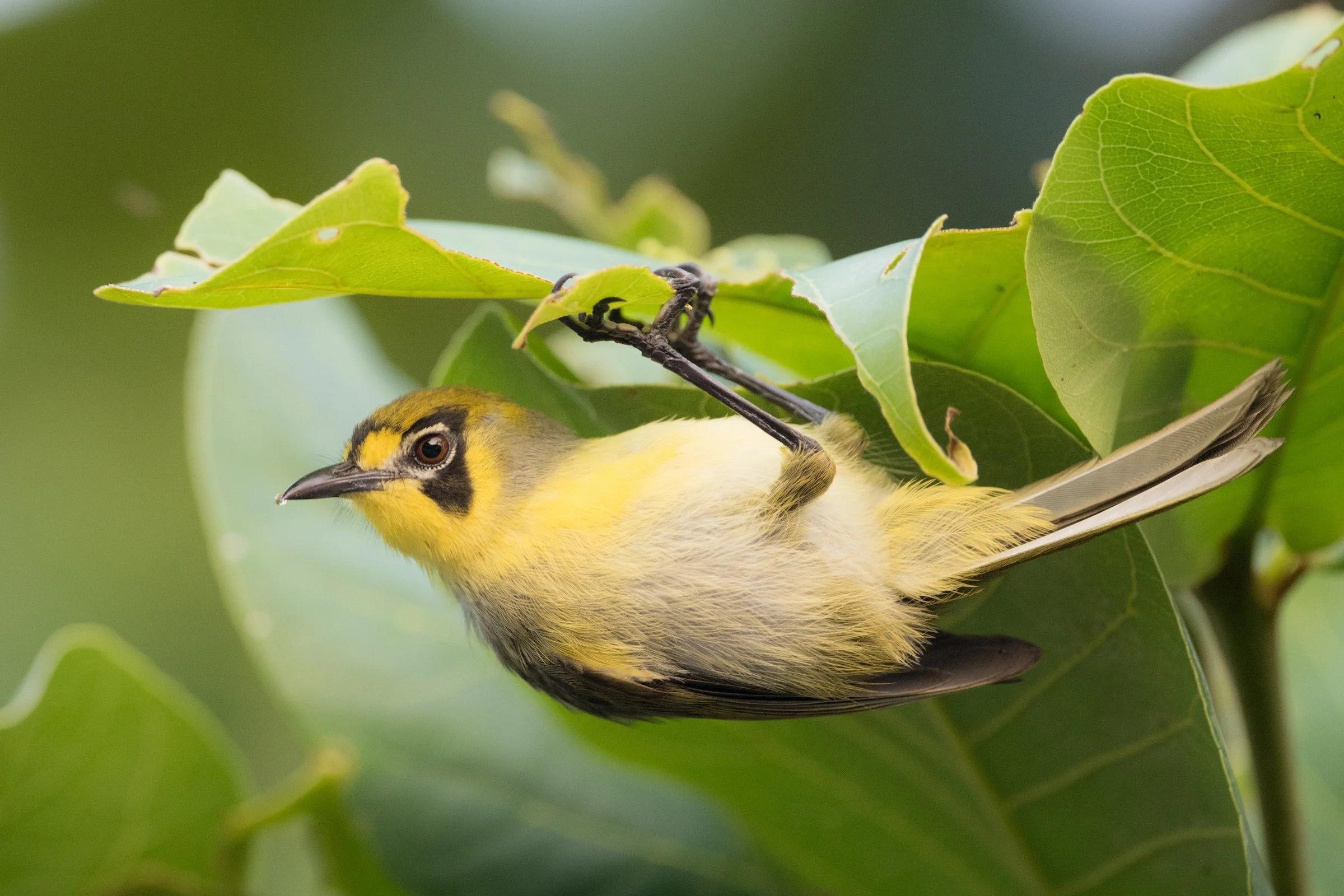
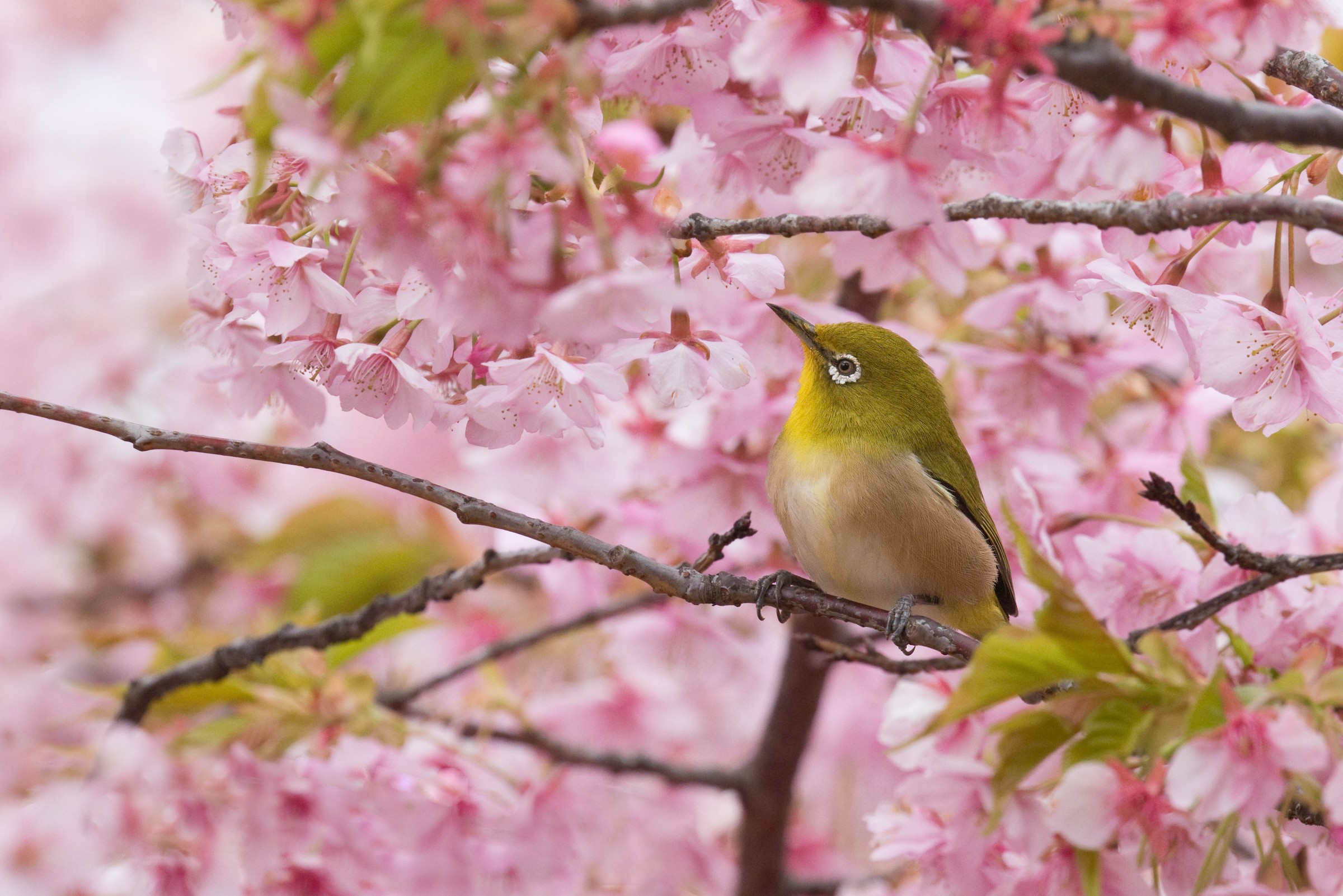
Among the white-eyes, of which there are over 100 species, the Bonin is unique for the dark triangles around its eyes. It is also unique in that it is the only species in its genus, Apalopteron.
Endemic to an archipelago some 1,000 kilometres (620 mi) south of Tokyo, the Bonin white-eye’s evolution — much like the evolution of many island species — is shaped by what its home lacks. In this case, many types of birds aren’t present on the Bonin Islands. As a result, the Bonin white-eye evolved into a generalist forager as it expanded to occupy niches normally split among species from several bird families.
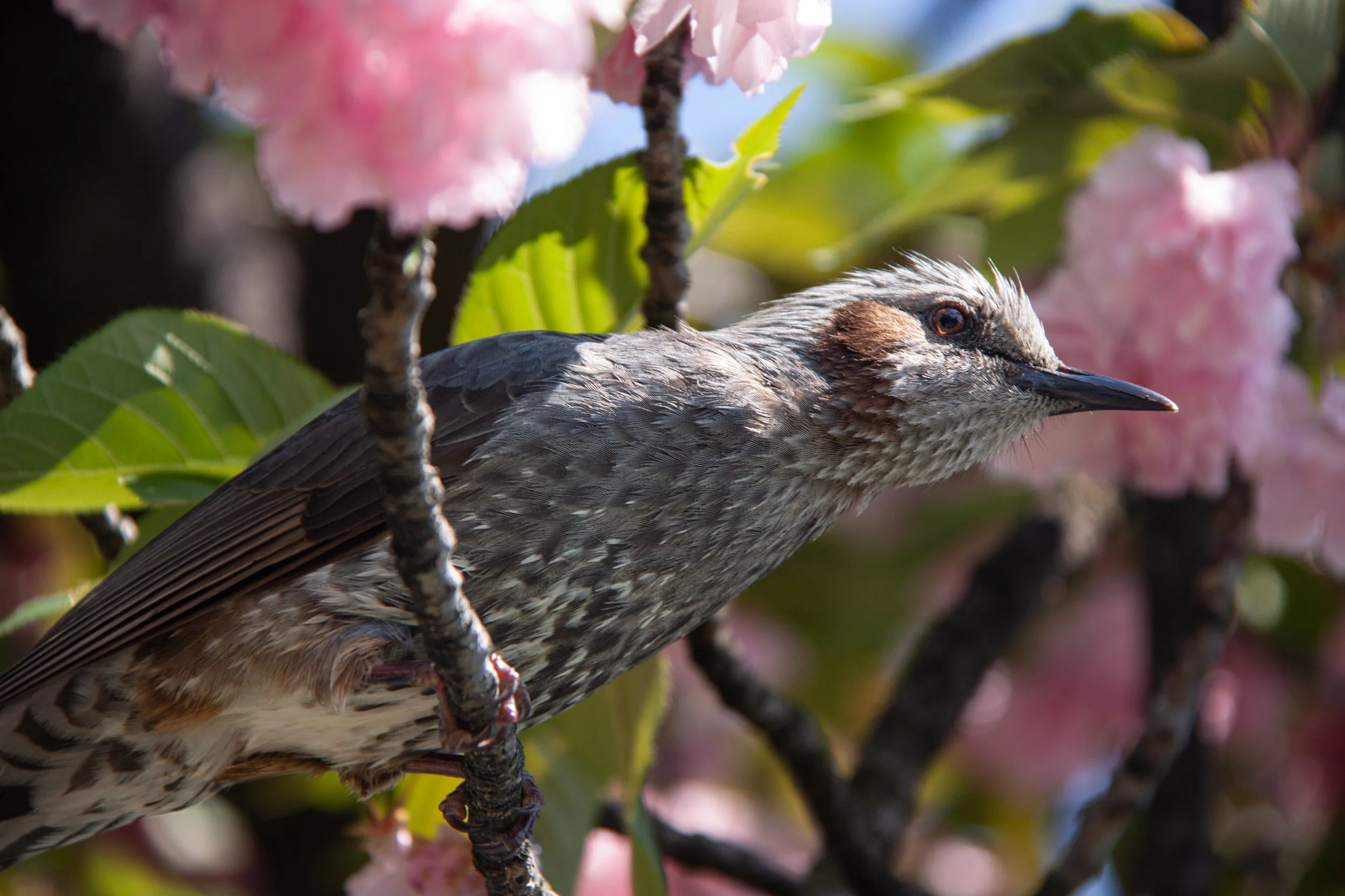
The brown-eared bulbul may be the most important bird within its range — ecologically speaking. It moves frequently, it’s the perfect size to be a great seed distributor, its bill has the right gape for swallowing many types of fruit, and it's known to consume over 90 different plant species from 54 different families.
In Japan, flocks of these bulbuls journey south in the autumn. And as each population moves further south, it is replaced by one coming in from the north, like a continuous blanket of bulbuls sweeping over the country. Their flocks create a less than pleasant chorus, their voices described as "unattractive" — loud and shrill — their song transcribed as a “pee-yuk p-uk p-uk p-uk.”
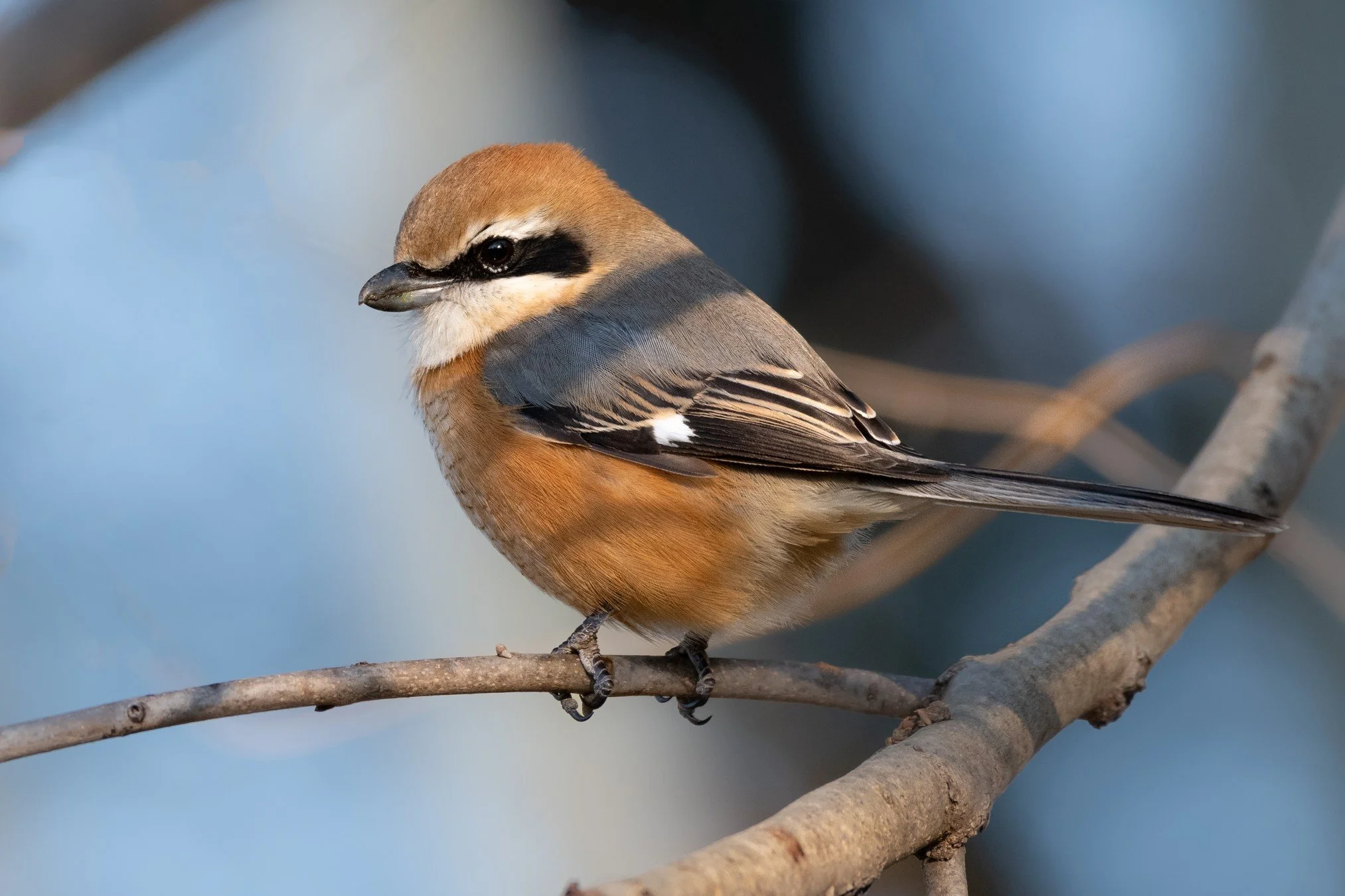
The bull-headed shrike's shrieking call ('kich-kich-kich') signals the approach of fall in Japan — in some regions, farmers use its call to time their work and avoid the winter frosts. The shrike's cries also serve as warnings, staking its claim over hunting grounds.
The name 'shrike' supposedly originates from the Old English word scríc, literally meaning "bird with a shrill call", but shrikes are more skillful songsters than their one-note name might suggest. Bull-headed males mimic the songs of their neighbours (some even 'neigh' like horses), and the males with the widest repertoires also attract the most mates.
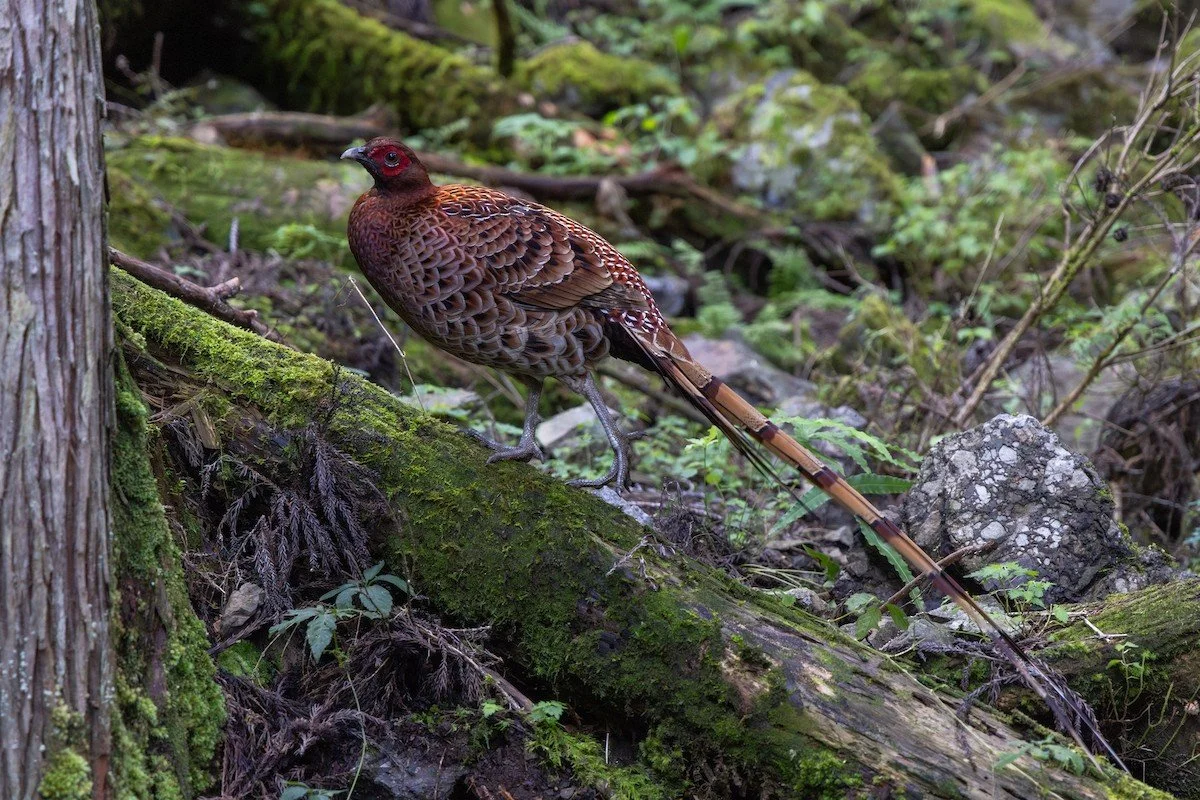
This pheasant, known as the yamadori (山鳥) in Japanese, is endemic to the montane forests of Japan.
While the female is an unflashy reddish-brown, the male is a deep copper with feathers rimmed in white, and markings of crimson over each eye. But the male's most extravagant trait is his luxuriant tail feathers; capable of growing over 1.2 metres (4 ft) long. According to folklore, if you find a male's tail feather with 13 nodes, it will repel evil spirits. It's also said that the feathers of older yamadori glow in the dark.
During the copper pheasant's breeding season, from late winter to early spring, you'll hear the proud "drumming" of an advertising male echoing through the forest. The sound is created as he beats his wings rapidly and air rushes over his feather quills. The folkloric version of this pheasant is a prankster that likes to frighten people. Its drumming creates a noise like startling explosions and the sound of severed heads rolling down the mountainside.
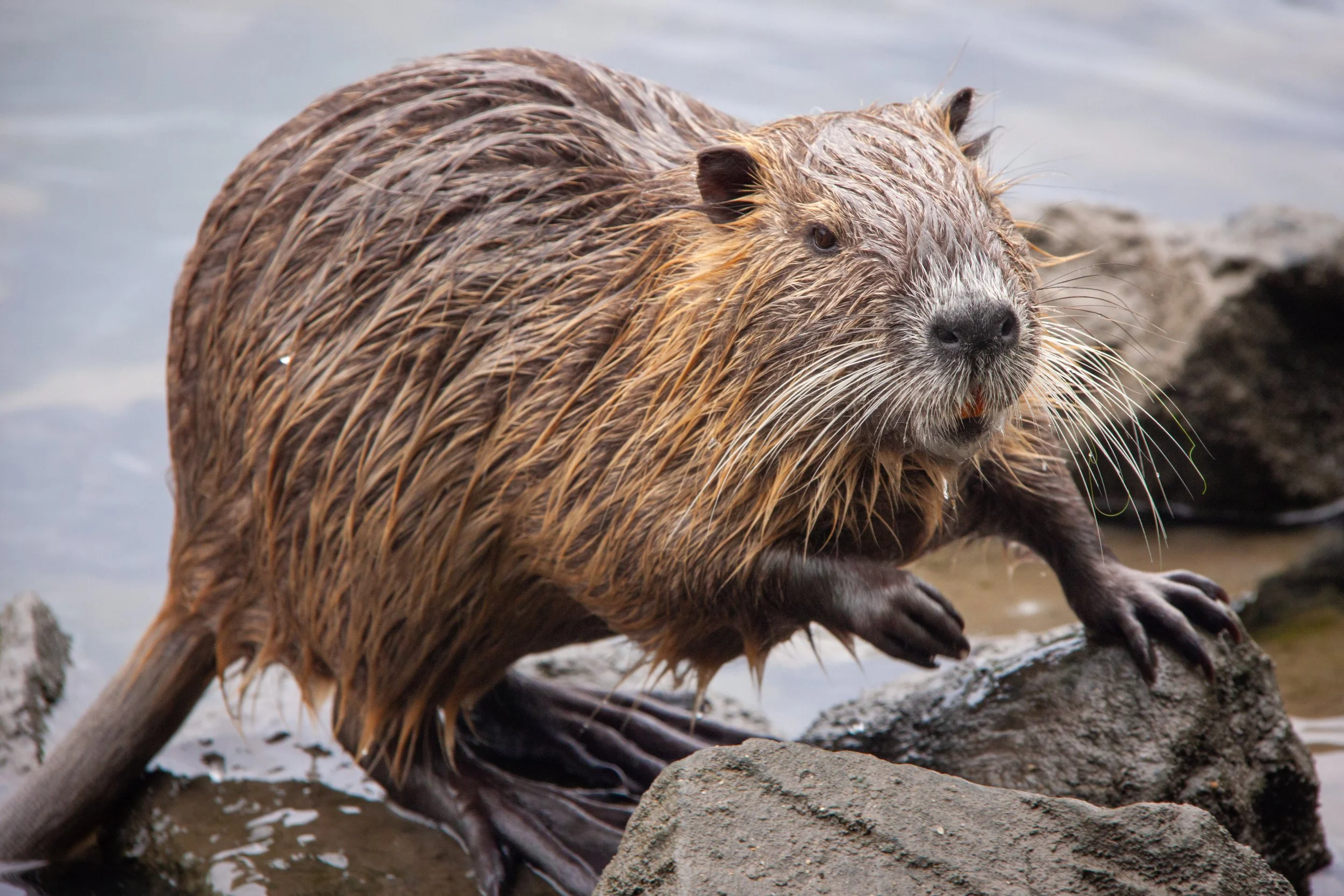
The coypu, or nutria, is a hefty rodent — weighing up to 10 kg (22 lbs) — native to South America. However, it is now invasive and prolific in the United States, Europe, Kenya, and parts of Asia such as South Korea and Japan. It was introduced to Japan during WWII as a food and fur source. Escaping into the wilds and proliferating, as rodents do, coypu now swim and scamper along the waterways of large cities such as Kyoto and Osaka.
The coypu has webbed hind feet for swimming, and unwebbed fore feet for handling food: reeds, cattails, grasses, roots, and aquatic plants. A coypu can dive for up to 10 minutes at a time and is most active at night. It constructs platforms on water, digs burrows in riversides, and makes runways through riverside grasses.

The unassuming green pheasant is a national icon of Japan. First adopted as such in 1947, it supposedly symbolises masculinity, might, and courage — somewhat contrary to its flighty nature, as it’s known to explode in a frightened flap of wings and dash away into the bushes when startled.
But this too is, or was, a point of admiration. It’s said that this pheasant is particularly prone to noticing tiny tremors in the earth and its panicked reaction can forewarn people of a coming earthquake.

The Iriomote cat is thought to be a descendant of leopard cats that arrived from Taiwan over 90,000 years ago, when a land bridge existed between the two islands. Its sole home is now the small — 284 km² (110 mi²) — but lush island of Iriomote.
With no competition from other predators, the Iriomote cat became an extreme generalist hunter, preying on over 95 different species, ranging from fish to birds to bats to bugs.
Its current population estimated to be around 100 individuals.
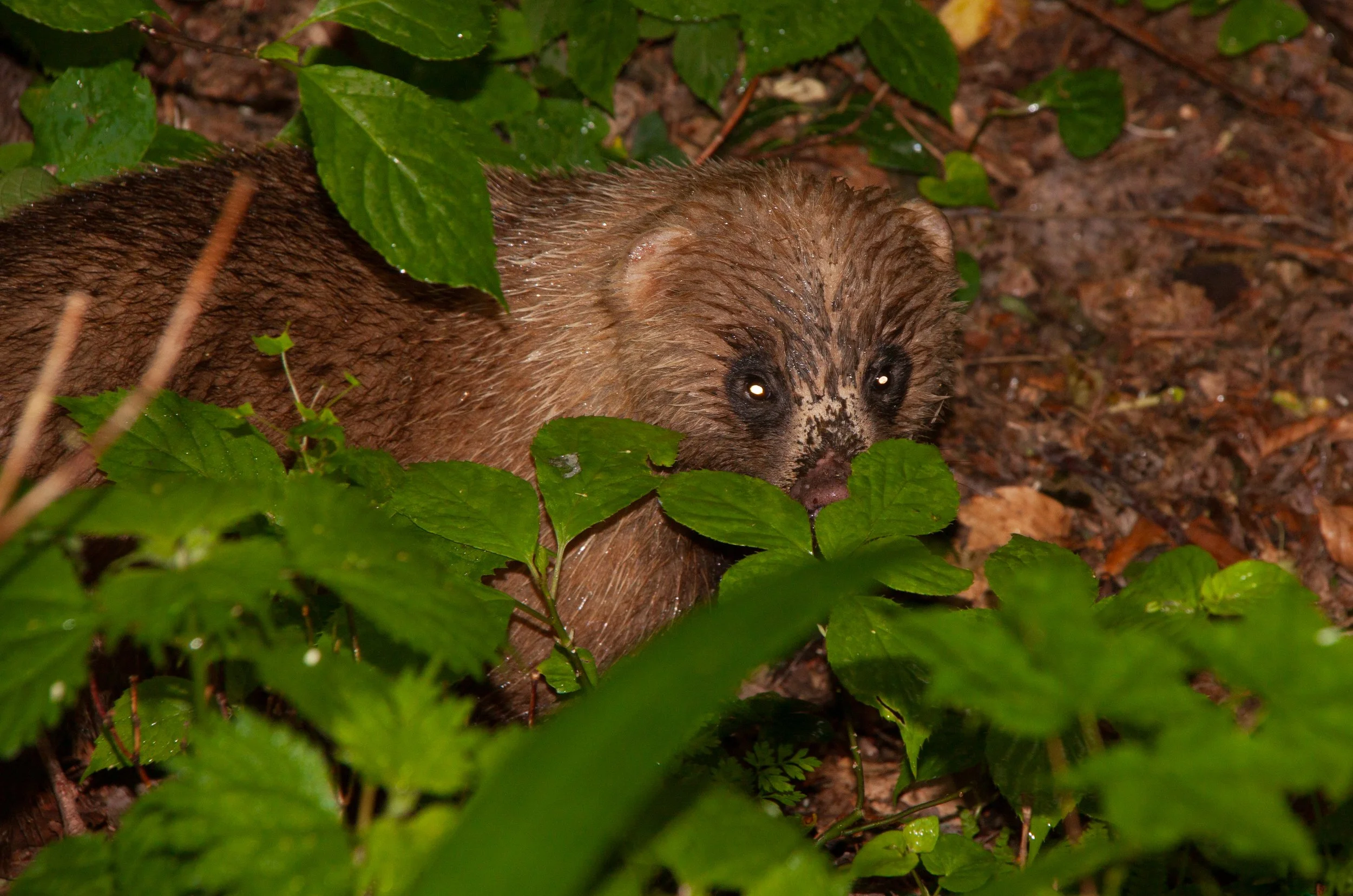
Endemic to Japan, the Japanese badger — like other badgers — lives in underground dens called "setts". However, the Japanese badger is known to be more solitary, with even mated pairs often living in separate setts. It is currently unknown why this is the case.
In Japanese, this badger is known as an anaguma (穴熊), which literally translates to "hole-bear". Being the only badger in Japan, this species plays an important role in its ecosystems; it turns over and aerates soil as it digs, making the earth more fertile, it disperses seeds in its scat, and it keeps pest populations in check.

For over 1,300 years, the Japanese cormorant has been part of a traditional fishing method known as ukai. A dozen cormorants swim alongside a wooden boat, each held by a leash around the neck. The cormorants catch and swallow fish into their throat pouches and, afterwards, the fishermen make them "cough it up".
This species, the Japanese cormorant, is less common in Japan than the great cormorant. It breeds mostly in the cold north, on the coastal cliffs of Hokkaido, before flying south in winter; as far as Japan's southern island of Okinawa where it can bask in the warm sun. It is most frequently seen along shorelines.
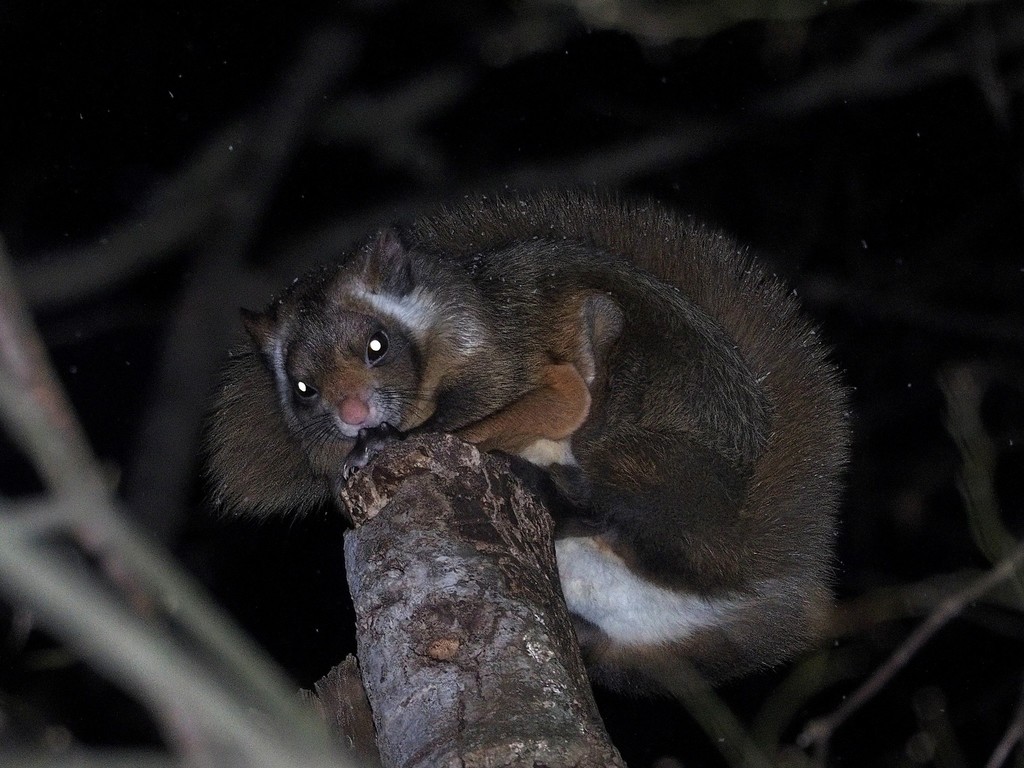
The Japanese giant flying squirrel is one of the world's biggest squirrel species — weighing up to 1.3 kilograms (2.9 lbs) — but, using its flying membrane, it can still glide distances of over 100 metres (328 ft). Young squirrels learn to glide a few days after first emerging from their nests.
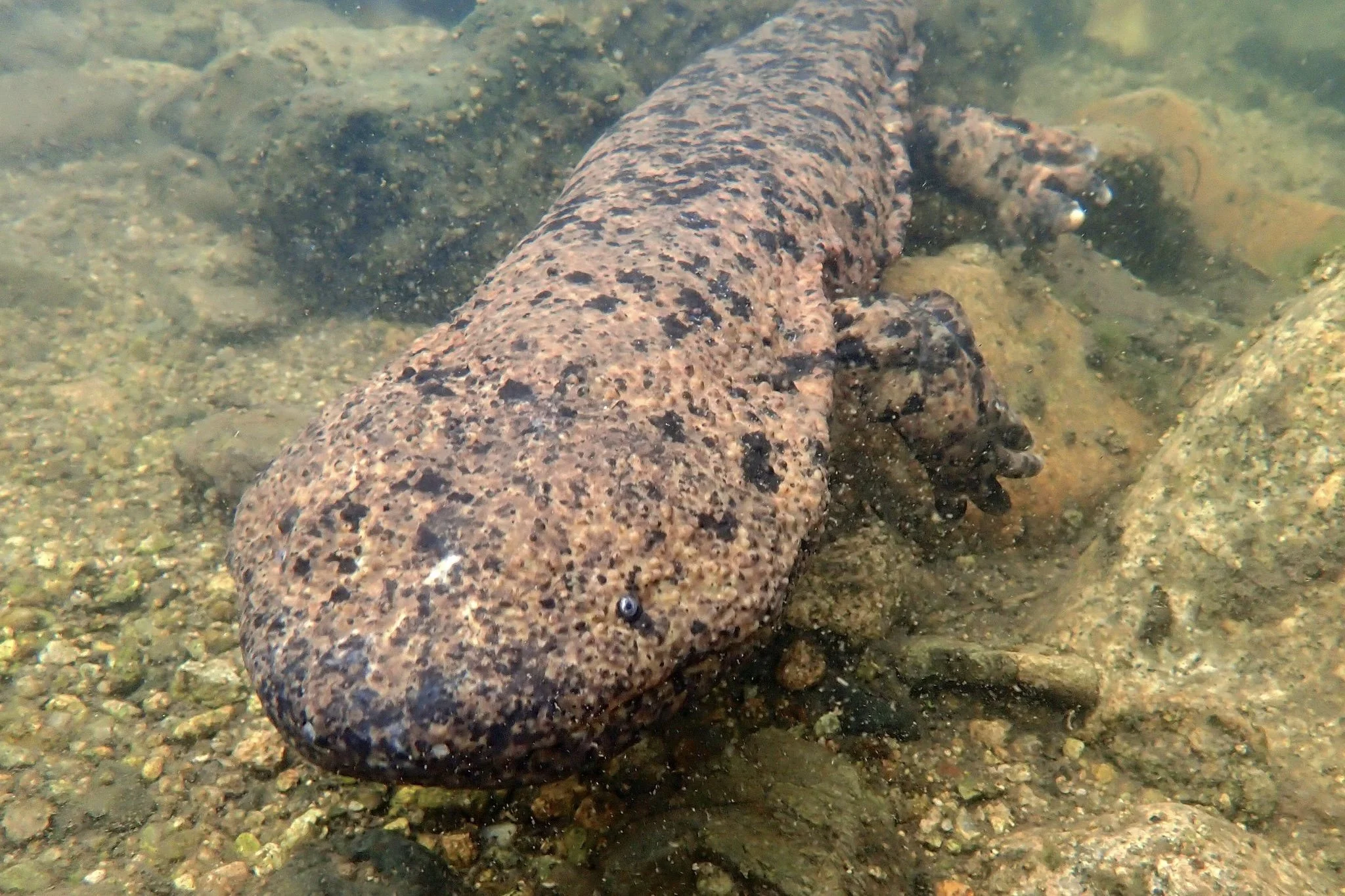
The Japanese giant salamander, one of the largest amphibians in the world, is endemic to Japan’s cold, fast-flowing streams. When disturbed, it oozes a milky, pungent mucus whose scent resembles sanshō (Japanese pepper), giving rise to its Japanese name ōsanshōuo, or “giant pepper fish.”
Like some monster from a folk story, the giant salamander is also known to lurk behind waterfalls. It waits for fish to tumble over the falls and as they splash down, disoriented from the tumble, the waiting monster emerges from behind the rushing water to devour the confused prey.
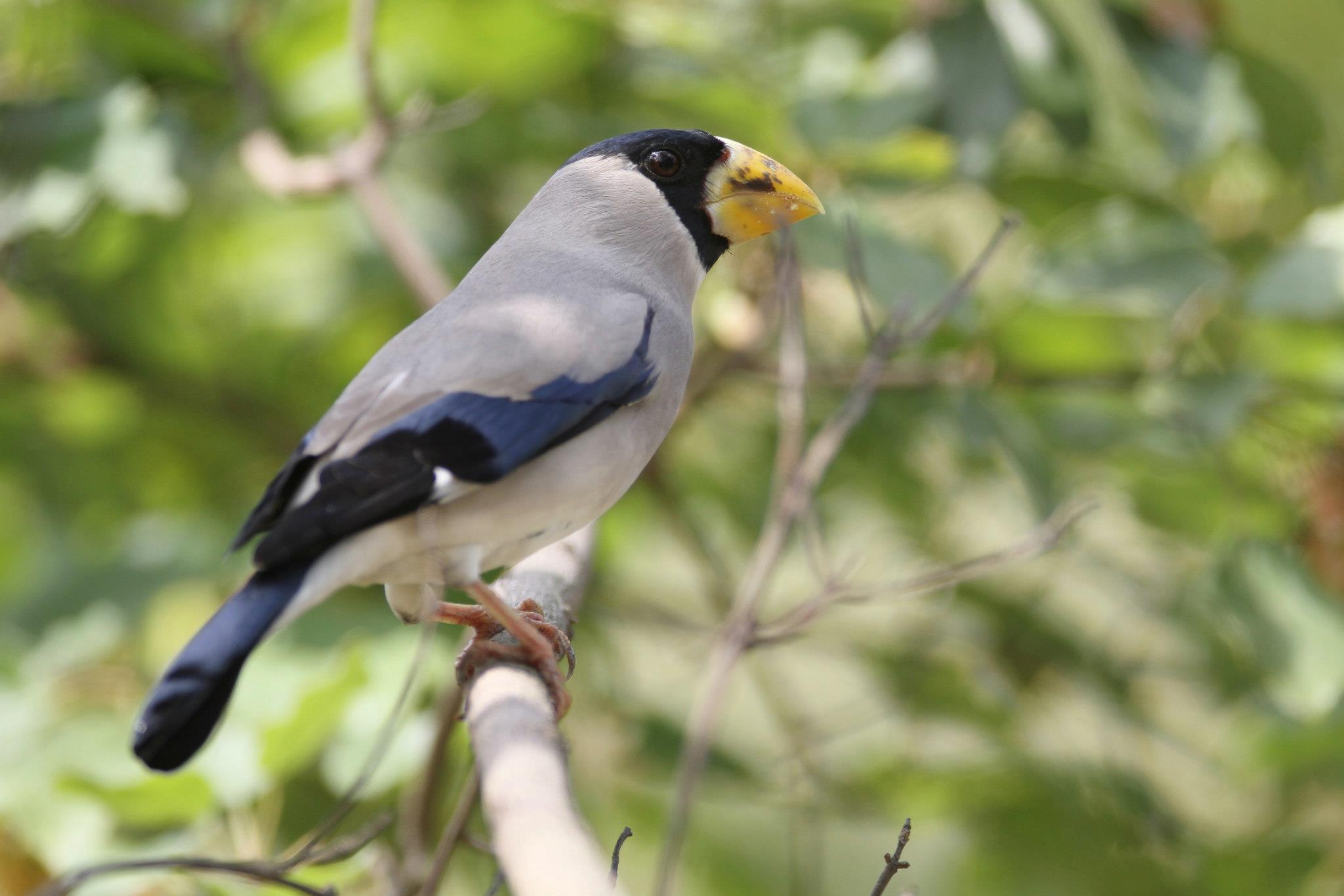
The Japanese grosbeak is a winged and feathered nutcracker, with a giant yellow bill occupying much of its facial real estate. It is large for a finch, measuring some 20 centimetres (~8 in), but, even for its size, its bill looks too big — as if someone cranked the size slider too high on its character customization screen.
Summer and spring swarm with insects and the Japanese grosbeak happily partakes in this flying, scuttling buffet — crushing even the toughest exoskeletons with ease. It's during winter when the grosbeak really justifies the enormity of its bill. Insects are scarce, branches barren of berries, and seeds sit protected inside their tough shells. Where a tiny-billed rosefinch may go hungry, the grosbeak finds a pine cone and plucks out an armoured seed. Holding it between its hulking mandibles, it uses its powerful jaw muscles to crack the kernel, before swallowing the exposed nut.
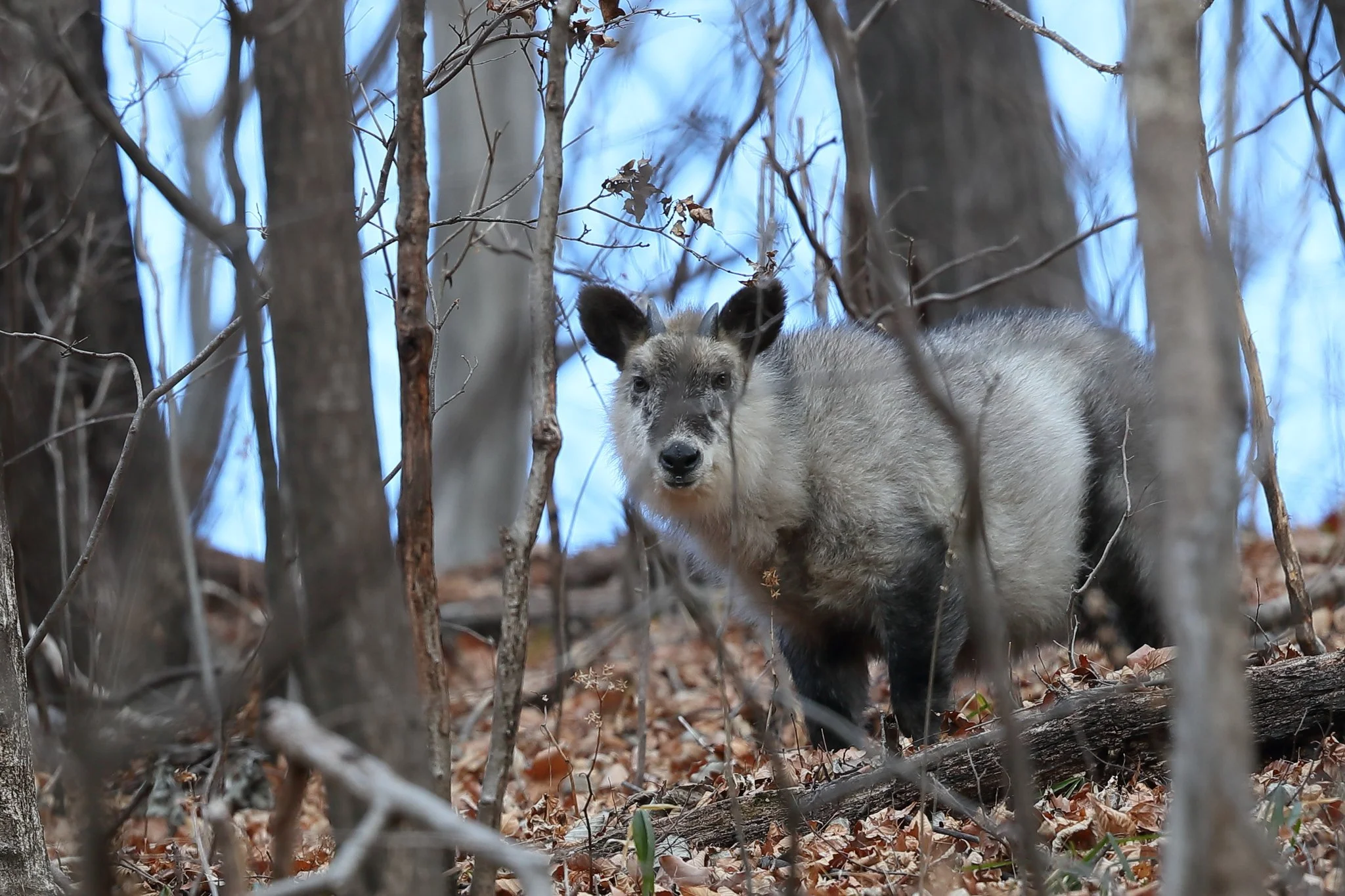
The Japanese serow is usually a solitary animal. It communicates with other serows via scent markings, rubbed onto leaves from tear-shaped scent glands below each of its eyes.
In the past, these serows were more plentiful throughout the lowlands of Japan. But as human populations spread and grew, deforesting land as they went, the serows retreated to higher and higher ground.
As spring arrives and snow melts, the super-abundant sika deer of Japan make their way up the mountains. They travel in herds — grunting, whistling, and barking — moving into the serows' territories. The serows, naturally quite antisocial, are too disturbed by the bustle of the deer and must retreat to poorer, but more private places.
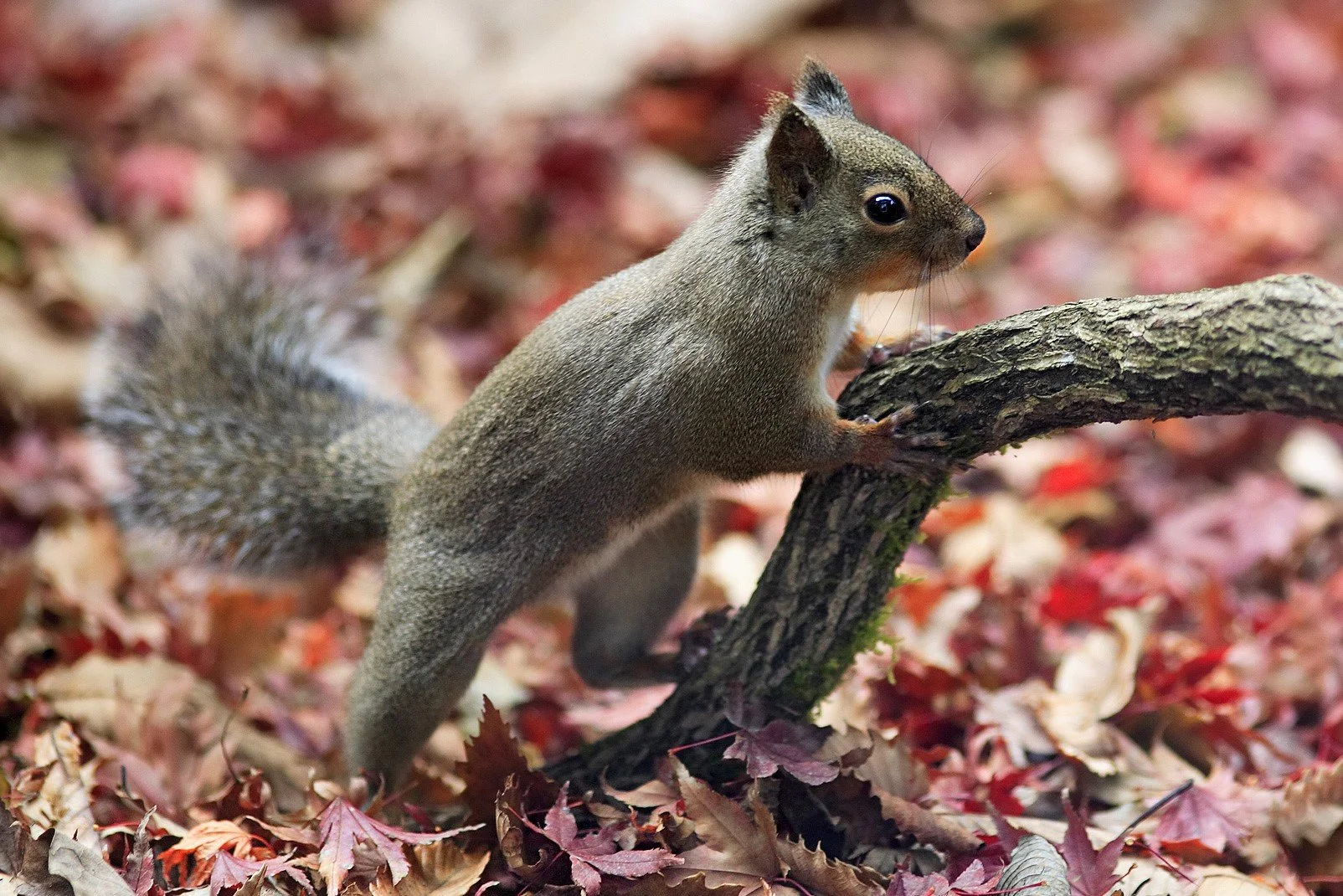
The Japanese squirrel is particularly fond of Japanese walnuts — in some areas, 35% of its diet is made up of walnuts.
One study, which provided Japanese squirrels with 720 walnuts, found that the squirrels were habitual hoarders. Over half (50.6%) of the walnuts were stashed away for later, and not in one hoard, but in several scattered across its territory. The squirrel is more likely to hoard larger seeds/nuts and is more willing to carry them farther in order to cache them — this may have resulted in walnuts evolving larger sizes in areas where this squirrel lives.

The Japanese weasel's agility and lithe body allow it to pursue its prey anywhere; down tunnels, up trees, or into water. During winter, it spends its time chasing rodents through snowy tunnels and, after catching and eating its target, it lays down to enjoy the warmth of its prey's burrow.
The Japanese weasel can produce a pungent musk from its anal gland. It rubs this musk across its territory; communicating information like the weasel's gender, age, social status, health, and breeding condition. Its musk also served as a defence, making the weasel unpalatable to keen-nosed mammalian predators. Birds of prey, however, are less picky about how their meals smell, and will readily hunt this weasel.

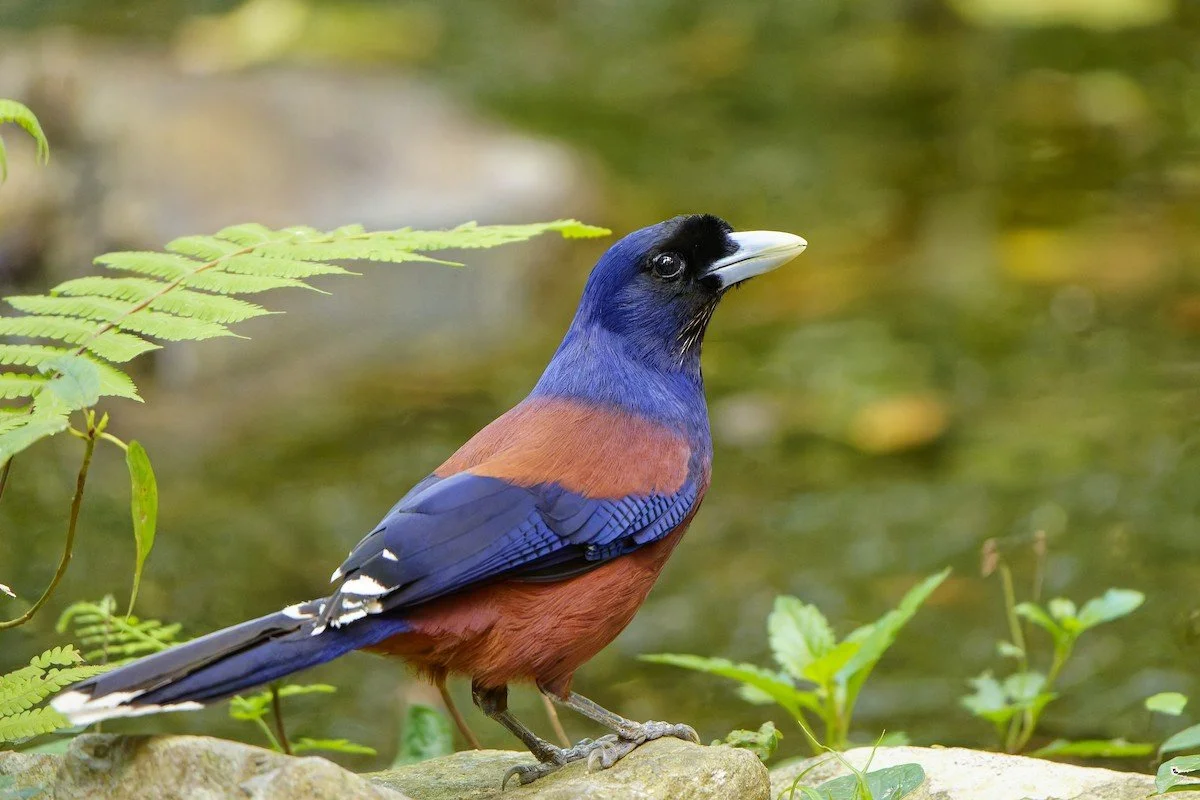
This jay's main home is on Amami Ōshima — part of the Ryukyu Islands in southwestern Japan — but it's also known to live on the island of Tokunoshima to the south.
This species was once classified as Vulnerable, due to the proliferation of invasive mongooses on its island. But after an intensive eradication campaign, on the 3rd of September, 2024, the Ministry of the Environment announced Amami Ōshima was mongoose free. Since then, the Amami jay’s status has been changed to a species of Least Concern.
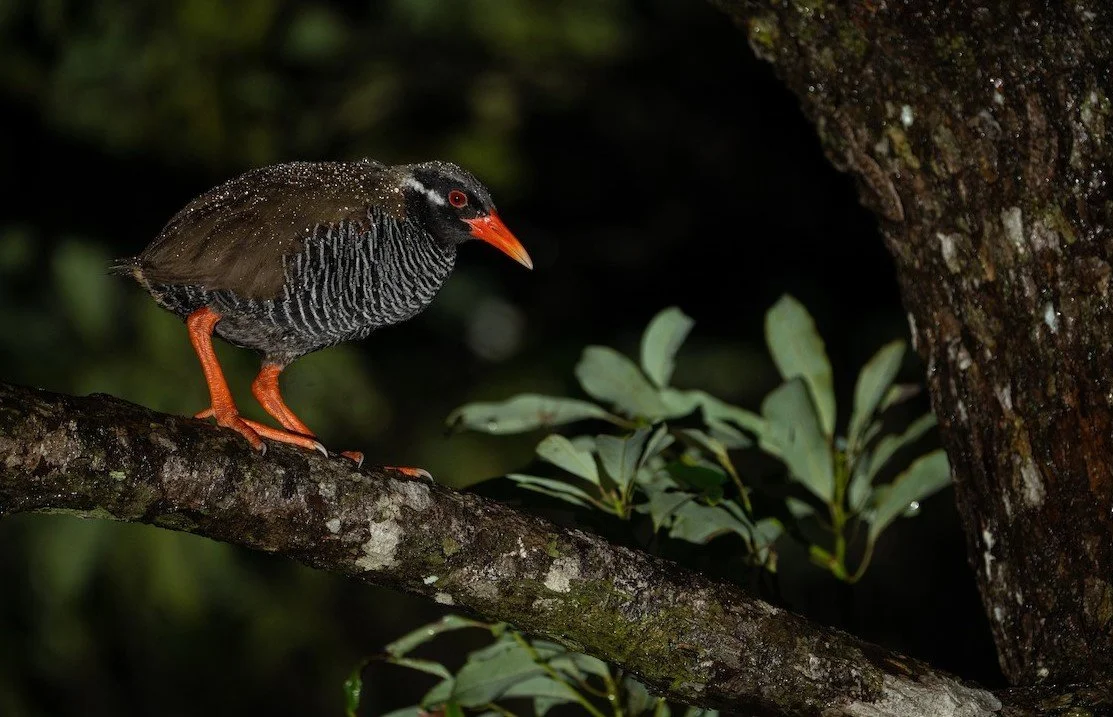
The Okinawa rail is Japan's only flightless bird — found exclusively on the island of Okinawa. Before nightfall, it uses its powerful clawed feet to climb trees, where it sleeps to avoid nocturnal-hunting pit vipers. In the morning, it drops back down in a graceless fluttering of wings.
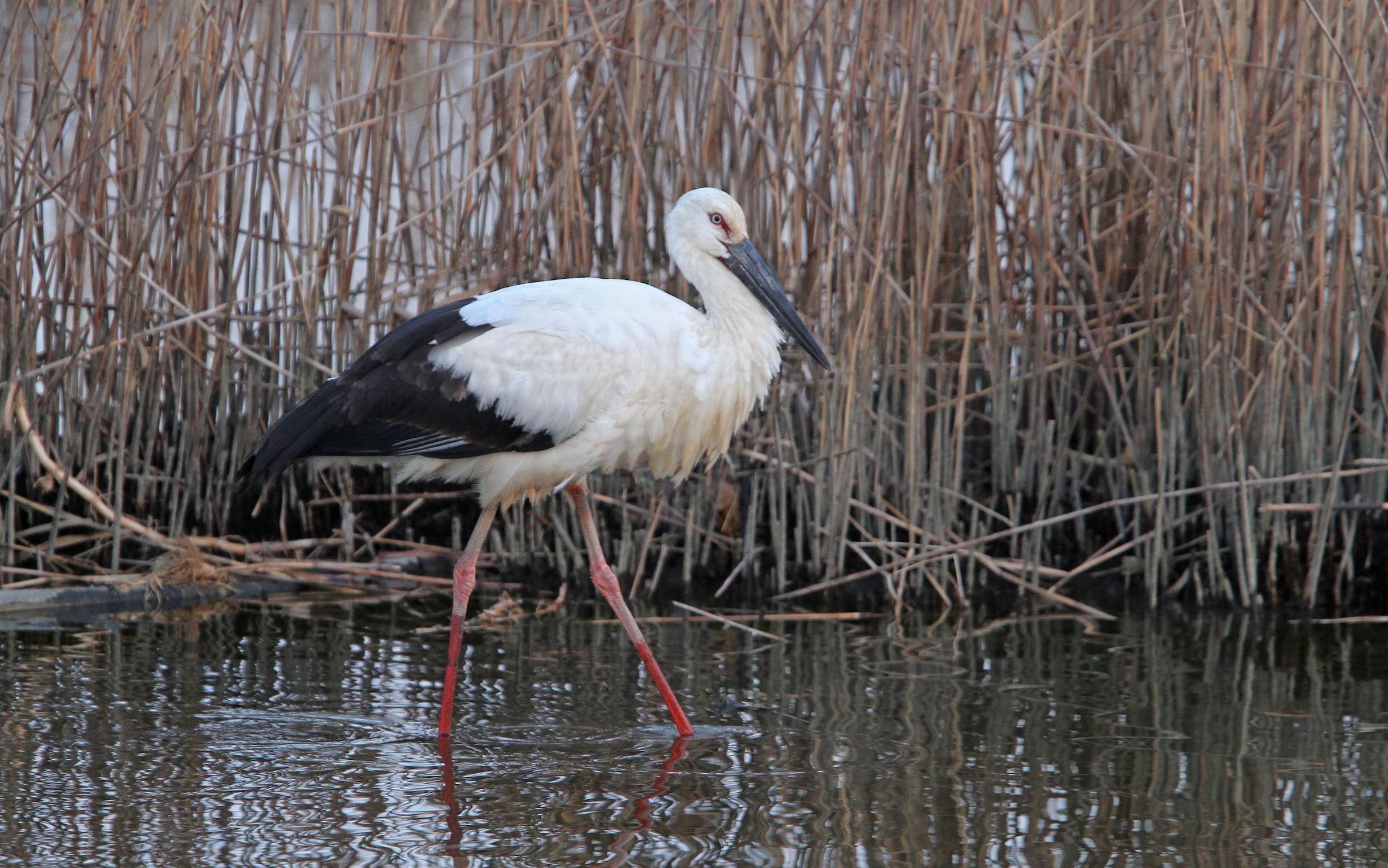
The oriental stork once lived across Japan. However, a regime of deforestation, wetland draining, pesticide use, and hunting saw the last stork of this species disappear from the country in 1971. The efforts of residents and researchers in the city of Toyooka has since reestablished a population — with some 350 of these endangered storks now living in Japan.
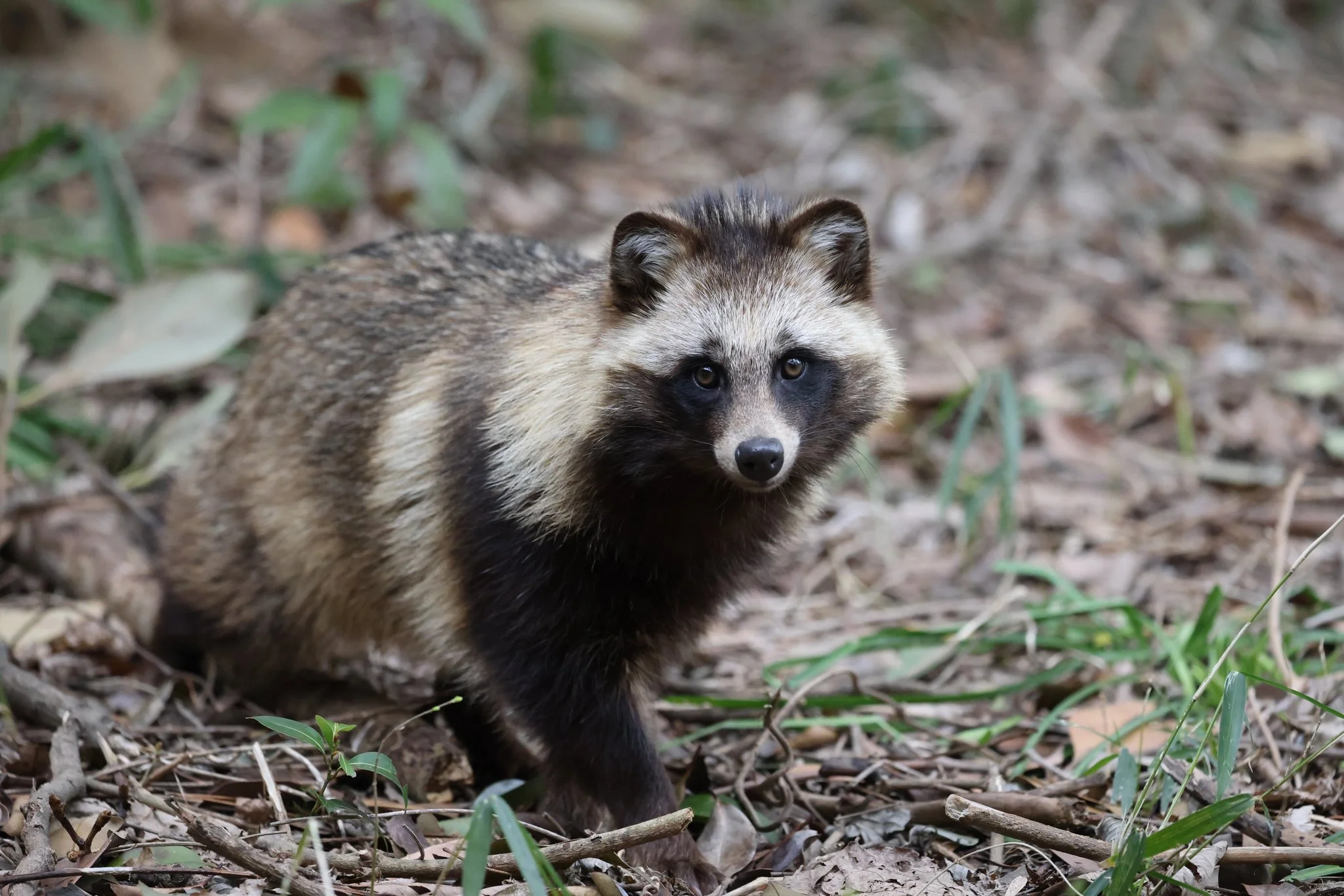
The raccoon dog isn’t a raccoon at all — it’s a canid, more closely related to foxes. It’s the only member of the dog family that hibernates and one of the few to use communal latrines, where it leaves behind smelly “messages” about its diet, health, and breeding status for other raccoon dogs to sniff out.
Of the 35+ species in the Canidae (dog) family, the raccoon dog is the only one that hibernates. It can put on 50% of its body weight in fat prior to hibernation, going from 4 to 6 kilograms (9–14 lbs) in summer to a chunky 6 to 10 kilograms (13–22 lbs) as winter approaches. It then climbs into its underground den, often with its partner, and settles down to hibernate.
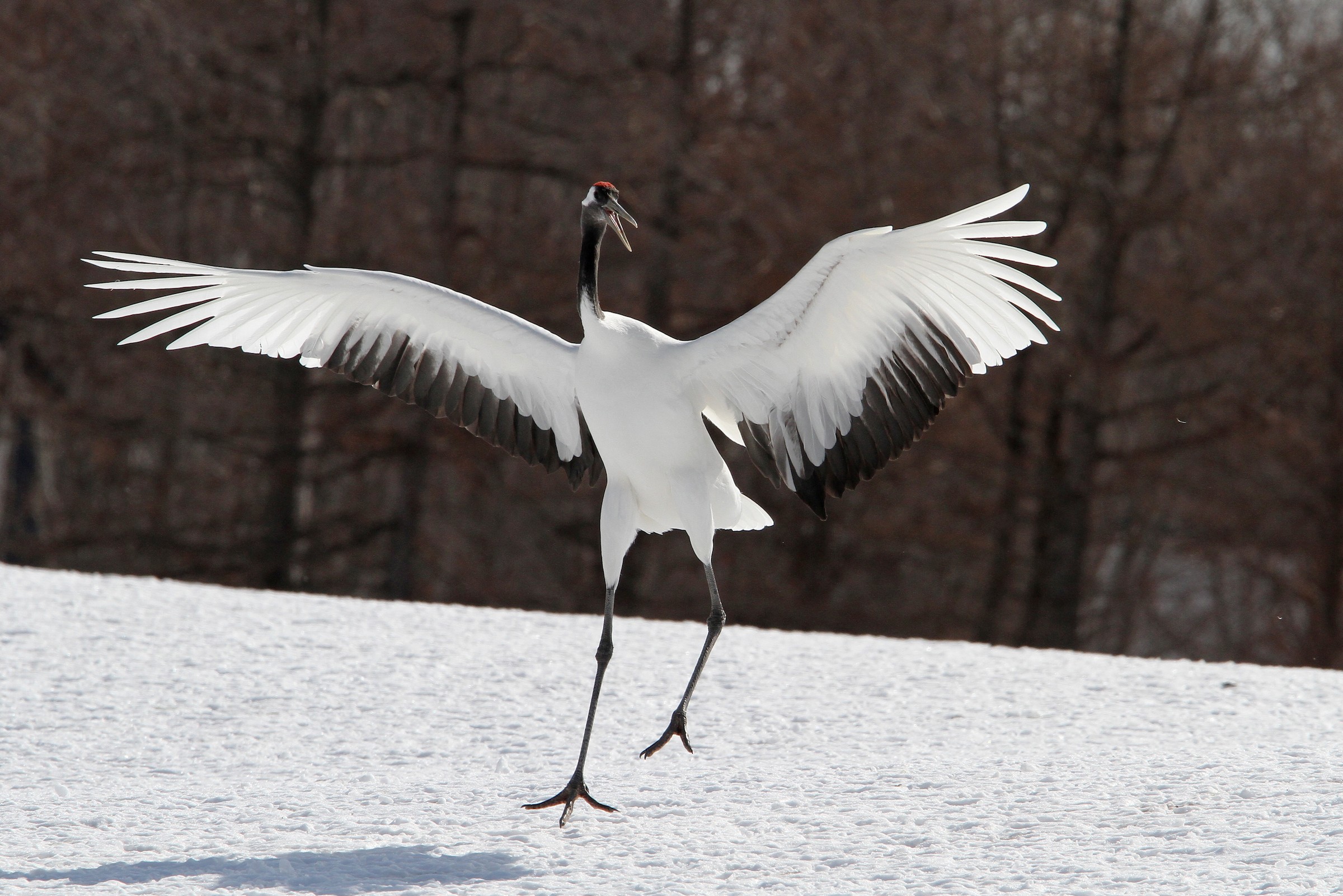
Red-crowned cranes in Japan are resident on Hokkaido, and exclusive to the island. But it was not always so. There’s evidence of this species ranging across northern and central Honshu — including written records, mentions in old poetry, and Edo artworks.
That was until the 3rd of January, 1868, when political power was restored to the Japanese emperor in the Meiji Restoration. The new regime brought with it major land changes, including wetlands turned to cultivated fields, and an end to the Edo-period ban on hunting with guns, and specifically the killing birds.
Today, the crane is kept alive in Japan via conservation efforts in Hokkaido. Every winter, the Akan International Crane Center takes a survey of the red-crowned crane population: there were less than 100 in 1955, nearly 200 by 1975, almost 600 in 1995, just over 1,000 in 2005, and, as of 2020, there are some 1,800 red-crowned cranes.
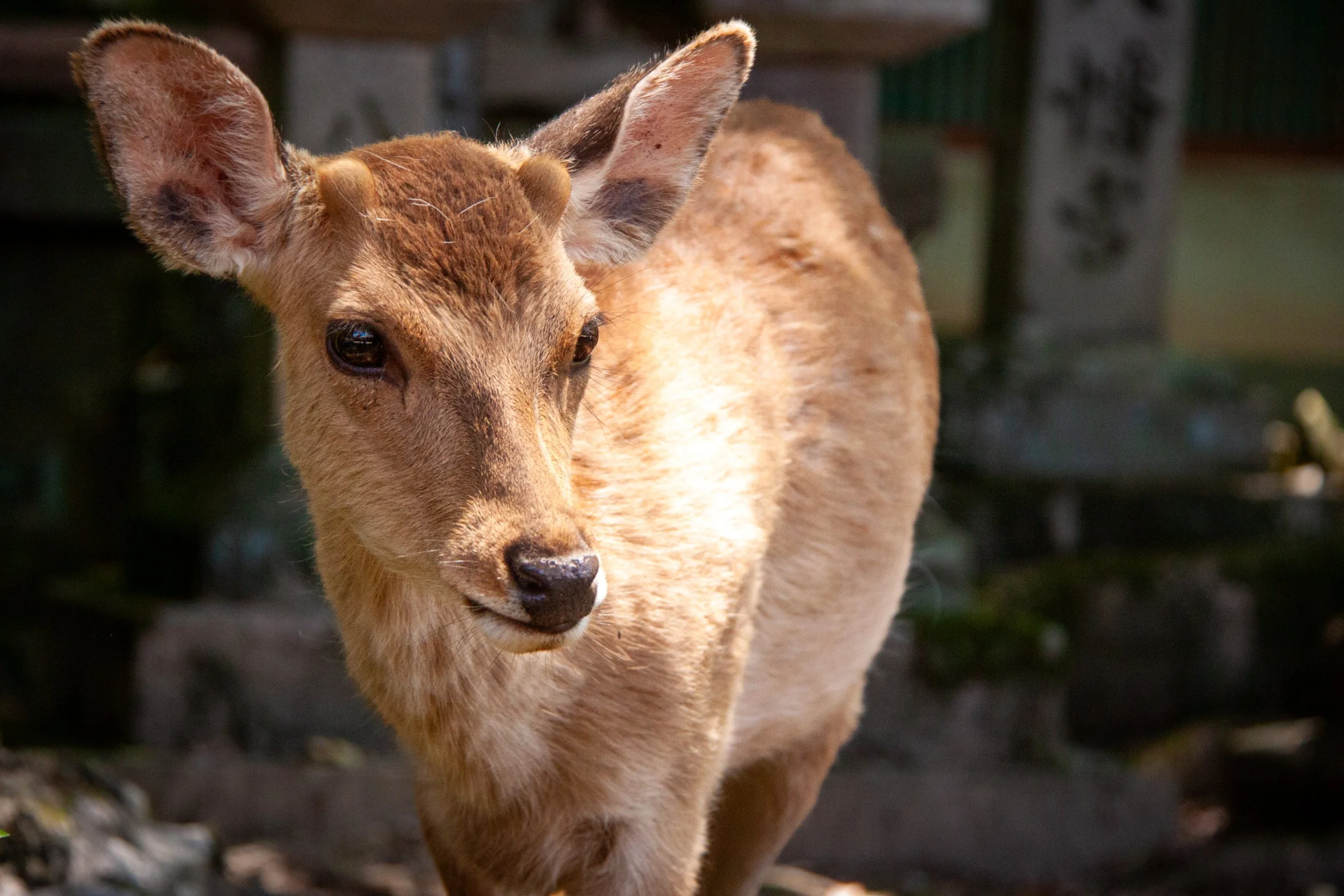
Sika deer are Japan’s most ubiquitous large animals, roaming from Hokkaido's northern tip to the subtropical Kerama Islands. Historically, the sika deer’s main predators were wolves, Amur tigers, and leopards. In many places around the world, however, predators are going extinct or declining. In Japan today, predation pressure on sika deer is minimal, and their populations now grow rapidly — to the point of disturbing species like the Japanese serow.
In the Shinto religion, sika deer are considered sacred messengers of the gods and are revered and protected; most famously in Nara Park, where well over 1,000 deer bow, beg, and bite to be fed “deer crackers.”
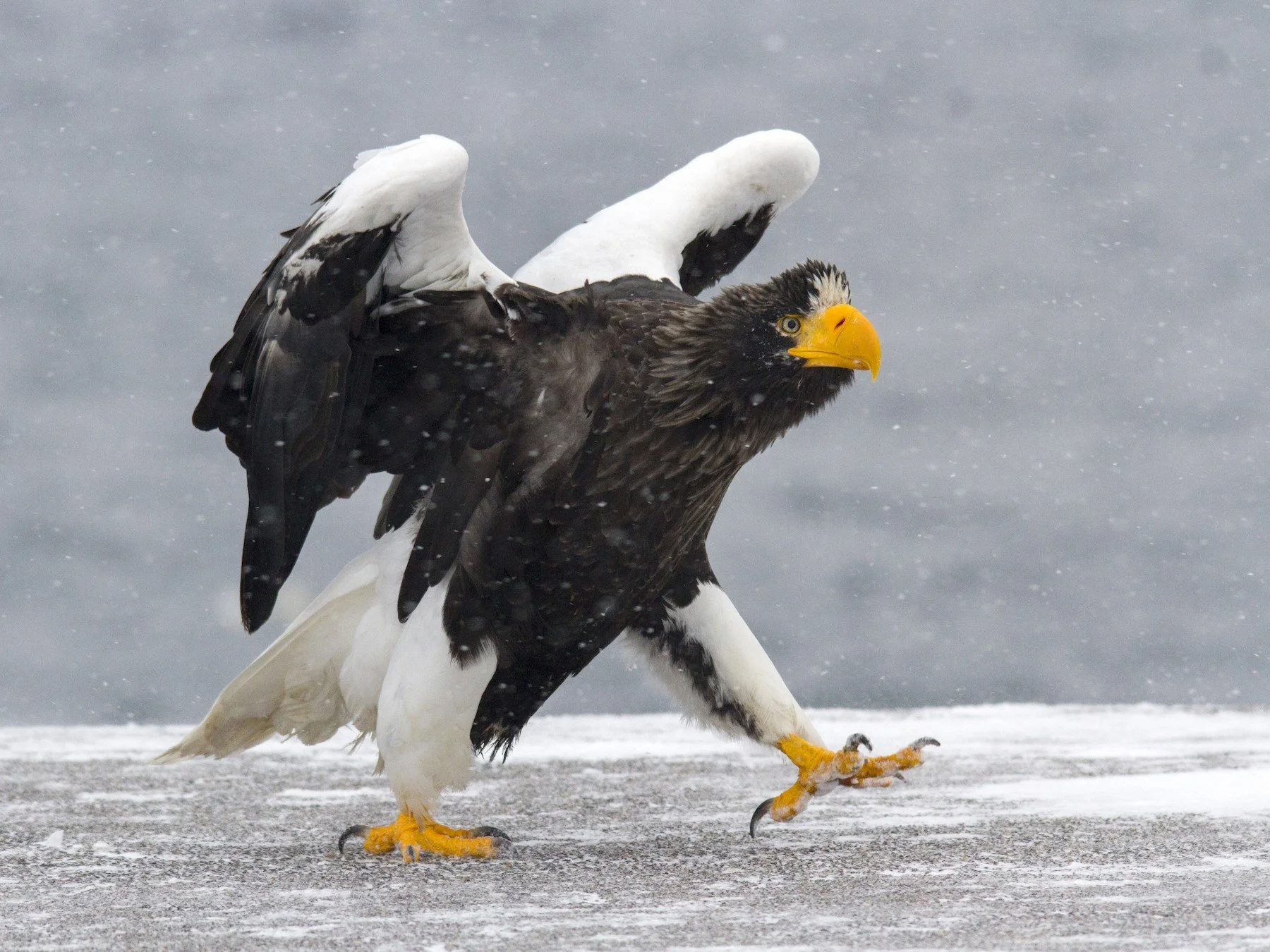
Female Steller's sea-eagle’s can weigh as much as 9 kg (~20 lbs), making this species the world's heaviest eagle. It’s also known to be particularly aggressive, often seen stealing fish caught by other eagles.
While these eagles breed in northeastern Russia, come September, many Steller's sea-eagles begin their migrations southwards. Some settle on the Kuril Islands, others on Hokkaido, while others still fly further; to western Japan, northeastern China, Taiwan, and the Korean Peninsula. Far-wandering individuals — likely lost — have even been seen in the United States.
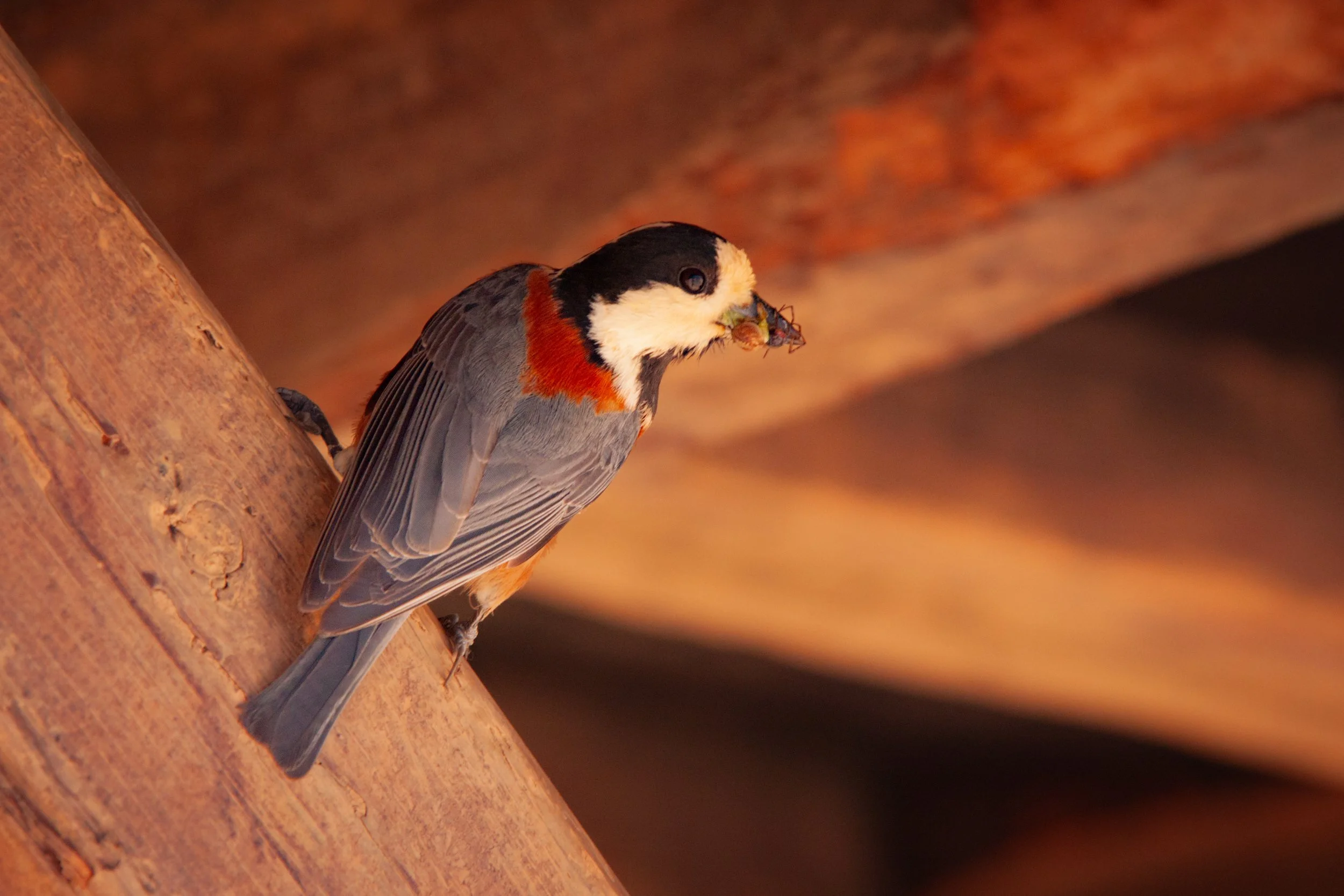
In Japan, the varied tit was once used in a practice called omikujihiki — a type of bird fortune-telling show performed at Shinto shrines. The tit would receive a coin, ring a bell, open the door of a miniature Shinto shrine, withdraw a sacred fortune, and hand it to the shrine-goer.
In the wild, the tit directs its smarts towards a more earthly goal than fortune-telling; namely that of obtaining lots of food. The diet of a varied tit consists mainly of insects and nuts. Once a tit seizes its food, it drags it out into an open space and beats it using its beak and feet for good measure, before carrying it off.