Sika Deer
Cervus nippon

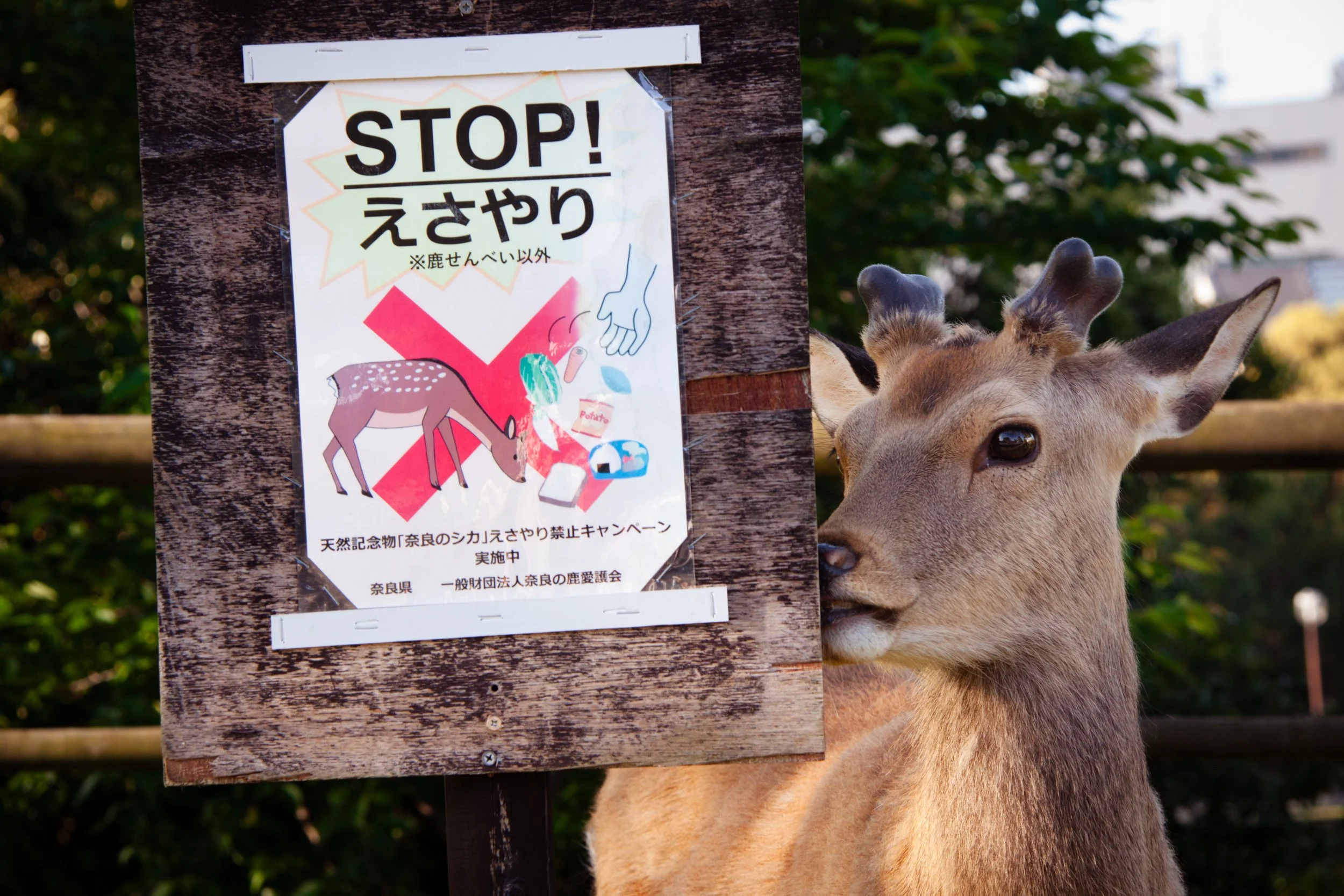
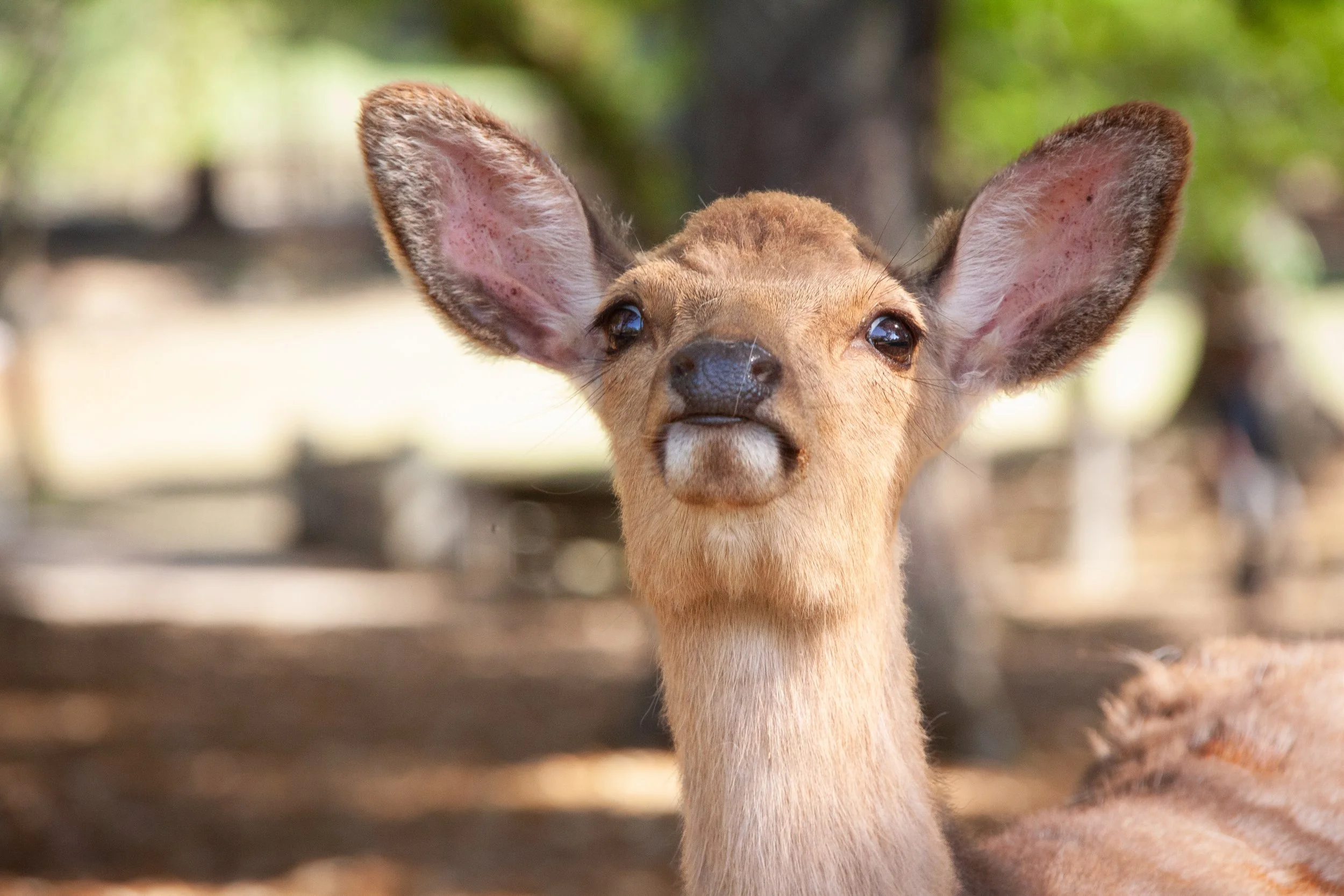
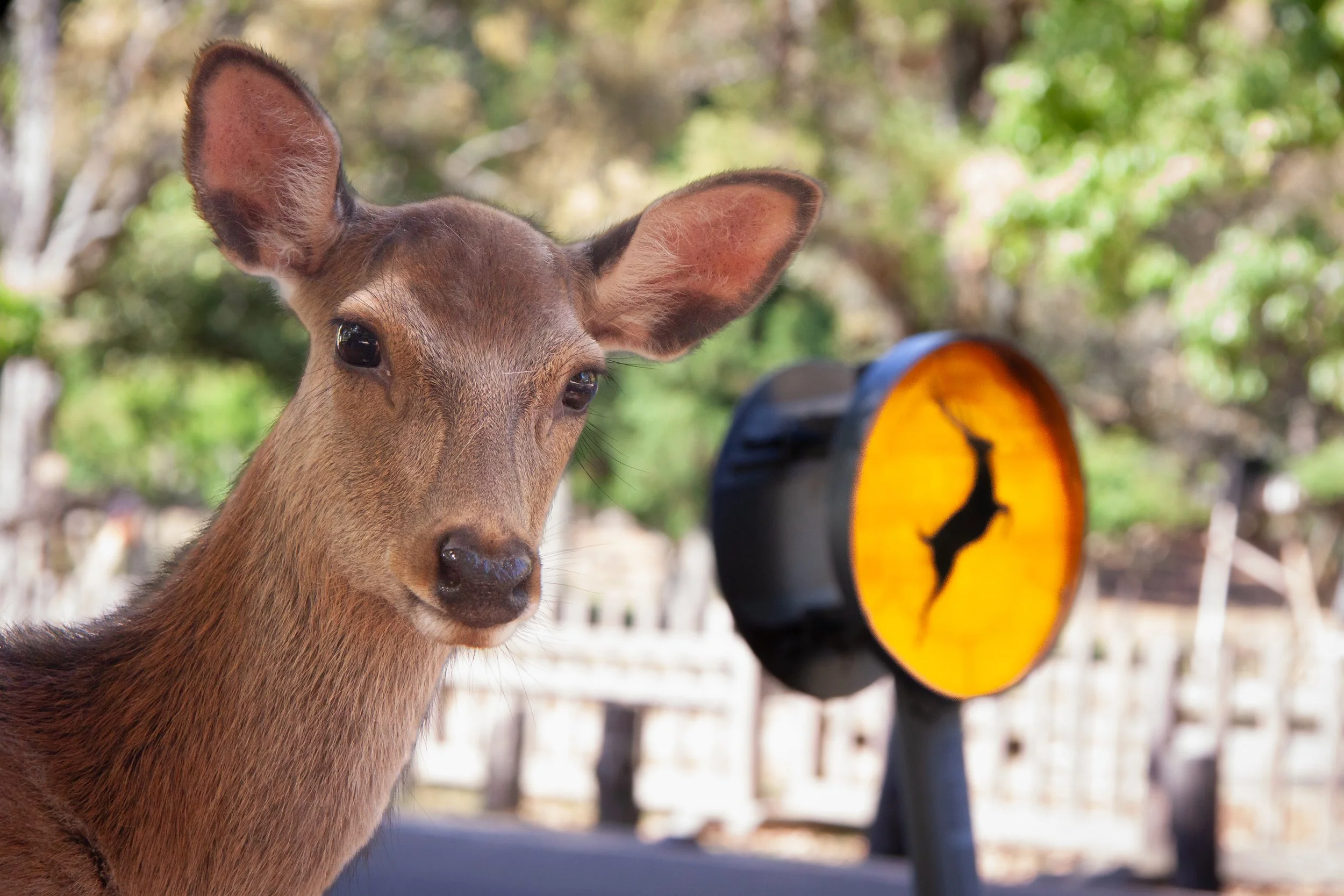
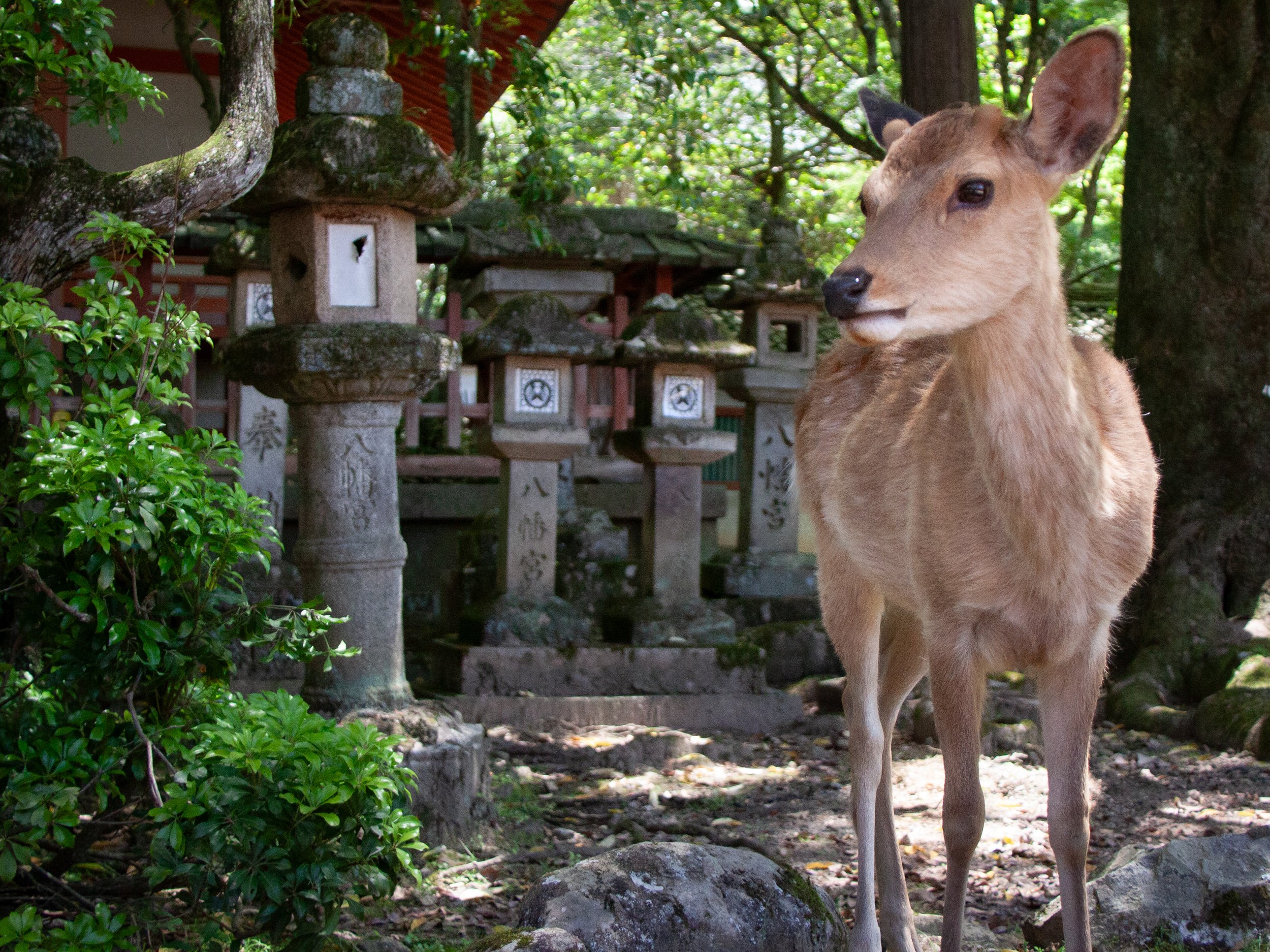
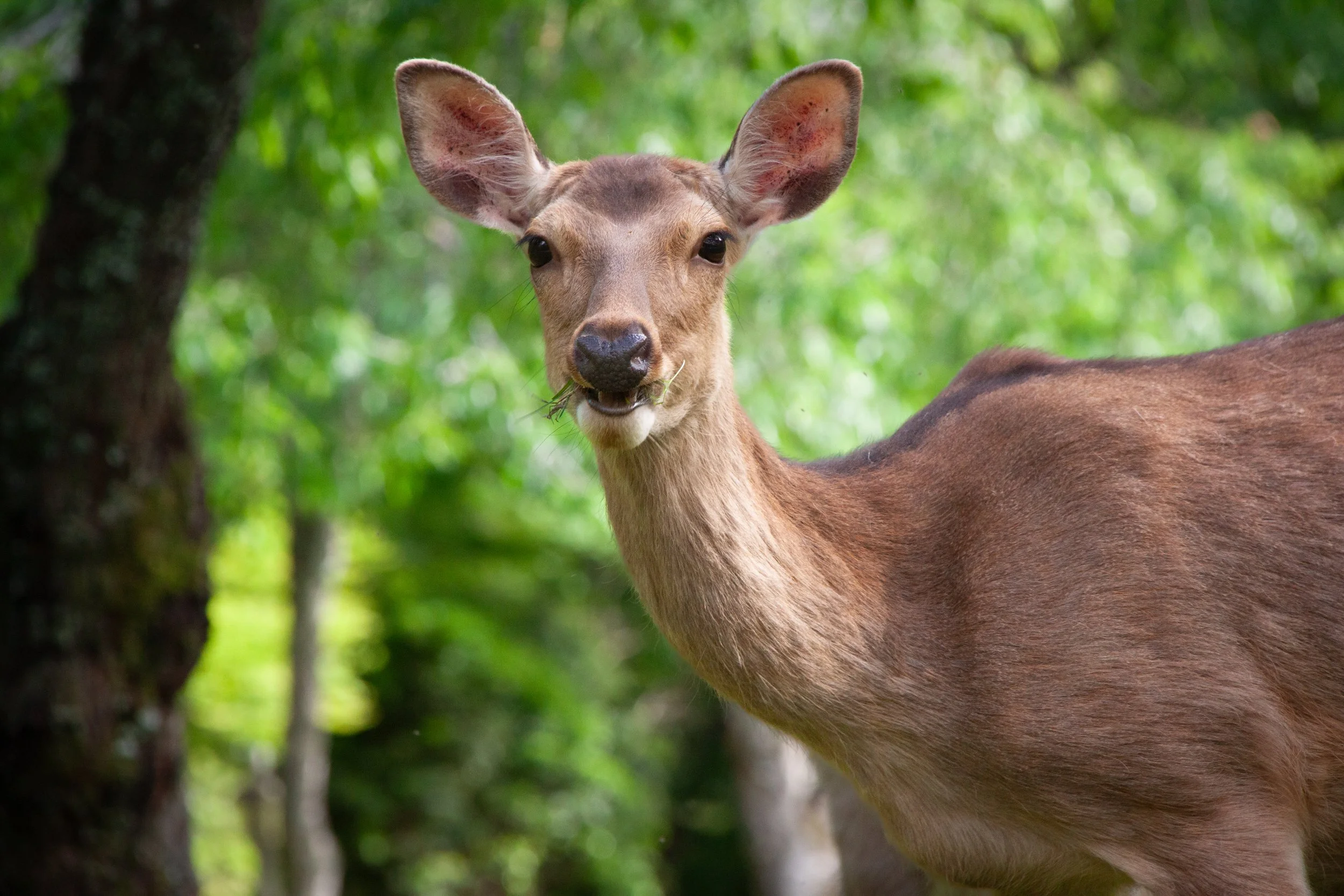
Sika deer are Japan’s most ubiquitous large animals — roaming from Hokkaido's northern tip to the subtropical Kerama Islands — their populations rocketing due to a scarcity of natural predators. In the Shinto religion, these deer are considered sacred messengers of the gods and are revered and protected; most famously in Nara Park, where well over 1,000 deer bow, beg, and bite to be fed “deer crackers.”
-
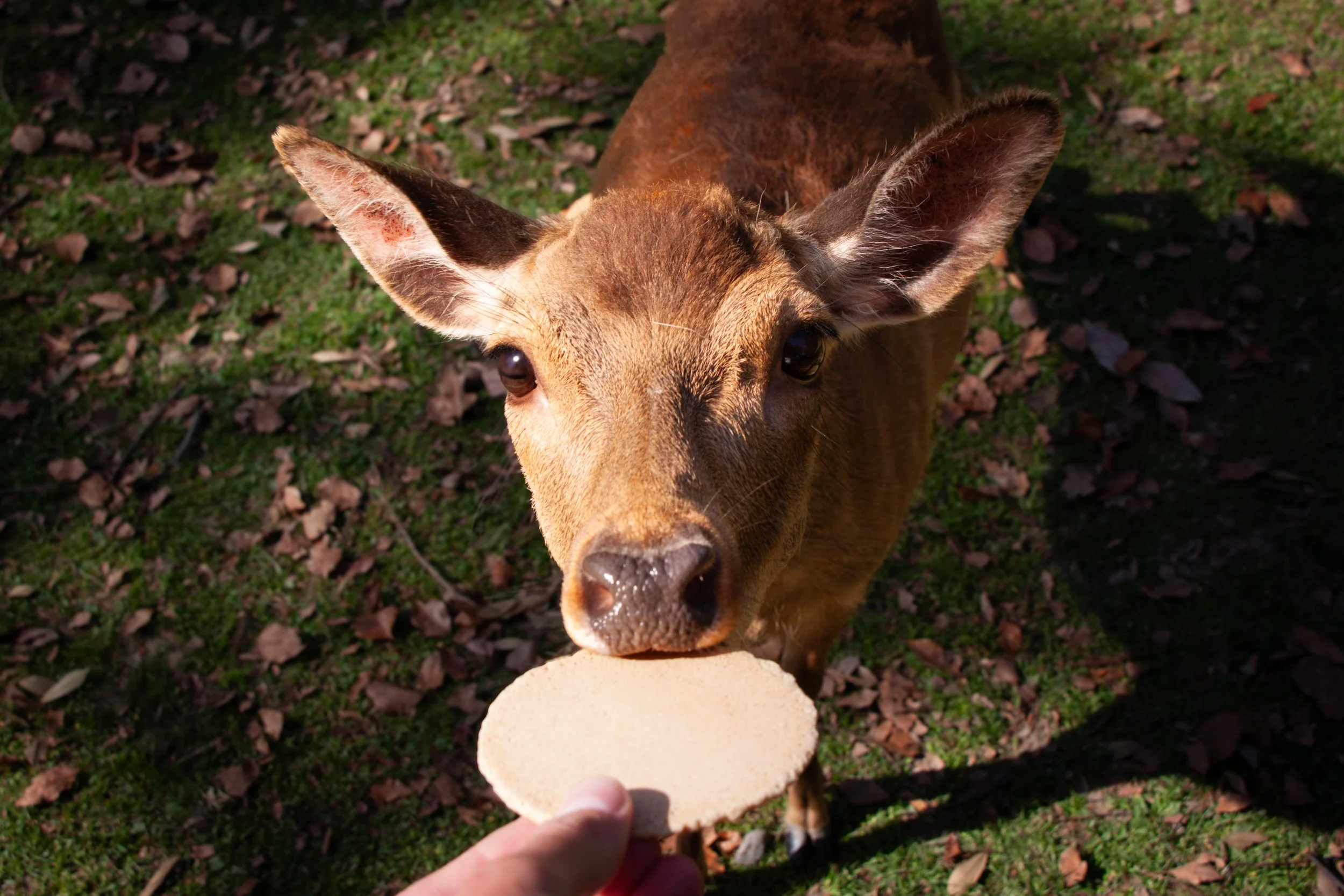
Perhaps nowhere else will you see wild deer in such abundance as in Nara Park — and nowhere else are the deer so bold. Beginning in the centre of Nara and travelling eastwards, you leave behind the concrete and glass city-scape and enter grassy parklands dotted with museums, temples, and shrines. The greenery expands to the north and south, eventually transitioning into forested hills and wilderness run through with hiking routes. All along the way, from the city to the deep woods, you’ll encounter sika deer. Throughout the park, vendors sell cute bundles of “deer crackers,” made specially for feeding the deer and costing ¥200 ($1.5) per stack. The deer do not bother the vendors themselves — likely, although I'm speculating, because the vendors have a firm hand with any thieving deer. But when the deer crackers leave the vendor's hand, all bets are off. In the morning, when the herds are hungry, any park-goer holding a bundle of crackers is all but begging to get mobbed.
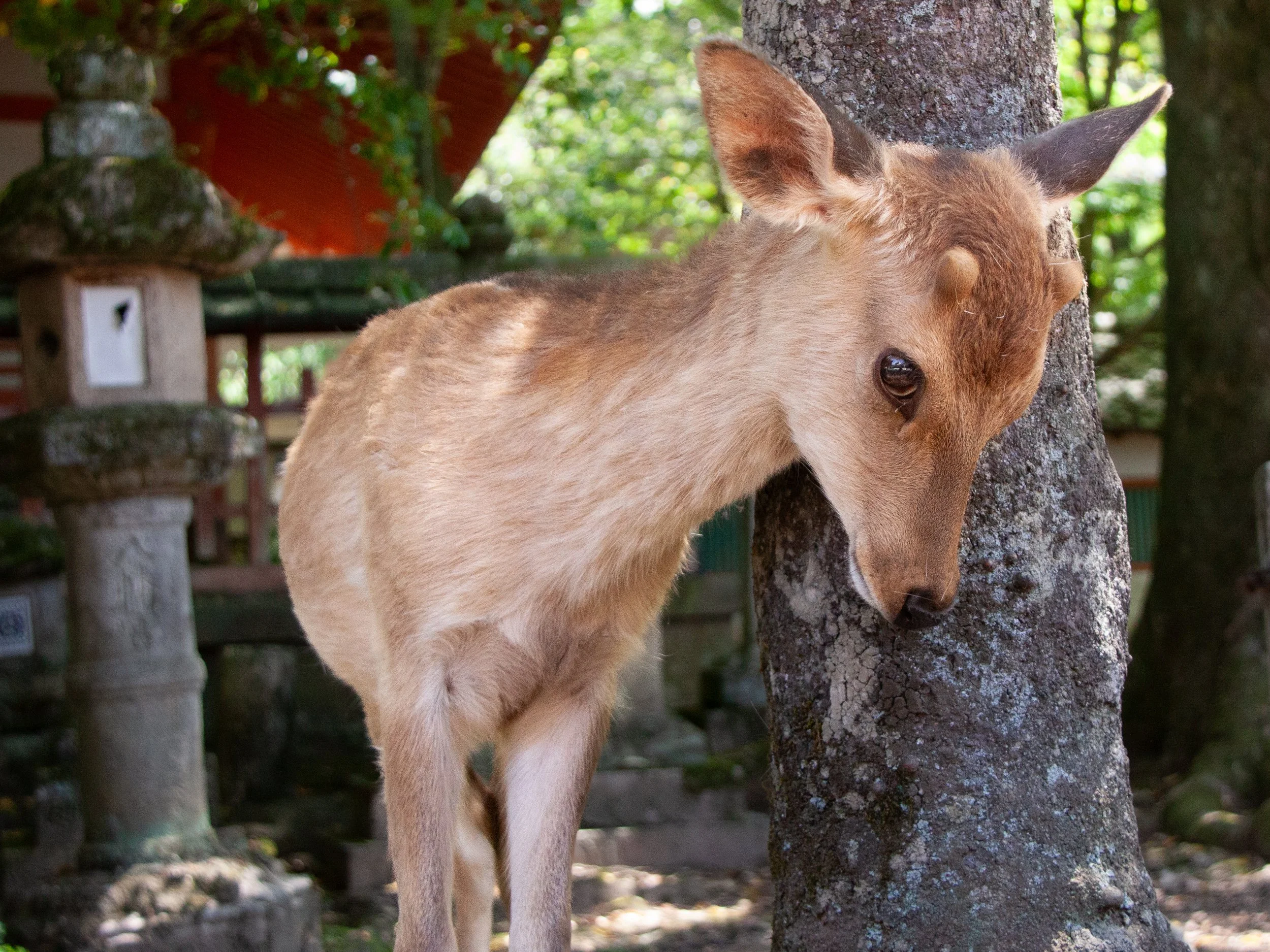
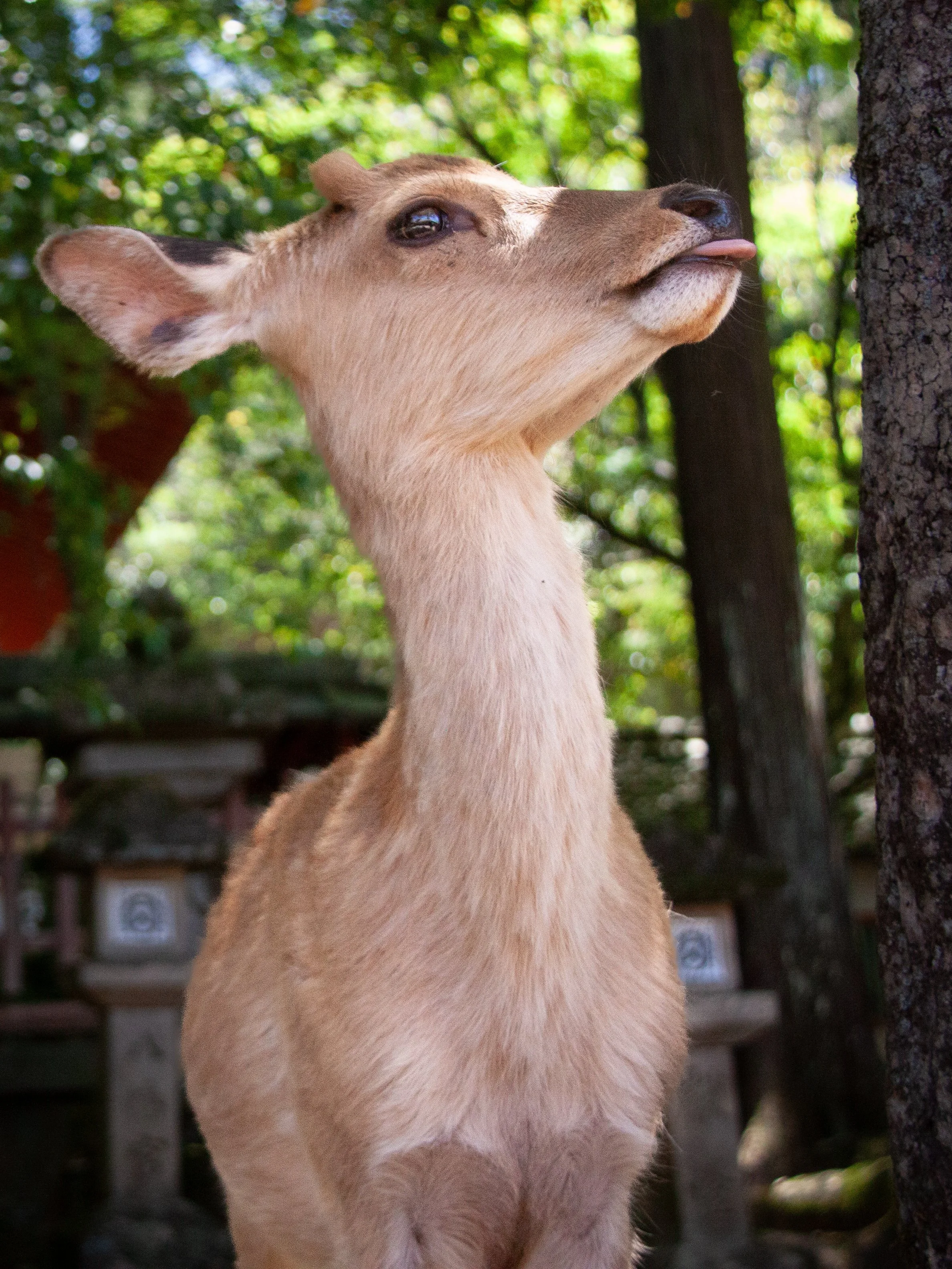
The Nara deer are famous for their manners — “so polite is Japan that even the wild deer bow to you.” But anyone that’s been to Nara will tell you that this is, in most cases, just an act, and an act quickly abandoned. It’s true that the deer will bow enthusiastically to anyone waving around a cracker; at times, so enthusiastically that they appear to be head banging rather than bowing. But, if not promptly fed, and not fed enough, the deers’ “good manners” quickly devolve into headbutting and biting (I got bitten on the butt more than once by a persistent youngster). I also witnessed more than one family become helplessly surrounded by demanding deer, while their young children cried out from fear of the large antlered creatures. To survive Nara Park, one must find a way to dissuade overeager deer. At first I tried to put obstacles between us, standing across small streams or atop tree stumps, but the nimble deer were not thwarted. I did quickly discover one effective method to deter a deer; as soon as I pointed a camera in its face, it would no longer see me as a food dispenser and quickly lost all interest.
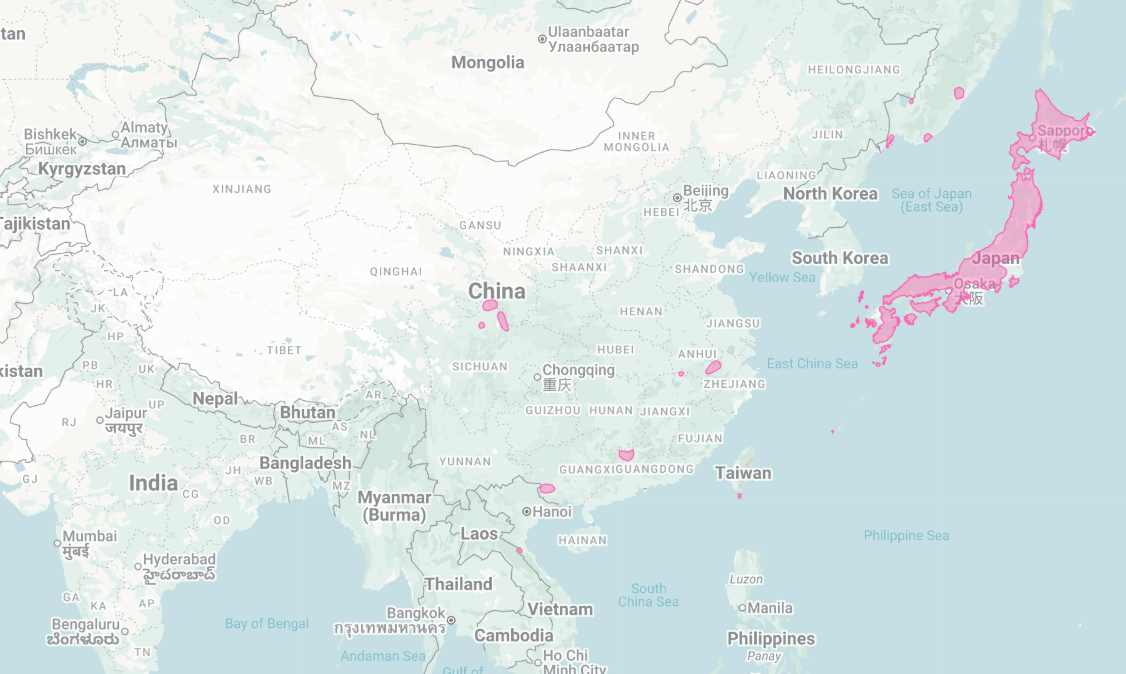
Where Does It Live?
📍 East Asia; including Japan, Taiwan, Korea, eastern China, and southeastern Siberia.
⛰️ Prefers forests, but can range into urban areas.

‘Least Concern’ as of 17 Nov, 2014.
-
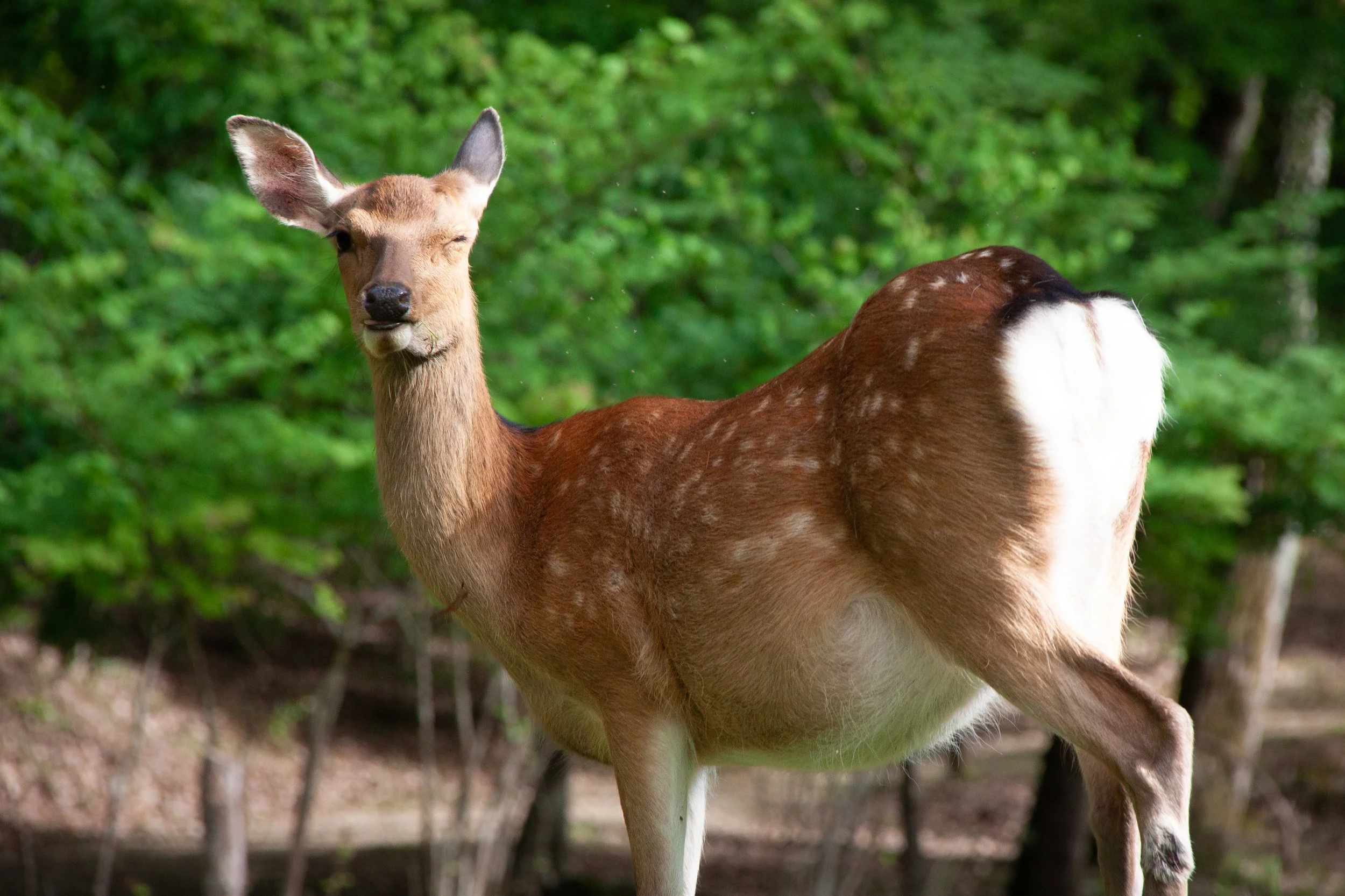
Compared to its deer relatives, the sika is on the smaller side, measuring between 64 and 109 centimetres (2 - 3.6 ft) at the shoulder.
Only male sika deer have antlers, which are velveted from May until August, revealing their sharp points around early September (taking around 130 days to grow after each shed).
The sika deer is primarily a forest animal, although it has adapted well to other habitats including urban ones.
Depending on location, snowfall, and vegetation availability, sika deer are known to migrate between altitudes — climbing and descending up to 700 metres (2,300 ft) in elevation.
The sika deer is polygamous, with some successful males garnering up to 12 females on their territories over a single mating season. Some males may lose between 20-30% of their body weight during the six week season.
In the past, the sika deer’s main predators were wolves, Amur tigers, and leopards. In Japan, where predation pressure today is minimal, sika deer populations grow rapidly — sometimes disturbing species like the Japanese serow.
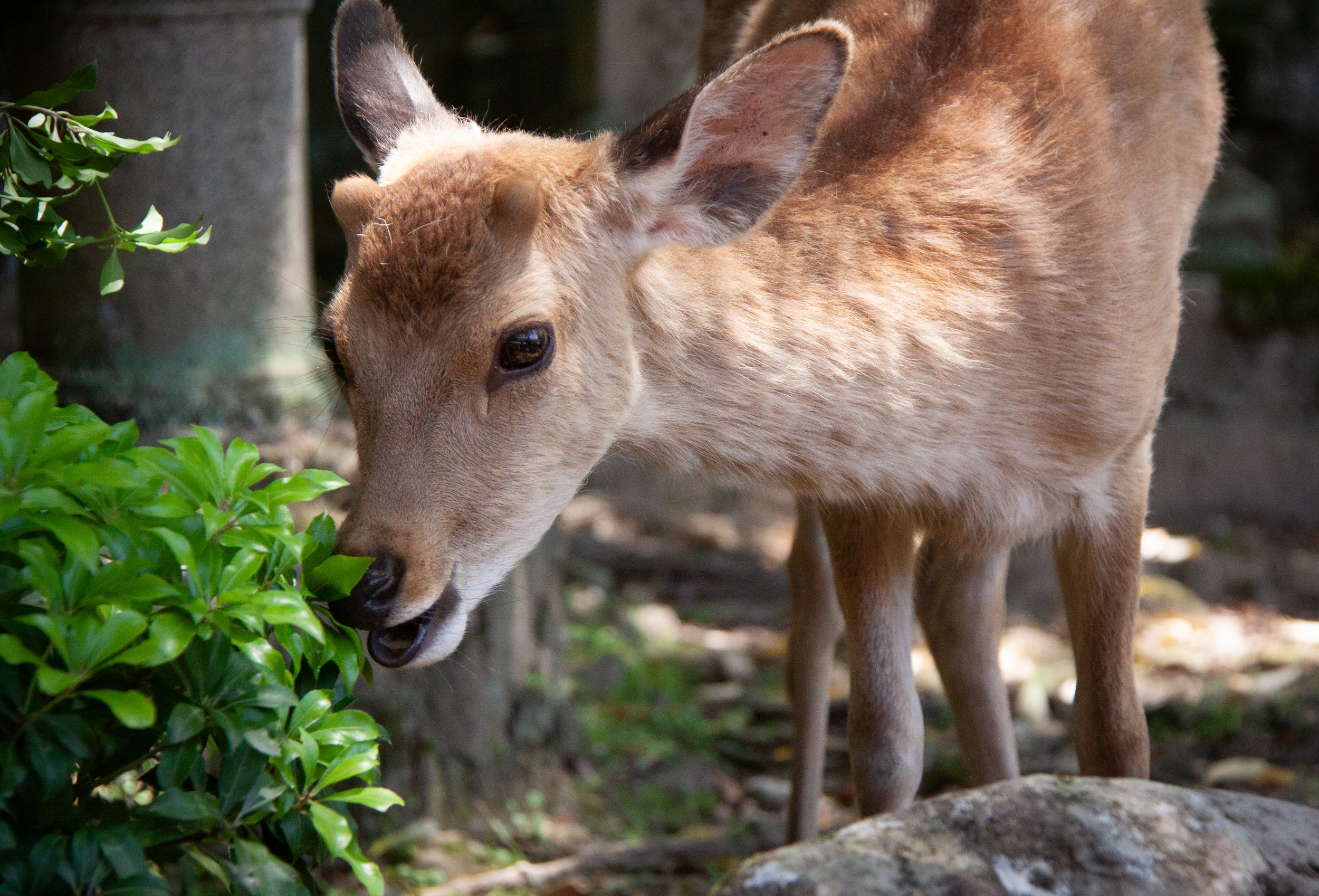
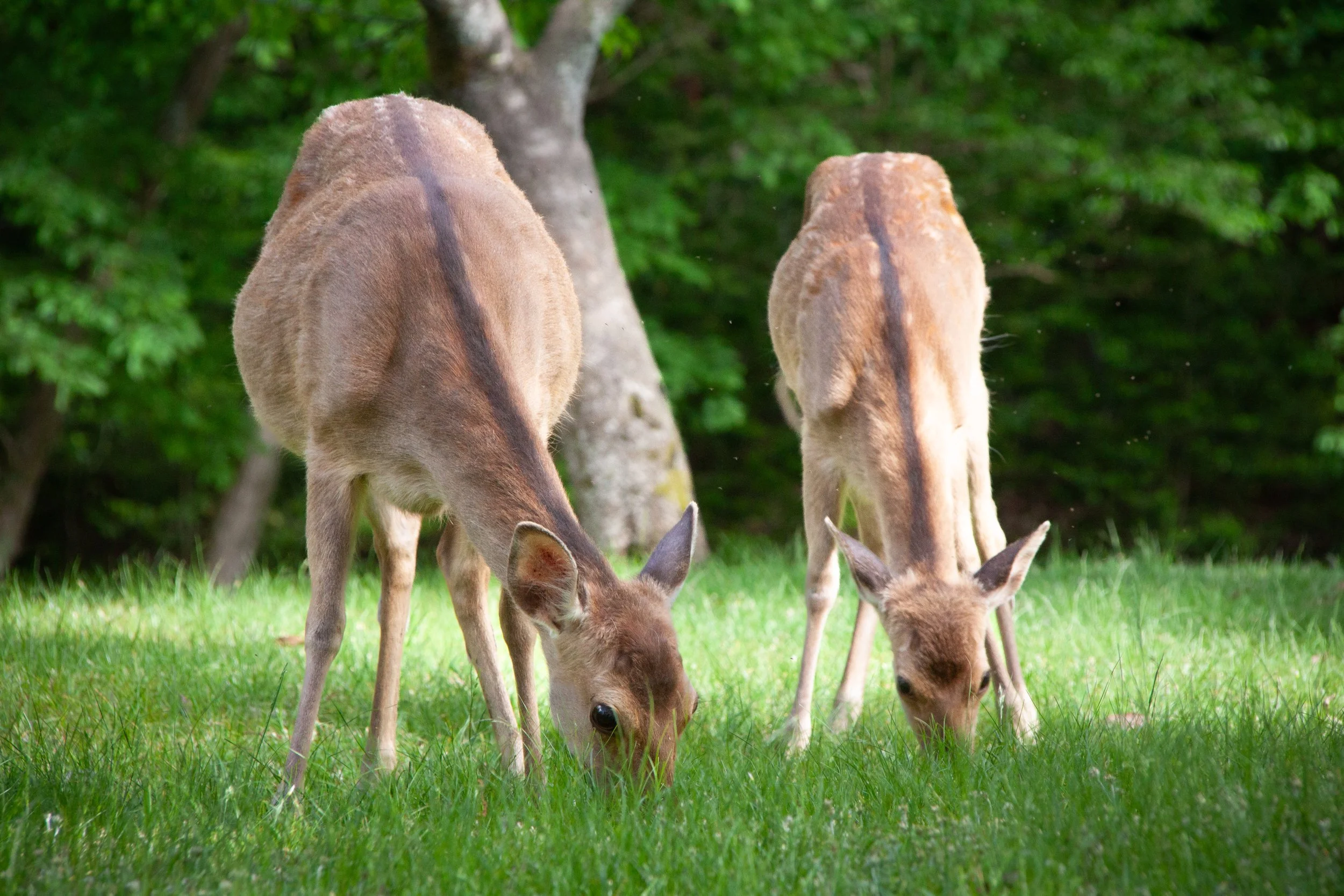
Sika are highly adaptable browser–grazers. In many parts of their introduced range they cause significant bark-stripping damage to trees (especially conifers) which can be severe in young plantations.
Historically, across most of East Asia (with the exception of Japan), sika deer were farmed for their velvet antlers, which were used in traditional medicines.
The name “sika” comes from the Japanese shika (鹿) which just means “deer.”
In the Japanese religion of Shinto, the sika deer is considered sacred and a messenger between humans and kami (spirits or deities).
The sika deer has been introduced to several places outside its native East Asia, including Europe, North America, Australia, and New Zealand — introduced mainly for hunting purposes.
Interbreeding between sika deer and red deer has occurred where the sika has been introduced, with some studies suggesting that the resulting hybrids have an adaptive advantage over their purebred relatives (known as hybrid vigour).