

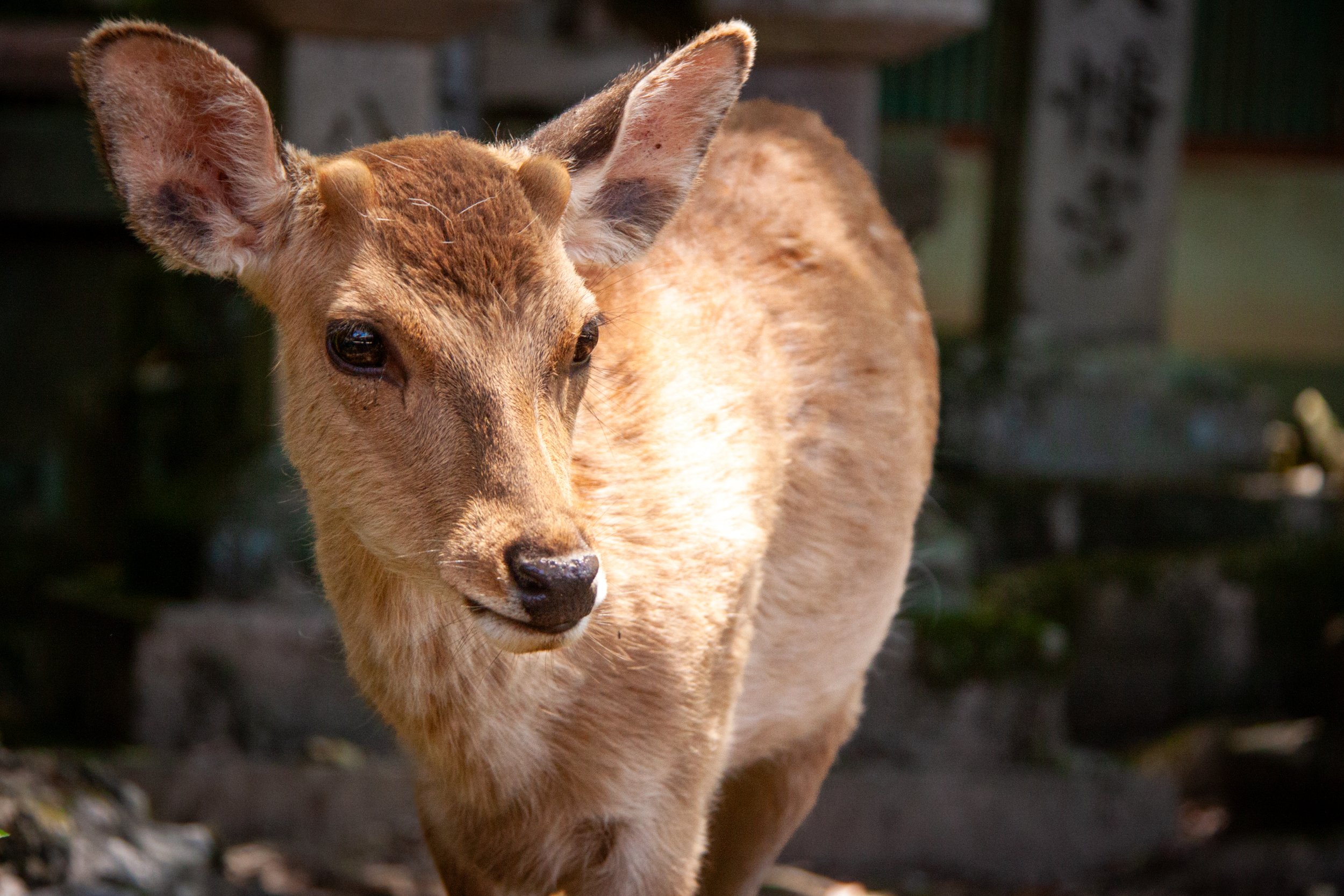
Sika Deer
Sika deer are Japan’s most ubiquitous large animals, with populations rocketing due to a scarcity of natural predators. In Shinto, the deer are considered sacred messengers of the gods and are protected and revered; most famously in Nara Park, where well over 1,000 deer bow, beg, and bite to be fed “deer crackers.”
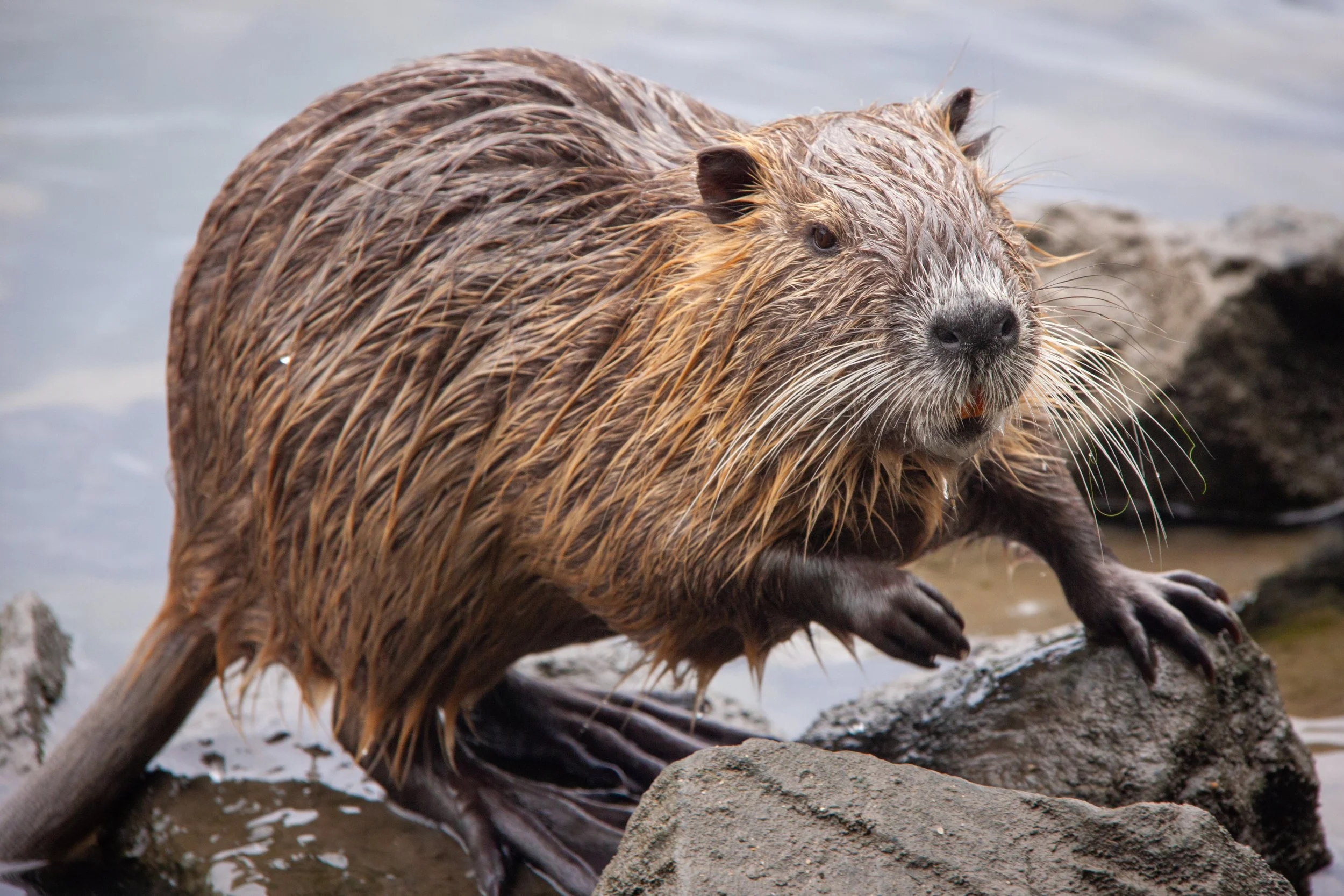
Coypu | Nutria
The coypu, or nutria, is a hefty rodent — weighing up to 10 kg (22 lbs) — native to South America. However, it is now invasive and prolific in the United States, Europe, Kenya, and parts of Asia such as South Korea and Japan. It was introduced to Japan during WWII as a food and fur source. Escaping into the wilds and proliferating, as rodents do, coypu now swim and scamper along the waterways of large cities such as Kyoto and Osaka.
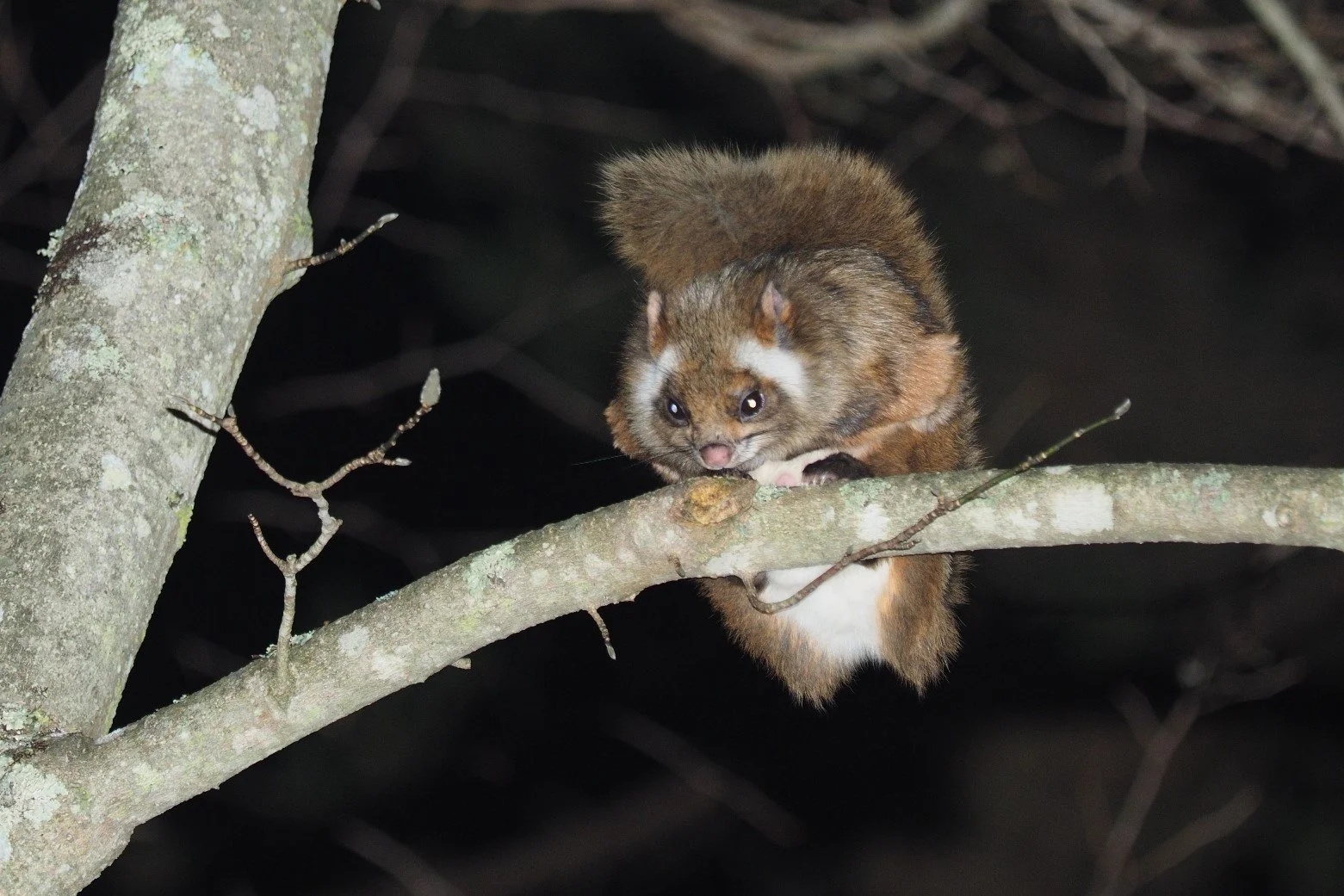
Japanese Giant Flying Squirrel
The Japanese giant flying squirrel is one of the world's biggest squirrel species — weighing up to 1.3 kg (2.9 lbs) — but, using its flying membrane, it can still glide distances of over 100 metres (328 ft). Young squirrels learn to glide a few days after first emerging from their nests.