A Ghost in the Dumbara Mountains
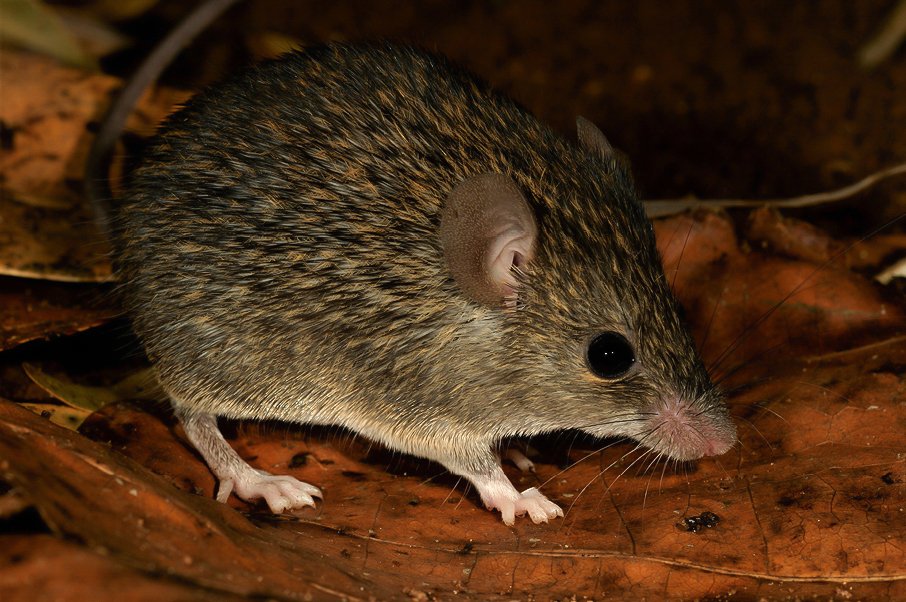
Mus dumbara, a new species of spiny mouse and micro-endemic from the Dumbara Mountains of central Sri Lanka.
Boyagoda SH, Meegaskumbura M, Manamendra-Arachchi K (2026) Mus (Pyromys) dumbara, a new endemic species of spiny mouse (Mammalia, Rodentia, Muridae) from Sri Lanka. ZooKeys 1280: 265-285. https://doi.org/10.3897/zookeys.1280.163907
March 2004, central Sri Lanka.
The Dumbara, or Knuckles Mountains punch into the sky; five prominent peaks forming the knuckles of a clenched fist. In the misty valleys, in a “forest surrounding a paddy field,” researchers check their pitfall trap and find a mouse. Six days later, they find another in one of their box traps.
Nothing much was made of these two females: unassuming, medium-sized rodents with white bellies and speckled, brownish-grey coats covered in fine, spiny guard hairs. Apart from their oddly long tails, they looked remarkably ordinary.
They were clearly a species of Mus — that is, they belonged to the mouse genus, alongside species like the house mouse (Mus musculus), and 40 others found all over the world.
Sri Lanka is home to a fair share: the house mouse, of course, the common Indian field mouse (M. booduga), and the endemic Ceylon spiny mouse (M. fernandoni) and Mayor's mouse (M. mayori).
The two captured females were noted as "resembling Mus mayori,” Mayor’s mouse, and that was it. Little did the researchers know, they had caught a ghost.
———
A decade passed before anyone went back to Dumbara to search for these mice.
At some point, someone took a closer look at the two specimens and began noticing anomalies. To get a better picture of what exactly these mice were, they’d have to go find more.
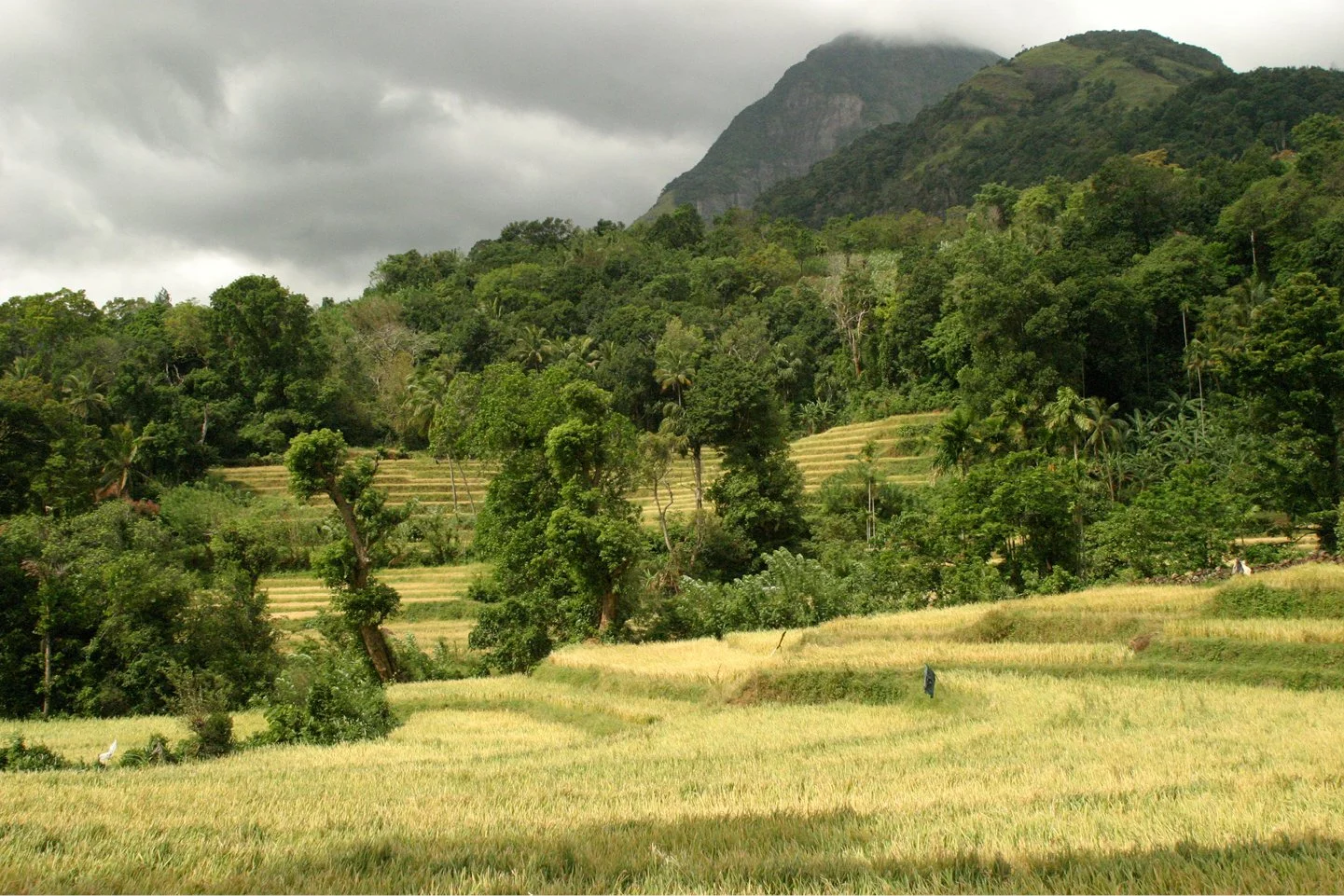
“Type locality of Mus dumbara at Puwakpitiya, a forest edge adjacent to a paddy field.”
In 2014 and 2015, researchers once again packed the valley with pitfall traps dug between knee-high walls that ran for 30 to 50 metres, and scattered mechanised box traps baited with roasted coconut, just as they had before. The work amounted to 1,900 “trap nights” — a unit of measurement used to quantify the total amount of effort invested into trying to capture animals during a survey.¹
They caught not a single individual of this ghost mouse. It’s as if they had all vanished.
———
All the researchers had, then, were the two original specimens.
The skulls: removed, boiled and cleaned. The skins: dried and preserved. And a muscle tissue sample: preserved in 90% ethanol for DNA extraction.
Among other cranial characteristics, they found that the skull of this new mouse had “moderately prominent” ridges above its eye sockets, distinguishing it from Mus mayori (Mayor’s mouse), which had none. It had “a tail distinctly longer than its combined head and body length,” unlike its close relative Mus fernandoni (the Ceylon spiny mouse).²
Its anatomy was compared against Mus after Mus, and proven to be distinct, a new species: Mus dumbara sp. nov. The Dumbara spiny mouse.
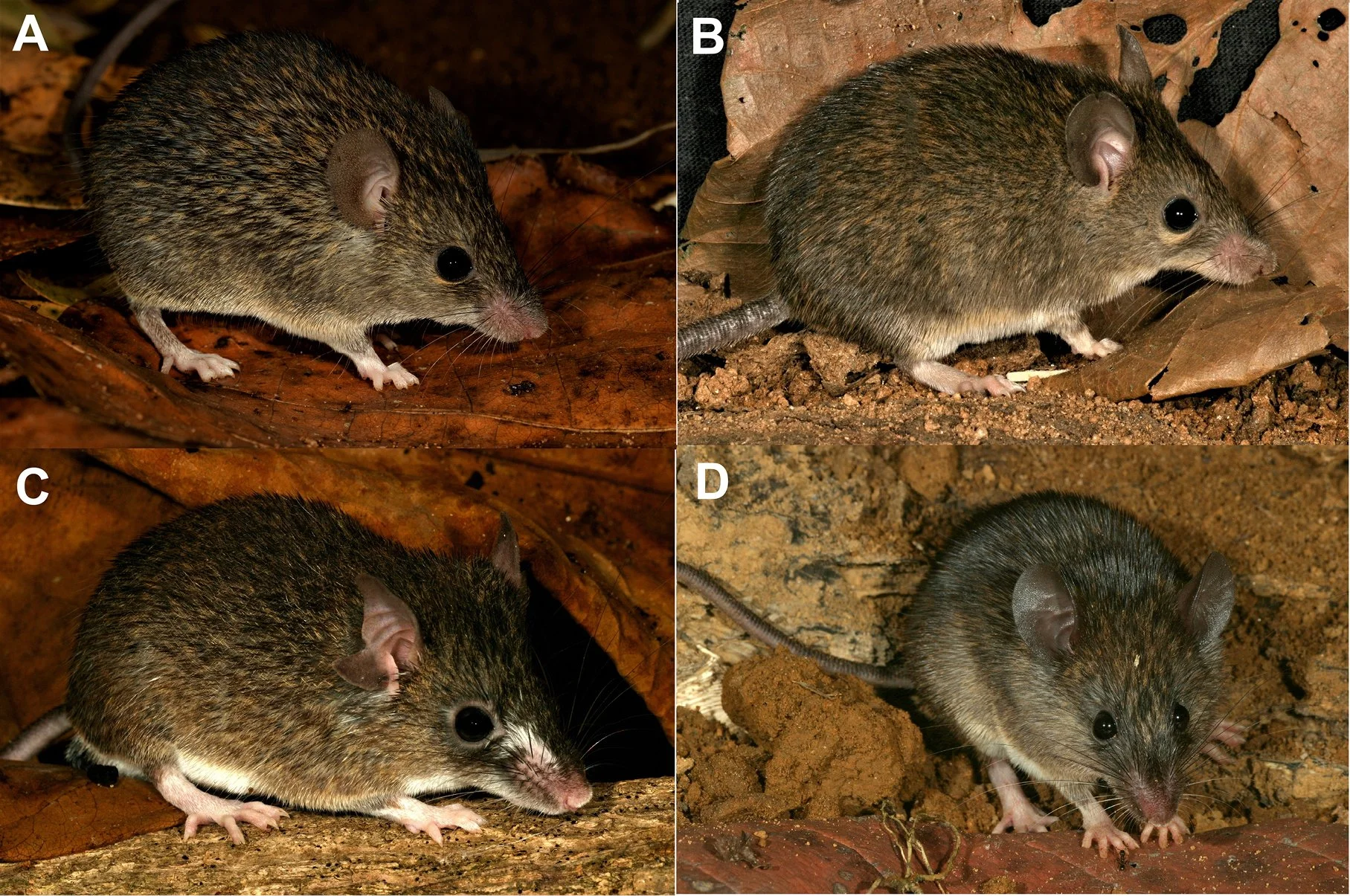
“Live specimens of spiny mice from Sri Lanka showing the external similarity. A. The new species Mus dumbara; B. Mus fernandoni; C. Mus mayori , a specimen with a tail having white ventral side; D. Mus mayori, a specimen with a brown tail. Photographs by MM and SHB.”
The Mus genus isn’t an easy one for taxonomists to work with. The entire genus is thought to be characterized by "rapid radiation”; that is, rapidly splitting and evolving new species. And because the genus is now so large and diverse, scientists have divided it into four smaller groups called subgenera.
Mus dumbara is more specifically known as Mus (Pyromys) dumbara. It was placed into the Mus subgenus Pyromys based on physical characteristics like its skull structure (and long openings in the roof of the mouth reach back as far as the middle of the first upper molar), which it shares with the Ceylon spiny mouse — Mus (Pyromys) fernandoni — but not Mayor’s mouse — Mus (Coelomys) mayori — which belongs to a different subgenus.
But skin and bone only reveals so much.
The researchers extracted DNA from the preserved muscle tissue and analysed three genetic markers, comparing the Dumbara spiny mouse against its two closest regional neighbours. The data from the mitochondrial cytochrome-b gene revealed a genetic divergence exceeding 11.7% for both species.³ This falls well within the range that would denote a new species (2–20%), and suggests that this “new” Dumbara spiny mouse has actually been around as a distinct species for a while, possibly for millions of years.⁴
———
The Dumbara spiny mouse was announced to the world on 26 May 2026, described from two specimens collected in 2004. The subsequent failure to find it again in 2014–2015 really does beg the question: how do we know that it’s not already extinct?
We don’t, not for sure. But we do have reason to hope it’s still alive.
The authors who described Mus dumbara explain just how particular of a species it might be.
For one, it is a tropical island resident, and island species are not infrequently confined to single, tiny areas. It’s possible that the mouse is mostly restricted to a single valley, at a specific elevation. Perhaps the original two individuals were caught at the very edge of the species’ range. The Dumbara spiny mouse might just be a ‘micro-endemic’ whose micro-range we just haven’t pinpointed yet. Maybe it evolved to fill a very particular niche, as island species also tend to do.
Montane habitats like the Dumbara Mountain Range are described as “species pumps.” As the global climate cools during glacial periods, montane habitats expand, allowing species to disperse and move between different areas. A montane mouse species is “pumped” out across the lowlands. Then, during interglacial warming, these habitats contract, and populations become re-isolated in high-altitude mountain pockets. That single mouse species, now split among many fragments, isolated, evolves to become many species. As ranges expand and contract, those new species will periodically need to live alongside one another, so they will come to occupy more specific niches in increasingly granular habitats.⁵
But all of that doesn’t mean the Dumbara spiny mouse isn’t vulnerable.
It is exactly these kinds of specialist species that are now suffering the world over. M. dumbara’s two relatives and closest neighbours — Mayor’s mouse and the Ceylon spiny mouse — “have restricted distribution due to fragmentation of their habitats” and are respectively Vulnerable and Endangered.
———
The name of these mountains in the local Sinhalese is Dumbara Kanduvetiya: the Mist-laden Mountain Range. The “Knuckles Mountains” comes from the British. Both of these names embody something about the mountains, beyond literal descriptors of weather and topology.
The Dumbara Mountains offer protection in the form of “refugia” — pockets of habitat that remain stable, even as the climate oscillates elsewhere. The mountains also offer refuge from us. The entire range, in fact, is a protected UNESCO World Heritage Site. The mist-laden mountains hide their species from the destructive forces of the wider world.
On the other hand, the Knuckles Mountains keep a tight grip on their residents. Those refugia both protect their species, but also make them exceptionally vulnerable, for if the refuge vanishes, so do they. It’s as the authors state: species “confined to small, isolated ranges are particularly vulnerable to habitat loss and climate change".
What to do?
As long as the Dumbara spiny mouse remains a “ghost,” there’s not much we can do.
“The limited range of M. dumbara underscores the need for targeted studies.” We study its “ecological requirements, population structure, and potential threats” — we make it corporeal — then we can find a way to help. Another 1,900 trap nights, if that’s what it takes.
¹ A "trap night" is standardly defined in ecology as one trap set for one night. For example, if you set 100 traps for 19 nights, that equals 1,900 trap nights.
² In fact, no other species in its subgenus has this trait.
³ The researchers also analysed a nuclear gene (Rag1), which showed a much lower uncorrected genetic divergence of only 1.13–3.11%. However, a low percentage of nuclear divergence is a standard characteristic for valid species within the Mus lineage and does not suggest they are the same species.
⁴ “Thus, morphological distinctiveness and molecular divergence provide multiple lines of evidence to support our contention that M. dumbara represents a distinct species of murine rodent.”
⁵ As an example, we know that M. dumbara is adapted to lower elevations, because we’ve only found it at around 370 metres (1,213 ft), while M. mayori is more prevalent at higher altitudes: 980 to 2,150 metres (3,215–7,050 ft). Two different, altitudinal niches.
-
Boyagoda SH, Meegaskumbura M, Manamendra-Arachchi K (2026) Mus (Pyromys) dumbara, a new endemic species of spiny mouse (Mammalia, Rodentia, Muridae) from Sri Lanka. ZooKeys 1280: 265-285. https://doi.org/10.3897/zookeys.1280.163907
de Alwis Goonatilake, S. 2024. Mus mayori. The IUCN Red List of Threatened Species 2024: e.T13969A22405572. https://dx.doi.org/10.2305/IUCN.UK.2024-1.RLTS.T13969A22405572.en. Accessed on 28 May 2026.
de A. Goonatilake, W.L.D.P.T.S. 2019. Mus fernandoni. The IUCN Red List of Threatened Species 2019: e.T13961A22404354. https://dx.doi.org/10.2305/IUCN.UK.2019-1.RLTS.T13961A22404354.en. Accessed on 28 May 2026.
UNESCO World Heritage — Central Highlands of Sri Lanka
United Nations Development Programme (UNDP) — guardians of the ‘Knuckles’ Range