The Nagao Odorous Frog
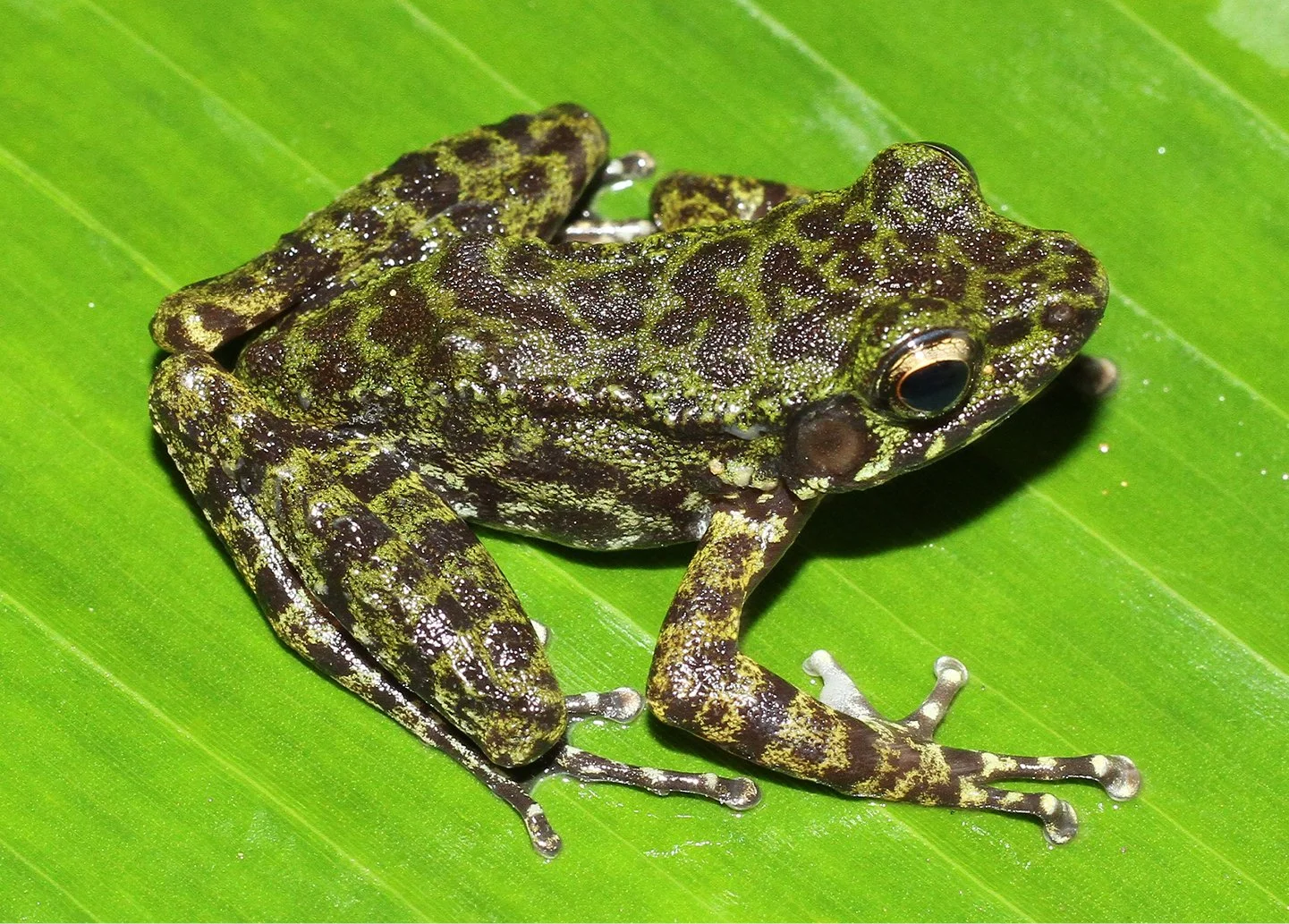
Odorrana nagao, a new species of odorous frog from karst forest in Vietnam.
Pham CT, Hoang CV, Nguyen MHT, Nguyen TQ, Ngo HN, Le DT, Ziegler T (2026) A new species of Odorrana (Anura, Ranidae) from the limestone karst forest of northern Vietnam. ZooKeys 1280: 245-263. https://doi.org/10.3897/zookeys.1280.192981
It is April of 2019. The nighttime air is humid and pleasantly warm in the karst forests of northern Vietnam. This vertiginous landscape, sculpted from limestone, has been bored full of holes — tunnels and caves — by rain and running streams. In and around a few of those caves, at elevations between 641 and 773 metres (~2,100–2,530 ft), a frog is discovered and photographed. Five specimens are collected, anaesthetised, and euthanised in a closed vessel with a piece of cotton wool containing ethyl acetate, then transferred into ethanol for storage.
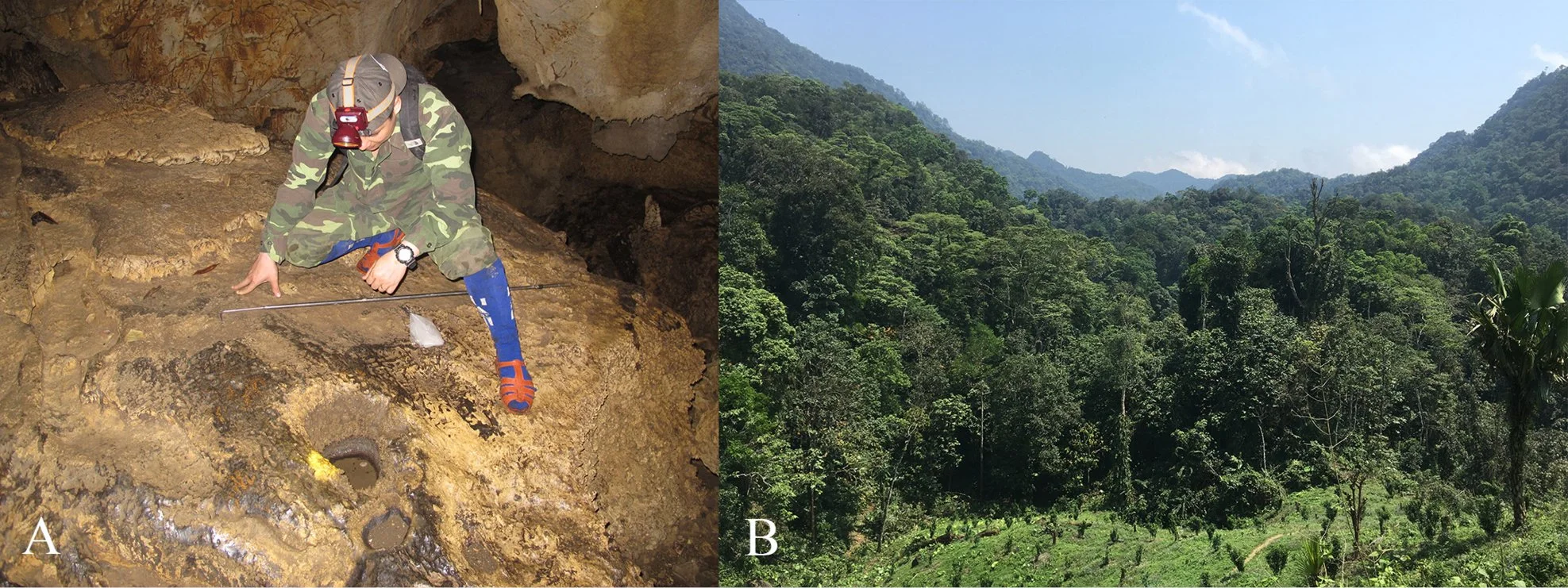
“Natural habitat of Odorrana nagao sp. nov. in Cham Chu Nature Reserve, Tuyen Quang Province, Viet Nam: A. Microhabitat and B. Limestone karst forest habitat.”
A little over seven years later, these specimens are described as a new species.
Odorrana, the odorous frogs, are named for the remarkably foul, skunk-like odor they emit from specialized skin glands. Many odorous frogs also have exceptionally pointed snouts that give them their other common name: tip-nosed frogs. Found from South to East to Southeast Asia, these anurans make up a large and quickly-growing genus; with some 70 known species to date, more than 20 of which were described in the past ten years.
Odorrana nagao sp. nov. is the most recent.
Published on 22 May 2026, the paper describes this new species, the ‘Nagao odorous frog,’ in relation to its congeners.
O. nagao, measuring between 37.4 and 54.7 millimetres (1.47–2.15 in) long, is smaller than O. liboensis.¹ It differs from O. feii in its tympanum-diameter to eye-diameter (TD/ED) ratio — a metric measuring the relative size of a frog’s external eardrums to that of its eyes. O. nagao’s fingers are of relatively different lengths (first finger larger than second) compared to the fingers of O. liboensis (opposite), with different “webbing formulas.” And O. nagao male’s lack external vocal sacs; unlike O. absita, O. amamiensis, O. anlungensis, and 50 other listed Odorrana species.
Odorrana nagao differs from its many congeners in multiple small morphological ways, all of which pile up as evidence of its species-hood.
It is the twenty-sixth Odorrana species discovered in Vietnam. However, its nearest known relative — O. liboensis from Vietnam’s Ba Be National Park some 74 kilometres away — is not its closest relative. A comparison of two gene sites between the two species show a divergence of 3.75% (gene 16S rRNA) and 9.49% (gene COI). O. nagao’s closest known relative was actually found to be O. feii, a species from the karst caves of Guizhou, China, around 556 kilometres away.²
Limestone peaks, deep green valleys, and winding rivers — karst landscapes stretch from China, down through Southeast Asia, and across to western Melanesia. The forests that cover these landscapes are known as “terrestrial islands,” because they create a variety of isolated microhabits and, consequently, a diversity of endemic species.
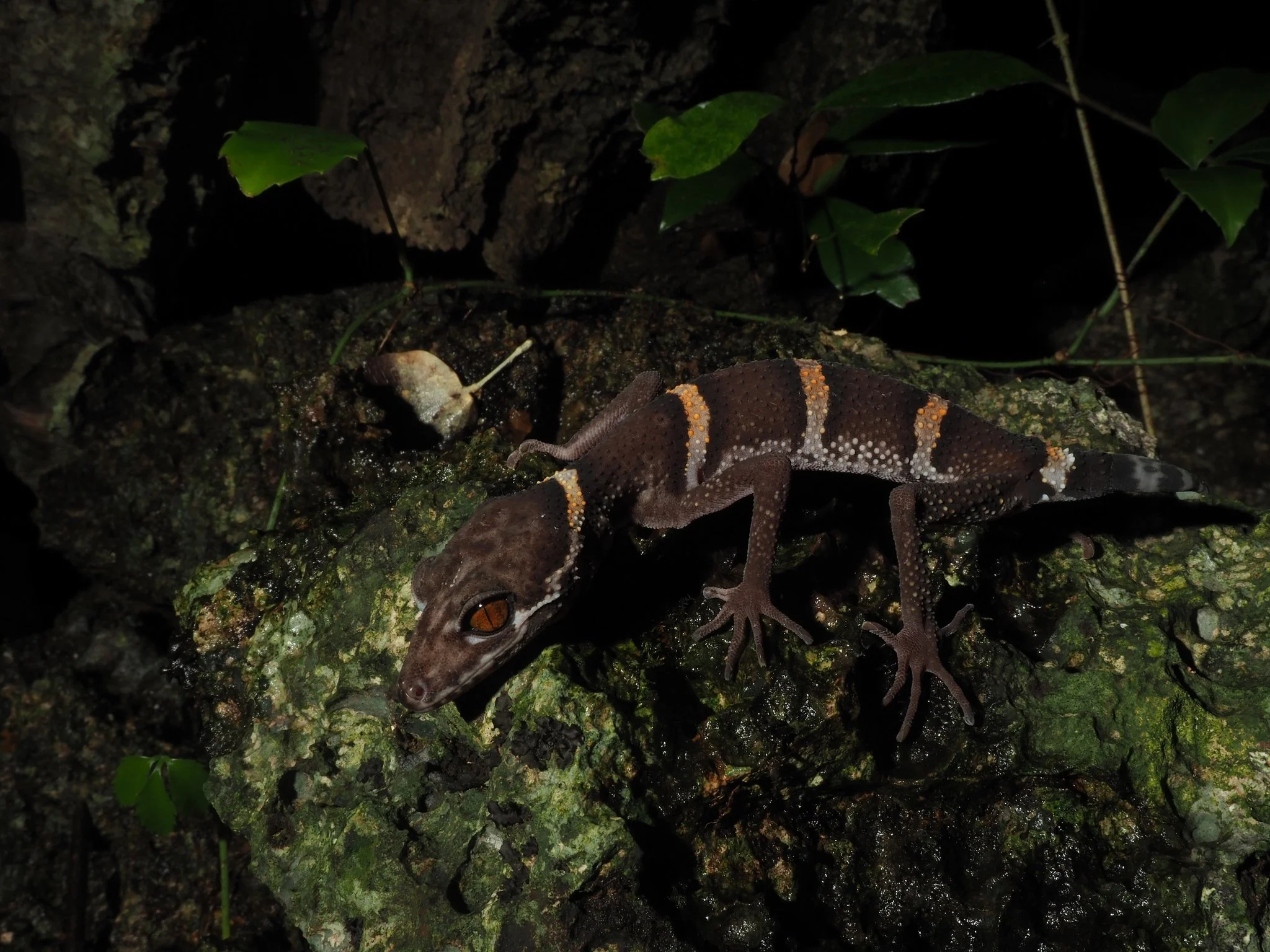
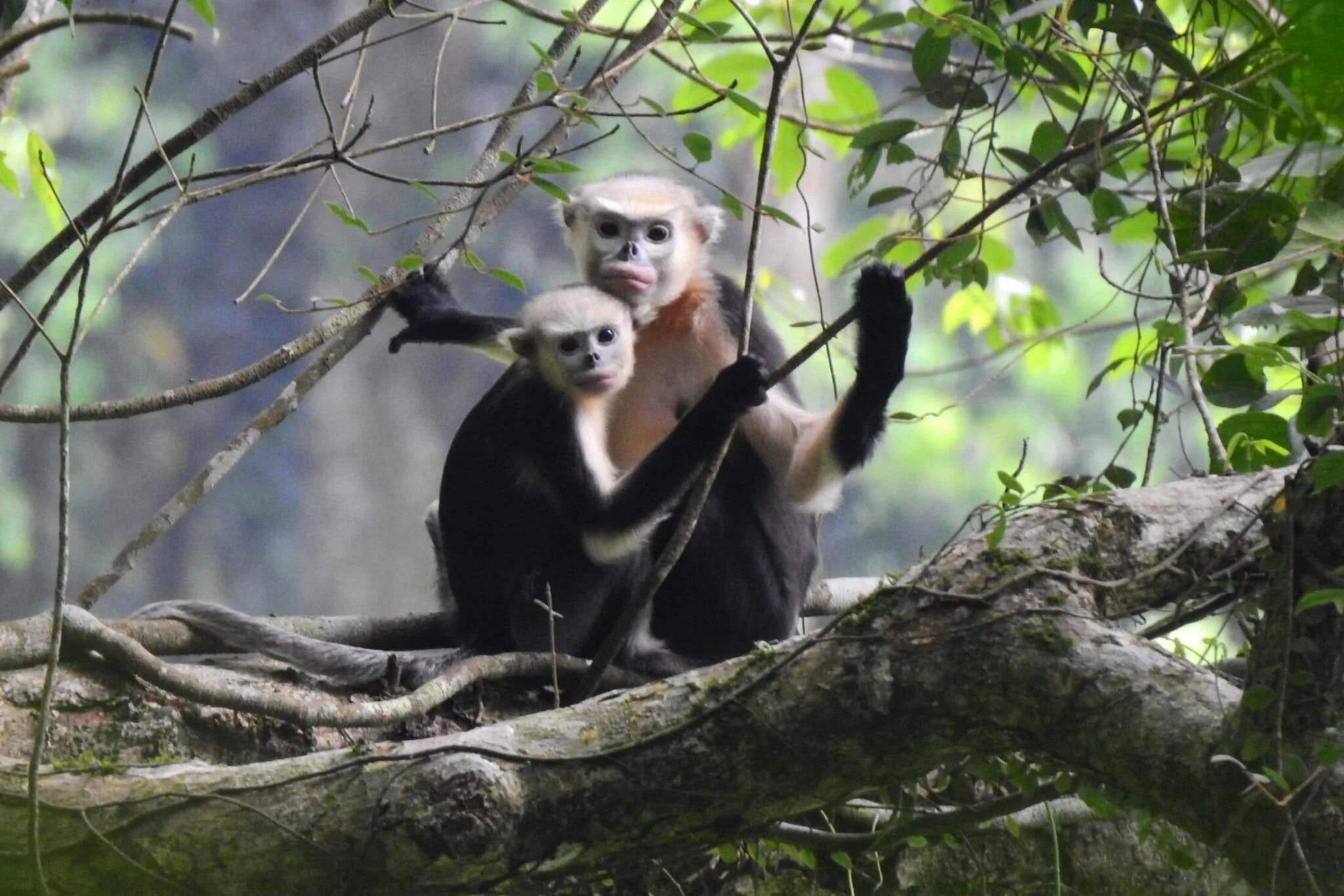
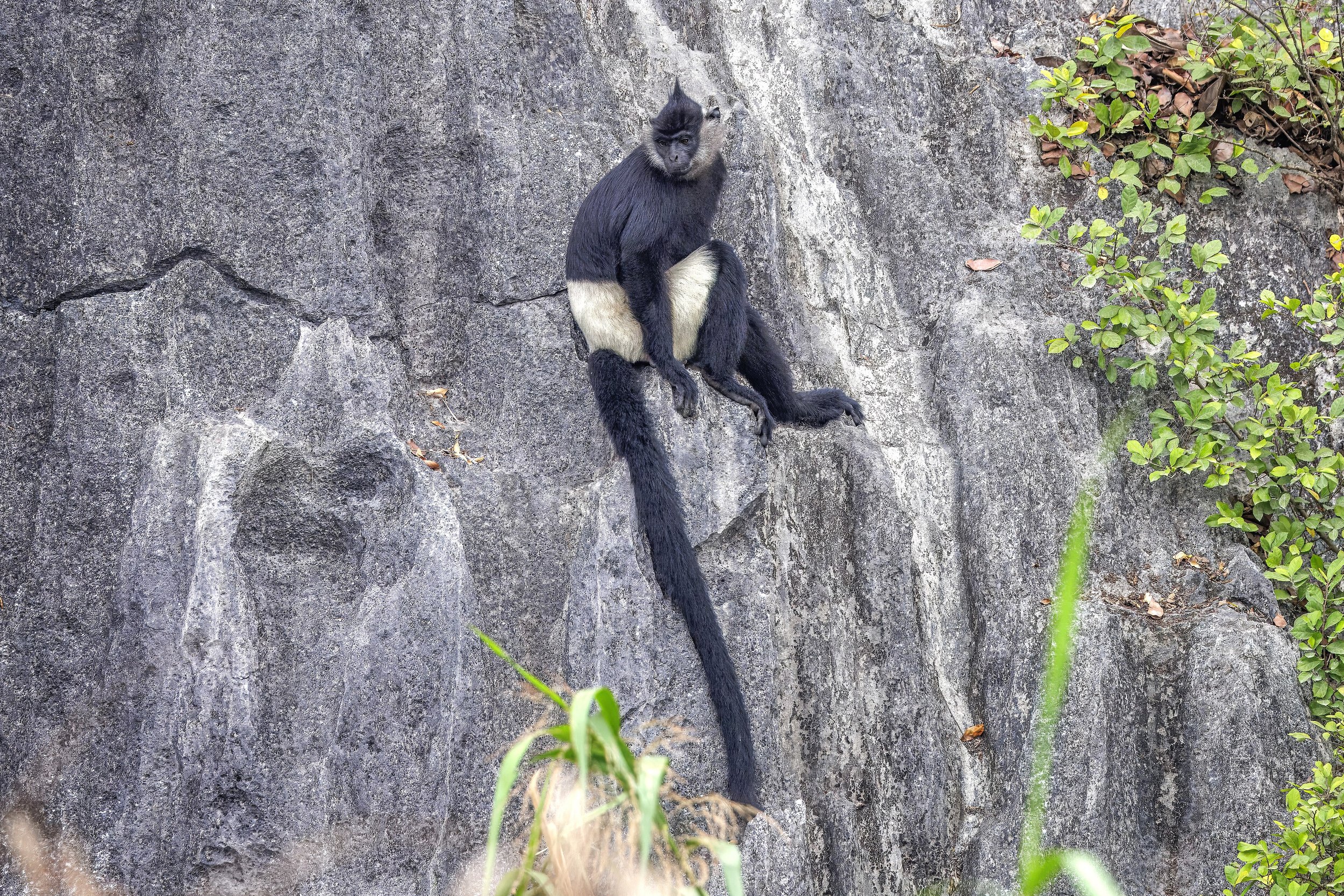
The Huu Lien tiger gecko uses its clawed digits to climb the limestone of Huu Lien Nature Reserve, while the stone litter toad mimics damp limestone rubble to evade predators. And it’s not just reptiles and amphibians; Vietnam’s karst landscapes are home to the critically endangered Tonkin snub-nosed monkey and Delacour’s langur, who can clamber and jump across razor-sharp limestone thanks to specialised pads on its hands and feet.
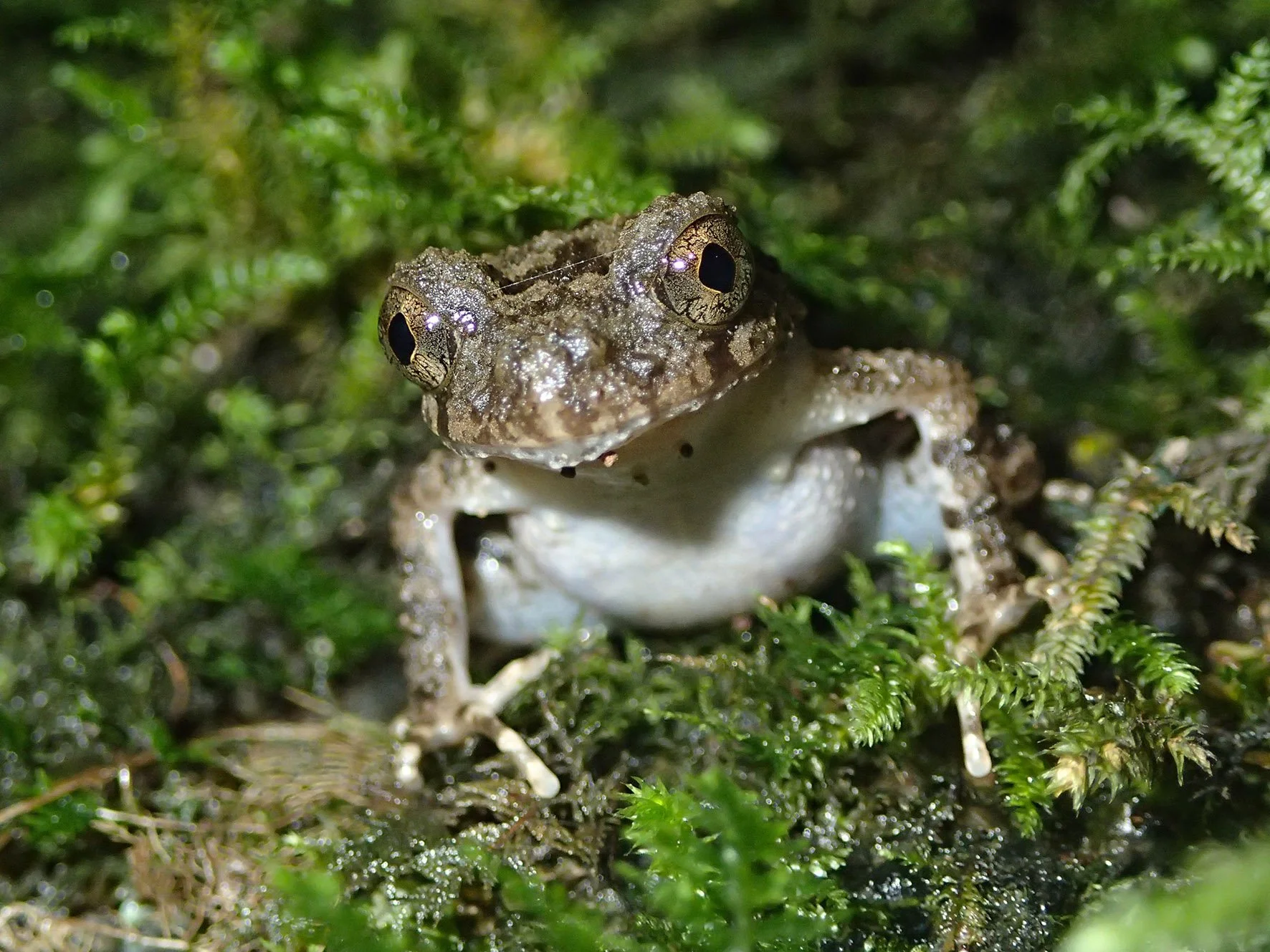
In northern Vietnam’s Cham Chu Nature Reserve, where both the new Nagao odorous frog and stone litter toad were found, the researchers also noted a diversity of other anuran species: Asian common toads, tiny Butler’s rice frogs, and clicking Asian grass frogs in the leaf litter; Hainan frilled tree frogs, northern whipping frogs, and Orlov’s tree frogs clinging to vertical surfaces and overhanging vines.
Vietnam as a whole is an incredibly biodiverse country, and there are many organisations, both local and foreign, invested in uncovering and protecting that biodiversity. This includes the Japanese Nagao Natural Environment Foundation, after which this new species is named. Even so, karst landscapes, often steep and inaccessible, are naturally difficult for researchers to traverse.³
With that in mind, what does the geographical distance between O. nagao and the genetically-similar O. feii mean? It likely means that the Odorrana genus, already among the most diverse of all amphibian genera, is only going to grow as researchers search the karst-dominated border regions of Vietnam and China: from O. nagao’s karst caves in Cham Chu to O. feii’s karst caves in Guizhou, over 500 kilometers away.
¹ The Nagao odorous frog is medium-sized for its genus, with females being larger than males.
² The divergence between O. nagao and O. feii is 2.33% for gene 16S rRNA and 6.33–6.52% for gene COI.
³ Karst landscapes are also among the least-known, and most threatened habitats on the planet. Polluted waters seep through the porous limestone and are distributed across great distances by the many underground rivers. Entire karst towers are obliterated by industrial quarrying for cement. And large crowds of tourists bring heavy foot traffic, waste, and artificial light. So sensitive are these habitats that the increased carbon dioxide levels from visitors can fuel the growth of invasive algae and mosses, posing a threat to the ecosystems.
-
Li S, Mu L, Jing J, Liu J, Cheng Y, Wang B (2025) A new species of the genus Odorrana (Amphibia, Anura, Ranidae) from Guizhou Province, China. Zoosystematics and Evolution 101(4): 1949-1964. https://doi.org/10.3897/zse.101.161151
Fauna & Flora — what is karst and why should we care about it
Fauna & Flora — Delacour's langur
Citizen Conservation — Huu Lien tiger/leopard gecko
Orlov, Nikolai & Ryabov, S.A. & Nguyen, Tao & Nguyen, Truong & Ho, T.C.. (2008). A new species of goniurosaurus (Squamata: Sauria: Eublepharidae) in North Vietnam. Russian Journal of Herpetology. 15. 229-244.
Rowley, J.J.L., Dau, V.Q., Hoang, H.D., Le, D.T.T., Cutajar, T.P. & Nguyen, T.T. (2017) A new species of Leptolalax (Anura: Megophryidae) from northern Vietnam. Zootaxa, 4243 (3), 544–564. https://doi.org/10.11646/zootaxa.4243.3.7
Grobbelaar, Johan. (2000). Lithophytic algae: A major threat to the karst formation of show caves. Journal of Applied Phycology. 12. 309-315. 10.1023/A:1008172227611.