Anthus antarcticus
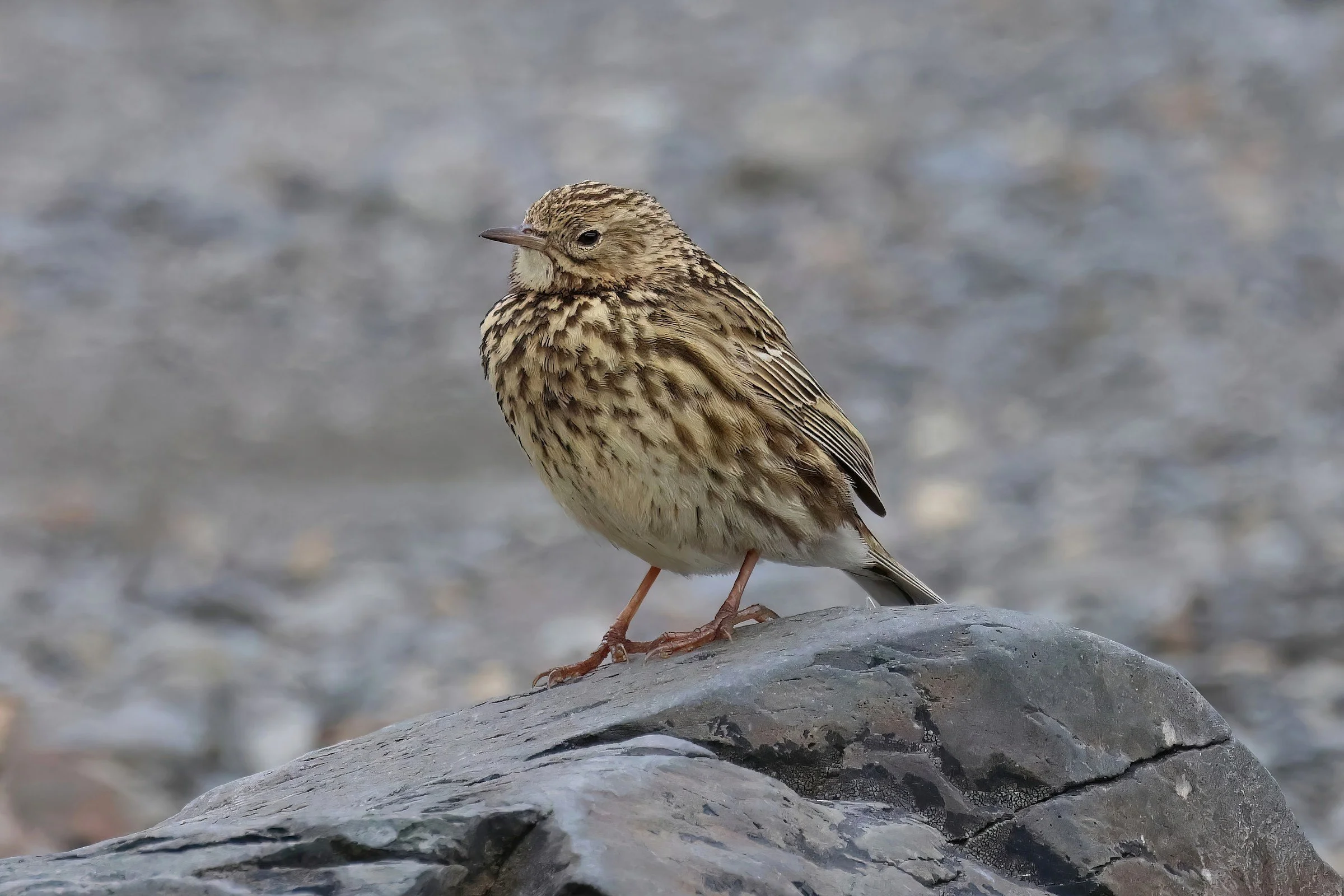
The South Georgia pipit is the only songbird in the Antarctic region proper and the most southern-breeding of all 6,500+ passerine species. It survives the island’s extreme winds and freezing temperatures by sheltering in stands of tussac grass. However, it was nearly wiped out by a rodent infestation.
Avifauna of the Antarctic Islands
The Antarctic and sub-Antarctic Islands may be among the coldest, windiest, and starkest landscapes in the world, but they are not lacking in birds.
Here there are massive snowy albatrosses, with the widest wingspans of any living bird. There are monstrous petrels known as “glutton birds,” Antarctic petrels that rarely leave the pack ice, and little storm-petrels that zip and patter along the surface of waves with their webbed feet.
There are kelp gulls who, in lieu of fries to steal, peck at the backs of right whales, feeding on their skin and blubber. There are both Antarctic terns, who remain in the Southern Ocean year-round, and Arctic terns, who undertake the longest migrations of any bird: from one pole to another and back, every year.
There are sheathbills, pigeon-like scavengers that comprise Antarctica’s clean-up crew, and Antarctic cormorants with plumage so dense that, unlike other cormorants, they don’t have to stand with wings spread to dry after a dive. And, of course, there are penguins: emperors, kings, Adélies, gentoos, rockhoppers, chinstraps, and macaronis.
The birds of these southernmost islands are impressive, to be sure, but they’re not all that varied. In fact, all Antarctic and sub-Antarctic avifauna is primarily made up of just three orders: Procellariiformes (albatrosses and petrels), Charadriiformes (terns and gulls), and Sphenisciformes (penguins). Most of the other 40 bird orders are either completely absent, or nearly so.
Take the order Passeriformes; the perching or song birds. There are over 6,500 species of them, making this by far the largest order of birds. Across Antarctica and its surrounding islands, the order has a single representative.
The Sole Songbird
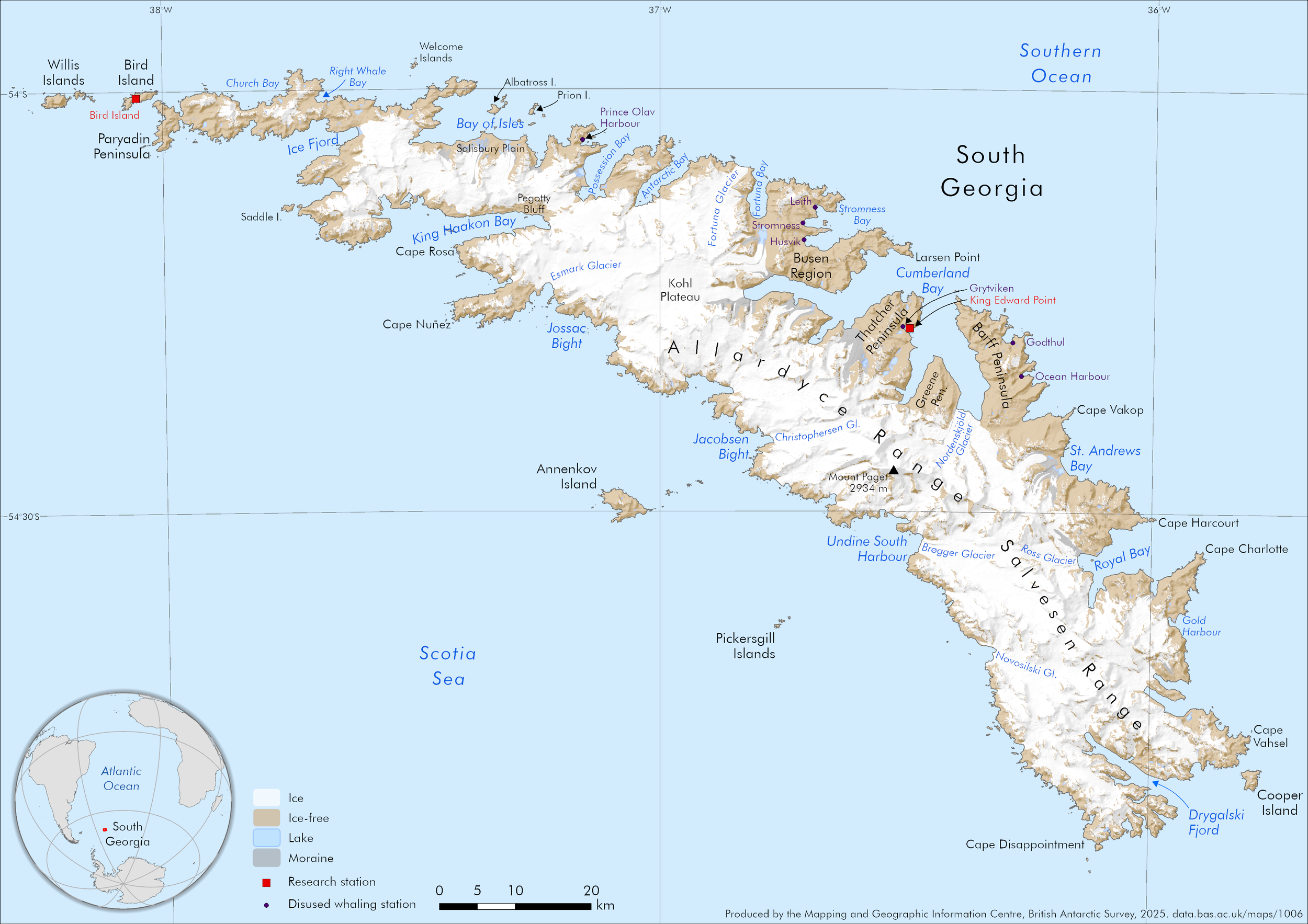
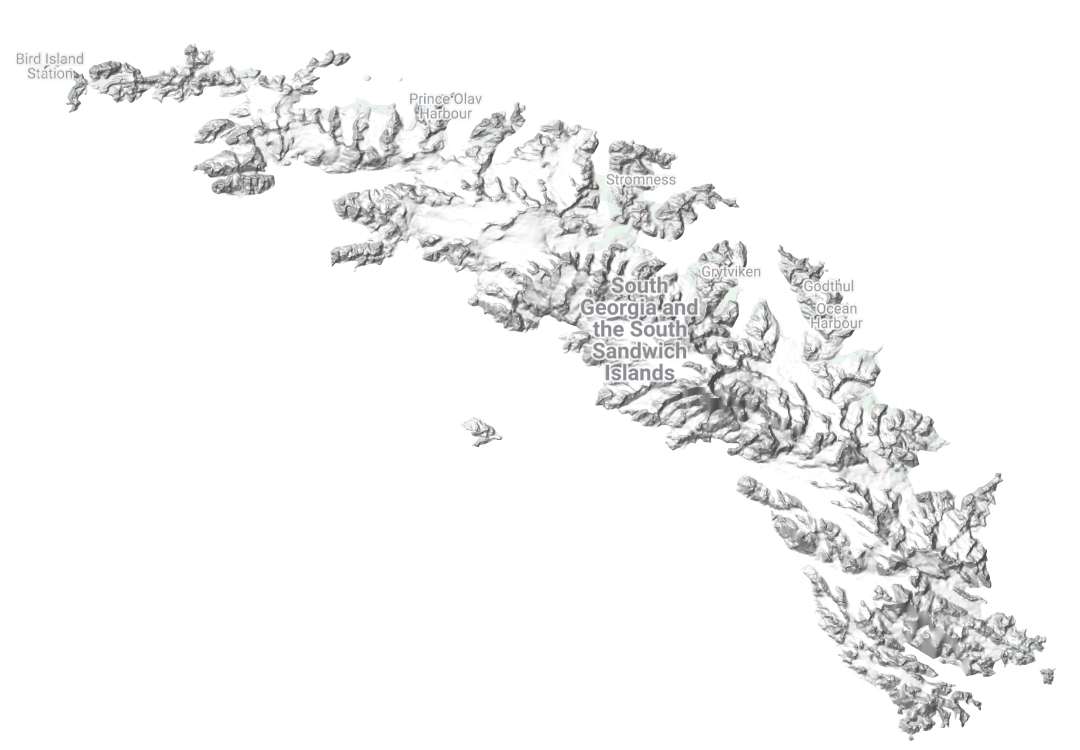
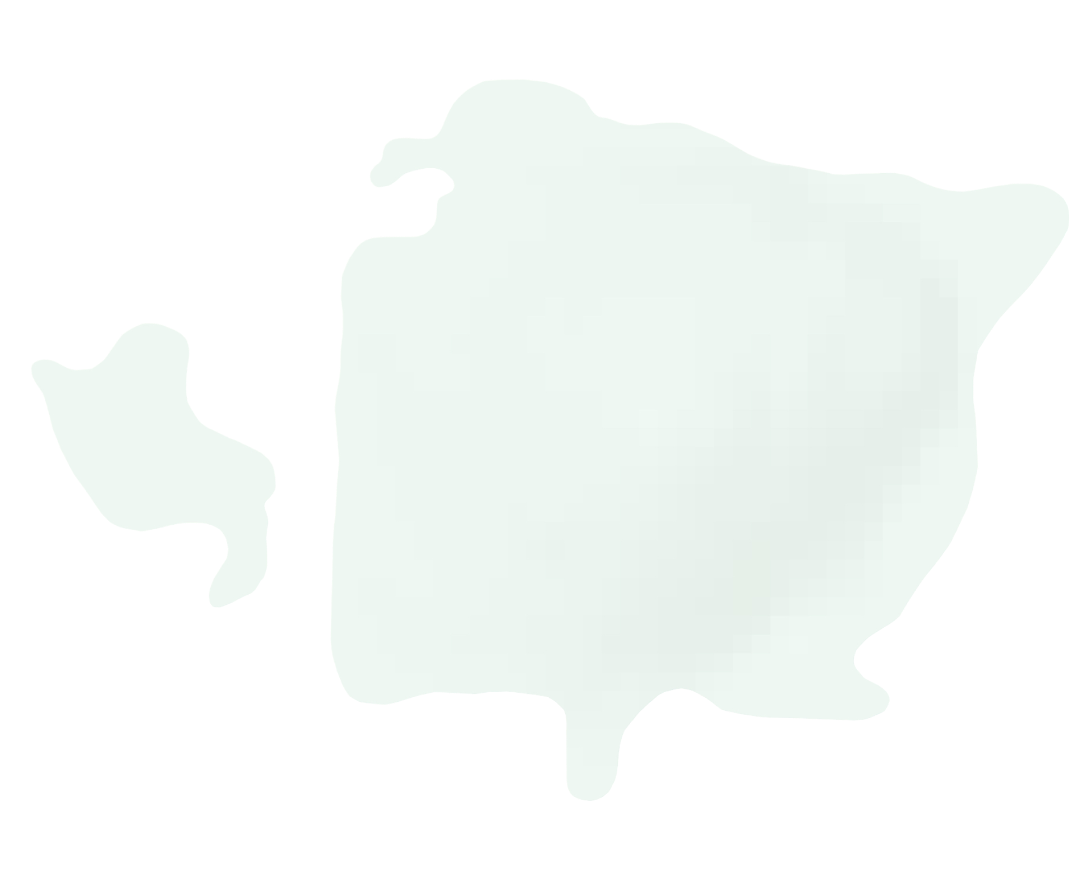
South Georgia Island is thin and long, appearing on a map like a jagged sea serpent swimming south towards Antarctica proper.¹ The tallest of this “beast’s” spines reach over 2,000 metres (6,560 ft) high to cut the lowest clouds, and on its back it carries thick glaciers that spill their meltwaters, sculpting the island’s broken coastline into bays and fjords.
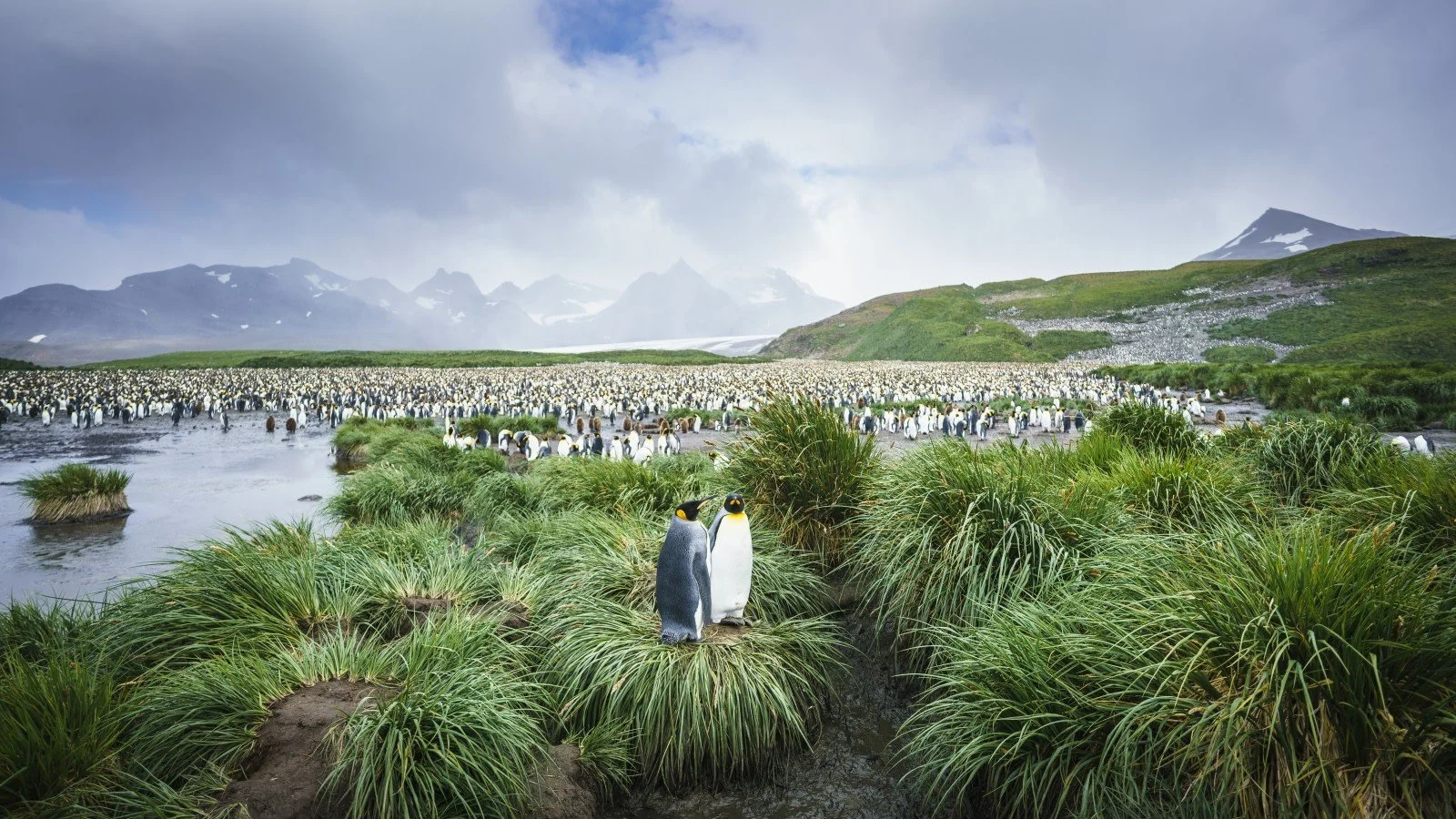
It is here, on this remote and isolated island — where no humans want to take up permanent residence — that we find the only songbird of the Antarctic region.
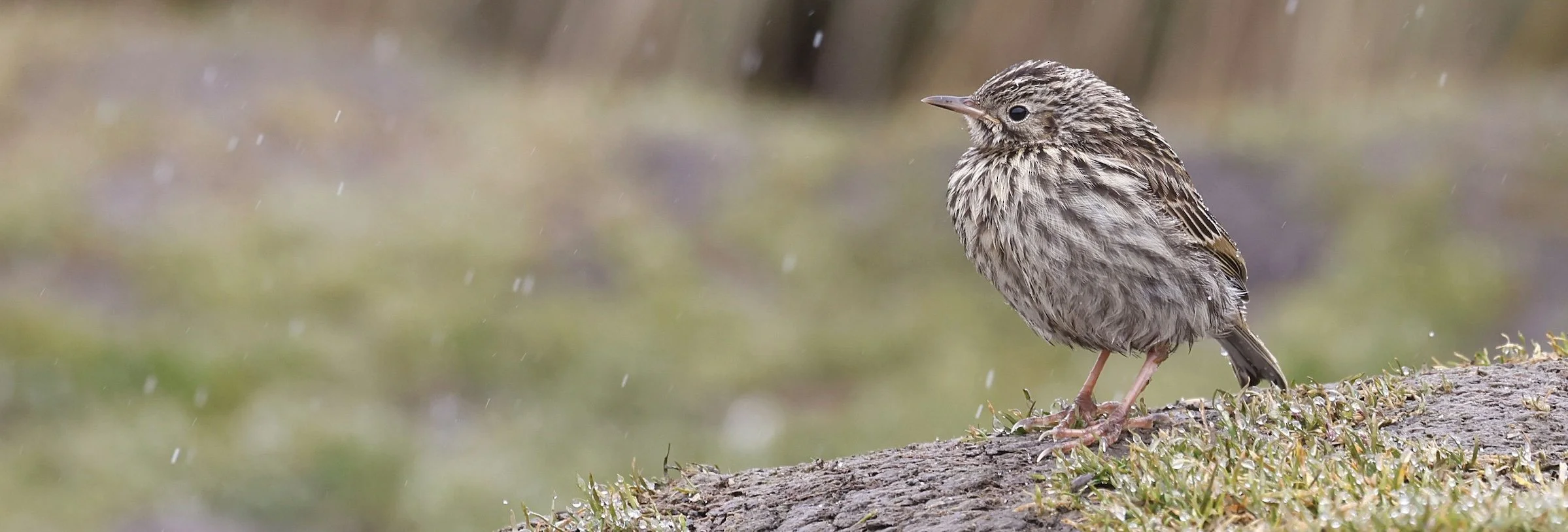
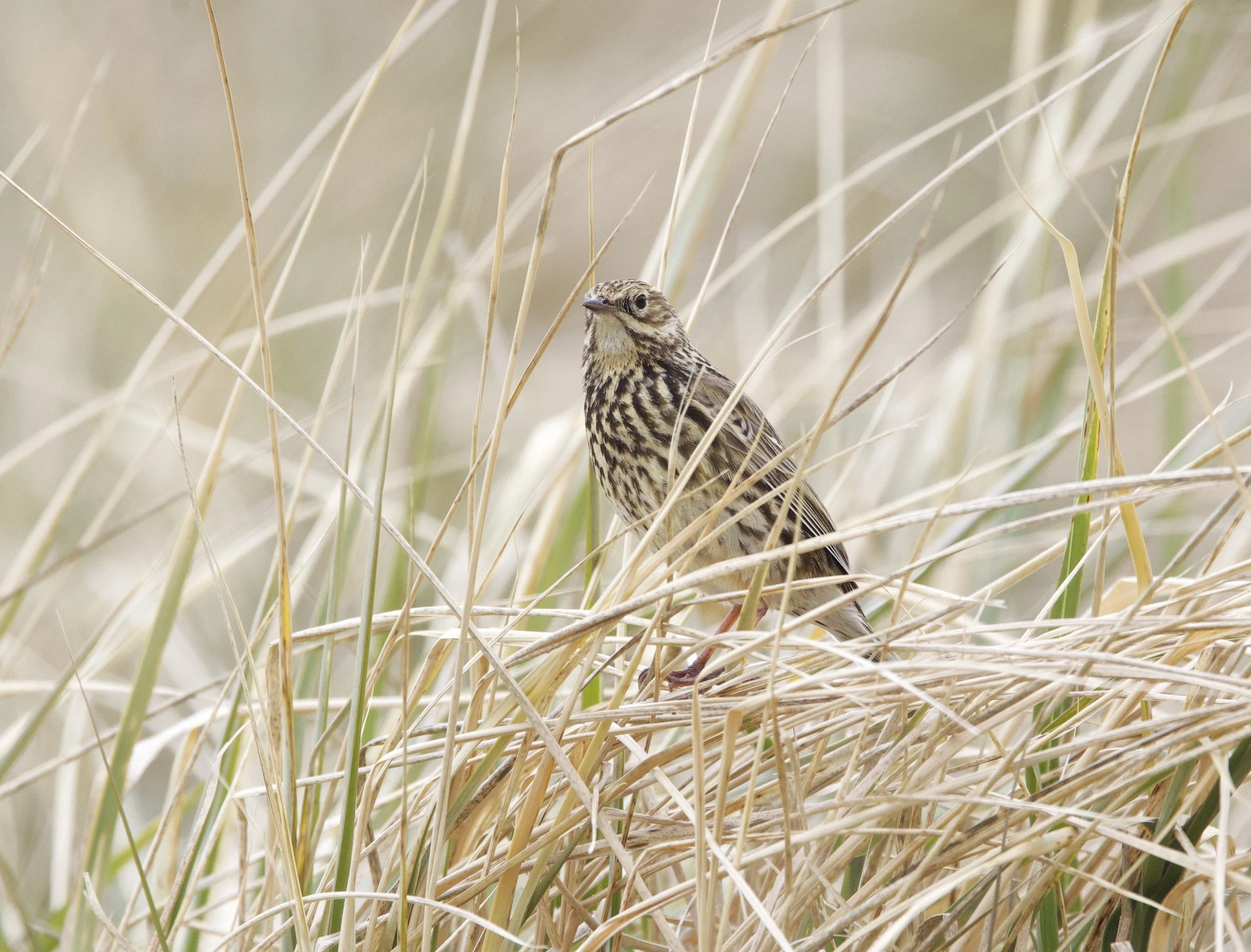
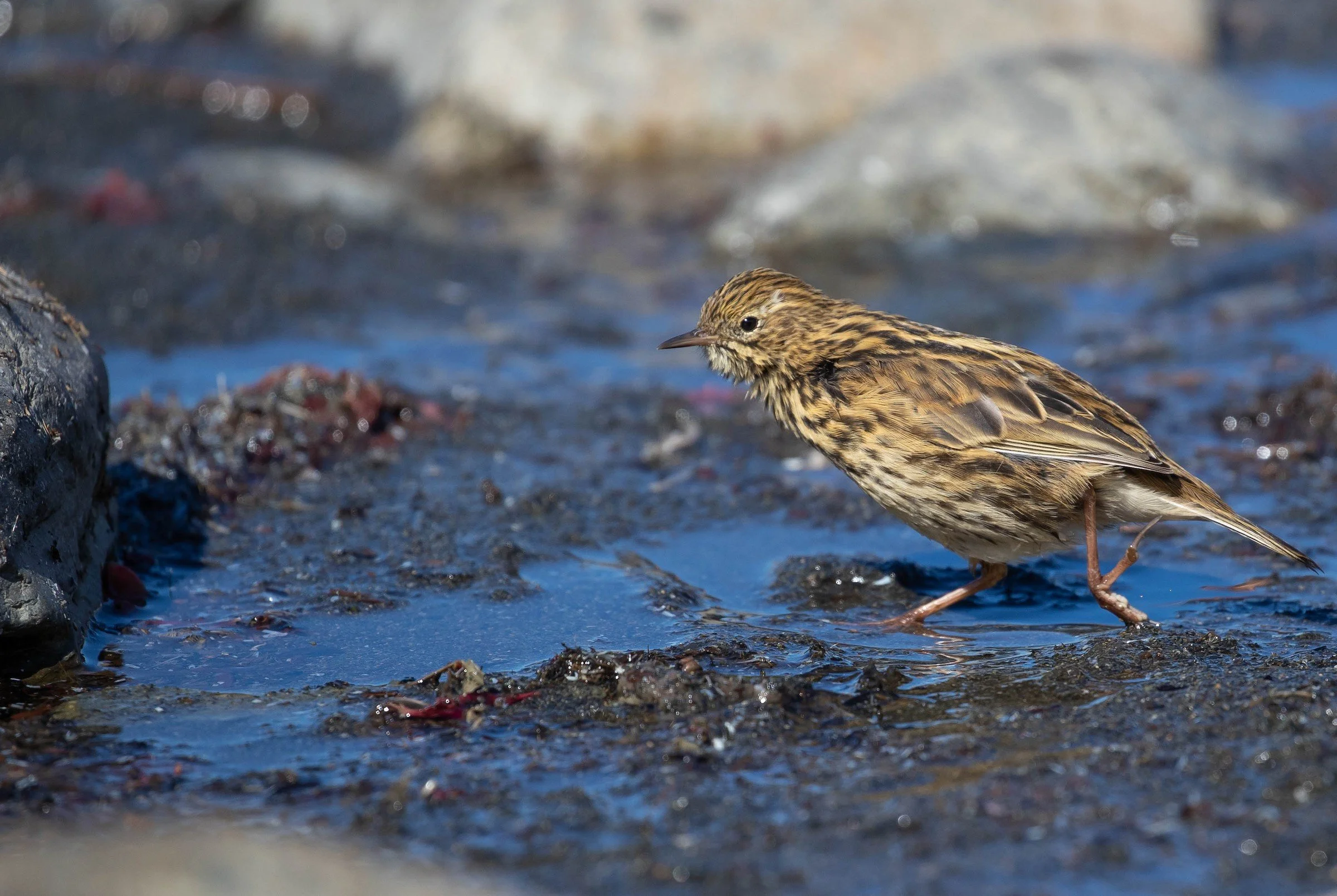
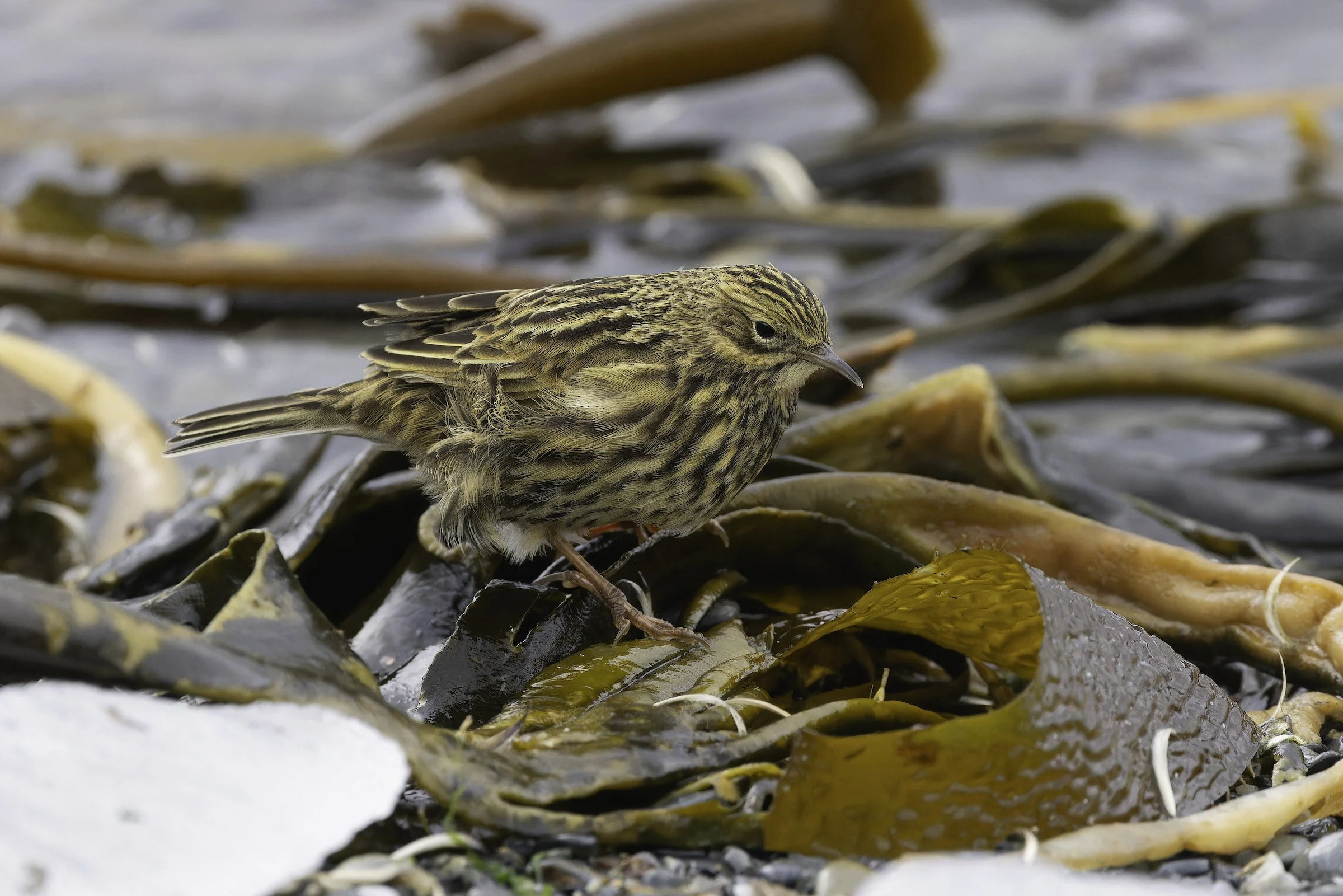
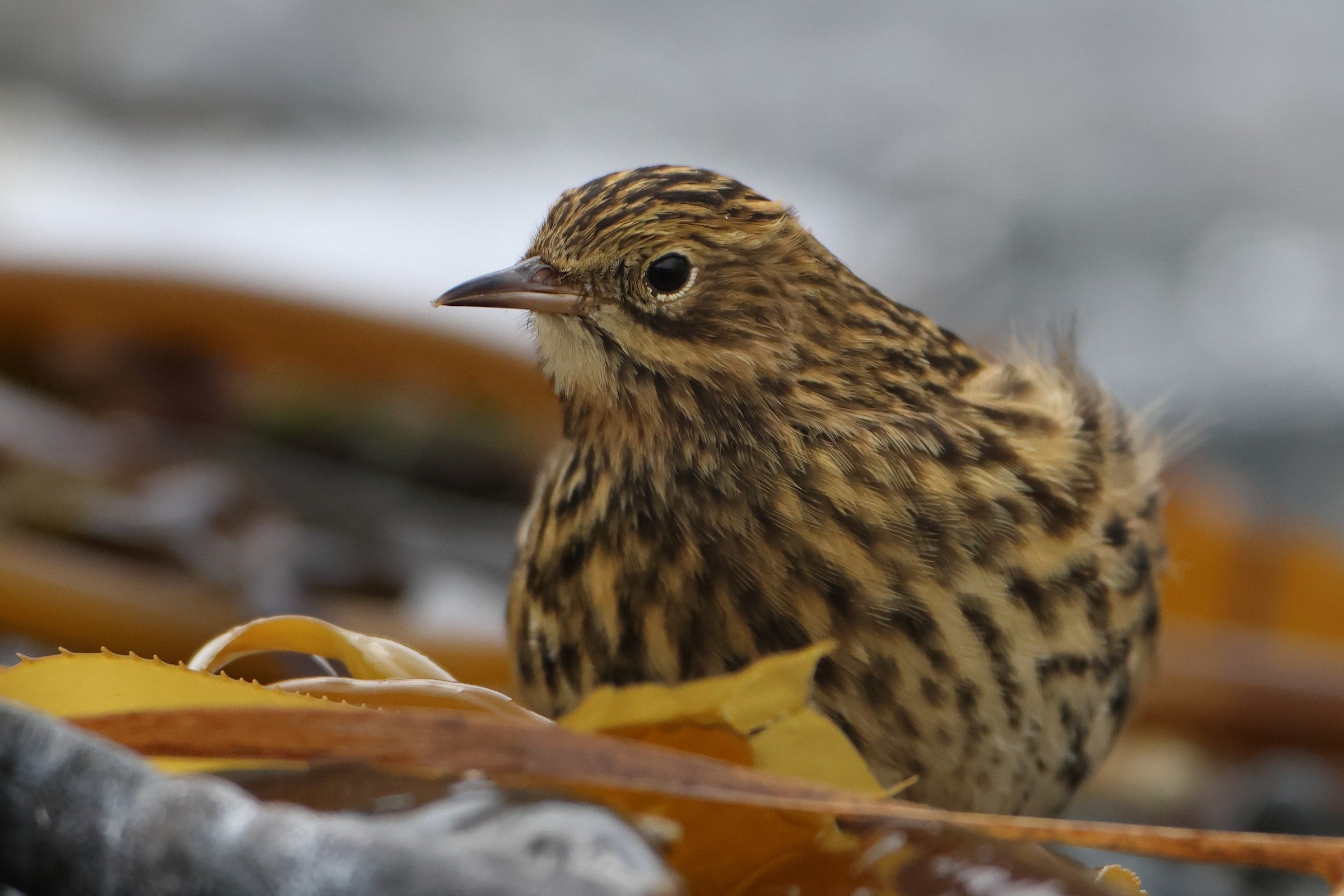
The South Georgia pipit, as its name suggests, is endemic to South Georgia Island. It is about the size of a sparrow, but with a shorter tail and longer legs for hopping through tussac grass. Its plumage is light-brown and streaked with black. It is, in its appearance, not all that different from its relatives: the pipits (genus Anthus), of which there are some 40 species found across the whole world.
How did a small grassland bird make it over 2,000 kilometres (>1,250 mi) across one of the most dangerous oceans in the world? It got very lucky. Or rather, it first got very unlucky.
A flock of pipits — perhaps of correndera pipits, native to southern South America and the Falkland Islands — was caught in a storm and carried out to sea. Unlucky. However, against all odds, the flock managed to survive the storm, and eventually found South Georgia Island. Lucky. Once there, they managed to establish a viable population and, over time, they evolved into a unique species.
In a 1923 edition of the journal El Hornero,² the American ornithologist Robert Cushman Murphy published Notes on Anthus antarcticus:
“There is no doubt that the most striking characteristics of this species are provided by the density of its plumage and by the great length of each of the body feathers. These birds of South Georgia are so well covered with long, soft, and extremely downy feathers that their skins stand in marked contrast to the rather smooth and uniform specimens of other species in the genus.”
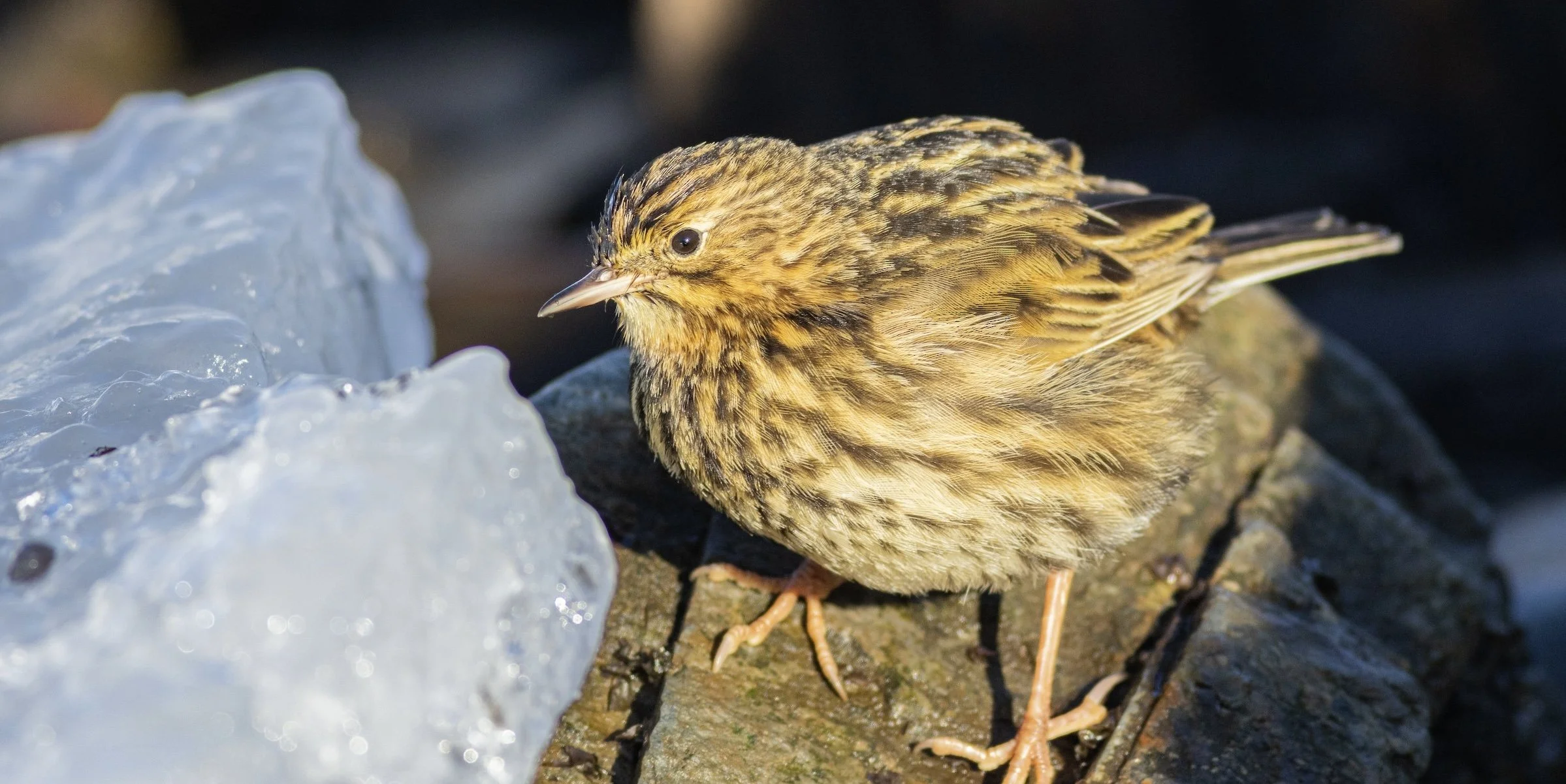
An 1884 paper describes this bird’s “lark-like rising, fluttering, and lovely singing.” (Pagenstecher, 1884)
The landscape of South Georgia Island is snowed-upon, sea-sprayed, and wind-blown — the island sits directly in the path of the "Roaring Forties" and "Furious Fifties," incredibly strong winds that whip across the Southern Ocean. The average temperature on the island hovers around freezing (-5°C to 5°C), with the aforementioned winds making it feel significantly colder. And, because the island is a tundra habitat, with not a tree in sight, cover is especially hard to come by.
What is there for a songbird here?
Well, there are a few insects: seaweed, kelp, and beach flies, winged midges and fungus gnats, dwarf spiders and bog beetles. This is the fare that the South Georgia pipit subsists on — foraging through grasses, along shorelines, and around tidepools.
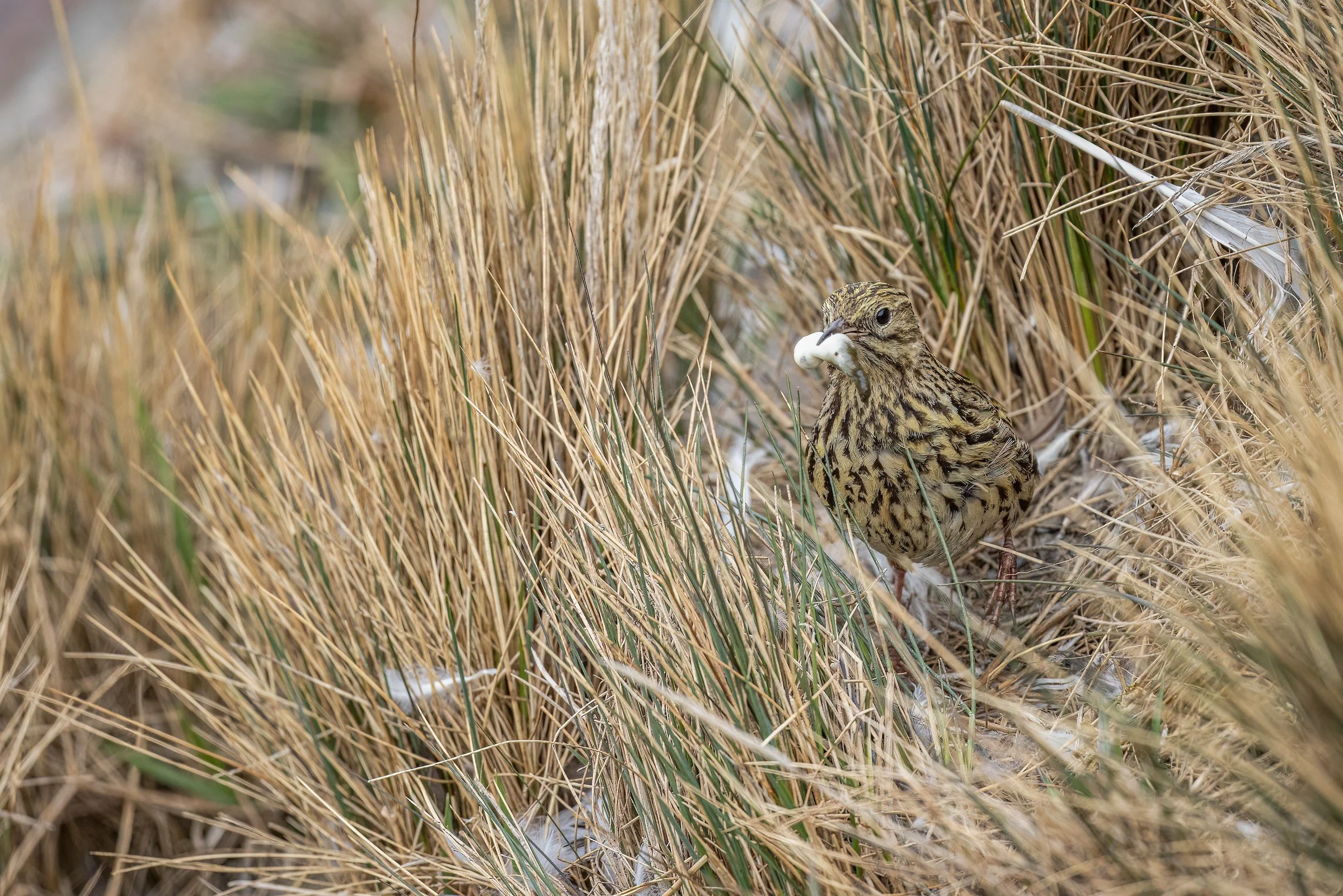
Being Antarctica’s only songbird, the South Georgia pipit is also the most southern-most breeding of any of the 6,500 plus Passeriformes. All observed species of pipits, even the tree pipit, nest on the ground. Perhaps this is what allowed that initial wayward flock to flourish on the treeless island of South Georgia. Where the land isn’t covered in ice, or doesn’t consist of dark barren rock, you're likely to find stands of tussac grass growing up to two metres (6.6 ft) tall. This is the pipits shelter and nursery.
The South Georgia pipit breeds during the Austral summer: around mid-November you’ll spot males performing their aerial displays and singing their twittering songs, and couples will raise young up through January and February. Together, they build a deep cup nest made of dry grass and fine roots, lined with feathers for insulation. Three to four eggs, greenish-brown and darkly speckled, are laid inside. Around two weeks later they hatch, and the featherless chicks feel the sub-Antarctic winds for the first time. The pipit parents can shelter their chicks from the elements, using their own body warmth and the thick nest walls, but they can do little if their nest is discovered by a predator.
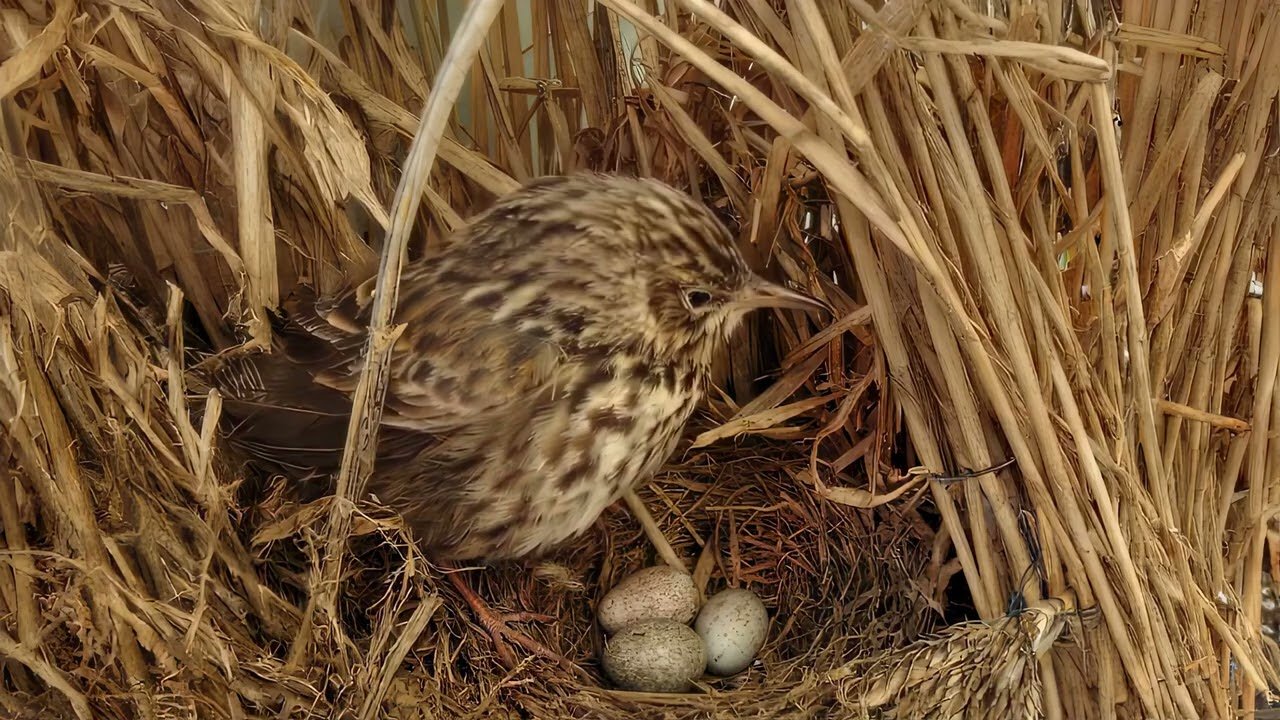
“The only egg known from the South Georgia pipit is dull gray-green, densely covered with dirty reddish-brown streaks and spots (22 mm long, 17 mm wide). In size, it comes closest to that of Anthus australis.
The nest…is built between tussock grass out of dry stalks—coarsest on the outside and with fibers almost as fine as horsehair on the inside. It measures about 16 cm in outer diameter and 9 cm in the hollow.” (Translated from Mitteilungen aus dem Naturhistorischen Museum in Hamburg 1883-1884)
A brown skua is over 40 times heavier than an adult pipit, and this carnivorous seabird won't hesitate to make a meal of penguin chicks or a seal carcass, much less a pipit brood. But predatory seabirds have been stalking the coasts of the Antarctic Islands since the South Georgia pipit’s ancestors first arrived. The species has survived and multiplied despite them, evolved alongside them.
What the South Georgia pipit never evolved to survive, however, was an army of ravenous mammals.
A Cold Hell
South Georgia Island has its mammals.
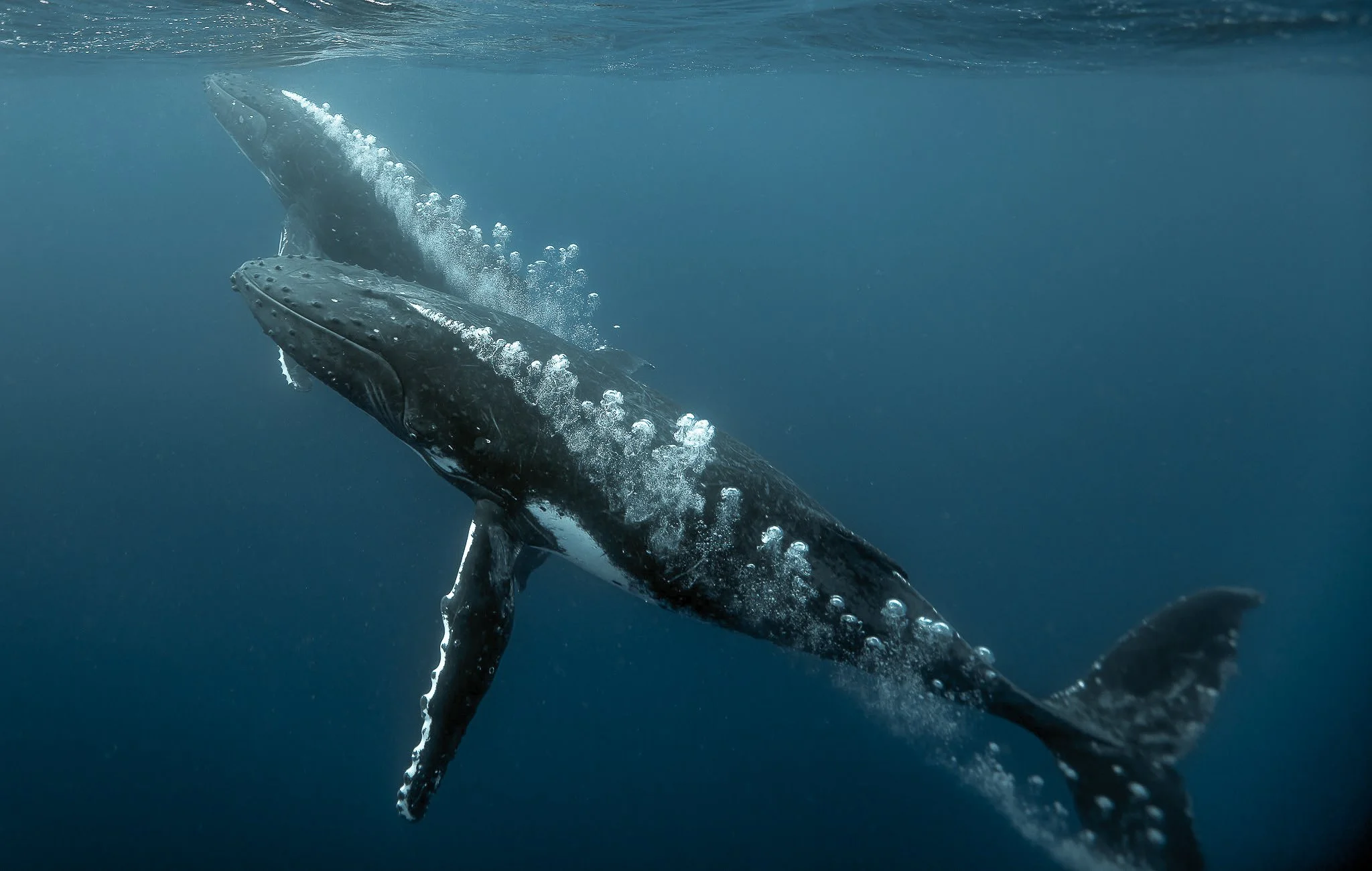
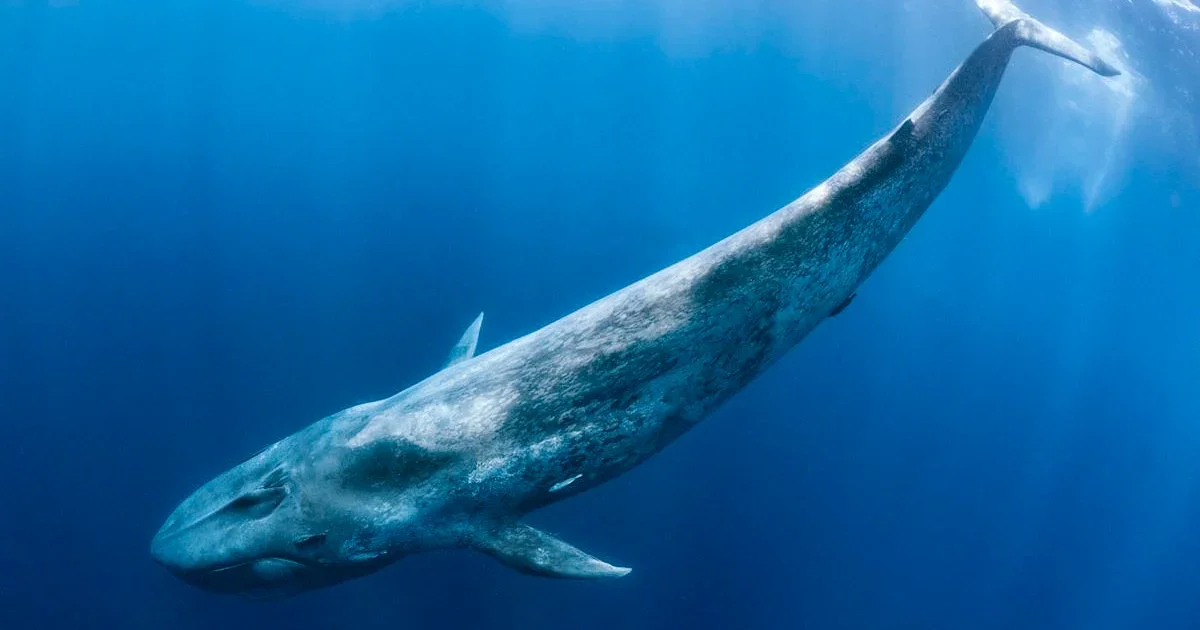
The most common is the Antarctic fur seal, followed by the southern elephant seal and, more rare, species like the Weddell seal and leopard seal. There are also several whale species — humpback, blue, fin, and right whales — that surface in the surrounding waters. But there are no true land mammals. Or at least there weren’t until the late 18th century.
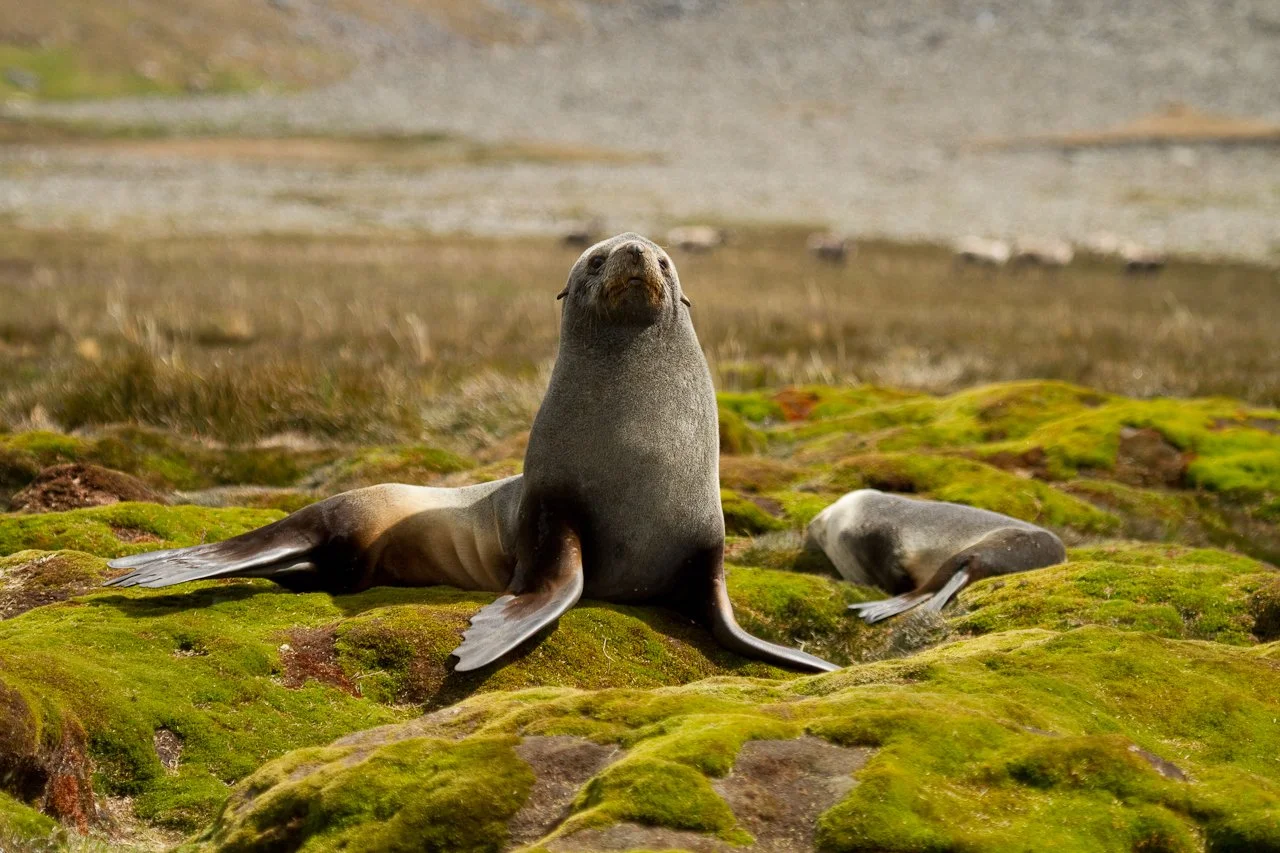
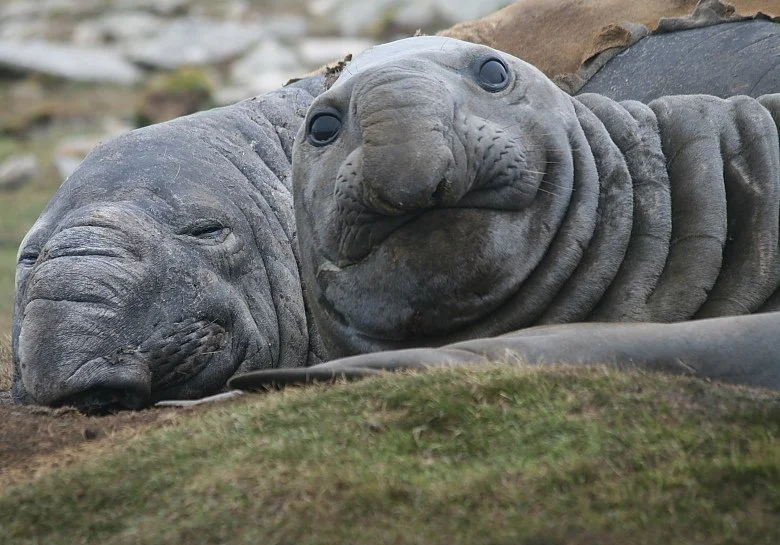
———
In 1775, one Captain James Cook makes the first ever recorded landing on South Georgia Island. He brings back to Europe reports of massive seal populations crowding the shoreline and pods of whales in the surrounding waters.
Soon, sealing ships are flocking to the South Georgia. Men are making for the rocky beaches with clubs in their hands, ready to bash in the skulls of countless fur seals. Once a seal is made dead, it is skinned, then and there on the beach, then its pelt is salted and stacked, ready to be sold. Inevitably, the “endless” Antarctic fur seal population on the island crashes. And so the sealers turn to the elephant seals. They built try-works, large iron cauldrons set over fires, on the beaches. They kill the elephant seals and cut away their thick blubber, throwing this fatty tissue into the cauldrons to boil down into valuable oil. The air smells of the sea and reeks of burning fat.
Entire seal populations are decimated by men with knives and wooden clubs. And, by the turn of the 20th century, seals are a rare sight on South Georgia. But there are still whales in the water.
A whaling operation is a whole different beast; an industrial monster made of steel and men, ravenous for blubber and for blood.
Almost as soon as the sealers leave, the whalers arrive on their ships of steel, powered by steam and later diesel. They build six massive shore stations with dormitories, cinemas, and whale-processing factories. At the height of the season, over 1,000 men live on the island simultaneously.
These men, the whalers, take to the seas on fast catcher ships, armed with exploding harpoons that kill whales through massive internal trauma. Whales are stabbed with hollow spears in their abdominal cavity or tongue and inflated like balloons. They are flensed: winched up a massive wooden ramp called a flensing plan, where flensers with long knives strip away their blubber like one removes the peel from a banana. Inside the on-shore factories, every bit of oil is extracted from their bodies, and some of the most awe-inspiring creatures on our planet are reduced to rank-smelling oil, sealed within a thousand barrels.

(© Scott Polar Institute, University of Cambridge/Getty Images, © 2026 Government of South Georgia & the South Sandwich Islands, and © Liam Quinn / Wikimedia Commons)
Through the savage, opportunistic barbarity of the sealers, and the methodical barbarity of whalers, South Georgia Island, once an unmarred paradise — if a windy and barren one — was transformed into a cold hell.
When the whalers finally left in the 1960s, they didn’t take all the horrors away with them. They left behind massive rusting factories, half-finished houses, and massive amounts of trash. And they left behind an infestation.
Infestation
Hundreds of ships sailed to and from South Georgia Island between the time of Cook's discovery and the departure of the last whaling ship. And it was a rare ship, in those days, that didn’t carry any rodents. They scurried out of the cargo, down the mooring lines, and onto the rocky shores. They bred and multiplied in the refuse of humanity, and eventually made their way into the tussac grass of South Georgia Island.
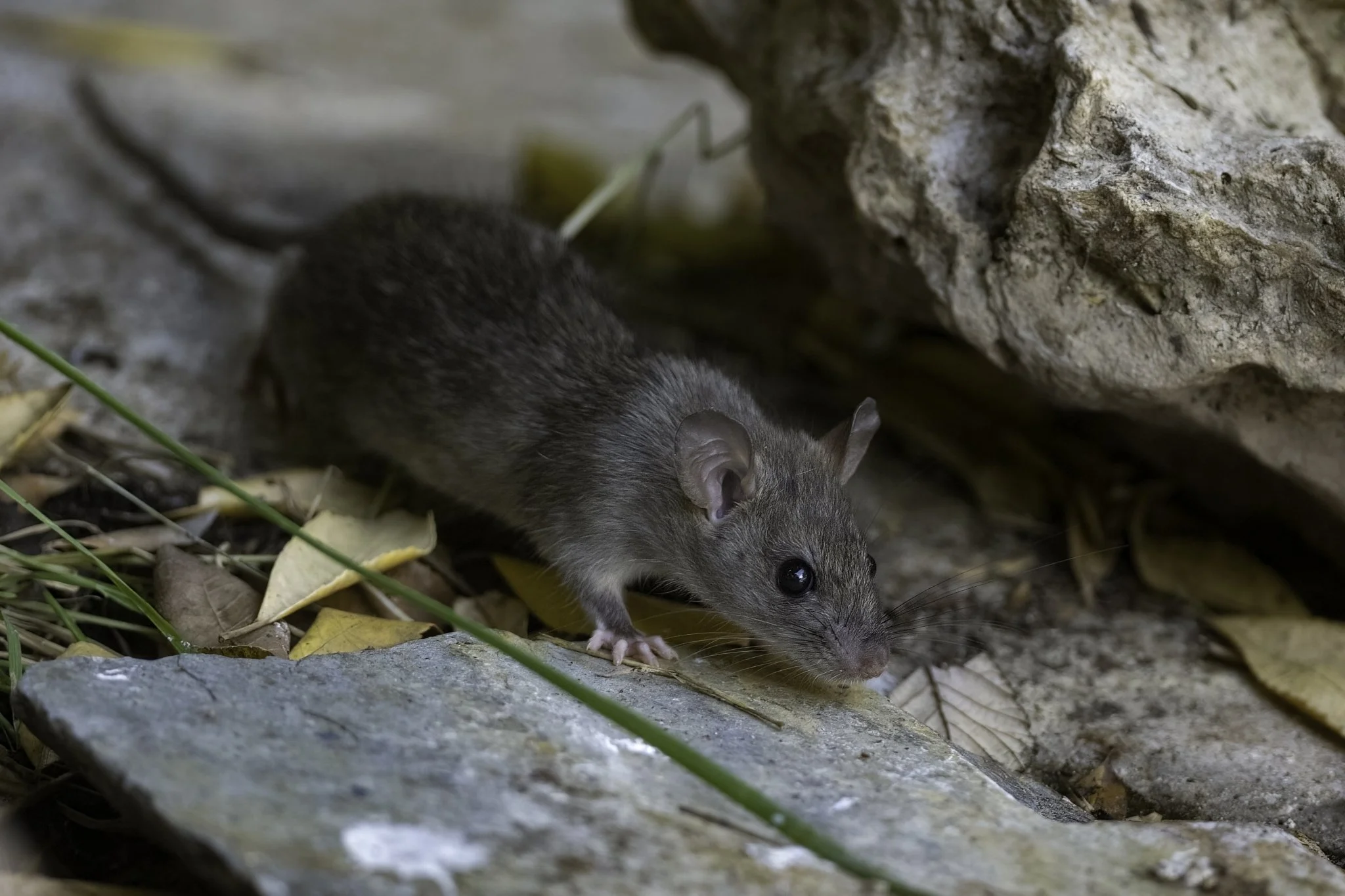
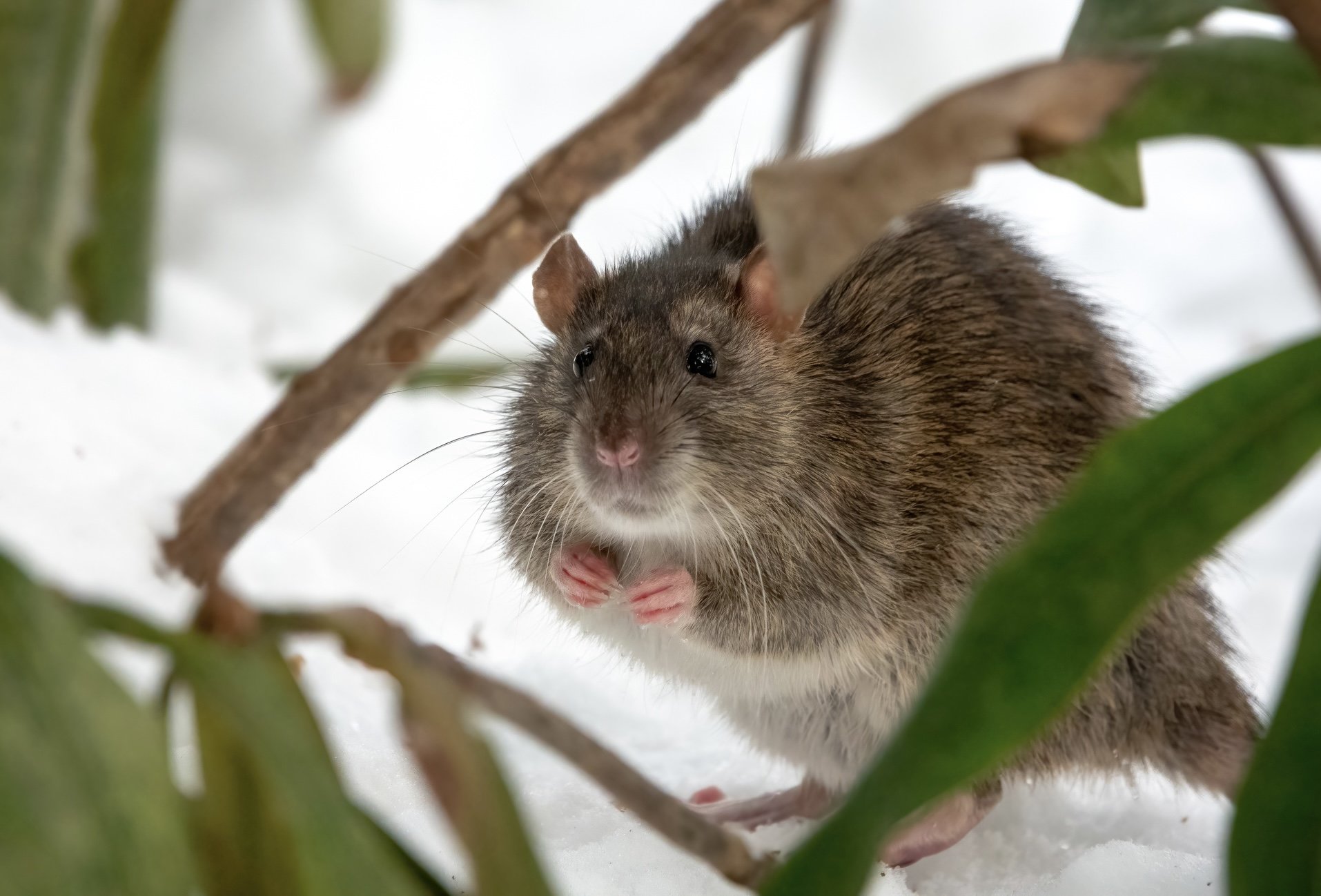
Stowaway rodents primarily come in three species: the black rat, also known as a ship rat, the brown rat, and the house mouse. All three likely made it to South Georgia island, but only the house mouse and brown rat persisted. Why?
The black rat, originally from Southeast Asia, was put in competition for the limited resources of this sub-Antarctic island against the larger brown rat, a native of the cold steppes of Central Asia and Russia. The big and bold brown rats went on to infest nearly two-thirds of the island’s coastline. The smaller house mouse, meanwhile, likely avoided the fight entirely, instead carving out micro-niches on the south-western coast of the island. The black rats died out.
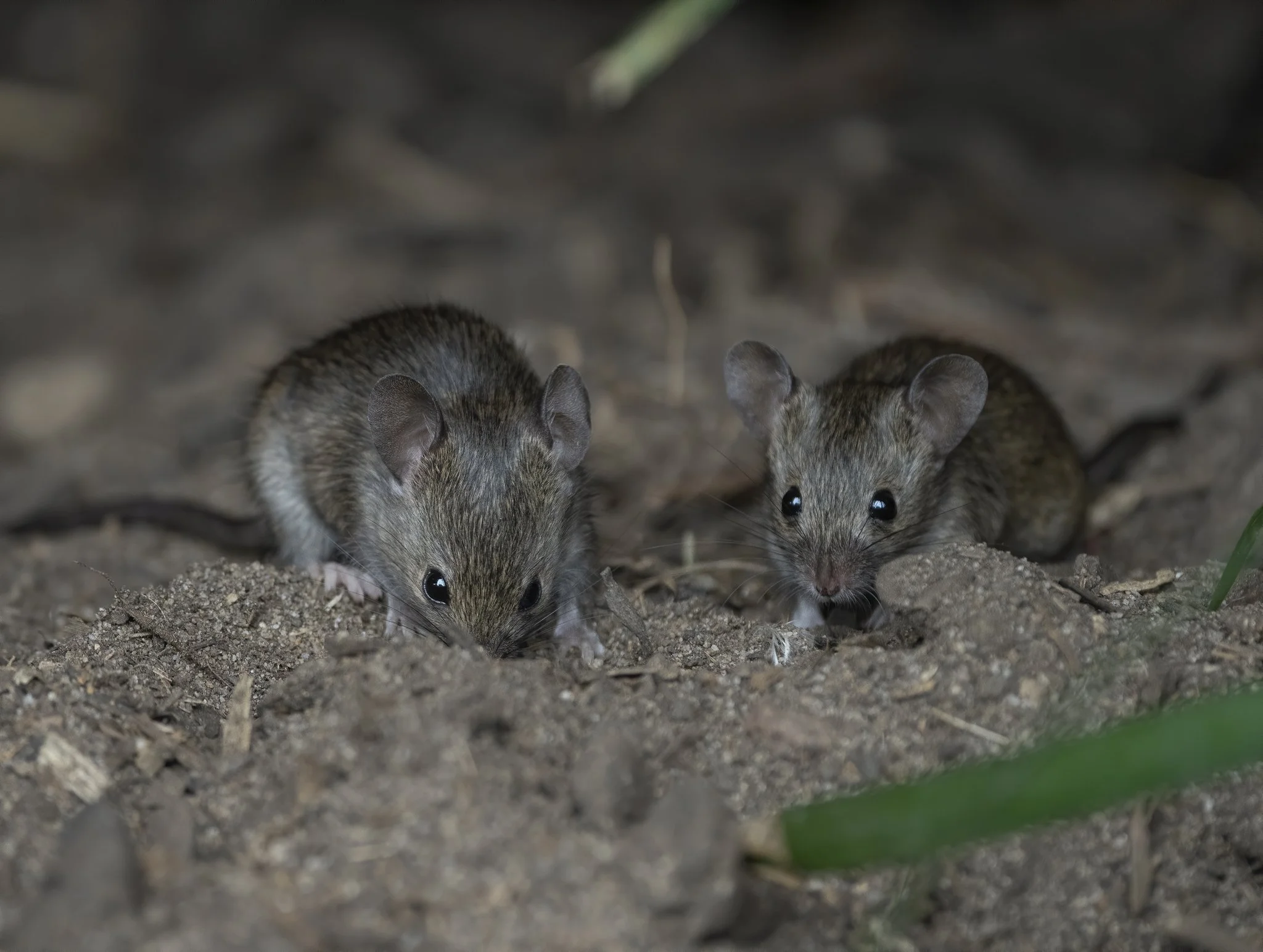
Rats and mice will eat almost anything — that’s partly what makes them such effective stowaways and invaders. When the whaling operation was abandoned, and the last of the human leftovers were consumed, the rodents had to turn to the fairly meagre fare offered by the island of South Georgia. They nibbled on tussac root and crunched on beetles. For a rodent, the only substantial meal here comes in a shell.
———
The South Georgia pipit isn’t the only one-of-a-kind bird on these sub-Antarctic isles. Of the entire Anseriformes order (ducks, geese, and swans), the only species present here is the yellow-billed pintail — specifically, a sub-species known as the South Georgia pintail.
Like the pipit, a South Georgia pintail couple build their nest hidden in tussac grass. When returning to the nest, the parents land some distance away, before stealthily creeping through the grass so as not to alert predators to the nest’s location. And once the eggs hatch, the parents guide their precocial posy of chicks from one tussac-rimmed pond to the next.
“Their speed was incredible, dashing from clump to clump like small rats…” writes Niall Rankin upon seeing the chicks during his expedition to the island after the end of World War II. “Their only natural enemy is the skua and time must have shown that so long as the ducklings remain amongst the alleyways between the overhanging clumps little harm can befall them.”
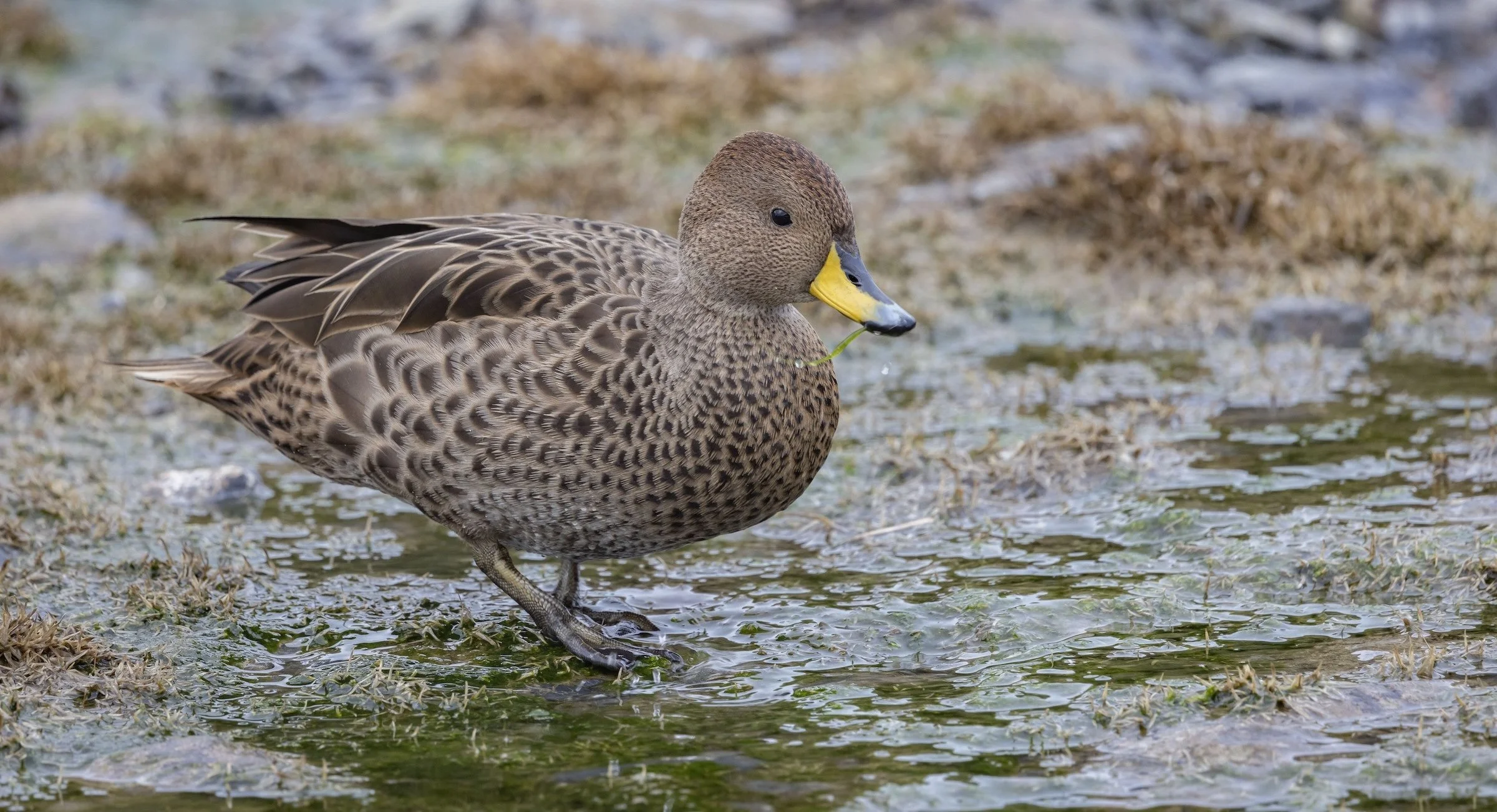
Murphy,³ the same ornithologist who published a description of the pipit, also described his encounter with these austral ducks:
“On December 20th, 1912, I photographed a pair of teals feeding in a trickle of water which ran through tall tussock grass from the melting edge of a glacier. The birds were well hidden by the screen of grass, and I almost stumbled over them before seeing them. They appeared quite unconcerned, however, and continued prodding about in the mud. When I had come within two steps of them, they raised their heads and waddled farther off among the hummocks, from where they peered out through drooping grass. All but the bright eyes and yellow bills blended completely with the surroundings…Many observers have noted the birds’ preference to lose themselves in the grass when they are approached, rather than to seek safety in the air…”
There is danger in the skies, in the form of predatory skuas, but a creature approaching from the ground does not appear to be much of a threat.
The South Georgia pipit is similarly unconcerned with terrestrial threats. Where its mainland relatives have to compete with foxes, ferrets, stoats, badgers, and hedgehogs; the South Georgia pipit might feel pretty confident that its eggs and chicks are safe in their ground nests, hidden among the tussac grass. As a consequence, this isolated, “naive” songbird had no idea how to defend itself from the plague of prolific, ravenous rodents.
Most of the seabirds on South Georgia didn’t either.
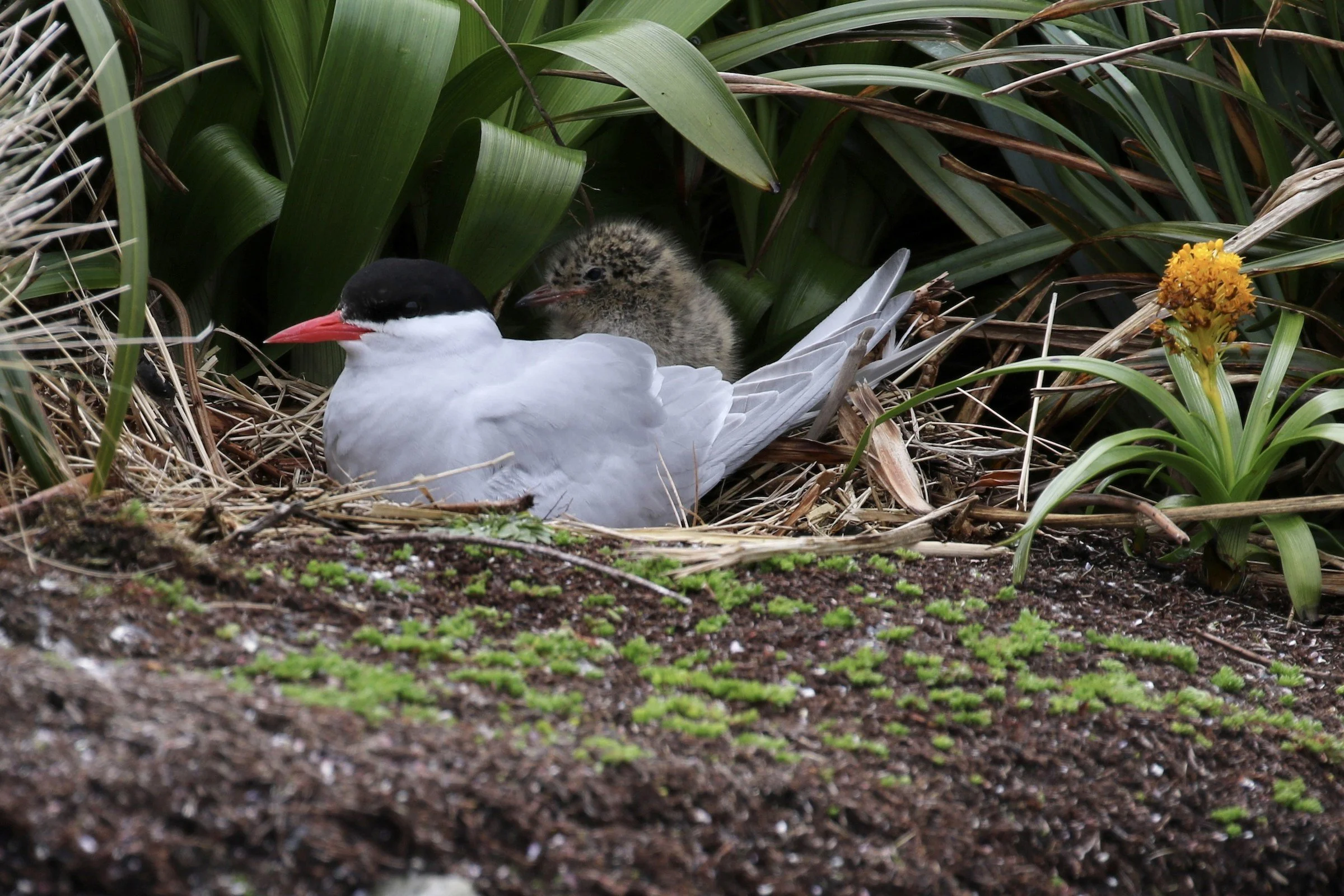
Many of them are, by nature, pelagic: spending most of their year at sea and only coming to the island to breed. Prior to the arrival of humans and our stowaways, these sub-Antarctic islands offered the ideal nesting grounds for a prion, albatross, or a tern. But a prion’s nest-burrow may as well be a pantry for a rat, an albatross’s mound an elevated dinner plate, and a tern’s nest, a shallow scrape in some gravel, offers absolutely no defense against a hungry mouse.
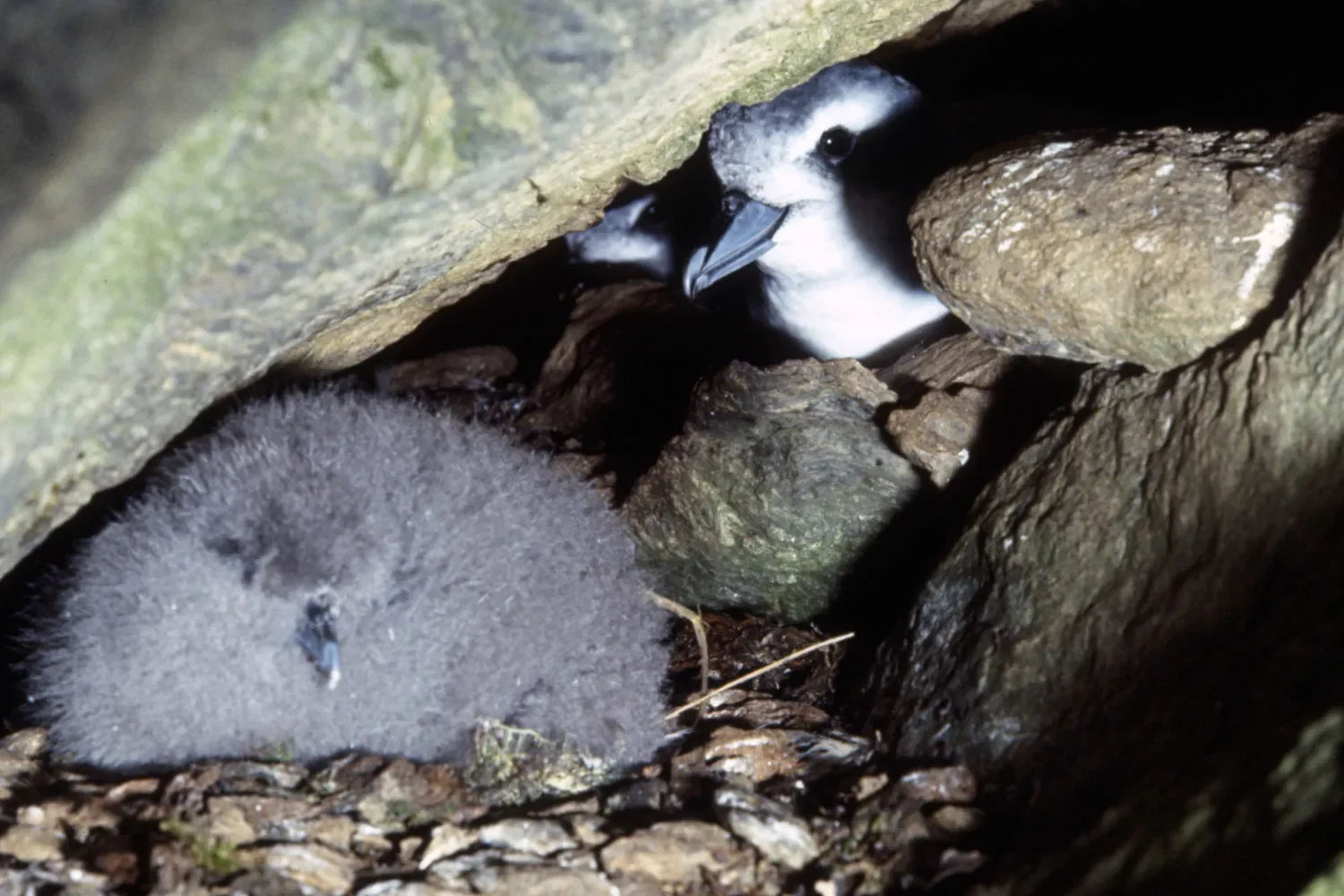
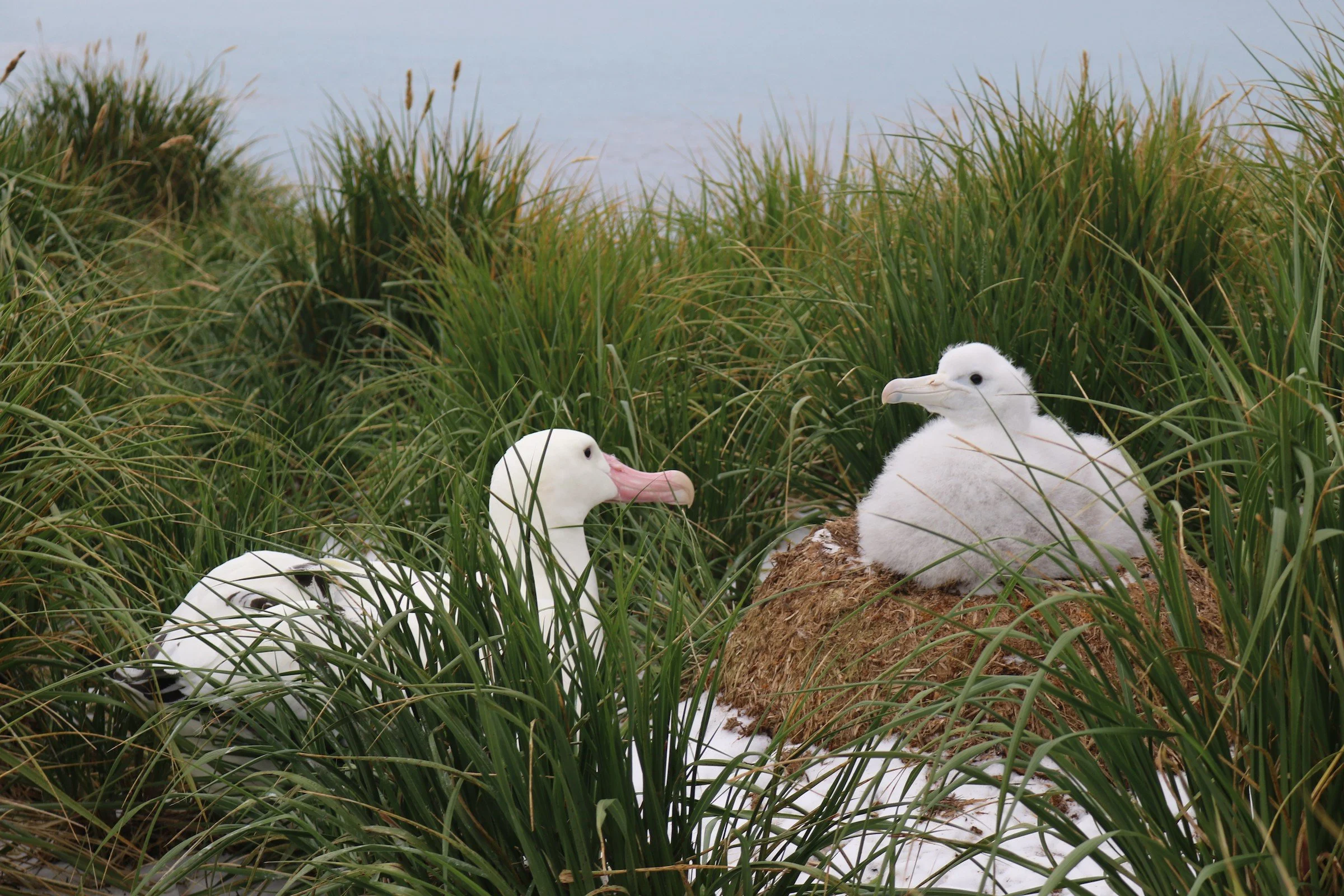
It’s similar to disease immunity. If you’ve been exposed to a disease before, your immune system is more equipped to fight it off. If the disease is completely foreign, your immune system is likely to be helpless. The birds of South Georgia did not have “immune systems” experienced in fighting off an “infection” of rodents.
It’s hard to say exactly how many seabirds perished over the 200 years that rodents have been present on South Georgia, but some estimate that rodent predation is responsible for a 90% drop in the island’s seabird population.
Compared to an albatross or tern, the nest of a pipit and pintail is at least somewhat concealed — for all the good that does against a rodent's sharp sense of smell. Despite being such different birds, the pipit and pintail were in much the same boat. Both of their populations plummeted as rodents took over most of the island's coastline.
The pintail struggled to breed in the presence of rats. Its ducklings were no longer safe “amongst the alleyways between the overhanging clumps” of tussac grass, not from the sniffing scavengers. It didn’t help that populations of this waterfowl, once considered a common species on the island, were already diminished by decades of hunting by sealers and whalers. Still, other birds were in an even worse state.
The endemic pipit was all but eradicated in rat-infested areas, surviving mainly on small offshore islets (like Prion Island), and within a few small, rat-free refuges on the main island.
By the late 20th century, the South Georgia pipit was nearly extinct.
Eradication
It very well could have gone extinct. Just another species on the list of extinctions driven by invasive rodents: the Hawaiian rail (1884), Auckland Island merganser (1902), bulldog rat (1903), Lord Howe gerygone (1928), Galápagos giant rat (>1930s), South Island snipe (1964)…
It probably would have gone extinct, in fact, if South Georgia didn’t become the site of one of the most ambitious island restoration projects ever attempted.
The somewhat blandly-named “Habitat Restoration Project” was conceived by the South Georgia Heritage Trust (SGHT), a charity dedicated to the preservation of the island's environment and history. The project's main goal was simple, but daunting: the complete eradication of rodents from the island.
———
It had been done before.
The first attempts were carried out on New Zealand’s offshore islets. Half of the extinct species listed above were native to New Zealand, where invasive rodents (and mammals in general) have been responsible for the extinction of 43% of native bird species. If a reliable method could be found to eradicate rats from an island, it would surely help prevent further extinction on this archipelago of more than 2,000 islands.
The island of Maria, now known as Ruapuke,⁴ is home to breeding populations of fluttering shearwaters, grey-backed and white-faced storm petrels, and little blue penguins.
In January of 1960, Miss V. Brown, secretary of the Junior Forest and Bird Protection Society, wrote a letter to the Department of Internal Affairs in Wellington: “Dear Sir, we find that rats from the mainland have been destroying literally thousands of different species of sea birds. We have counted some 950 petrel carcasses all killed by rats. Would it be possible for your department to supply us with free rat poison?”
Volunteers, both adults and children, spread poisoned bait across Ruapuke, and the island was officially deemed rat-free in 1964 — making this the first successful island predator eradication in New Zealand. But Ruapuke is tiny: around 2 hectares in total. The question now was, could such an operation be successful on an island of significant size?
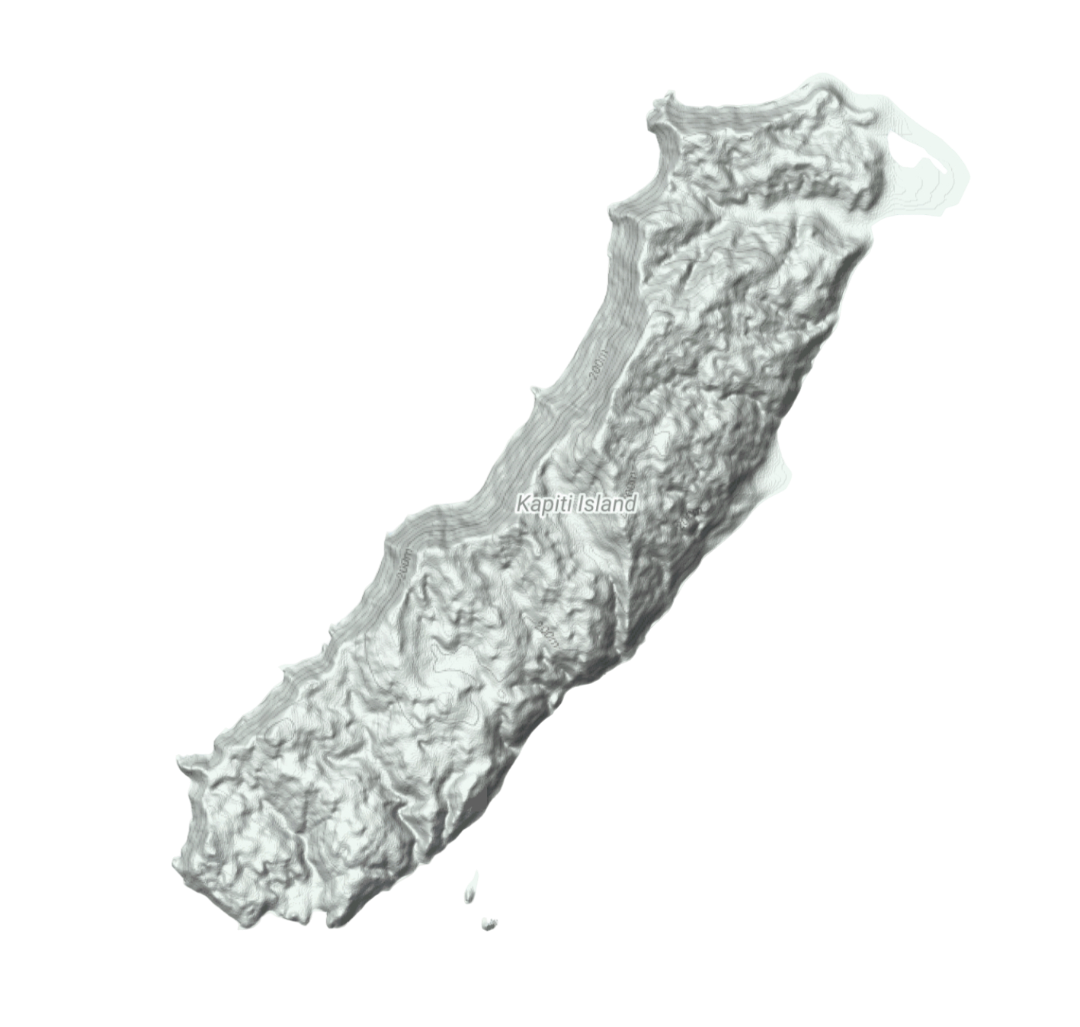
Kāpiti Island was christened as a bird sanctuary all the way back in 1897, and it has long been one of New Zealand’s most important and well-known nature reserves — home to saddlebacks, stitchbirds (hihis), red-crowned parakeets, kōkakos, kakas, and wekas. The island saw the successful removal of the last brushtail possum, an invasive from Australia, by teams of trappers and their dogs in 1986. But two species of rats, the brown and Polynesian, still threatened Kāpiti’s birds.
To get rid of this rodent problem, it was decided that 30 tonnes of bait pellets would have to be scattered across the island. Each bait pellet was laced with the rodenticide known as brodifacoum. This specific poison was chosen because it is slow-acting; rats don't feel sick immediately, so they don't develop "bait shyness" and will continue to eat it until they have ingested a lethal dose. But the entire 1,965-hectare island couldn’t realistically be covered on foot. So instead, they dropped the pellets from the skies using helicopters. Two trial drops were performed using non-toxic bait, and the ground-dwelling wekas had to be temporarily removed from the island because they displayed a propensity towards eating them.
After a stint of bad luck with the weather — during which time all 30 tonnes of the pellets went mouldy and had to be produced again — everything was in place by the end of 1996. The island was showered with brodifacoum-filled pellets in two applications, once in September and once in October. In 1999, Kāpiti was officially announced to be completely free of mammalian predators.
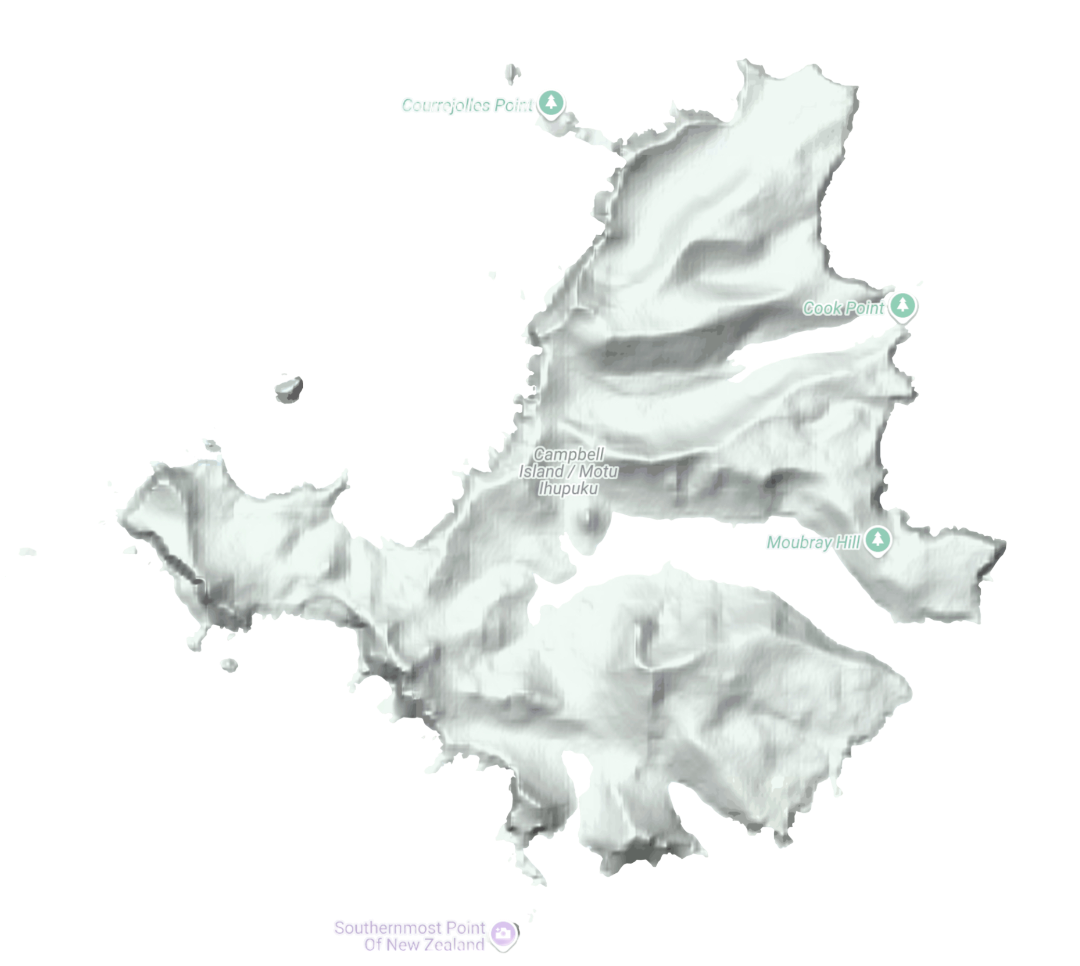
Kāpiti was seven times larger than any previously attempted rat eradication in New Zealand. The next step up was Campbell Island — nearly six times larger than Kāpiti at around 11,300-hectares. It is also far more remote too, located some 700 kilometres south of the South Island.
The operations on Campbell Island relied heavily on the blueprint pioneered on Kāpiti Island just five years earlier: using highly maneuverable helicopters guided by GPS equipped with spreader buckets to drop brodifacoum baits onto the brown rat populations below.
Campbell is primarily a refuge for seabirds that arrive to nest during the spring and summer, so the operations had to be carried out during late winter so as not to disturb them. And winter in the Southern Ocean isn’t the calmest of seasons. There were no facilities on the island and it rained almost-constantly, so custom waterproof "pods" had to be designed and built from plywood just to keep the bait dry for the months required to complete the operation. The bait itself also had to be larger to last longer in the damp conditions.
A team of fourteen people and four pilots used three helicopters to drop brodifacoum-laced cereal baits. Two helicopters flew the main transects over the island using GPS guidance to ensure they left no gaps in their coverage, while the third helicopter specifically targeted the treacherous, vertical sea cliffs. They worked from mobile loading sites — which themselves were supplied by a fourth helicopter from a central supply site — taking any opportunity to fly that the weather gave them. Campbell Island was officially declared rat-free in 2003.
Rodent eradication was proving to be possible on islands of increasingly large size: Maria/Ruapuke Island (2 ha), Kapiti Island (1,965 ha), and, the largest so far, Campbell Island (11,300 ha).
———
And so we return to South Georgia, an island of some 375,500 hectares.
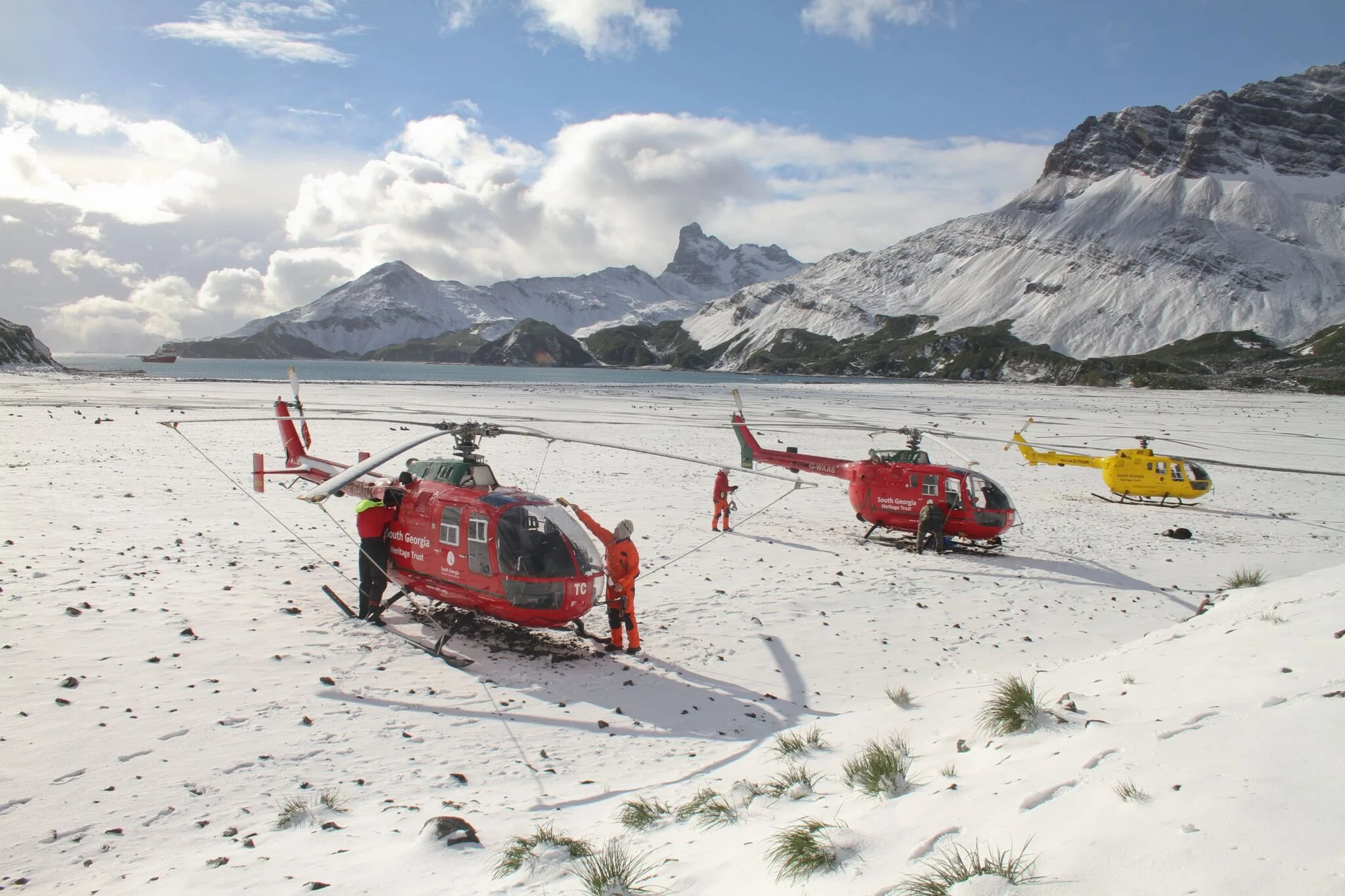
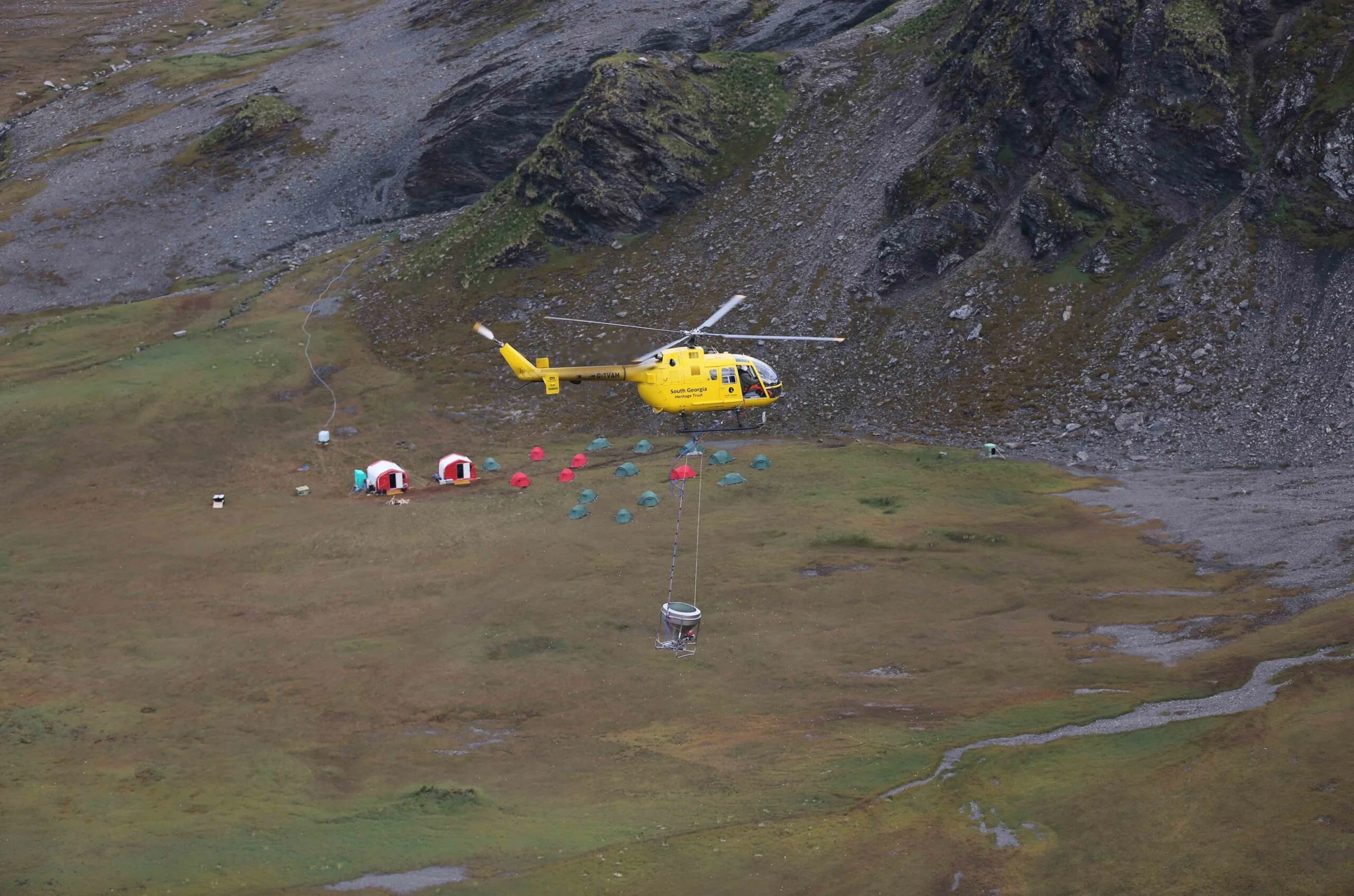
It is 2011, and phase one of the “Habitat Restoration Project” is underway. This is the trial operation, its goal to test the feasibility of the project, and it consists of an eleven person team, dubbed “Team Rat” — although they certainly aren’t on the side of the rats. Two helicopters whirr low over South Georgia’s rugged landscape, carrying specially designed buckets full of bait pellets, each containing a lethal dose of brodifacoum. More than 50 tonnes are scattered onto the land below.
Before being loaded onto the helicopter's spreader buckets and rained down onto South Georgia, before even reaching the sub-Antarctic, the specialized brodifacoum first pellets had to survive a massive journey. Manufactured off-site (likely in the USA or New Zealand), the 50 tonnes of bait was shipped to the Falkland Islands off the coast of Argentina, then 1,400 kilometres (870 mi) to South Georgia, meaning the pellets had to be extremely durable to withstand months of transit and storage without spoiling — a lesson learned from the Kāpiti operation in New Zealand.
South Georgia’s isolated location in the Southern Ocean creates difficulties, as did Campbell’s isolation, but the island’s cold, rugged landscape proves to be an advantage. Team Rat uses the island’s natural “walls”— its glacial barriers — to isolate zones for treatment, essentially treating the island like a series of smaller “islands.” Once a section is baited and cleared of rodents, there is little to no risk of rats from neighbouring areas reinvading.⁵
Over the course of 28 days, Team Rat cover some 12,500 hectares (128 km²) in rodenticide-filled pellets. And although this is only 12% of the infested area, this trial alone is already the largest eradication ever attempted.
The proof-of-concept is complete and, in 2013, the project moves onto phase two.
Team Rat, now with 25 members, have over 150 tonnes of pellets to move and store, as well as the fuel necessary for three helicopters and over 600 flying hours. 800 separate loads are flown out from the helideck of the Antarctic Survey's logistics ship RRS Ernest Shackleton to fourteen operating bases located around the island’s coastline.
This scattered distribution is necessary given the island’s large size, with helicopters reloading at the nearest base to their designated target areas. Pilots fly with the helicopter doors off to more clearly see the bait drop zones below them, enduring temperatures of -14°C (6°F). Heaps of powder snow and frozen equipment threaten to halt operations. Nonetheless, over 157 tonnes of bait is successfully distributed. In this phase, Team Rat also go after the mice. The size of bait and concentration of rodenticide is altered for maximum effectiveness, and then scattered across the 49-square-kilometer zone inhabited by the house mouse.
2015 sees the start of phase three. Pellets are hand-scattered inside abandoned whaling stations, where hiding rodents could potentially have missed the bait outside. Another 95 tonnes of bait are dropped.
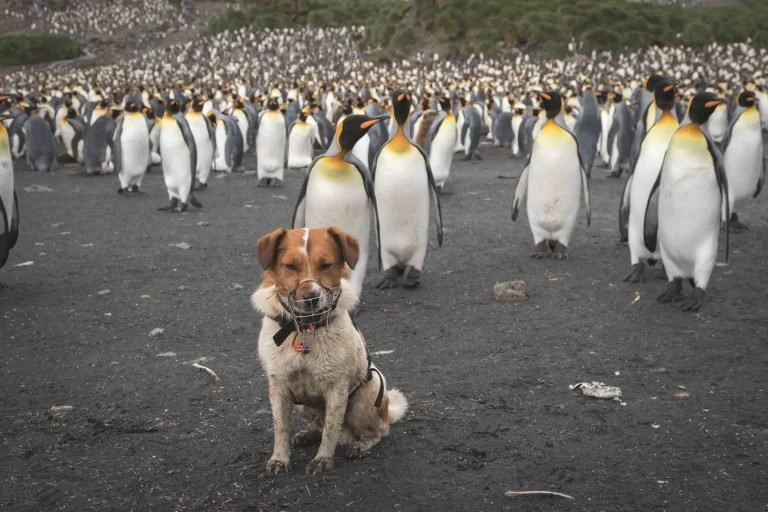
It has been two years since the last poison bait was dropped, and Team Rat return to the island for the fourth and final phase.
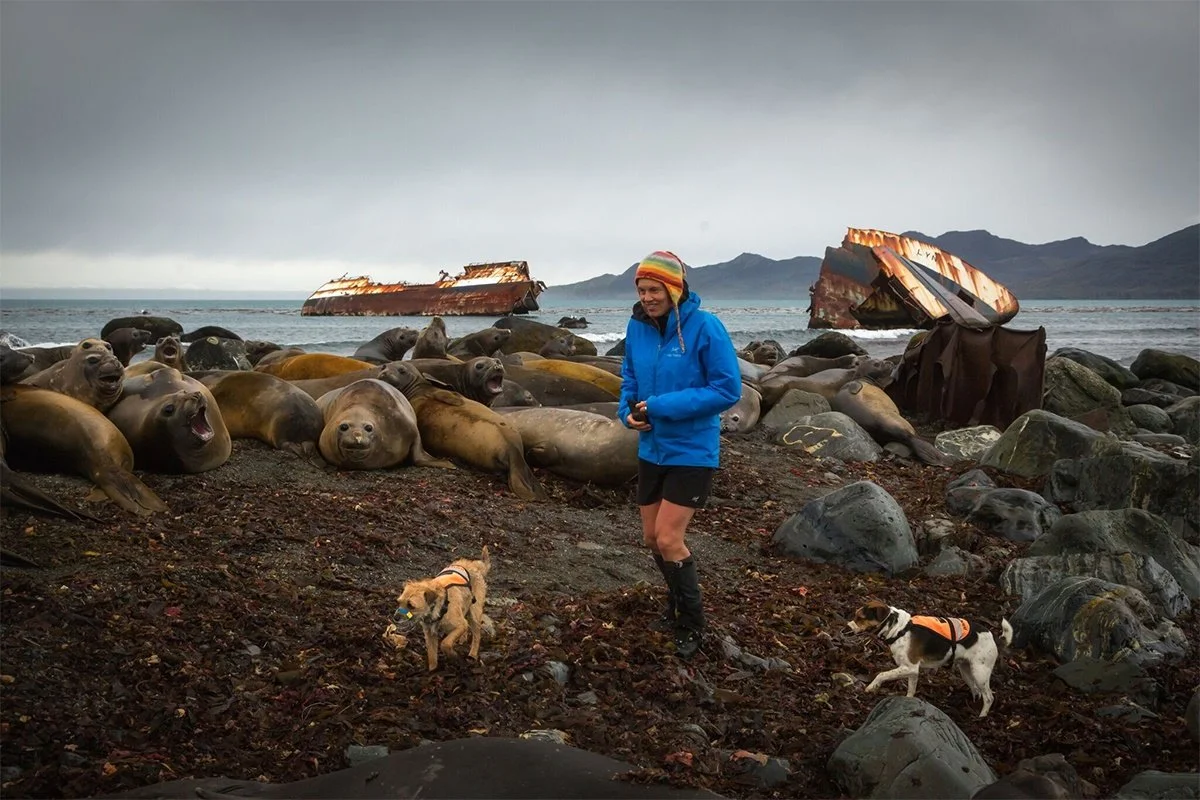
Between 2017-18, they comb the entire island for rodents: deploying over 4,600 devices, such as chewsticks, meant to reveal the presence of rodents, and employing three rodent-detection dogs. After six months, the chewsticks are unchewed and the rodent-detecting dogs detect nothing. Team Rat found no rats nor mice.
But they did find pintails and pipits.
Once the rodents disappeared, the South Georgia pintail showed almost-immediate signs of breeding success in previously infested zones. The South Georgia pipit, meanwhile, quickly reclaimed its historic range on the mainland, and began to breed prolifically as small songbirds do.
On May 18, 2018, South Georgia was officially declared rat- and mouse-free.
During the seven years of operations on South Georgia, rodents were successfully removed from Australia’s Macquarie Island (12,785 ha). New Zealand’s Antipodes Island (2,012 ha), once home to 200,000 house mice, was declared mouse-free in 2018 — notably, a crowdfunding campaign called the "Million Dollar Mouse" saw the public raise a large portion of the budget for the project. Lord Howe Island was cleared of rats and mice in 2019, making it the largest permanently populated island with a successful eradication. And, on the Galápagos island of Floreana (over 17,000 ha), a rodent removal operation began in late-2023 and is currently underway.
Over 600 islands worldwide have been cleared of invasive rodents with the goal of protecting native ecosystems.
Seabird populations boomed on the tiny island of Maria/Ruapuke. Kāpiti Island, now a true sanctuary, saw its saddlebacks, stitchbirds, and kakas increase in abundance. The Campbell Island teal could be safely reintroduced back to its own island. The grey petrel saw a 600% increase in breeding success on Macquarie Island. The odd, ground-dwelling Antipodes parakeet got its insect food supply back. And the Lord Howe woodhen population has more than doubled since 2019.
Success built on success. The lessons learned from one project were applied to the next — many of the techniques and personnel used on South Georgia came from New Zealand. And the projects became more and more ambitious.
As of November 2020, the South Georgia pipit is considered a species of Least Concern with a stable population of 6,000 to 8,000 mature individuals. According to the IUCN, it “now breeds and occurs year-round in all vegetated parts of the main island and smaller offshore islands.”
Thanks to decades of planning and fundraising, the collection of £10 million, the production of over 300 tonnes of bait, and the seven years of active work in sub-Antarctic conditions, the sound of bird-song — of the sole Antarctic songbird — can still be heard on this cold, windy, and stark island.
¹ Is South Georgia an Antarctic or sub-Antarctic island?
The sub-Antarctic islands are roughly located between the latitudes of 46° and 60°S, north of the Antarctic Convergence, while the Antarctic islands are south of 60°S and governed by the Antarctic Treaty.
According to Friends of South Georgia Island, “The [South Georgia and South Sandwich] islands are a United Kingdom overseas territory and lie within the Antarctic convergence making them a true Sub Antarctic group of islands.”
² “El Hornero is the national scientific journal on Neotropical ornithology, managed by the Scientific Department of Aves Argentinas. It is one of the oldest journals on ornithology, which from 1917 to the present date, publishes original research results and reviews on the biology of birds, mostly from the Neotropics.”
³ In addition to writing about the South Georgia pipit and pintail, Robert Cushman Murphy surveyed South Georgia’s Bay of Isles (where a series of peaks was later named Murphy Wall), collected the type specimen for the Chilean jack mackerel (known by the scientific name Trachurus murphyi), described a new species of petrel (Murphy’s petrel, Pterodroma ultima), and rediscovered the Bermuda petrel, which was thought to be extinct for over 300 years.
⁴ Not to be confused with Maria Island off the eastern coast of Tasmania, Australia — an important sanctuary for Tasmanian wildlife (including the Tasmanian devil, rufous-bellied pademelon, and 11 of Tasmania's 12 endemic bird species) — nor with Ruapuke Island, located south of New Zealand’s South Island.
⁵ The glaciers of South Georgia have been retreating significantly: “Ninety-seven percent of these glaciers have retreated over the period for which observations are available [1950s-2010]. The average rate of retreat has increased from 8 Ma-1 in the 1950s to 35 Ma-1 at present.” (Cook, et al., 2010)
These barriers of ice are melting away to reveal rocky corridors and beaches, which would have allowed rodents to bypass the historical boundaries. Had the team waited even a decade longer to act, their "zoning" strategy wouldn’t have been possible, likely rendering the entire eradication effort unfeasible. South Georgia was cleared of rodents just in time. The window of opportunity may be closing for other Antarctic and Arctic islands.
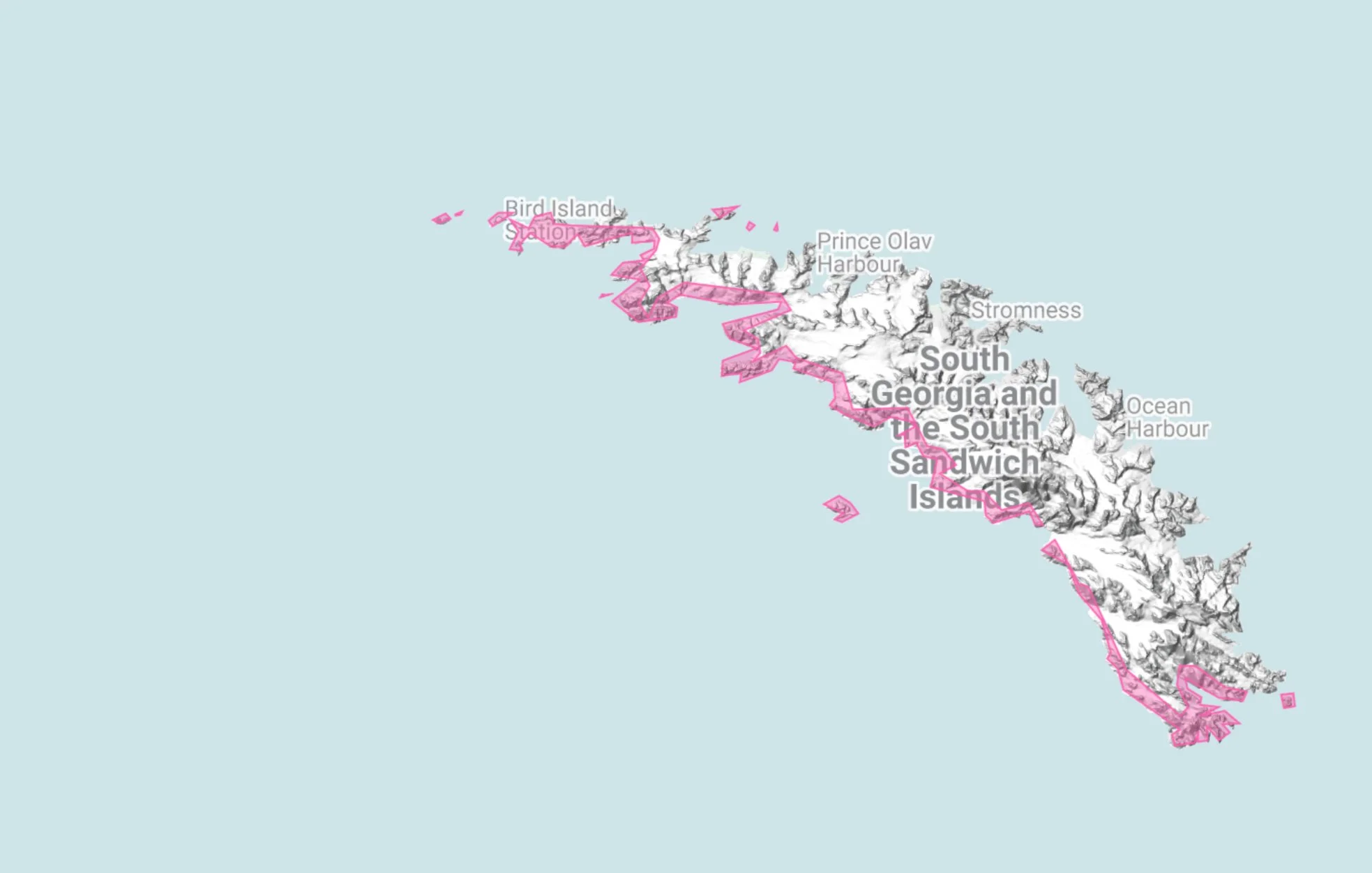
Where Does It Live?
⛰️ Tussac grass, rocky shorelines, and inland pools and streams.
📍South Georgia Island

‘Least Concern’ as of 02 Nov, 2020.
-
Size // Small
Wingspan // N/A
Length // 16.5 cm (6.5 in)
Weight // 36 g (1.3 oz)
-
Activity: Diurnal ☀️
Lifestyle: Solitary 👤
Lifespan: N/A
Diet: Omnivore
Favorite Food: Coastal insects
-
Class: Aves
Order: Passeriformes
Family: Motacillidae
Genus: Anthus
Species: A. antarcticus
-
Endemic to the island of South Georgia, this species has uncharacteristically long legs and hindclaws for a pipit, which it uses to navigate the thick tussac grass and rocky shores where it hunts for dwarf spiders, bog beetles, and kelp flies (among other invertebrates).
It has evolved significantly thicker feathers than its more equatorial mainland relatives to provide insulation from the "Roaring Forties" and "Furious Fifties” — incredibly strong winds that whip across the Southern Ocean — and temperatures that, on average, hover around freezing.
During the breeding season, males perform spectacular aerial song displays, hovering high above the cliffs before parachuting down. There are also reports of “the bird's lark-like rising, fluttering, and lovely singing.” (Pagenstecher, 1884).
For two centuries, invasive brown rats and house mice (introduced by sealers and whalers) preyed on the pipit's eggs and chicks, pushing the species to take refuge on tiny offshore islets. However, following the world’s largest rodent eradication project — taking seven years to complete — the island was declared completely rodent free in 2018. The South Georgia pipit has reclaimed its island and the species is now listed as Least Concern by the IUCN.
-
Mitteilungen aus dem Naturhistorischen Museum in Hamburg (Proceedings from the Natural History Museum in Hamburg)
Notes sur Anthus antarcticus (Notes on Anthus antarcticus) by Murphy, 1923
Government of South Georgia and the South Sandwich Islands — Eradication Projects / Rats & Mice
Rodent eradication scaled up: clearing rats and mice from South Georgia by Martin, et al., 2017
Glacier retreat on South Georgia and implications for the spread of rats by Cook, et al., 2010
New Zealand Herald — New Zealand expert in South Georgia
Bell Labs — South Georgia Island baiting complete
Beyond Kapiti - A decade of invasive rodent eradications from New Zealand islands by Broome, 2009
Predator Free New Zealand — History of eradication
New Zealand Government: Conservation Blog — Kāpiti Island rat eradication
New Zealand Government: Department of Conservation — eradicating predators from islands
Te Ara: Encyclopedia of New Zealand — introduced animal pests
Auckland Museum — Maria/Ruapuke Island
New Zealand Geographic — Maria/Ruapuke Island
Science — the global war on island rats
BBC — rats on Palmyra
Australian Government: Department of the Environment — Macquarie Island
Eradications of invasive mammals from islands: why, where, how and what next? by Philips, 2016
Yale Environment 360 — rat eradication on islands
-