Red Avadavat
Amandava amandava
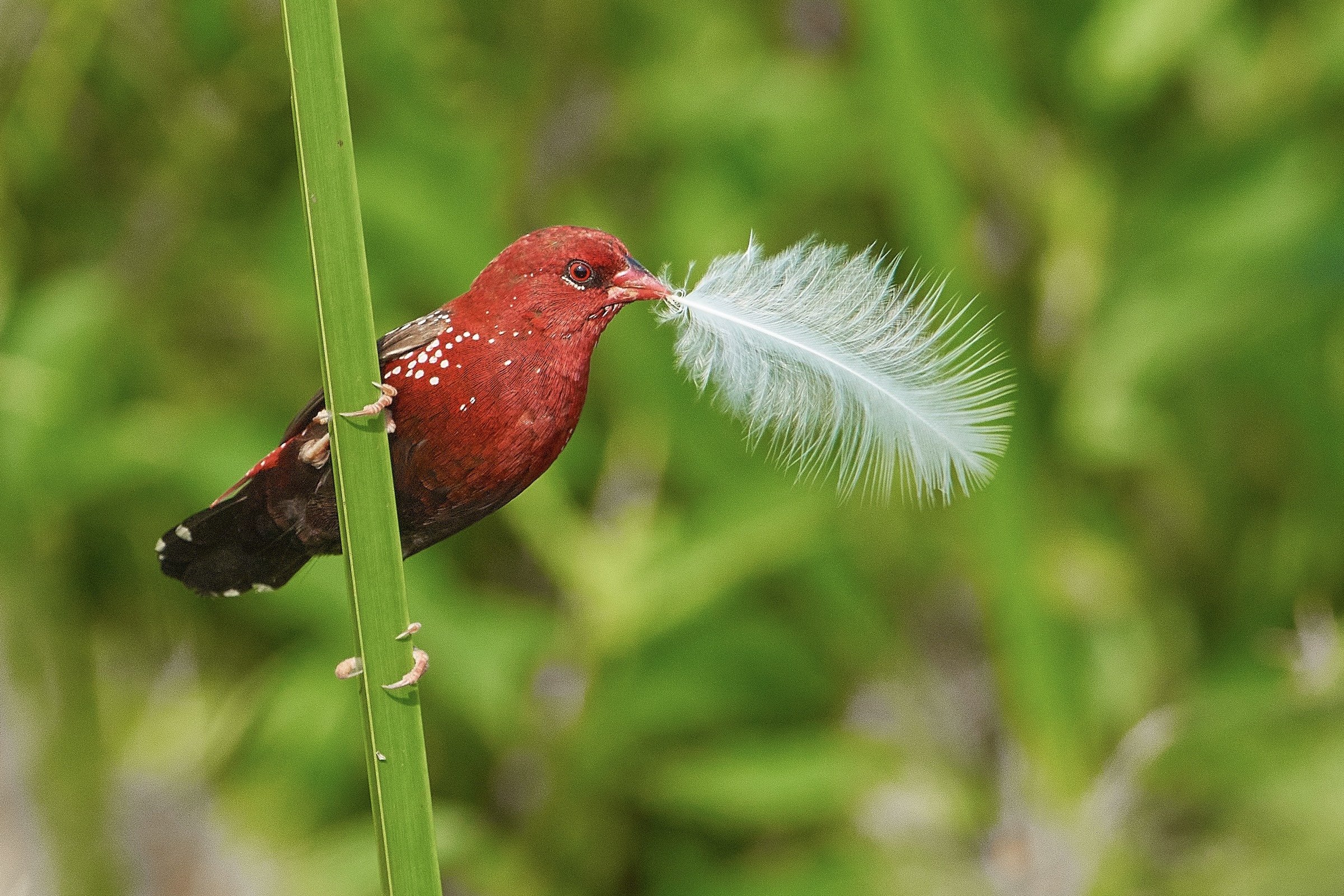
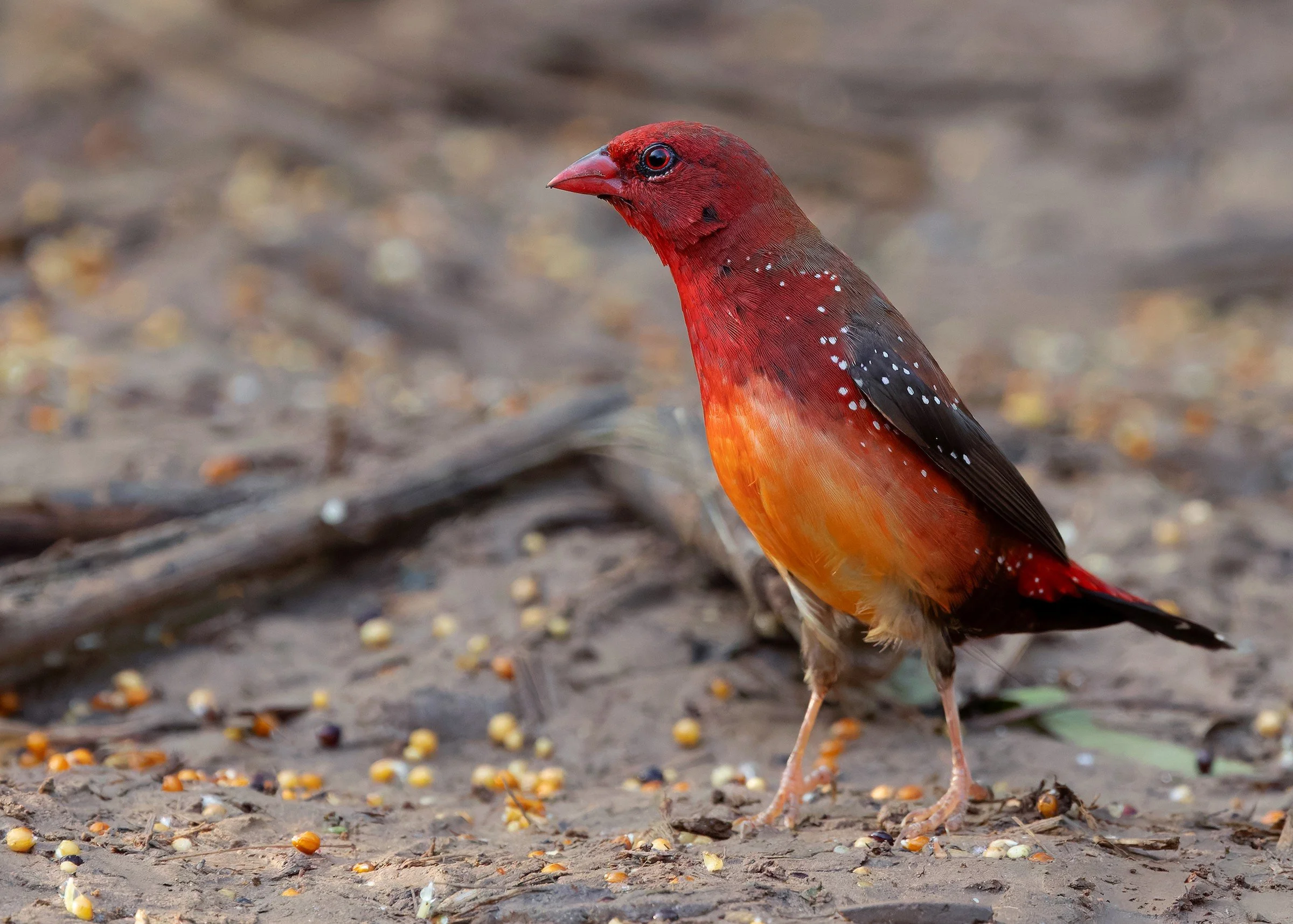
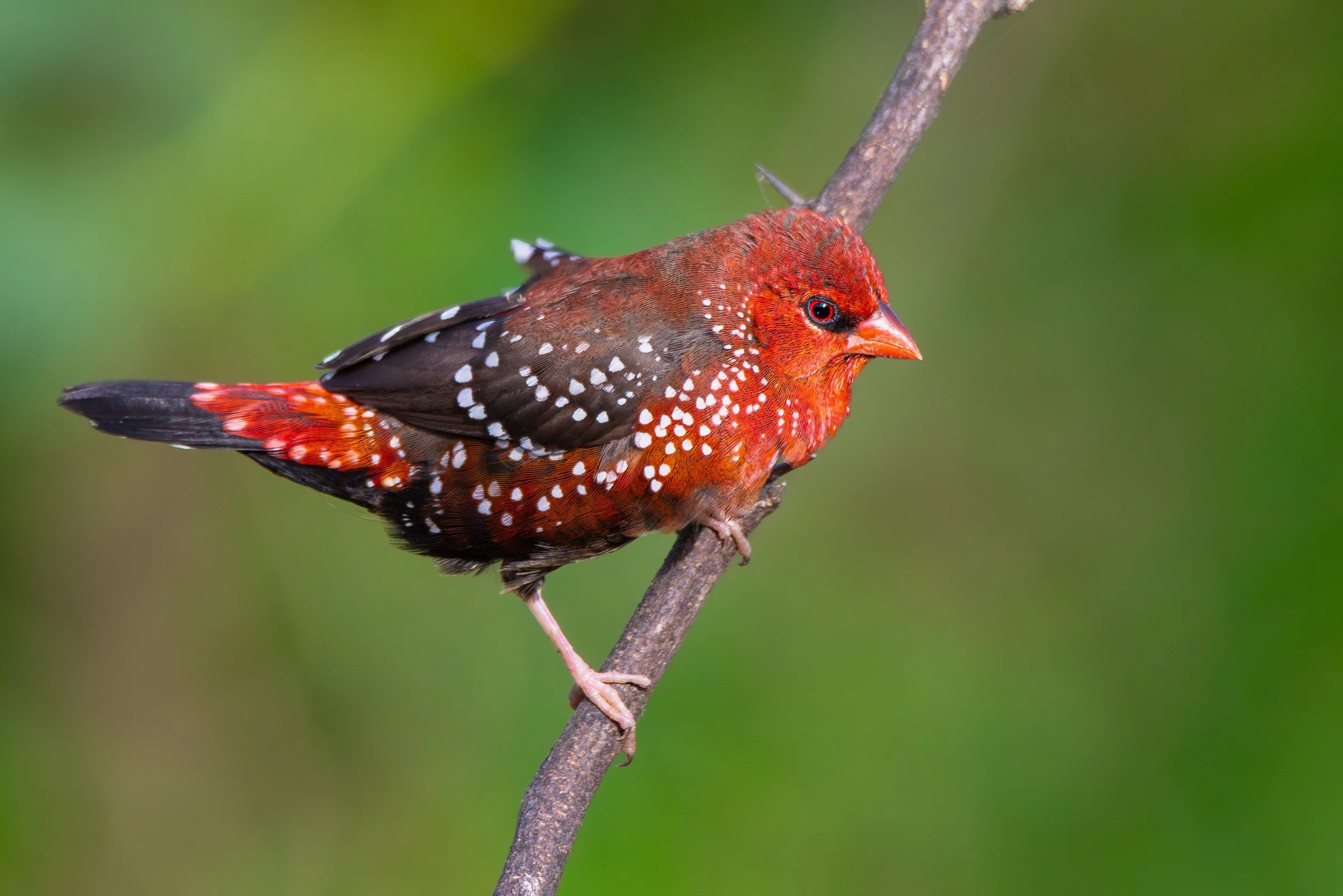
The breeding plumage of a male red avadavat is a deep scarlet, flecked with dots of white — the species is also known as the “strawberry finch.” To court a female, a male bows deeply and repeatedly, holding a blade of grass or feather in his beak.
The red avadavat isn't always red.
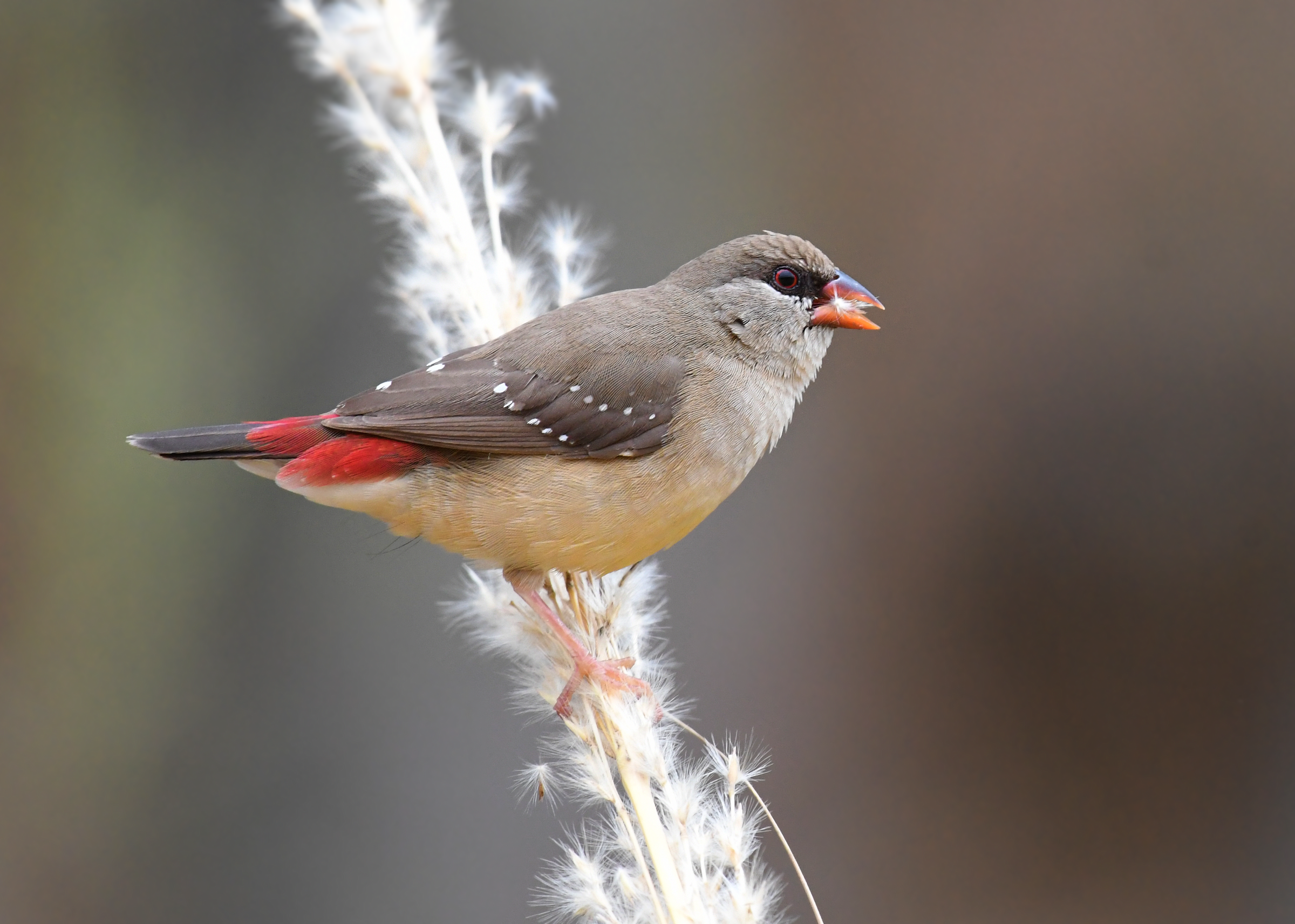
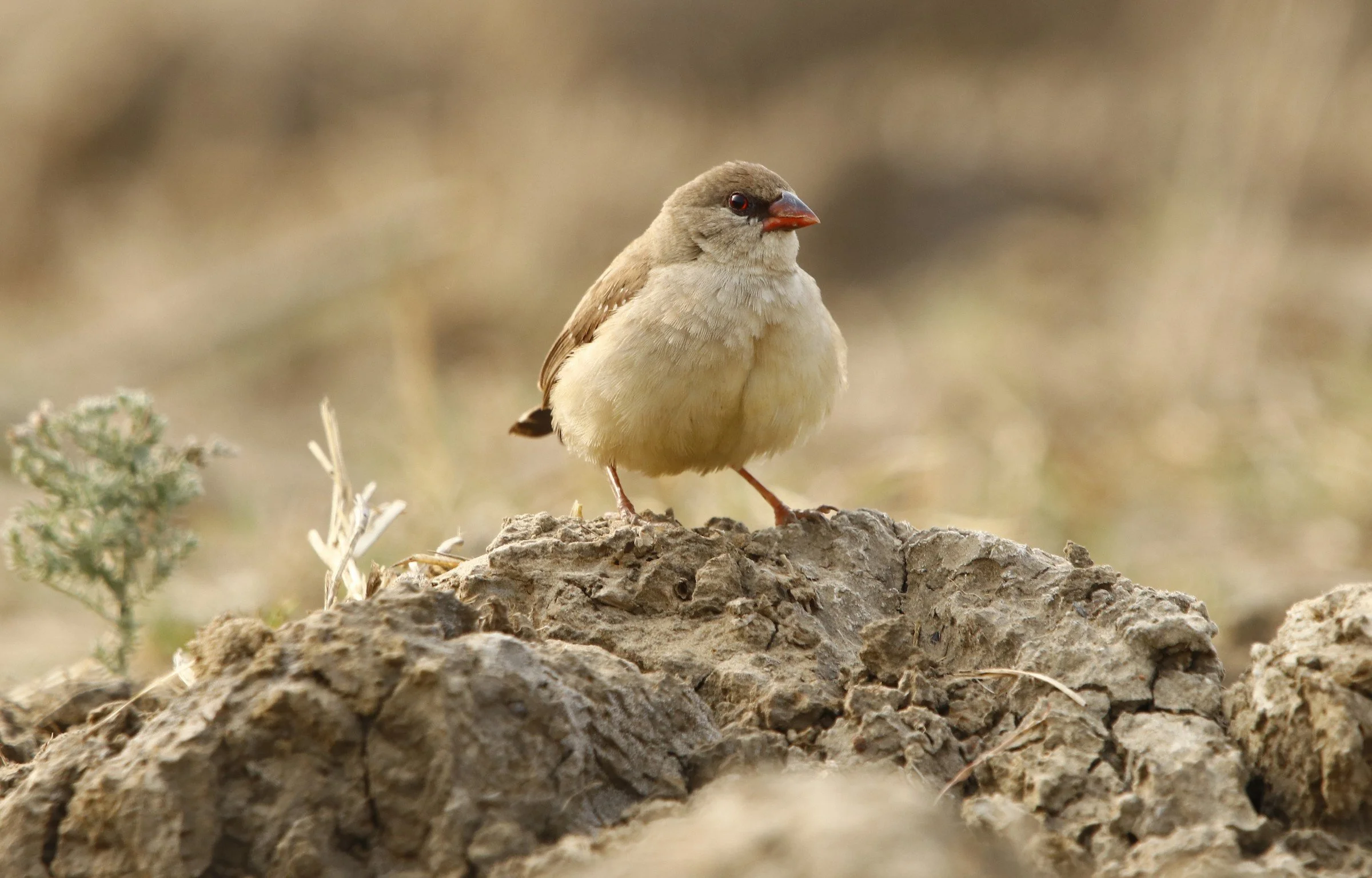
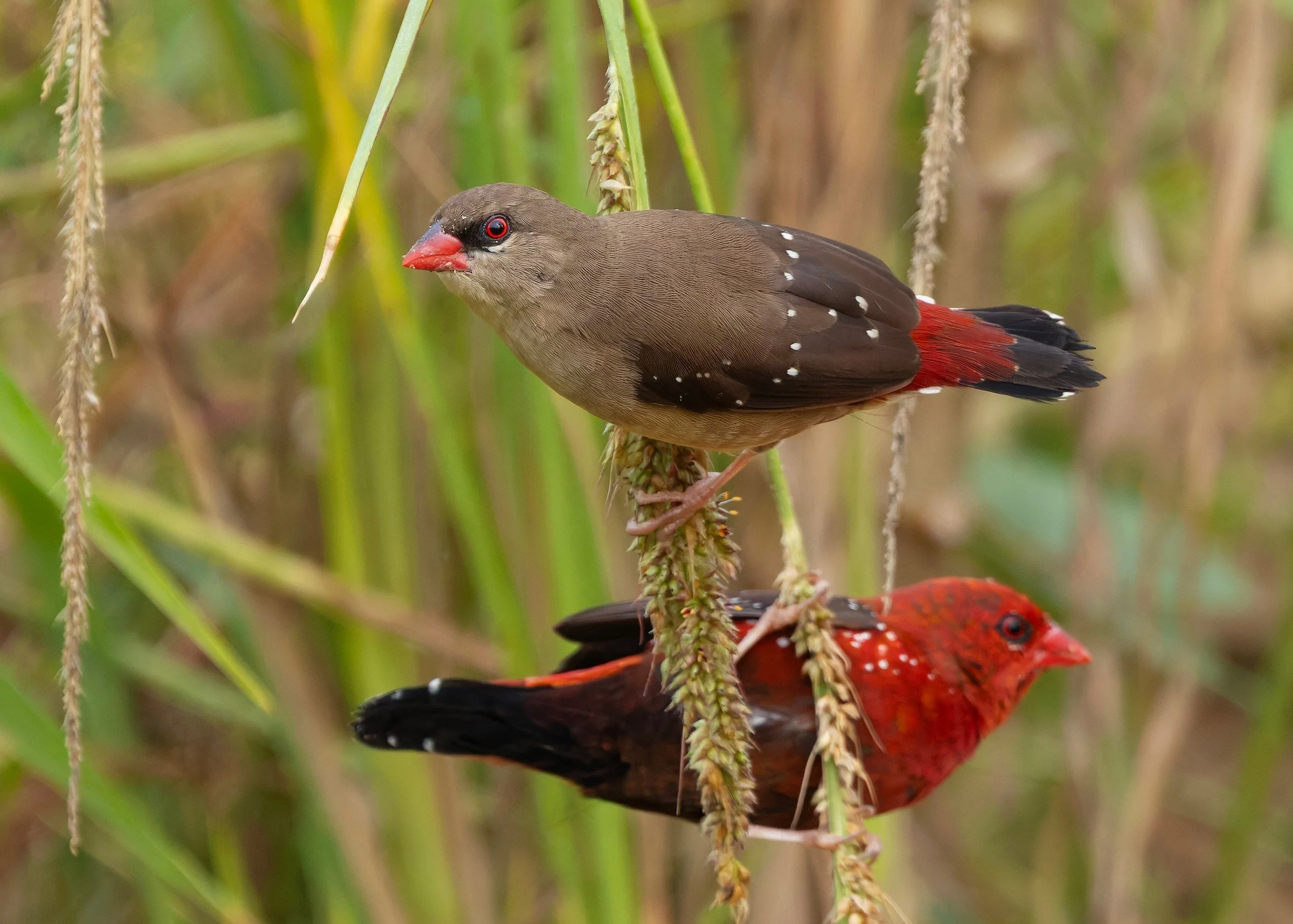
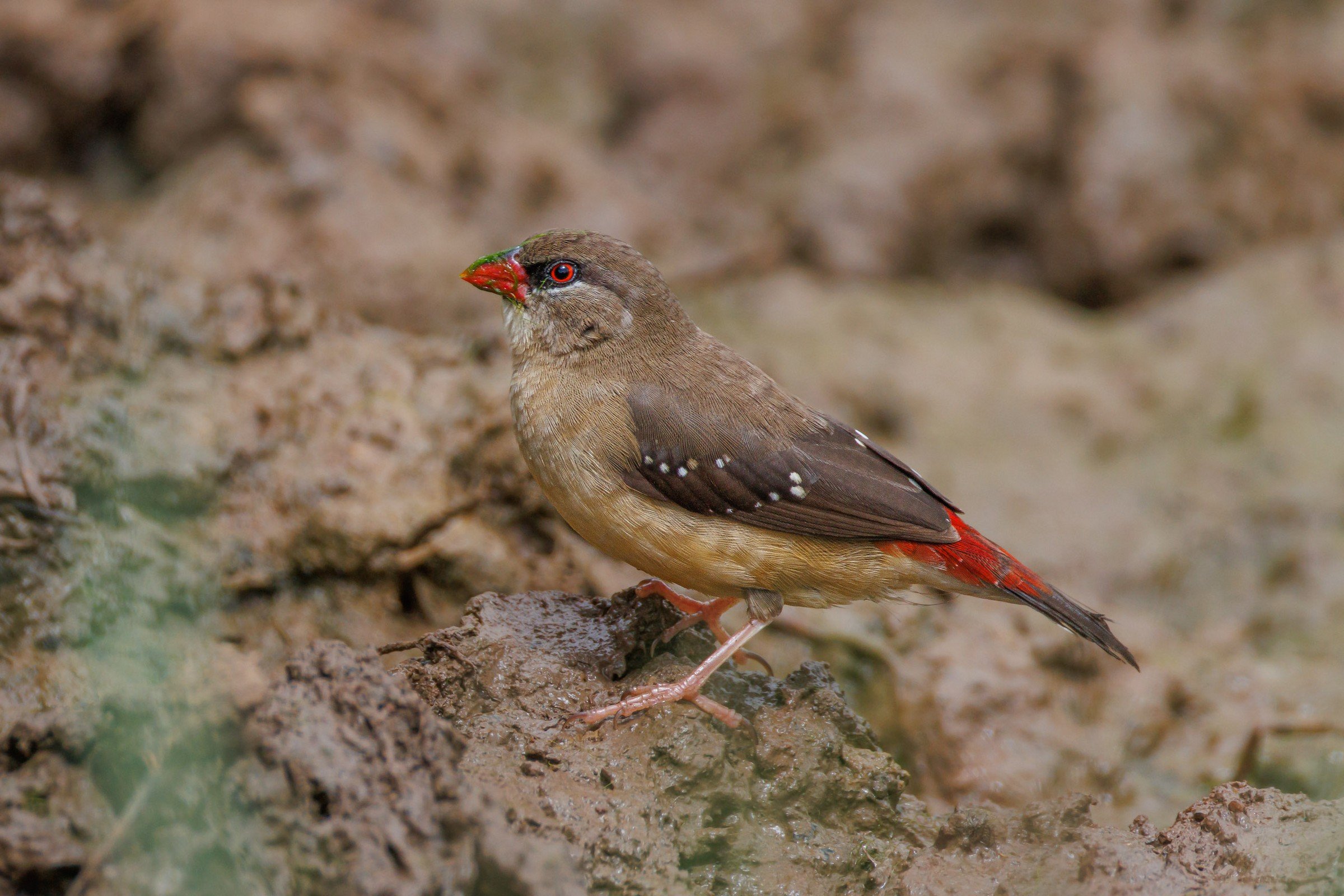
In fact, most of the time, it’s not. A juvenile is a dull grey or brown. A female is a mixture of yellow, tan, and rufous — even during breeding season, all she gets is a few white dots. And, for most of the year, a male looks much like the opposite sex. Then the breeding season rolls around, and the male dons his most eyecatching, most attractive, most red attire.¹
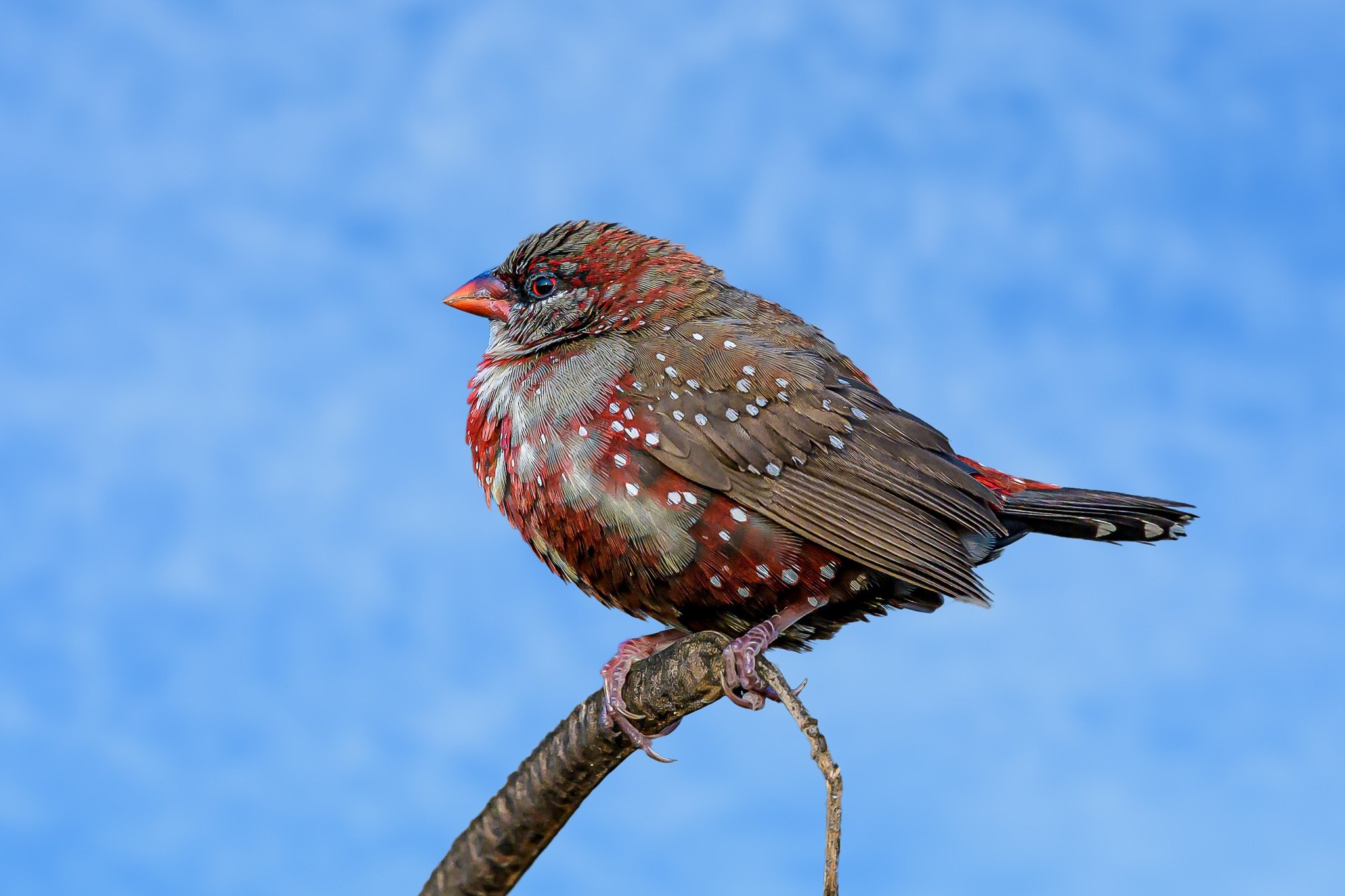
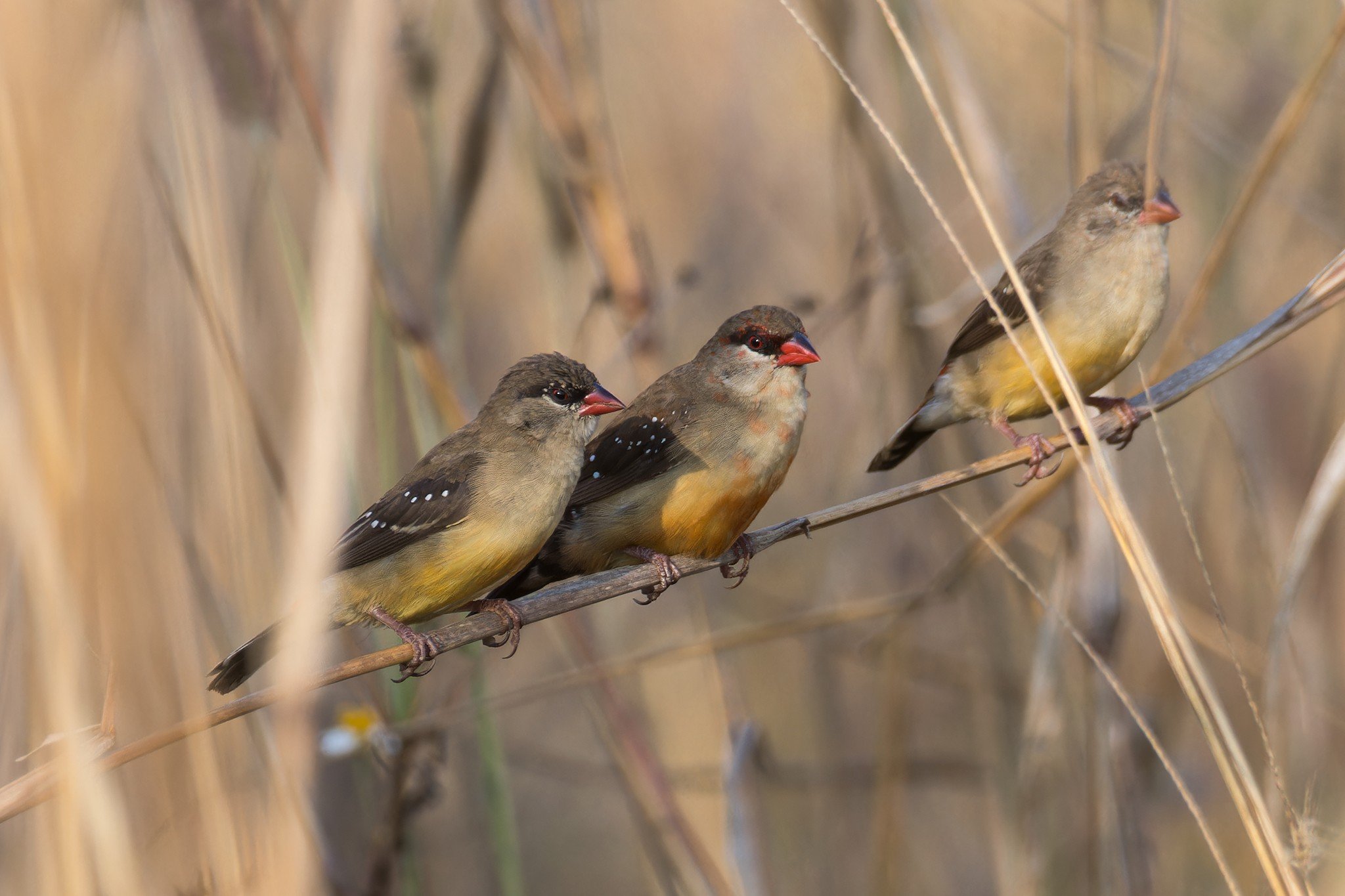
A male sits on the open branch of a bush, showing himself off. From beak tip to tail feathers, he is red. The dark feathering along his wings and tail only highlight his burning crimson colour. He peers around with a scarlet eye and opens his cherry-red beak to sing a high, chirping song. His feathers are decorated with white dots, as if bespeckled by a flick from an artist's brush. It's easy to see how such a bird, appearing like the brightest strawberry you’ve ever seen,² might catch the attention of a female.
But his fashion, ripe and red as it is, isn't enough.
A female requires a performance and the male bows to — quite literally. With a blade of grass or a feather held in his beak, as a tango dancer holds a rose, he begins his performance. Feathers erect, he bows deep. Head up, he tweets and hops, then bows once more. And on he goes, hopping, hopping; hoping to sway the female with his doting dance. If she assents, they abscond from the other avadavats to build their home: a globular nest constructed from blades of grass and softened with feathers. They might incorporate the males’ courting “rose.”
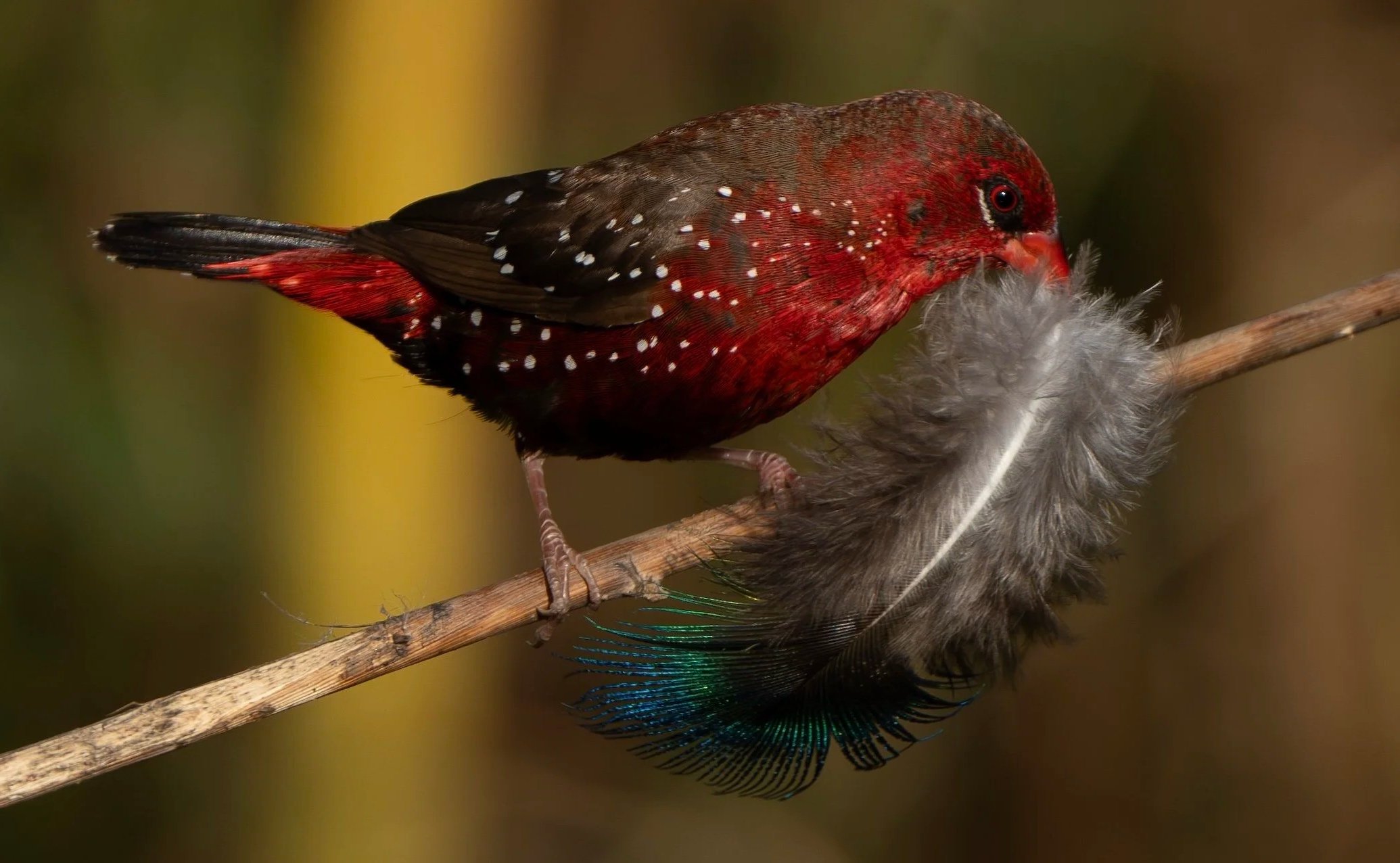
A red avadavat male with a courting feather.
Life moves quickly for such small-scale animals. Four to six eggs are laid in their nest. Eleven days and the eggs hatch. Twenty more and the chicks move out. From an egg to independent in about a month.
A lot is crammed into that month.
For one thing, a lot is crammed into a chick’s mouth, with mom and dad working to feed their offspring a buffet of grub; from ant larvae, to caterpillars to centipedes. The father passes down his songs, teaching his children his melodies as their naked heads bob and beg for food, mouths agape. Sometimes the parents get carried away, swept up in their romance, procreating so swiftly that a new clutch of eggs is laid before their first chicks can leave the nest. The father then takes sole responsibility for feeding, while the mother dotes over their new clutch.
Outside of breeding season, when they aren’t in a race to reproduce, the not-so-red avadavats gather in large sociable flocks of up to 100 individuals. This gathering behaviour is called clumping. In their clumps, the avadavats flit about and preen one another.³ They sing shrill songs to warn each other of danger and call out merrily to their dull-coloured companions. They live in collective harmony until their next breeding season, when, like ripening strawberries, the males turn bright red once more.
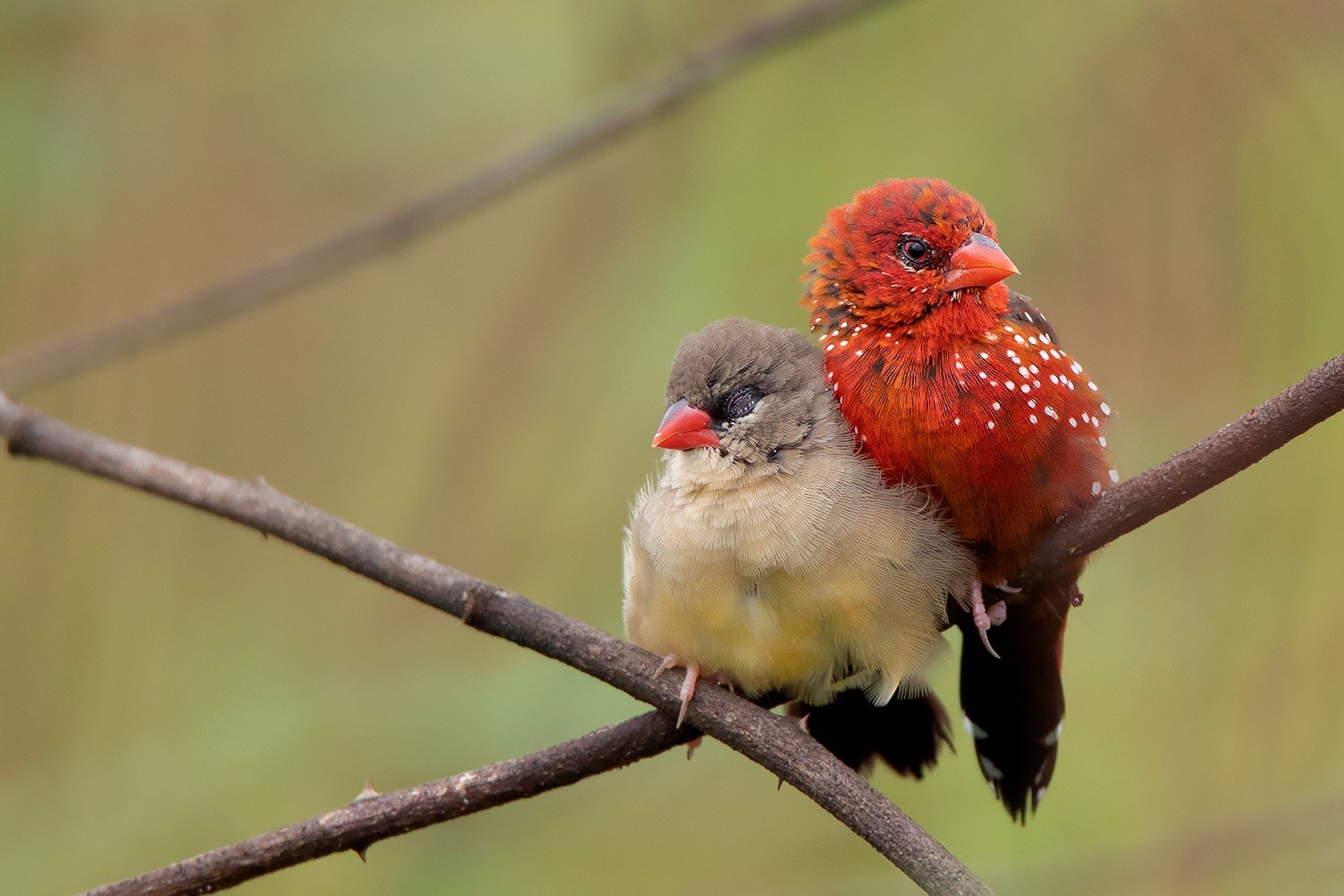
Male and female red avadavats, or strawberry finches.
¹ There’s also a yellow-bellied subspecies of the red avadavat (Amandava amandava flavidiventris) with appropriately yellow belly feathers that stand out especially against the male’s red breeding plumage.
² The red avadavat is alternatively known as the strawberry finch, although it doesn’t belong to the “true” finches (family Fringillidae). Rather it is an estrildid finch (family Estrildidae), alongside species like the zebra finch, scaly-breasted munia, Java sparrow, Fiji parrotfinch, and common waxbill. In this family, the red avadavat belongs to a monotypic genus: Amandava.
³ To see an avadavat clump for yourself, you'd need to search the gardens, fields, and jungle clearings of south and southeastern Asia; from India to the Malay Peninsula and the islands beyond. It has also been introduced to areas of Japan,West Asia, Spain, and a few Caribbean Islands. Maybe you'll even witness the curious sight of an avadavat showing off its flexibility; perched between two vertical posts with legs spread in opposite directions, doing the splits like an avian Van Damme. To spot a “ripe” male in his strawberry plumage, look out for wicker nests between January and April.
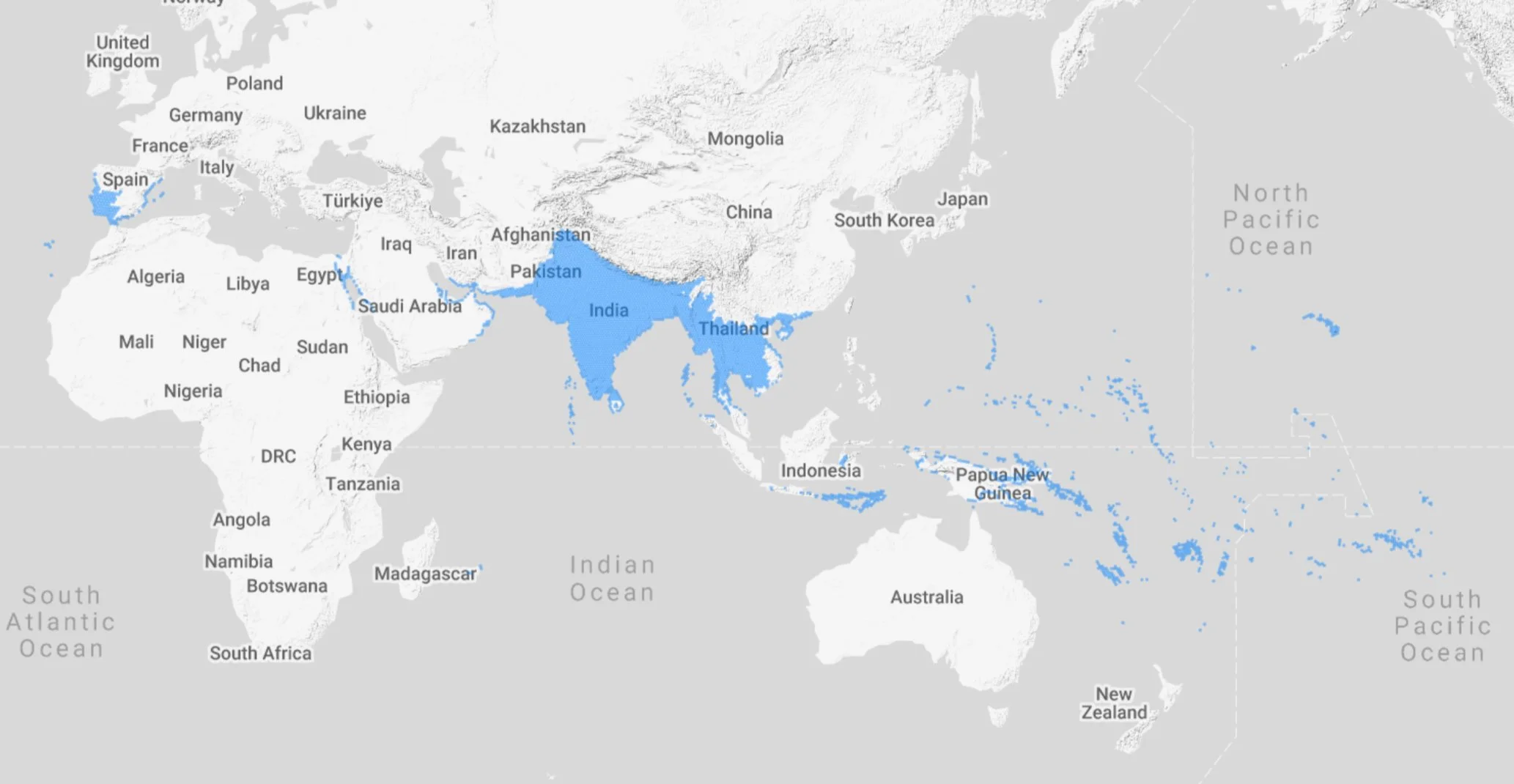
Where Does It Live?
⛰️ Grassy areas; forest clearings, scrublands, cultivated fields, parks and gardens.
📍 Native to South Asia and parts of Southeast Asia, although it has been introduced to several other countries.
-
Size // Small
Length // 10 cm (3–4in)
Weight // 7–12g
-
Activity: Diurnal ☀️
Lifestyle: Social 👥
Lifespan: N/A
Diet: Omnivore
Favourite Food: Grains and insects 🌾
-
Class: Aves
Order: Passeriformes
Family: Estrildidae
Genus: Amandava
Species: A. amandava
-
The name "Avadavat" is a corruption of Ahmedabad, a city in Gujarat, India, which served as a major centre for the bird trade in the past.
During breeding season, males transform into a brilliant deep red speckled with tiny white dots, while females and non-breeding males remain a duller greyish-brown.
Regardless of their plumage, both sexes possess a distinct, bright red conical beak used for cracking small seeds.
Their diet consists almost exclusively of grass seeds and occasional small insects, particularly when they are raising chicks.
Pairs build a spherical nest made of grass blades, usually hidden low in thick clumps of grass or reeds to protect against predators.
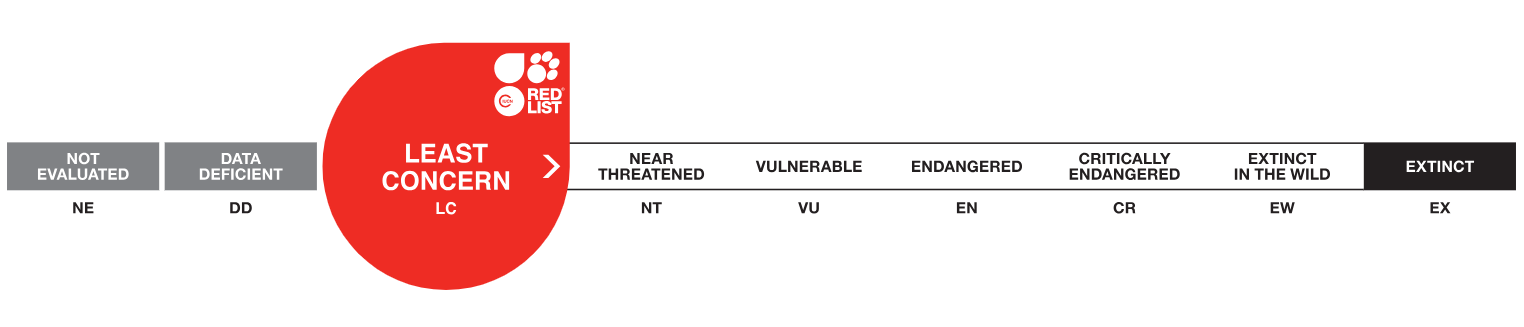
‘Least Concerned’ as of 12 Jun, 2024.