Malagasy Leaf-nosed Snakes
Langaha spp.
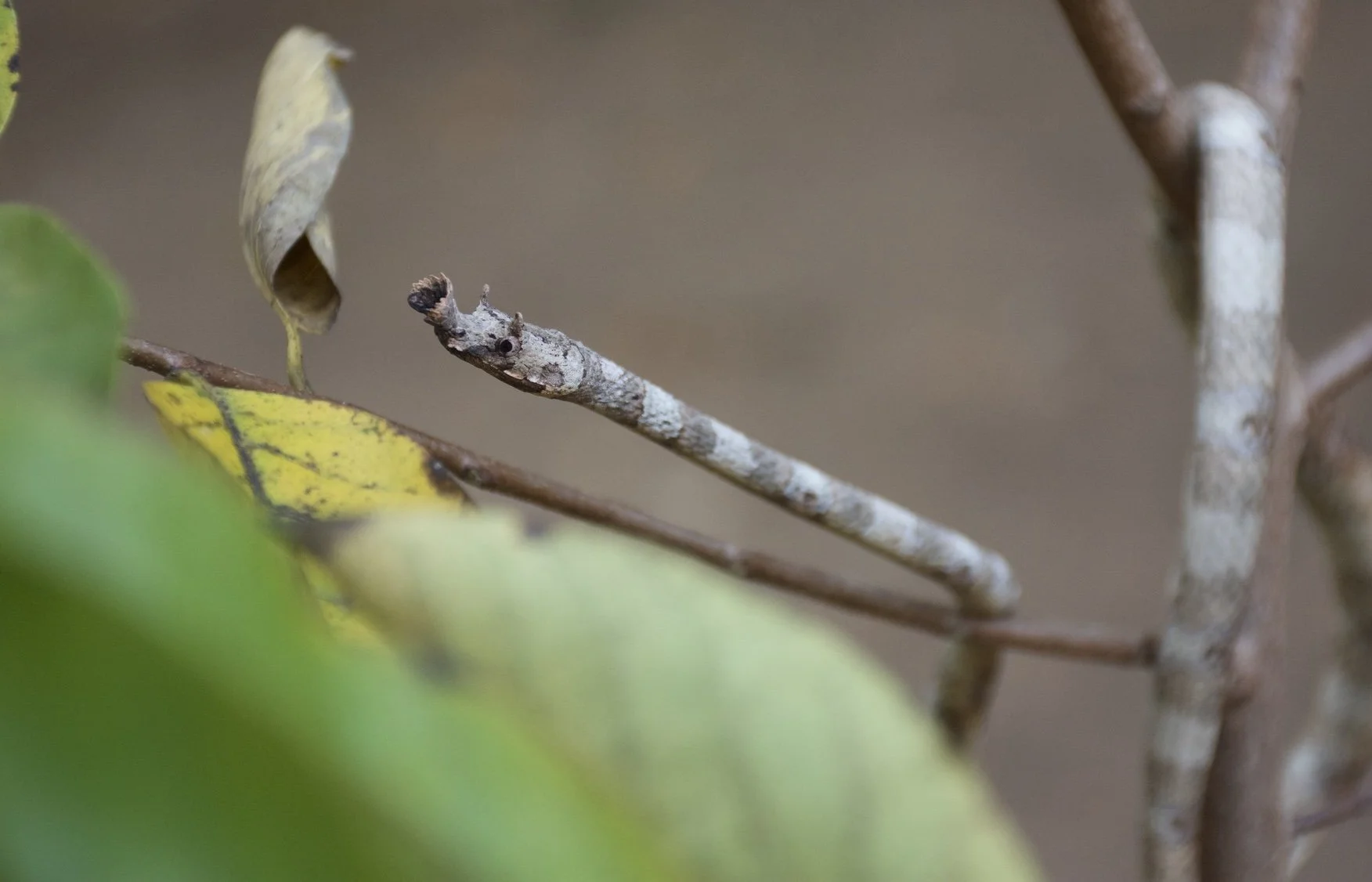
Malagasy leaf-nosed snakes possess bizarre nasal protrusions that mimic smooth vines or frilly leaves and broken branches — depending on the sex and species. These snakes can grow over a metre (3.3 ft) long, but are extremely cryptic and difficult to spot in both dry and wet forests.
You walk into a zoo enclosure crowded with trees and bushes, and after a look around, assume it to be devoid of any animal life.
You step closer to inspect what looks like a long skinny branch with several twigs protruding along its length, and you notice that it's subtly swaying back and forth, even though there is no breeze. Atop a nearby leaf, a broken twig begins to flutter its wings and takes off towards the canopy. You look upwards, blinking in the light, to see a thick piece of jagged wood perched on the end of a dead stump; it blinks back at you with yellow eyes. You go to lean against a tree trunk, and stop yourself just as you notice a patch of mossy bark softly expanding and contracting, breathing.
You look around at the forest, and every twig, leaf, and piece of bark, all suddenly seem far more alive. You are in the company of insects, birds, and geckos. And you don’t even spot the snakes hidden in the canopy above.
———
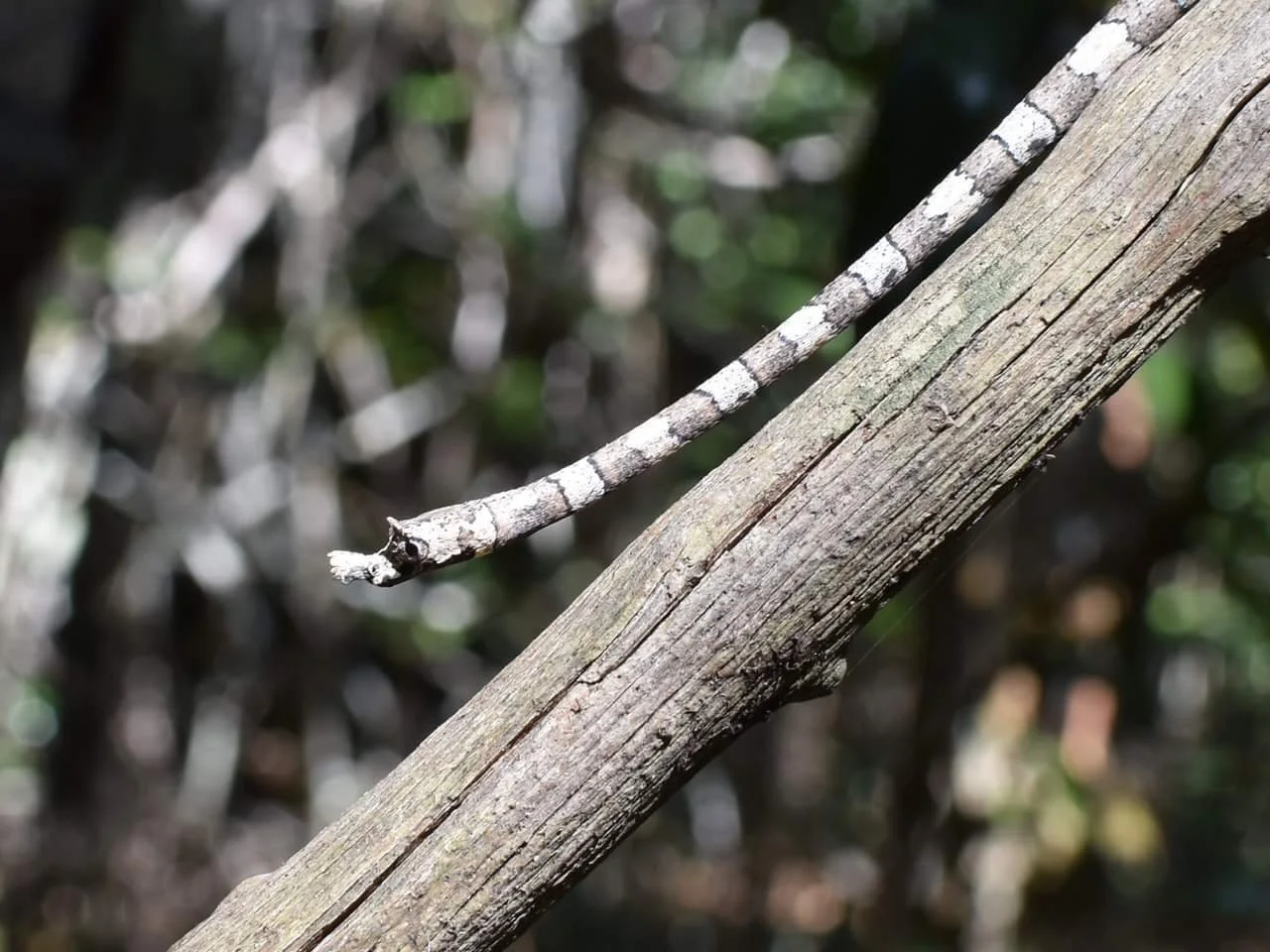
Hanging down from a tree, some two or three metres off the ground, is a metre-long (3.3 ft) branch. Its bark is greyish-brown, with lighter banding around its circumference. At one end, it is splintered into pale fibrous strands, as if someone had just snapped it in half.
If you decided, for whatever reason, to reach up and grab this branch, you would immediately notice two things: first, that it's much softer than a typical branch, and second, that it's now desperately coiling about in your grasp. You should let go.
This “branch,” as you have no doubt figured out by now, is a snake; the Ambilobe leaf-nosed snake. In the wild, this species can only be found around the Ambilobe region in northwestern Madagascar — although actually finding it is not easy, for obvious reasons.
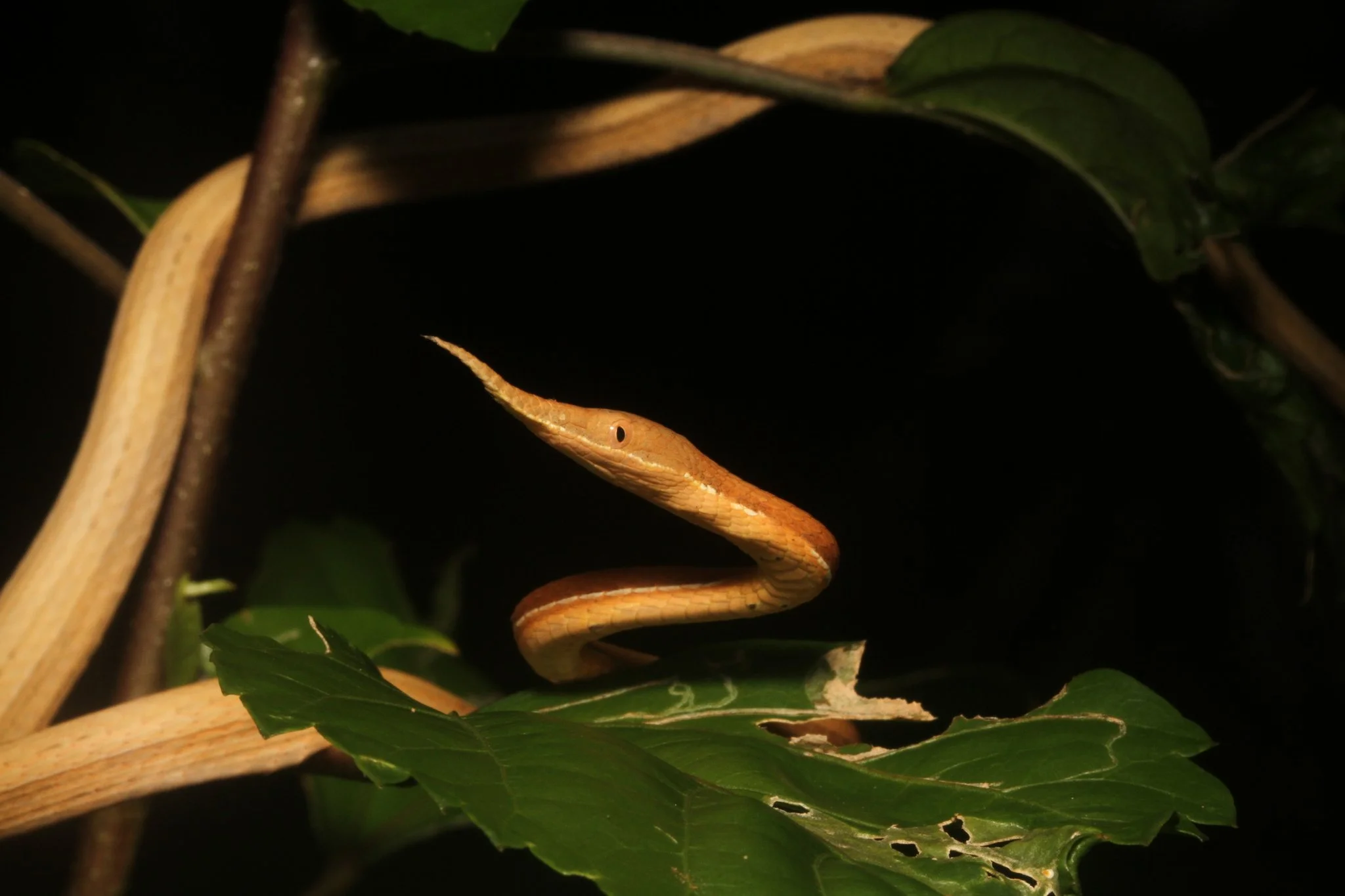
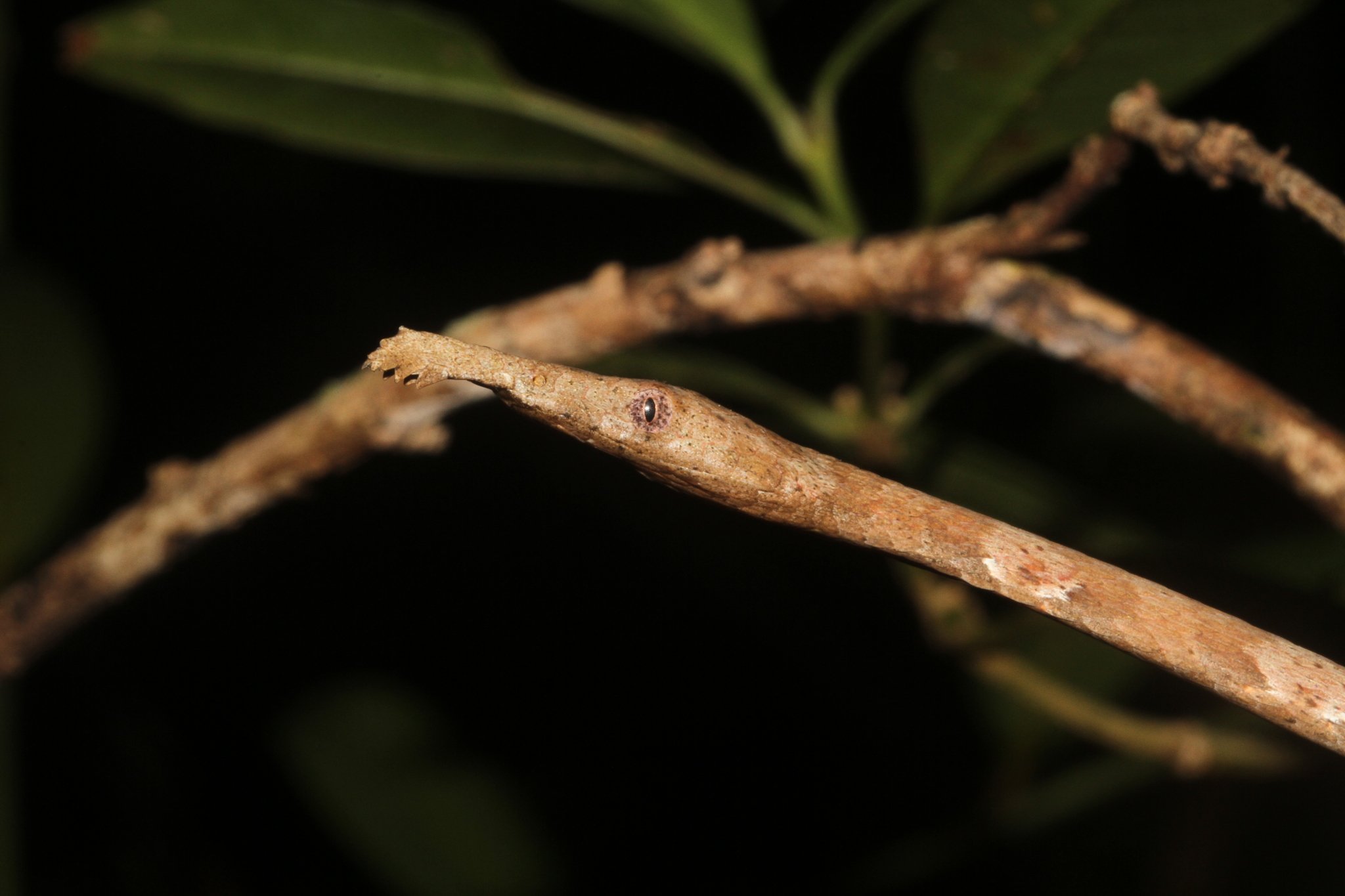
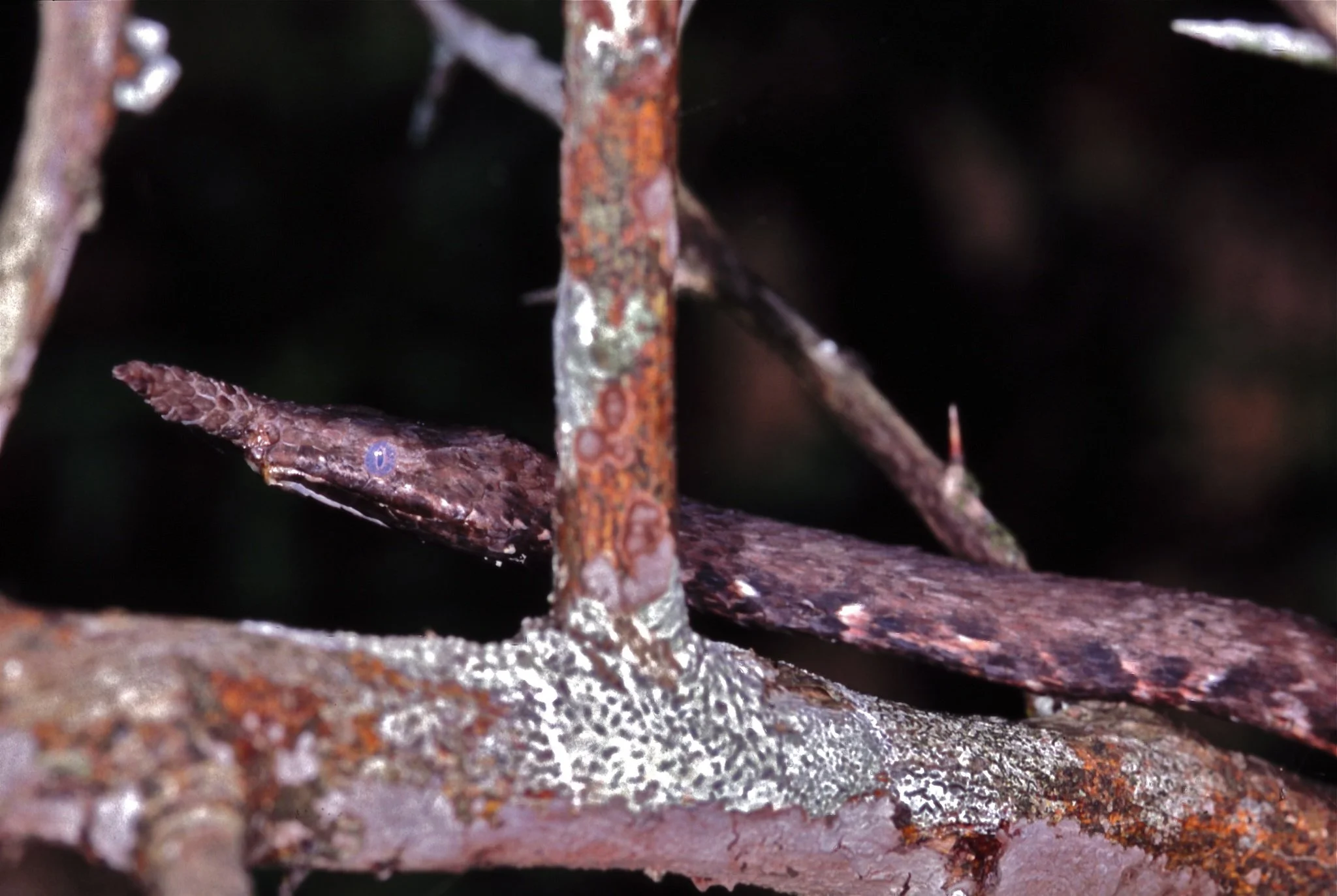
Its scales are mottled and banded to look like bark, and the part of it that looks to be the broken end of a twig is actually a hard, nasal protrusion.¹ It’s as if a buff-tip moth, whose body mimics the exposed wood of a snapped branch, was grafted to the front end of a snake — specifically, a female snake. Males tend to have a longer, more pointed protrusion, though still frayed to give the illusion of leafiness.
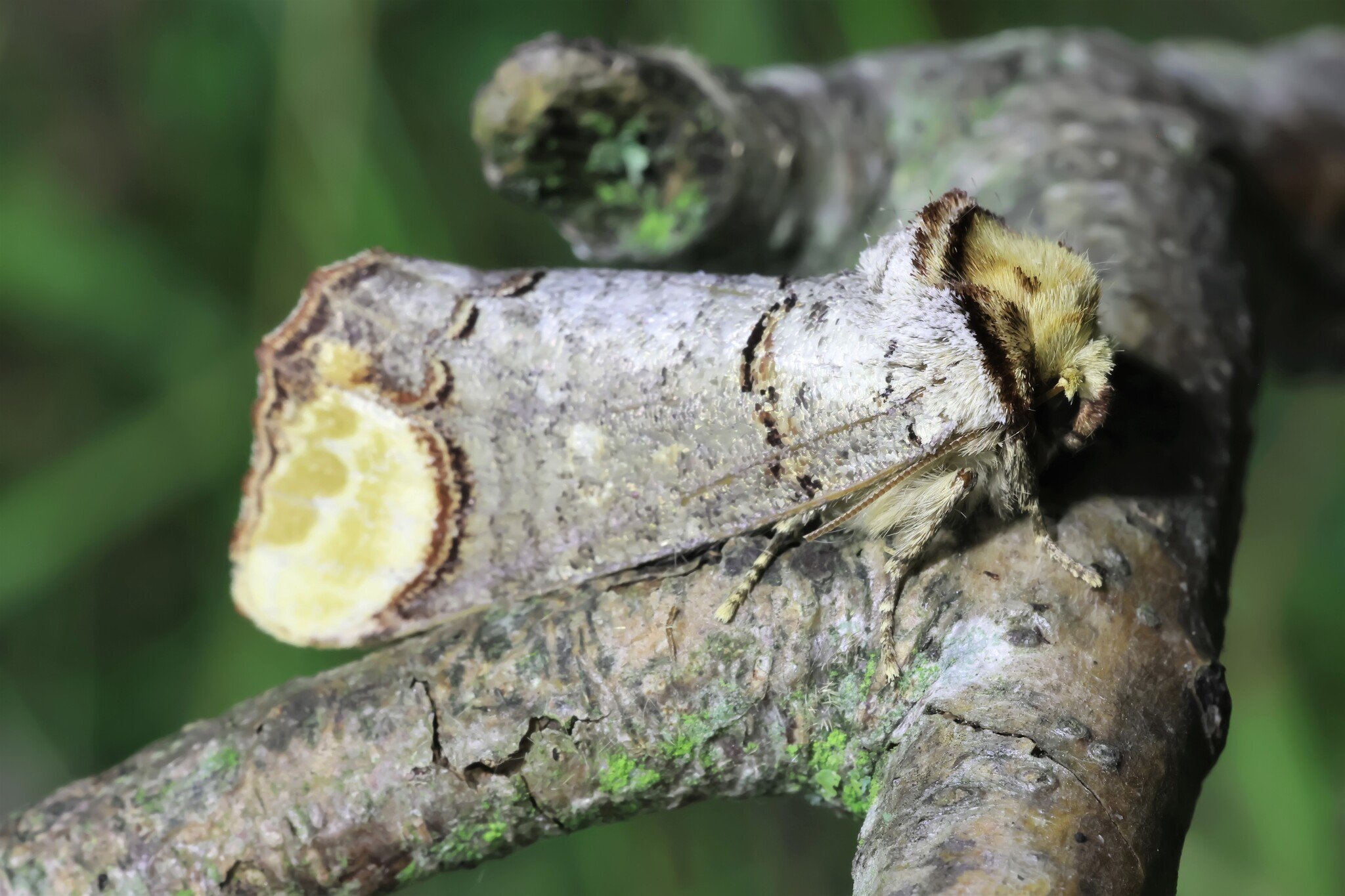
“Phalera bucephala (Buff-tip) exhibits one of the most striking examples of camouflage amongst UK moths: the yellow-tipped forewings held tent-like along the body give the convincing appearance of a broken birch twig. The moth is nocturnal and found across the UK, mainland Europe and parts of Asia.” (Boyes, et al., 2025)
Why the sexual dimorphism?
Often, sexual dimorphism has to do with sexual selection: females preferred males with a particular trait, and so that trait succeeded and persisted in males. This can happen even if that trait is deleterious to survival. We see this, for example, with the collared lizards of North America: males are colourful and ostentatious while females are dull and inconspicuous. A male might be more likely to survive if he looked like a female — less likely to be seen by both predators and prey in the desert — but survival is pointless, evolutionarily speaking, if the male can’t find a mate. Males essentially lose stealth points to put towards their attractiveness in this evolutionary trade-off.
But a male leaf-nosed snake isn’t necessarily less camouflaged, just differently camouflaged. The nasal protrusions of both females and males serve to break up the silhouette of the snake’s head, and both effectively mimic plant parts, if somewhat different plant parts.
———
The Ambilobe leaf-nosed snake belongs to a genus (Langaha) with two other species: the Madagascar leaf-nosed snake and the southern leaf-nosed snake. Not much is known about the latter, but the former — the Madagascar leaf-nosed snake (Langaha madagascariensis) — is distributed across much of the island. The males of this species have impressively long nasal protrusions, which truly do look spear-like (if a bit bent), while those of the females’ are flatter and frilled.
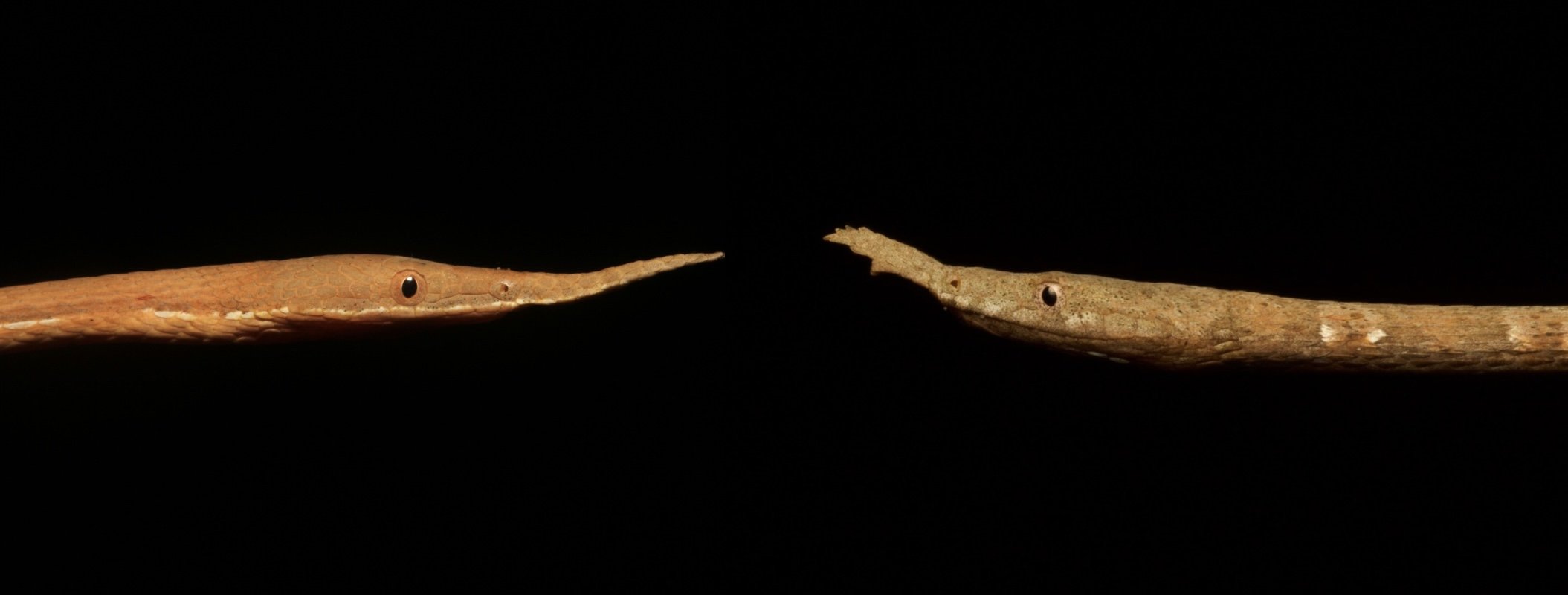
Male (left) and female (right) Madagascar leaf-nosed snakes (Langaha madagascariensis). (© Samuel GUIRAUDOU and © John Sullivan / iNaturalist)
These differences are present from birth, so they’re unlikely to be purely sexual signalling traits. They almost certainly have an ecological, functional purpose.
For a species trying to hide — that is, a cryptic species — it would be detrimental for all individuals to appear the same. Why? If a species evolved an optimal form of camouflage, wouldn’t all individuals benefit from conforming to that form? Not necessarily, and the reason has to do with what’s known as a ‘search image.’
Imagine you’re inside a zoo’s reptile house. You walk up to an enclosure and peer in through the foggy glass. You look around and see plants and rocks and water, but no animals. You can keep looking around until you maybe find whatever’s living in there, or you can check the plaque with information and a photo of the animal inside. Now you know what to look for: its shape, size, colour. You have a search image.
Animals similarly develop search images of their predators and their prey, so that they can recognise them as quickly as possible. The more exact the search image, the faster the recognition and response. In other words, when you know exactly what to look for, you’re more likely to find it, and find it quicker.
There is a small species of stick insect (known as Cristina's timema) native to the mountainous shrublands of Southern California. It is polymorphic, meaning that individuals of this one species come in different morphs: the grey morph, red morph, green morph, and striped morph (which is the same as the green, but with a white stripe down its back).
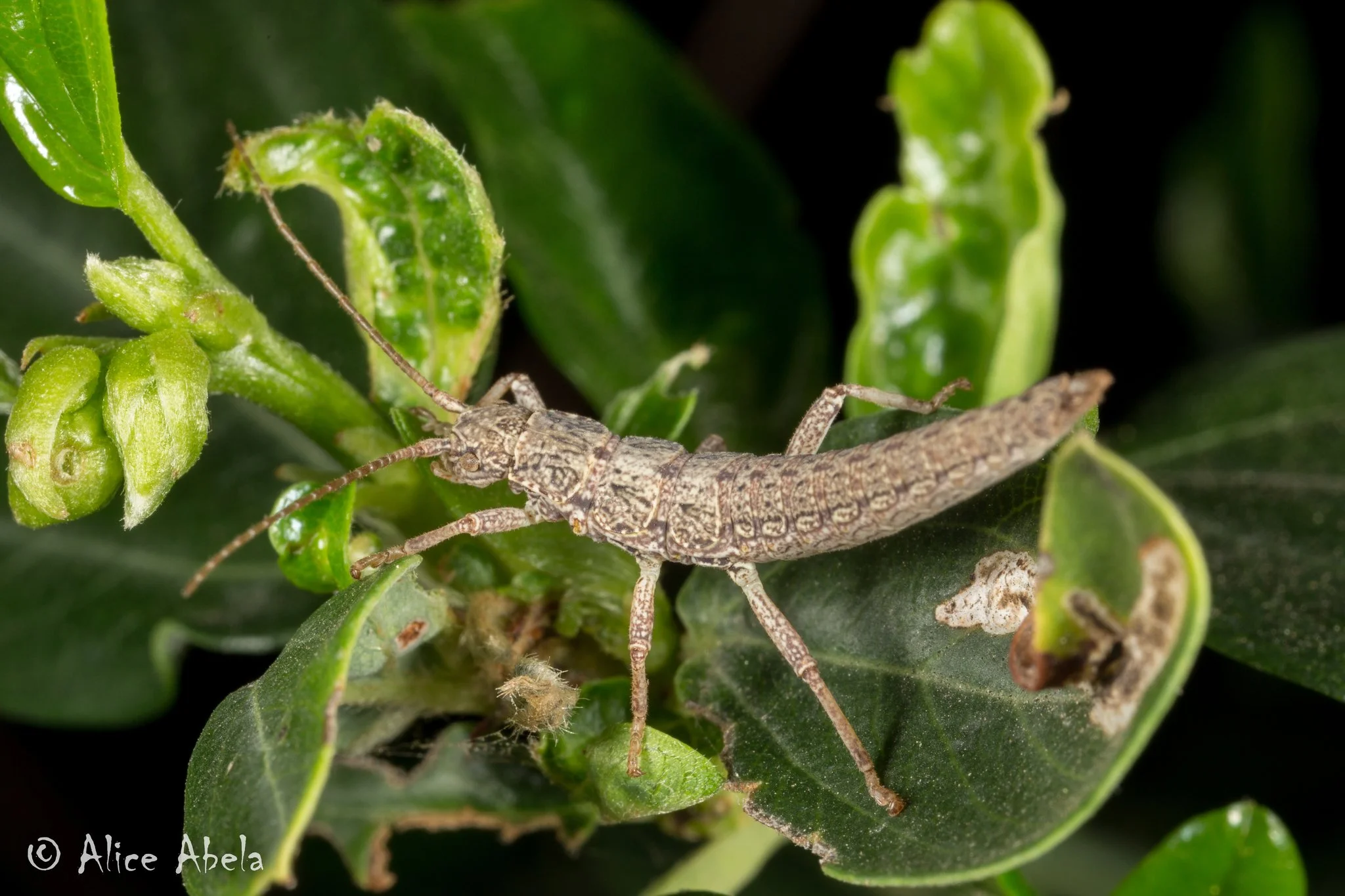
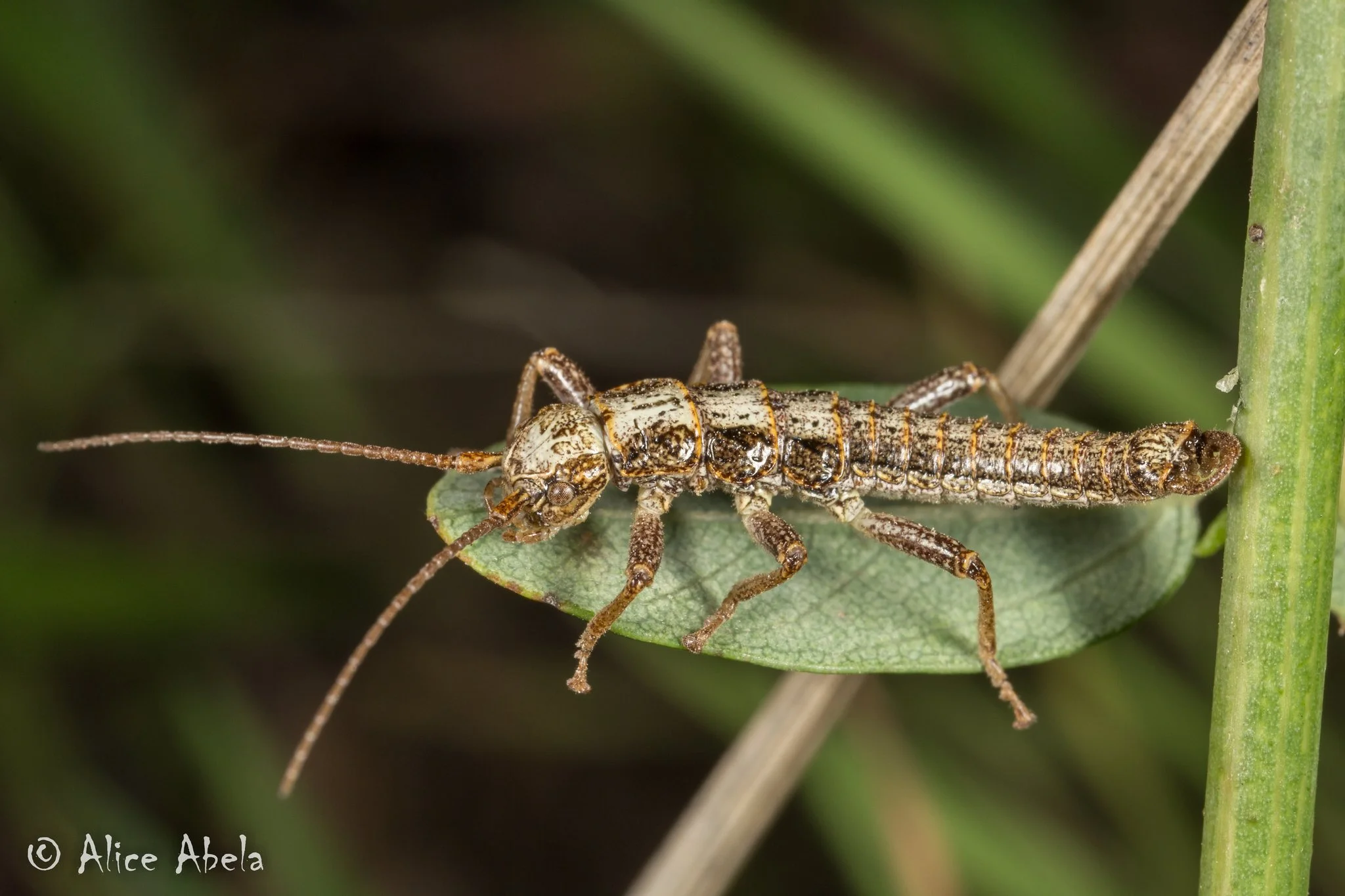
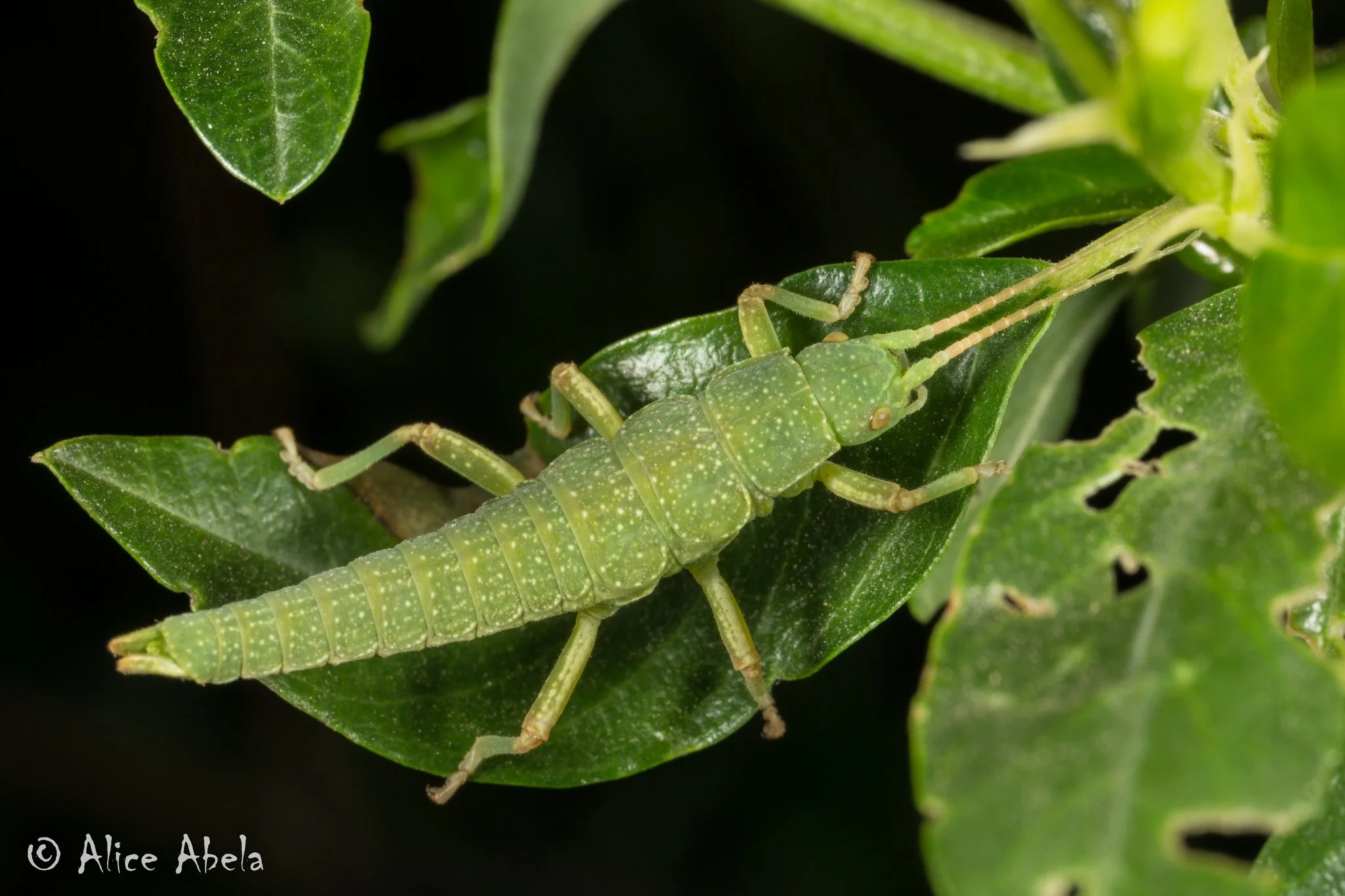
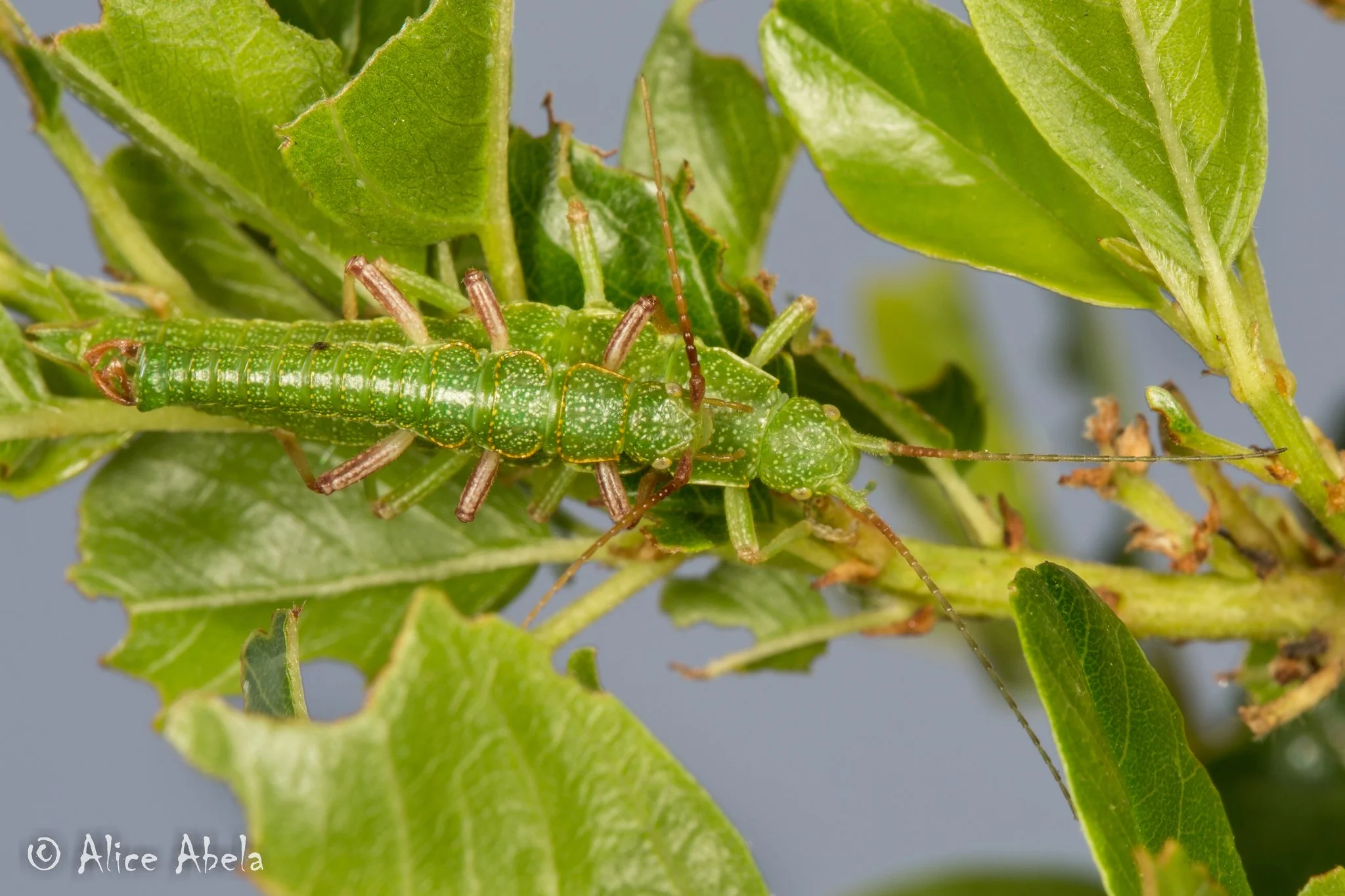
Picture a scrub jay hunting through the shrublands. It has identified the stick insect’s striped morph, and uses the search image of green with a white stripe to find its prey. It scrutinises Ceanothus plants for green, striped insectine outlines. It misses the pure green morphs, as well as the grey and red ones, because it's not specifically looking for them. Meanwhile, a fence lizard hunting in the same area is using the red morph as its search image, and so misses all the other, differently coloured stick insects.
If every individual stick insect had the same "optimal" morph, their predators would become so efficient at spotting that morph that the camouflage would eventually fail. Just by appearing different, even if different isn’t inherently more cryptic, an individual can bypass a predator’s mental filter.
It’s possible that leaf-nosed snakes present different forms of camouflage — by being sexually dimorphic, rather than polymorphic — to confuse the search images of the predatory hawks, mongooses, and fossas that hunt them.²
———
Unlike stick insects, who use their camouflage solely to hide from predators, leaf-nosed snakes also employ their crypsis to catch prey. They are sit-and-wait predators — or, more accurately, hang-and-wait predators. Leaf-nosed snakes often hang straight down like vines or broken branches, waiting for lizards and small rodents to wander near, before striking and consuming them.³
In this regard, they are similar to potoos. During the day, these odd-looking birds mimic broken boughs by stretching out their bodies, closing their large yellow eyes, and remaining completely motionless. At night, they are similarly motionless, but vigilant; waiting for insects to fly close, then suddenly swooping down to catch them.
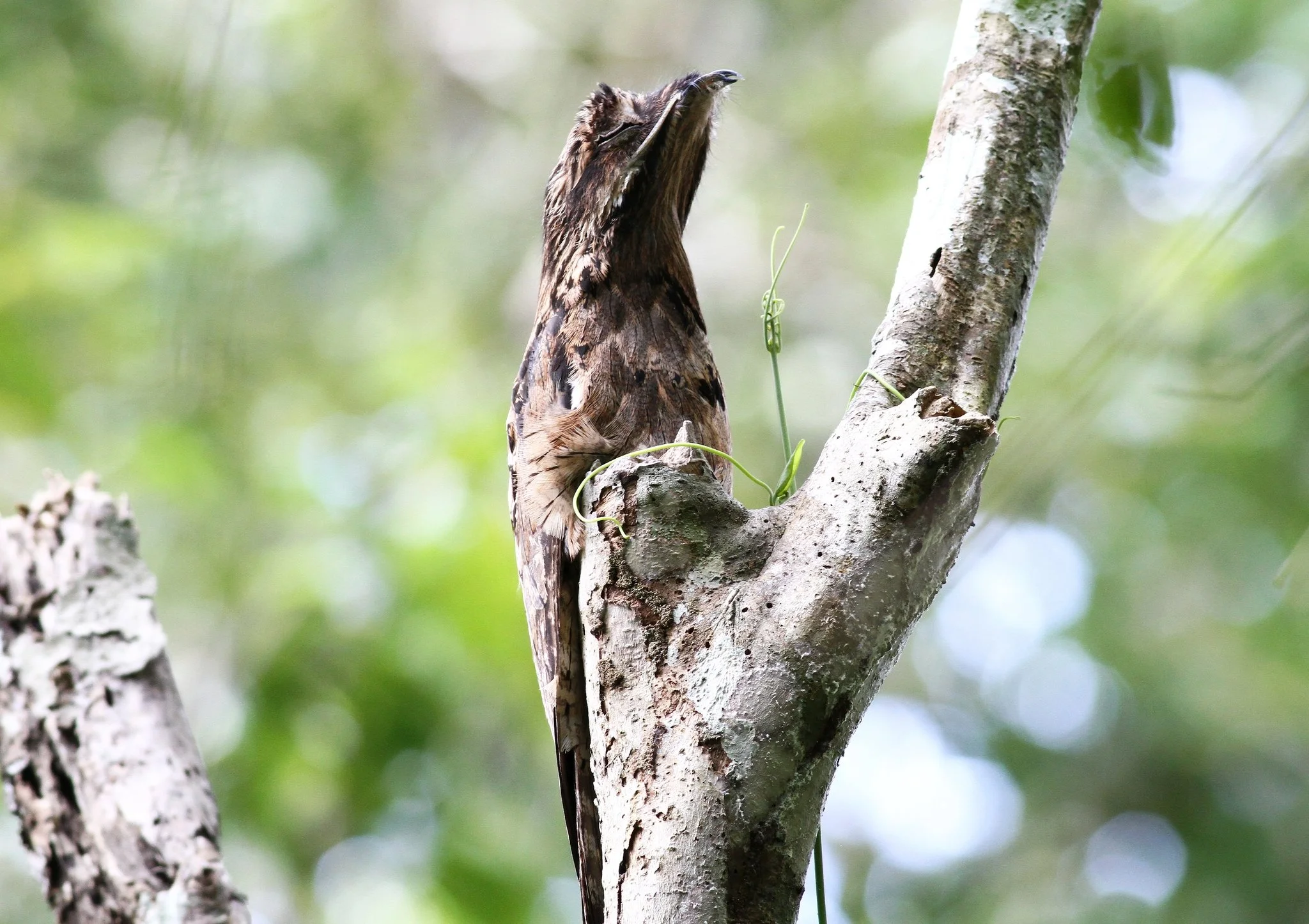
…these birds are accustomed during the day to maintain an absolute immobility in the rest position so that they are easily hidden from the sight of their enemies…very frequently its nest is located on the tip of a thin and dry trunk, chosen preferably among those that have been split obliquely, as often happens due to the wind during a storm…during incubation it maintains its body pressed against the trunk in a posture that comes to simulate a perfect extension, due to its coloration, like a continuation of the broken trunk.” (El Hornero v.2, 1920-1922)
Plenty of other animals, most notably arthropods, employ a similar kind of “aggressive plant mimicry.”
There is an entire family of spiders, with over 2,000 species, known variably as crab or flower spiders.⁴ All crab spiders are ambush predators; taking up a post on a plant and waiting for food to come to them. Many even have the ability to change their colours to better match the plants they’re hunting on — by secreting or excreting a liquid pigment into their outer cell layer, with different colours taking different amounts of time (between 3 and 25 days). A crab spider can appear as white, yellow, pink, or green, which allows that individual, and its species as a whole, to spread out into more types of habitats. The species is then able to fill more niches: hunting on white trilliums, yellow buttercups, pink orchids, and green leaves or buds.
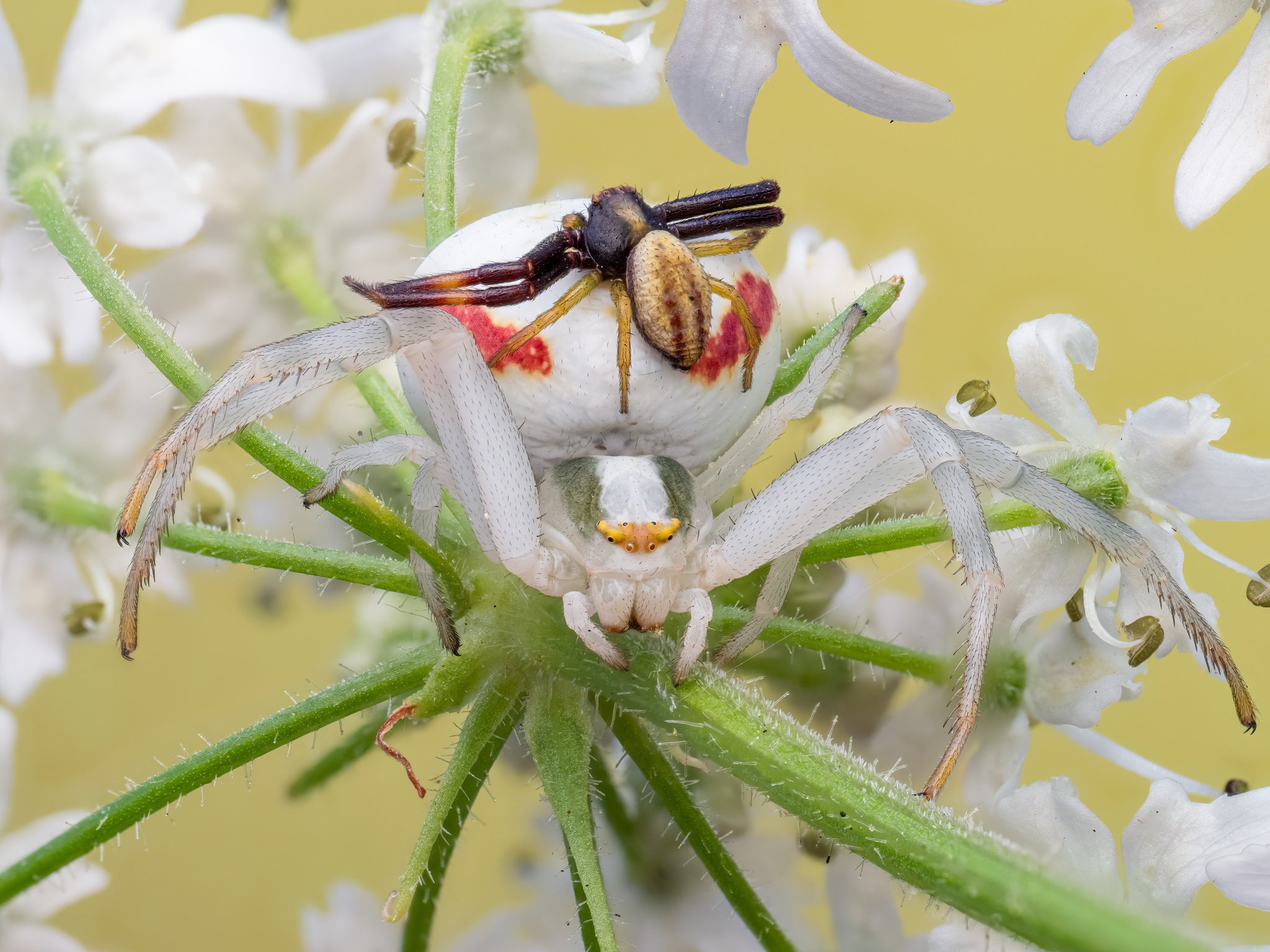
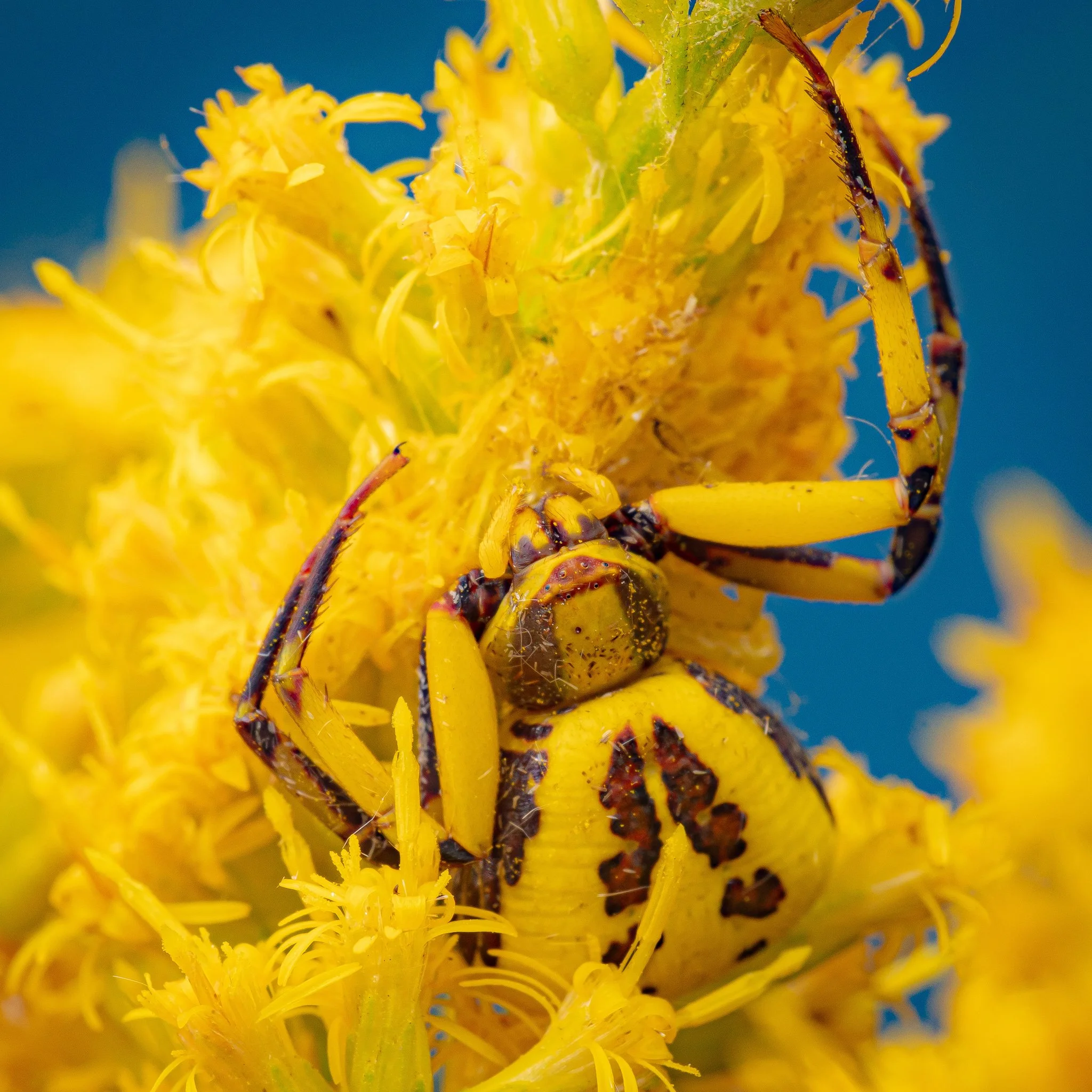
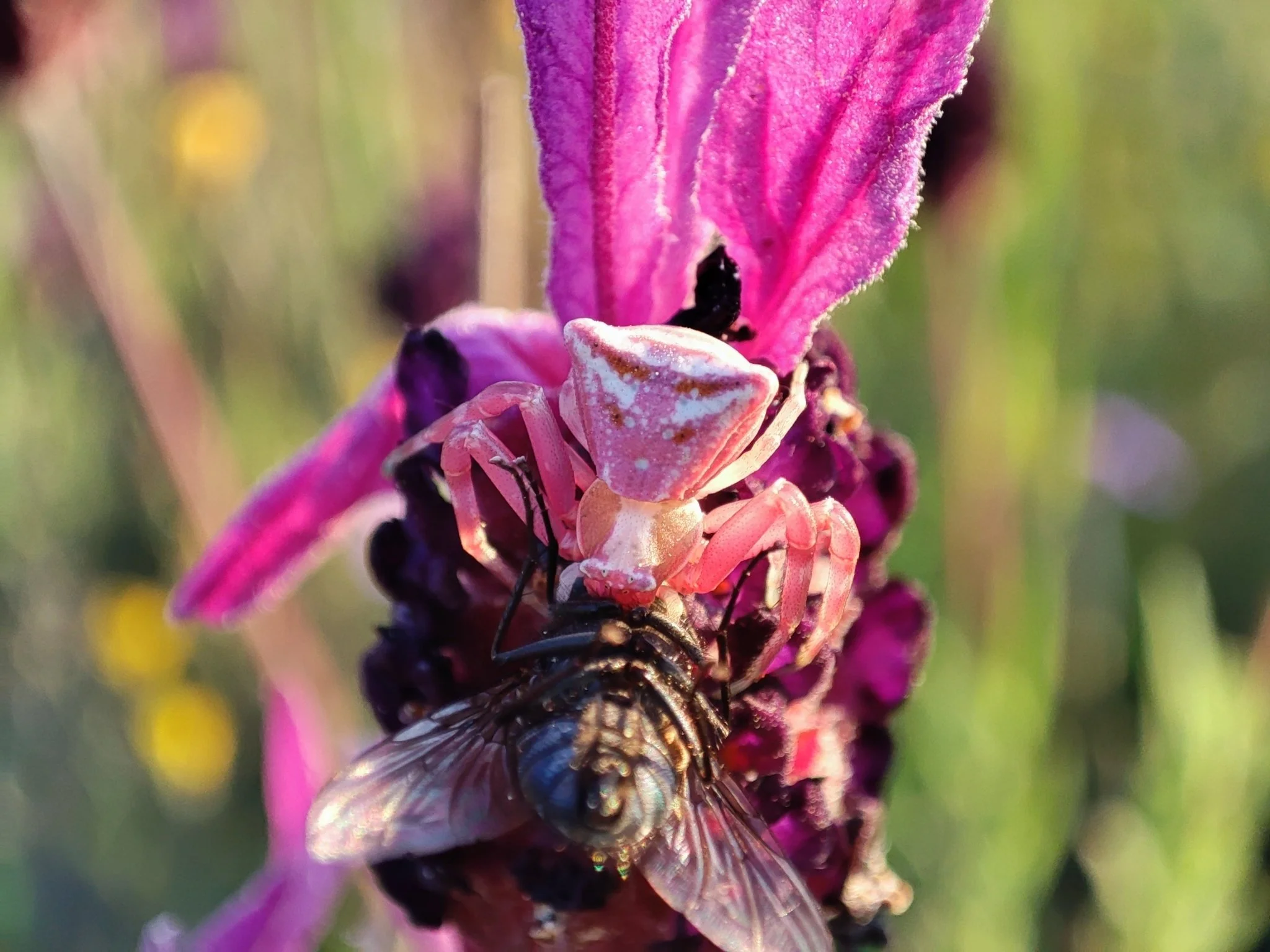
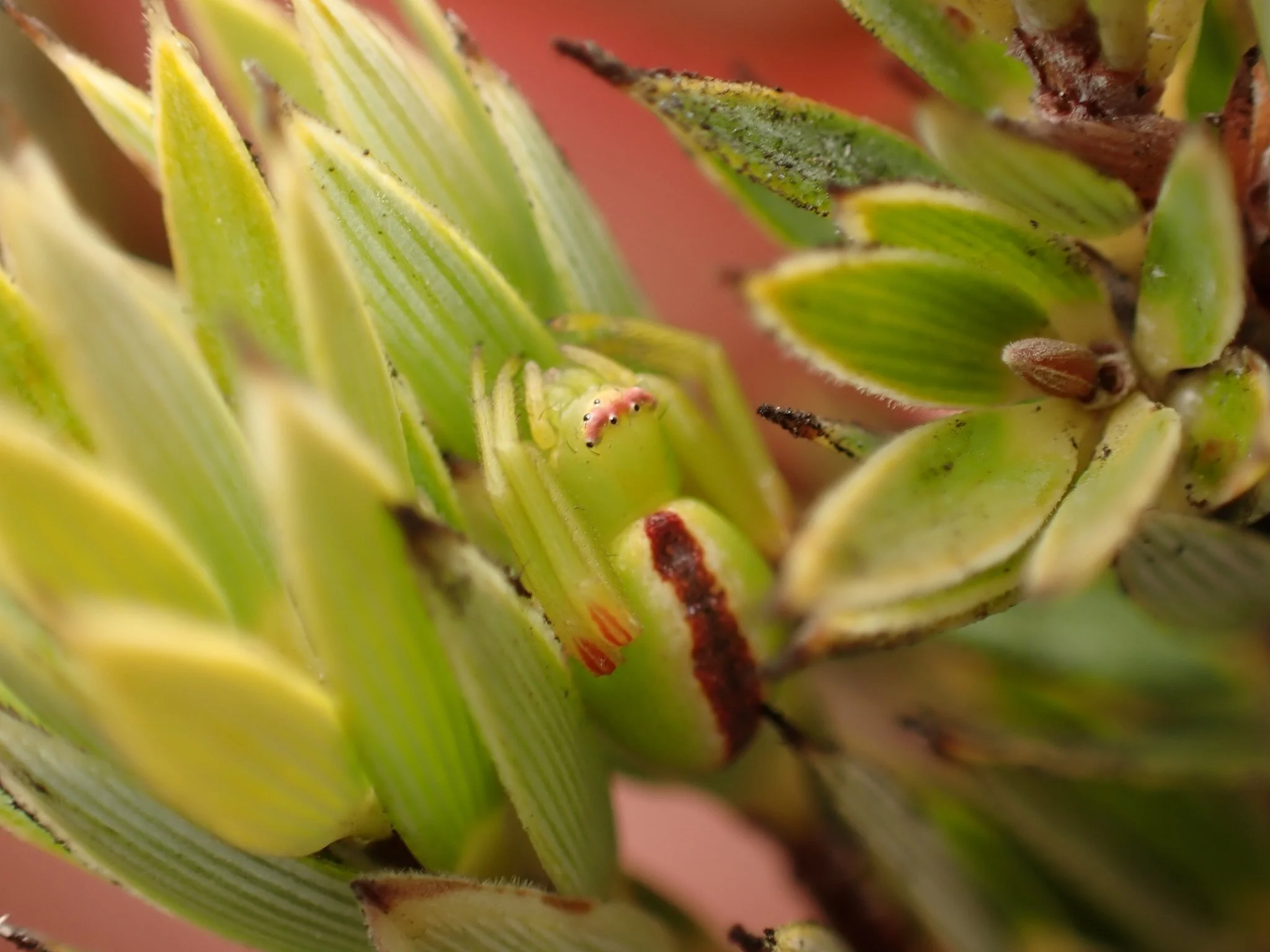
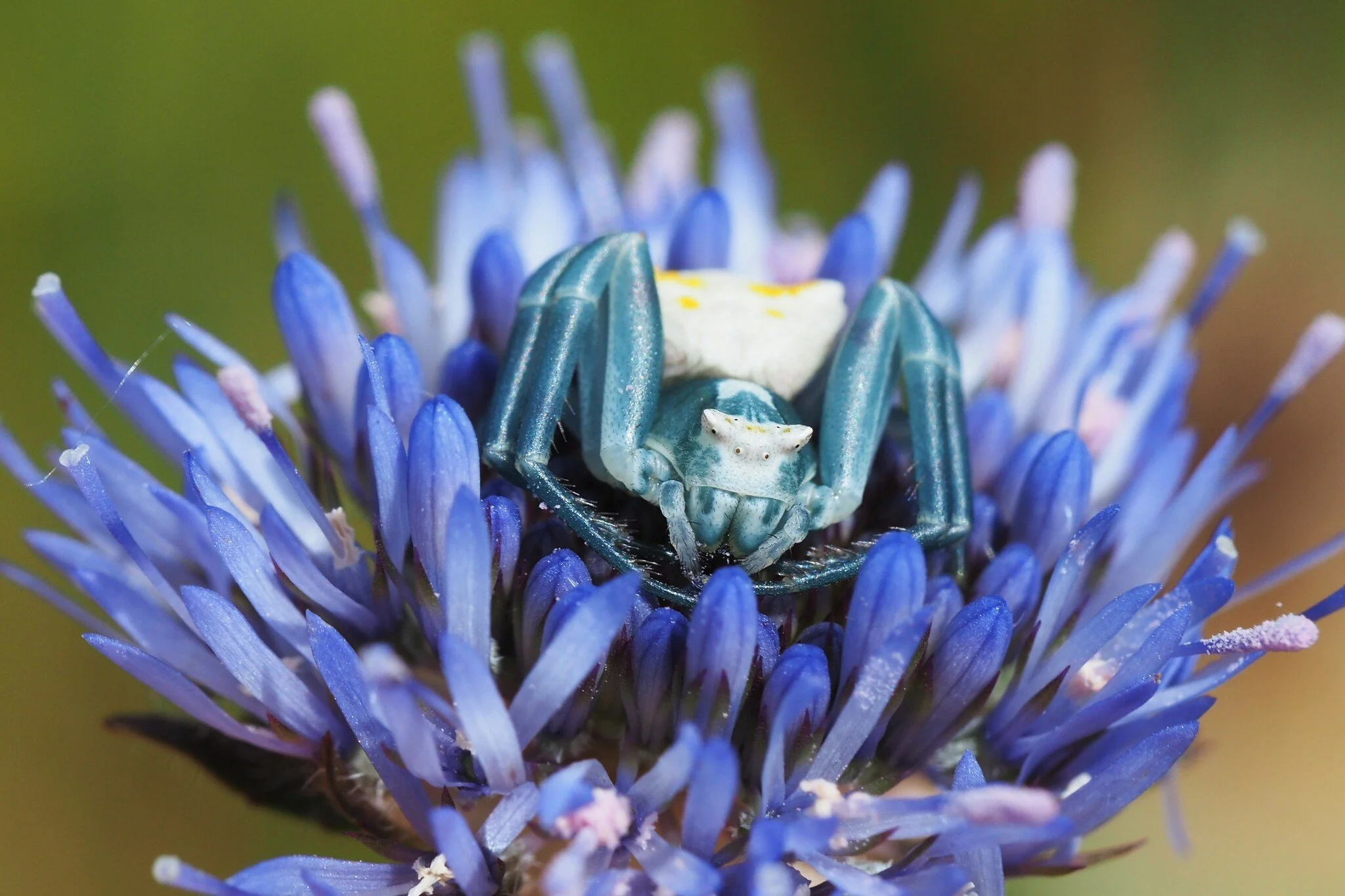
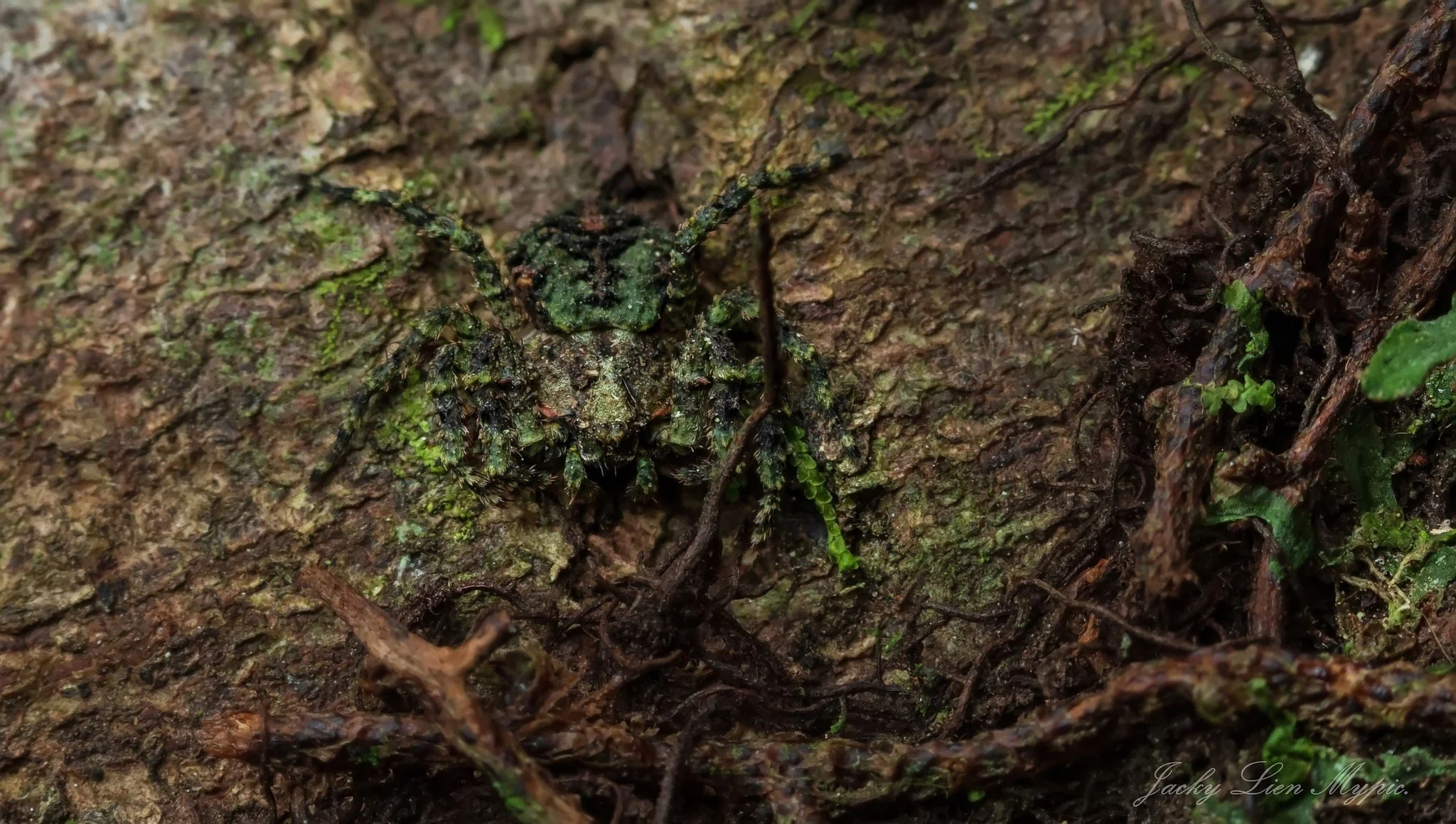
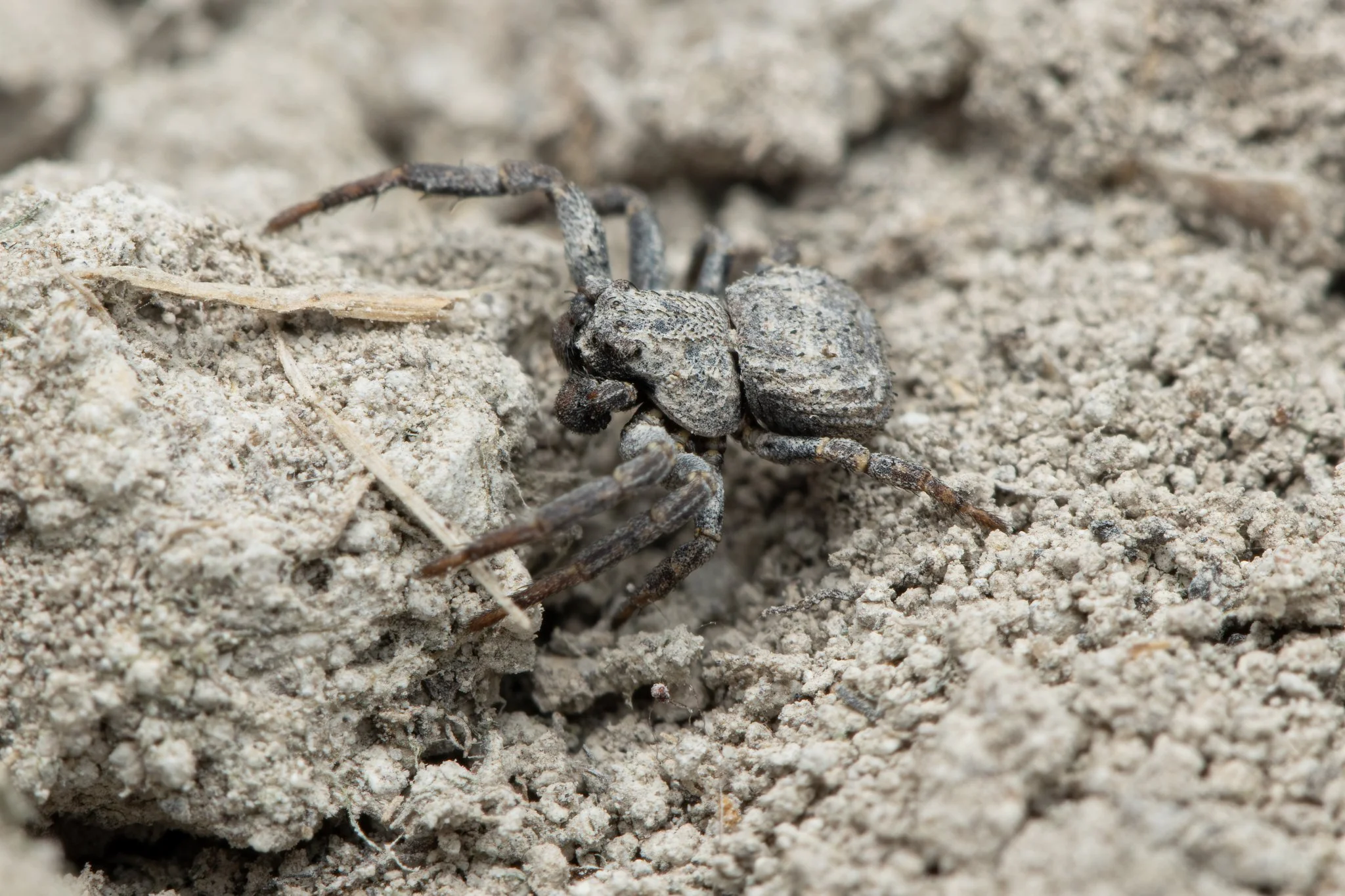
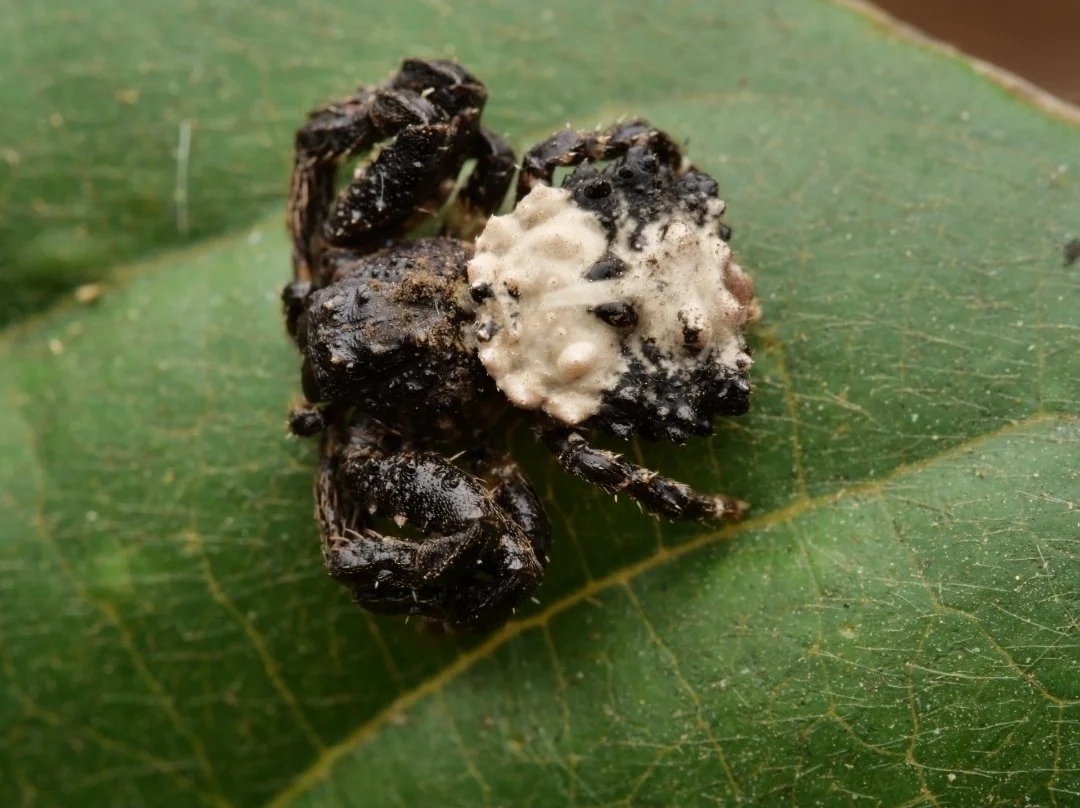
Leaf-nosed snakes are static mimics, in that an individual cannot change its camouflage as a flower spider can, but perhaps the nasal differences between male and female snakes are similarly a result of ‘niche-differentiation.’
The male, with his straighter nose, mimics straight twigs or thin, hanging vines. He can catch the smaller, faster lizards that frequent the thin outer branches. The female, with her frayed nose, mimics rough bark, lichen, diverging buds, or a snapped branch. She hides among the textured branches of the interior to ambush larger prey. The two sexes “partition” out the tree, so they can live in the same territory without starving each other out.⁵
———
The habitat zones of Madagascar are many and varied: lush eastern rainforests, western dry deciduous forests, the unique southern spiny thickets, the cooler central highlands, limestone tsingy formations, and coastal mangroves.
Different Malagasy mimics are, naturally, adapted to different habitat types.
A satanic leaf-tailed gecko, with its notched leaf-like tail, is nearly invisible in the leaf litter of a dry forest floor but sorely out of place in the lush, green canopy of the island’s highland rainforests. Conversely, a mossy leaf-tailed gecko has mottled and textured scales — with fringes of skin along its jaw and body that eliminate its shadow and create a seamless transition from gecko to tree trunk — allowing it to blend into lichen- and moss-covered rainforest trees, but making it stand out in drier habitats.
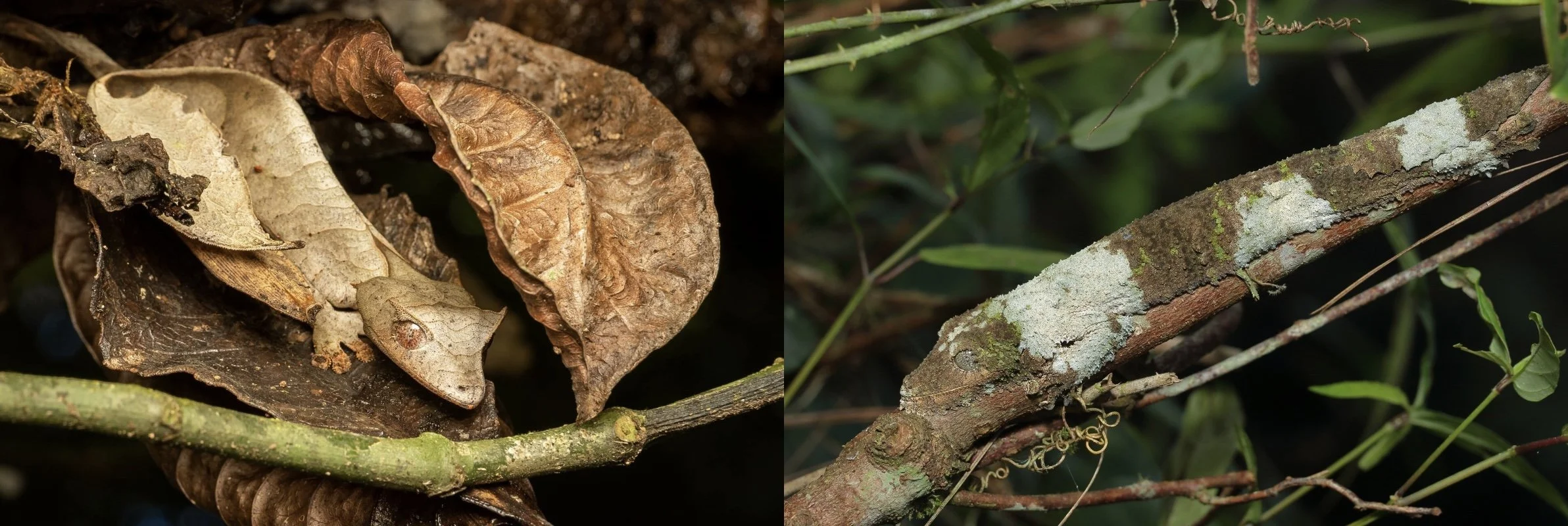
(© Piotr Lukasik and © Tommy Hui / iNaturalist)
This kind of camouflage naturally limits the types of habits a cryptic species can live in.
Thanks to their varied crypsis, leaf-nosed snakes aren’t as limited by habitat type: they can live in lush rainforest habitat, where males can blend with the many vines, and in drier deciduous forests, where females can mimic bare, broken branches. But because their crypsis varies according to sex — not morph — leaf-nosed snakes can’t wholly partition out these habitats. Males and females must still meet to mate, after all.
Sexual dimorphism often arises from interacting pressures: ecological needs (diet, habitat, survival) which meet, and often clash up against reproductive needs (fecundity, mating).⁶
The sexual dimorphism of leaf-nosed snakes likely didn’t arise due to sexual selection, but it might still be linked to mating behaviour. One of the sexes must still bear the cost of standing-out, but that sex isn’t set: it can be either the male or female who is better camouflaged, depending on what habitat they find themselves in.
Tropical rainforests tend to remain wet and lush year-round, creating a backdrop of vibrant greens and organic, flowing shapes in which the better-camouflaged male serves as the primary "seeker" in the mating process. If the female were to attempt this same active search here, through the lush green heights, she would stand out as an obvious target. But if she remains still, her bark-like texture melts into the darker tree trunks and branches.
In the deciduous forests, when the dry season causes the foliage to dissipate and drop from May to July, the forest becomes a skeletal landscape of grey bark and brown twigs. This happens to coincide with the leaf-nosed snake’s breeding season. In this "dead" environment, the male’s disguise becomes a liability, and far more so when he is moving. Consequently, the female takes over the role of the seeker, safely navigating over dead branches to find him, while the male remains motionless to avoid detection.
This final hypothesis posits that sexual dimorphism arose in these leaf-nosed snakes as a unique strategy for habitat expansion.⁷ By modifying their behaviour, rather than just their looks, the snakes could effectively mitigate the risk to the disadvantaged sex; whether that be a female in the rainforest or male in the dry deciduous forest. But it is still just a hypothesis.
Whether males and females actually swap “seeking” roles hasn’t been observed. In general, among snakes, females release pheromones to attract seeking males, rather than do the seeking themselves (in some cases, such as among garter snakes, they even try to evade males to escape harassment). But given how unique the leaf-nosed snakes of Madagascar are in other respects, it wouldn’t be unthinkable that they evolved some unusual breeding behaviour too.
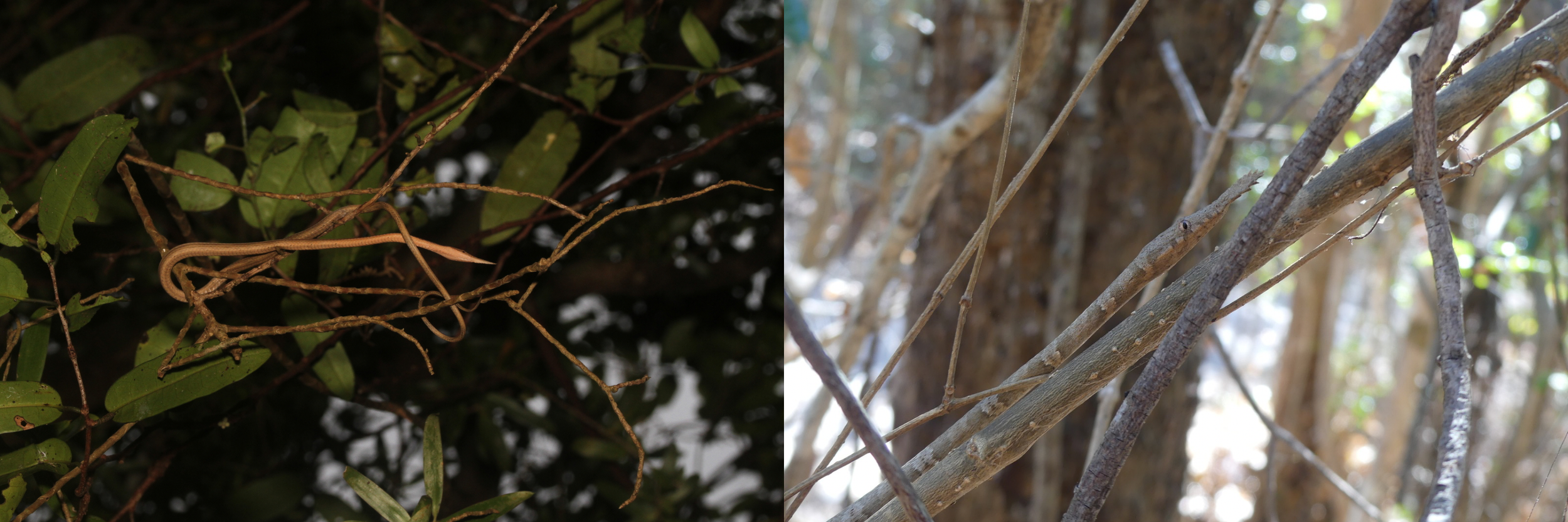
(© Samuel GUIRAUDOU and © LORKOWSKI Mathieu / iNaturalist)
So how does the extreme crypsis of these Malagasy snakes relate to their unusual sexual dimorphism?
At this point, we just can’t say for sure.
Leaf-nosed snakes might confuse predators with multiple search images, partition their habitats for food, and strategically survive across both wet and dry forest by altering their behaviour. And they might do it all through sexual dimorphism. Or perhaps the different nasal protrusions serve a purpose we haven't even guessed at yet, such as sensory organs or lures for their prey. All these hypotheses might be true, or it could be that none of them are quite right.
Snakes that evolved to not be seen are, naturally, a little difficult to study.⁸
How little we’ve been able to learn about them is, in itself, a testimony to how well these snakes do what they’ve evolved to do: to be a hanging vine, a broken branch, just a part of the foliage. If a leaf-nosed snake is hard to spot in an enclosure, imagine trying to find one in a sprawling forest.
¹ A few snake species have nasal protrusions, a couple of the most prominent being the nose-horned viper and rhinoceros ratsnake. It’s believed these “horns” serve to break up the outline of a snake’s head, the most recognisable part of a snake, thus making it harder to spot.
² Madagascar may be an island, but it isn’t lacking for mammalian predators. In fact, there’s an entire family (Eupleridae) of Malagasy endemic predators: vontsiras, falanoucs, the bokiboky, fanaloka, and the fossa (7–9 living species in total). There are also avian predators like the Madagascar fish-eagle, serpent-eagle, buzzard, harrier, harrier-hawk, and sparrowhawk. And although the island’s famous lemurs are primarily herbivorous, they are also opportunistic omnivores, with some of the larger species, like the ring-tailed lemur, known to consume reptiles.
³ Malagasy leaf-nosed snakes are rear-fanged, meaning they have fangs at the back of their upper jaws rather than the front, and seem to possess a mild venom that is relatively harmless to humans.
⁴ The name “crab spider” comes from the shape of these arachnids, being somewhat crab-like, and the unusual way they’re able to scuttle sideways and backwards.
⁵ Like couples who can’t stand to share with one another, some species partition their niches so fully between the sexes that males and females develop strikingly different physiologies. The shapes of bird bills, for instance, are famously correlated to what they eat (think Darwin’s finches), and several species have evolved sexually dimorphic bill shapes: riflebirds, sicklebills and some species of woodpecker and hummingbird.
But no species was as dimorphic as the now-extinct huia bird from New Zealand. The male's bill was short and stout (60 mm/2.4 in), used for chiseling away decaying wood, while the female's bill was curved and long (104 mm/4.1 in), used for probing deep into more solid wood.
⁶ Usually, the appearance of an animal is a compromise between these two selection pressures. If an individual is too focused on survival (camouflage), it may never be noticed by a mate; if it is too focused on reproduction (attraction), it may be eaten before it can breed. This "seesaw" creates the diverse array of sexual dimorphism we see in nature. We see this with the colourful male collared lizards, who trade stealth for seductiveness. And it is usually the males who bear the cost of reproduction, as they are often the sex doing the wooing, while the females bear the burden of survival; having to safely lay and hatch a brood.
⁷ This final hypothesis comes from this blog post on ReptiFiles®.
⁸ All three species of Malagasy leaf-nosed snakes are currently (2026) listed as being of Least Concern by the IUCN. Is this reflective of their real-world conservation states, or just the sparsity of data? The fact that all three of them were last evaluated all the way back in 2011 points towards the latter.
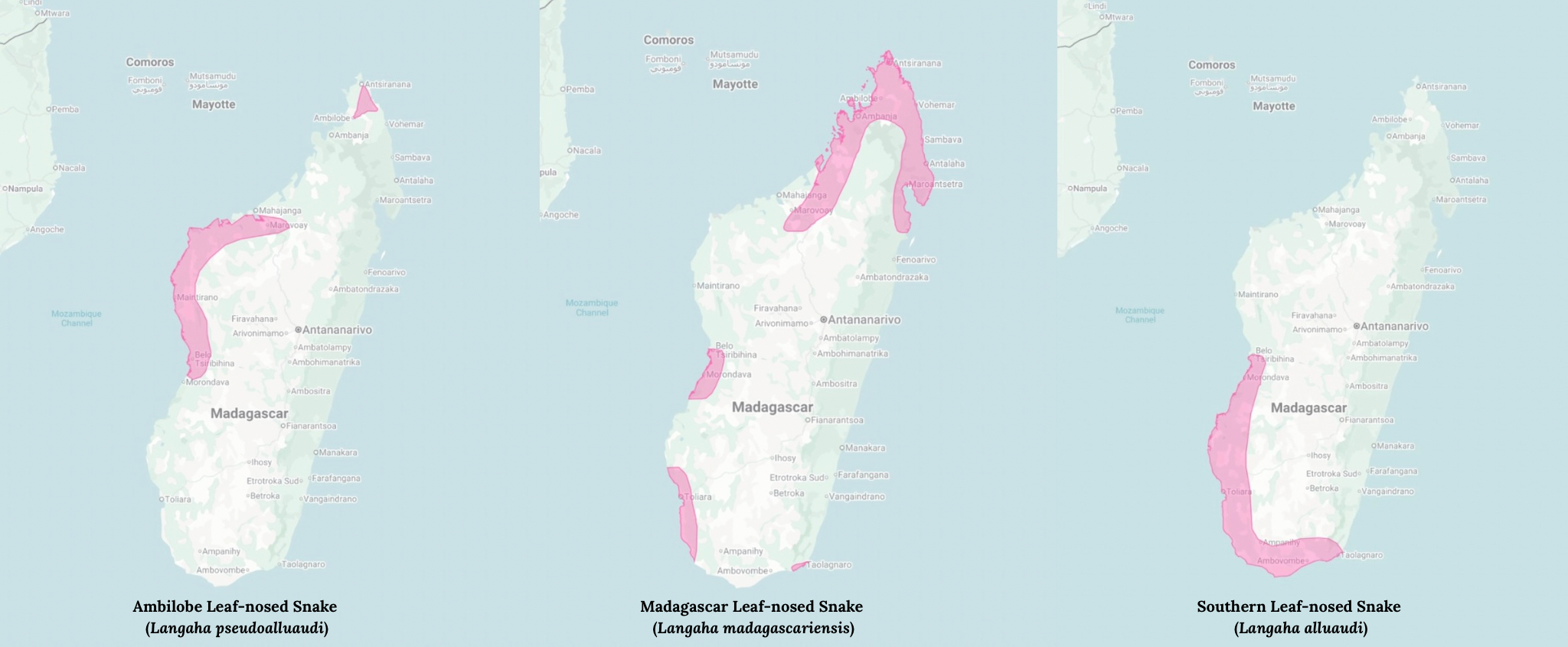
Where Does It Live?
⛰️ Both dry forests and rainforests.
📍 Madagascar.

‘Least Concern’ as of 2011.
-
Size // Medium
Length // 100 - 127 cm (3.28 - 4.17 ft)
Weight // N/A
-
Activity: Diurnal ☀️
Lifestyle: Solitary 👤
Lifespan: N/A
Diet: Carnivore
Favourite Food: Lizards & frogs 🦎
-
Class: Reptilia
Order: Squamata
Family: Pseudoxyrhophiidae
Genus: Langaha
Species: L. madagascariensis
-
These snakes make up the genus Langaha, with three species total, all endemic to the island of Madagascar.
The “noses” of each species do look different — the nose of the Ambilobe leaf-nosed snake looks like the end of a broken branch, for instance. But the most striking variance exists between the sexes. Male Malagasy leaf-nosed snakes possess straighter, pointier protrusions, while those of females are frillier and more leaf-like.
Why the sexual dimorphism? There are a few theories.
One is that these differing protrusions create different search images (the mental templates predators use to recognise their prey), making it harder for hawks, mongooses, and fossas to memorise exactly how the snakes look, thus making it harder to find them.
Another theory revolves around niche-differentiation and partitioning. The male, with his straighter nose, mimics straight twigs or thin, hanging vines. He can catch the smaller, faster lizards that frequent the thin outer branches. The female, with her frayed nose, mimics rough bark, lichen, diverging buds, or a snapped branch. She hides among the textured branches of the interior to ambush larger prey. The two sexes “partition” out the tree, so they can live in the same territory without starving each other out.
The final theory is an expansion of the last one: rather than just partitioning niches, the two sexes partition entire habitats, in a way. These snakes live both in Madagascar's lush rainforests and scrubby dry forests — with the male more camouflaged in the former, and the female in the latter. And whichever sex is at an advantage in any given habitat, is the one that actively seeks out a mate. This allows the species to survive and breed across varied habitats. Or so the theory goes.
It’s always difficult to find definitive answers for evolutionary questions. All of these theories may be correct or none of them may be quite right. Naturally, it’s quite hard to study species that evolved not to be seen.
-
Tingle, Jessica. (2012). Field Observations on the Behavioral Ecology of the Madagascan Leaf-nosed Snake, Langaha madagascariensis. Herpetological Conservation and Biology. 7.
Krysko, K. L. (2005). Feeding behaviour of the Madagascar leaf‐nosed snake, Langaha madagascariensis (Serpentes: Colubridae: Pseudoxyrhophiinae), with an alternative hypothesis for its bizarre head structure. African Journal of Herpetology, 54(2), 195–200. https://doi.org/10.1080/21564574.2005.9635534
Krysko, K. L. (2003). Reproduction in the Madagascar leaf‐nosed snake, langaha madagascariensis (Serpentes: Colubridae: Pseudoxyrhophiinae). African Journal of Herpetology, 52(1), 61–68. https://doi.org/10.1080/21564574.2003.9635478
D'Cruze, N.. (2008). Envenomation by the Malagasy colubrid snake Langaha madagascariensis. Journal of Venomous Animals and Toxins Including Tropical Diseases, 14(3), 546–551. https://doi.org/10.1590/S1678-91992008000300014
Rosa, Gonçalo & Noël, Jean & Andreone, Franco. (2012). Updated distribution map and additional record for the cryptic leaf-nosed snake, Langaha madagascariensis Bonnaterre, 1790 (Serpentes: Lamprophiidae) from Madagascar. Herpetology Notes. 5. 435-436.
Oninjatovo Radonirina, H., Randriamahatantsoa, B., Rabibisoa, N. H. C., & Raxworthy, C. J. (2023). Amphibians and Reptiles of the Montagne des Français: An Update of the Distribution and Regional Endemicity. Animals, 13(21), 3361. https://doi.org/10.3390/ani13213361
‘New Record, Range Extension, and Colouration in Life of Langaha Pseudoalluaudi (Reptilia: Colubridae) in North-Western Madagascar’. Protected Areas, https://protectedareas.mg/document/show/177763. Accessed 12 May 2026.
iNaturalist — genus Langaha
Catalogue of Life — genus Langaha
IUCN — Langaha madagascariensis
IUCN — Langaha pseudoalluaudi
IUCN — Langaha alluaudi
Troscianko, J., Nokelainen, O., Skelhorn, J. et al. Variable crab camouflage patterns defeat search image formation. Commun Biol4, 287 (2021). https://doi.org/10.1038/s42003-021-01817-8
Boyes D, Holland PWH, University of Oxford and Wytham Woods Genome Acquisition Lab et al. The genome sequence of the Buff-tip, Phalera bucephala (Linnaeus, 1758) [version 2; peer review: 1 approved, 1 approved with reservations]. Wellcome Open Res 2025, 7:28 (https://doi.org/10.12688/wellcomeopenres.17539.2)
CRISTINA P. SANDOVAL, Differential visual predation on morphs of Timema cristinae(Phasmatodeae:Timemidae) and its consequences for host range, Biological Journal of the Linnean Society, Volume 52, Issue 4, August 1994, Pages 341–356, https://doi.org/10.1111/j.1095-8312.1994.tb00996.x
Farkas, T. E., Mononen, T., Comeault, A. A., Hanski, I., & Nosil, P. (2013). Evolution of camouflage drives rapid ecological change in an insect community. Current Biology, 23(19), 1835–1843. https://doi.org/10.1016/j.cub.2013.07.067
Fiebrig, C. (1921). Algunos datos sobre aves del Paraguay. El Hornero, 2, 205. https://www.biodiversitylibrary.org/page/34800343
Shine R, Wall M, Langkilde T, Mason RT. Do female garter snakes evade males to avoid harassment or to enhance mate quality? Am Nat. 2005 Jun;165(6):660-8. doi: 10.1086/429591. Epub 2005 Mar 28. PMID: 15937746.
BBC Discover Wildlife — how do snakes mate
iNaturalist — crab spiders
Chittka, Lars. (2001). Camouflage of Predatory Crab Spiders on Flowers and the Colour Perception of Bees (Aranida: Thomisidae / Hymenoptera: Apidae). Entomologia Generalis. 25. 181-187. 10.1127/entom.gen/25/2001/181.
University of Colorado Boulder — crab spider colour change
Encyclopedia of Life — satanic leaf-tailed gecko
Encyclopedia of Life —mossy leaf-tailed gecko
-