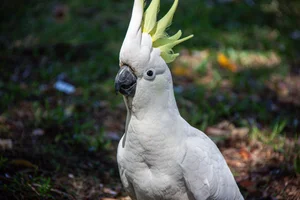
The Pilotbird
In the Shadow of the Lyrebird
Deep within the misty gullies of southeastern Australia, a superb lyrebird struts through the damp undergrowth. It rips apart decayed logs with its powerful feet, it tears thick moss to fragments, and aggressively churns through heavy leaf litter. It pulls up earthworms and centipedes, spiders and skinks. And it leaves behind a banquet of exposed earth and overturned debris.
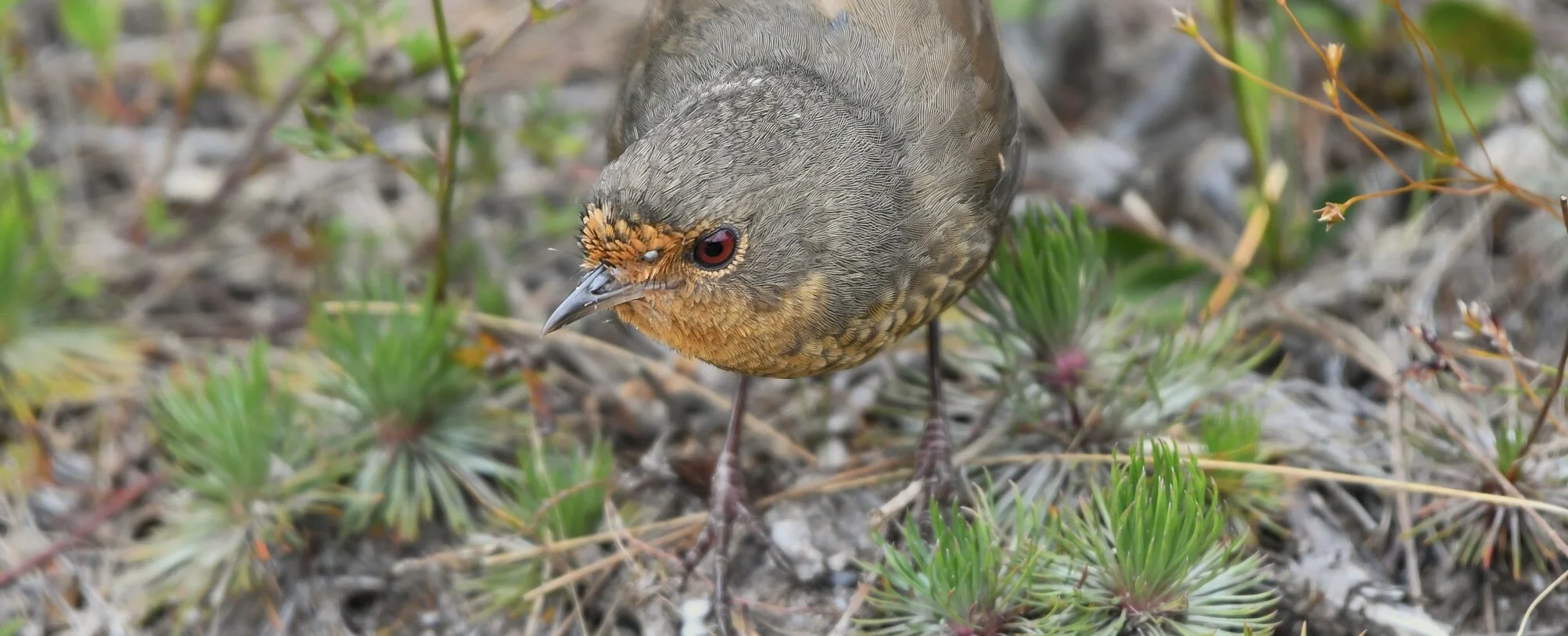
Hopping along at the lyrebird’s heels is a plump, chocolate-brown bird the size of a large sparrow. It weaves through the sword and wire-grasses, moving with such dexterity that it looks more rodent than bird. As the lyrebird ploughs forward, this smaller companion snaps up leftover tidbits inches from its tearing claws.
Together they move through the forest.
———
Sailors of times past spotted schools of silvery, black-striped fish swimming placidly alongside a shark — around its tail, along its flank, right beside its lethal maw. They took these fish to be navigational guides, “piloting” the visually impaired sharks toward prey. In reality, these pilot fish were just hanging around to eat the shark's leftovers.
“Where Menura [the lyrebird] is, you will hear or see the pilot bird (Pycnoptilus floccosus), a small, dark brown species which appears to be as fond of the lyre bird’s company as the pilot fish is of that of the shark,” wrote naturalist Charles Leslie Barrett in 1922.
He described the relationship between the pilotbird and lyrebird as a kind of “cupboard love.” Pilotbirds “glean in the wake of the hunter,” picking up “‘crumbs’ from their big friends table” — small insects, worms, seeds, and berries, that the larger lyrebird exposes but overlooks.
The pilotbird lives in its larger companion's shadow, and in more ways than one.
Outwardly, the lyrebird is magnificent. Including its flowing tail feathers, a male superb lyrebird can grow up to a metre (3.3 ft) long, making this one of the largest of all songbird species. And what a songbird the lyrebird is. A camera shutter or car engine, a dog’s bark or baby’s cry, a human voice and the calls of dozens of other birds — there is perhaps no better vocal mimic in the entire animal kingdom. The lyrebird has rightly become a media sensation and an Australian avian icon.
In contrast, few people know much, if anything, about the pilotbird.
Thomas Henry Tregellas, however, was not like most people.
In 1929, he pushed his way through sassafras and tree-ferns into the wooded gullies southeast of Melbourne. At the time, pilotbirds were “fairly plentiful” around there, and Tregellas, the pioneering naturalist that he was, wanted to study them.
While wading through the forest, Tregellas came upon a massive, hollowed out log — likely a reject from early forest cutting. He went about refurbishing it: he cleaned out the inside, boarded up the far end, built a paling canopy at the entrance, and constructed a fireplace. From this “log cabin” he could sit and watch for passing pilotbirds.
However, instead of a little brown bird running through the undergrowth, it was the lyrebird — displaying in the branches of a fallen tree, its tail spread like a fan and its body quivering, singing its mimetic song — that caught Tregellas’s attention. It made a “deep impression” on him, so much so that he remained to study this eye- and ear-catching bird, even naming his log-home after its genus: Menura.
Tregellas had gone in search of a shadow and found a showman. The quaint little pilotbird led him to the astonishing lyrebird.
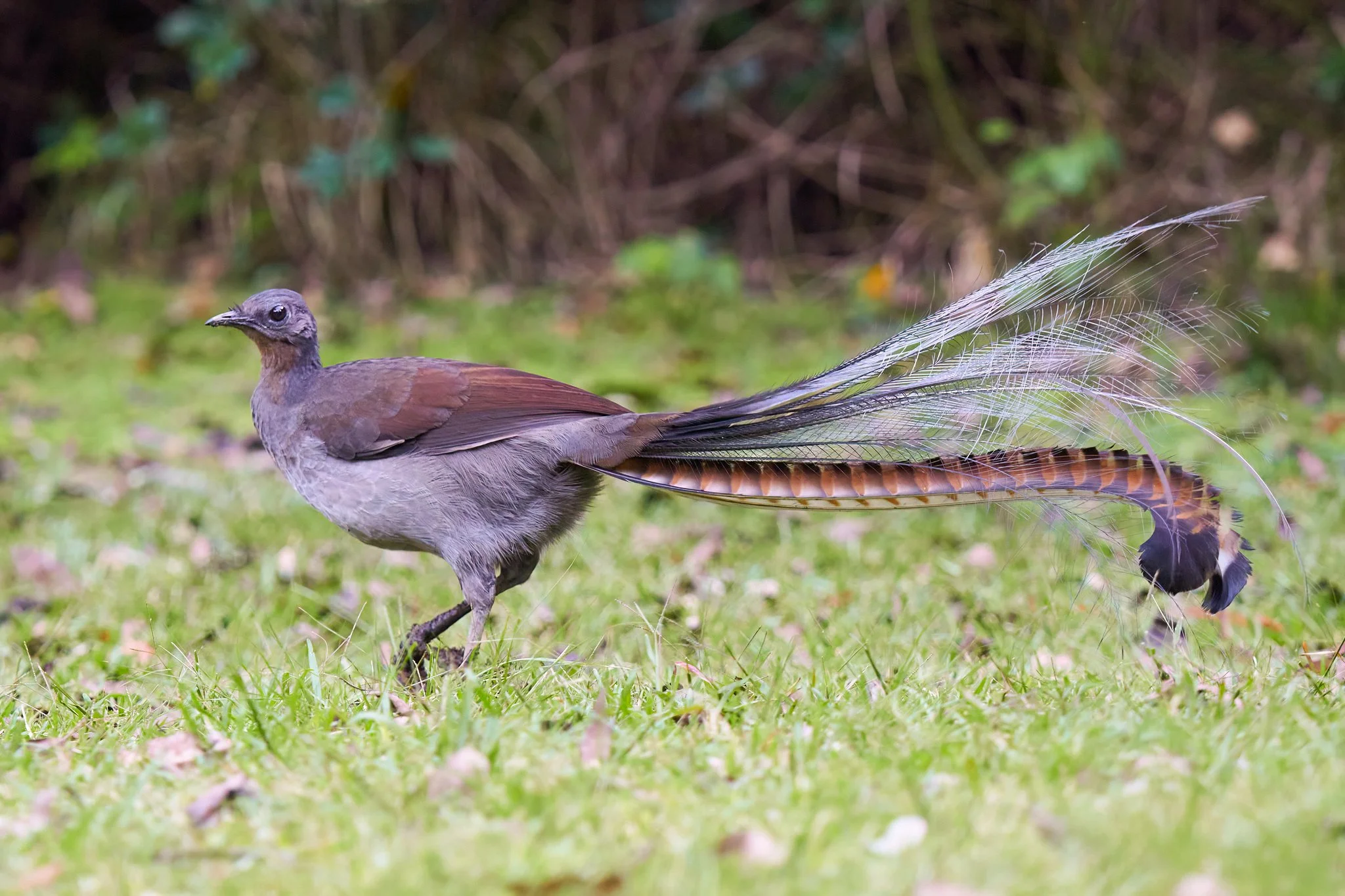
A male superb lyrebird, Menura novaehollandiae.
For all their outward differences, however, the lyrebird and pilotbird are quite alike in several ways.
“I do not think that any bird-note is more beautiful than that of this species,” ornithologist Frank Ernest Howe opined about the pilotbird in 1907, “it comes with such piercing sweetness, and from the volume of it one would think it was made by a much larger bird.”
The pilotbird throws its head back, and its “little throat can be seen working from a fair distance off.” It likes to sing as it runs along fallen logs and boughs, like some whimsical forest sprite, producing “at least half a dozen different calls,” “sweet and varied,” a “glorious song.”
It may not have as versatile a voice as the lyrebird, but the pilotbird is an accomplished songster in its own right.
Both birds also favour the thick undergrowth of moist gullies and wet forests in southeastern Australia, where they forage and shelter among dense vegetation and heavy leaf litter on the forest floor.
The pilotbird even builds a domed nest on or near the ground that resembles a miniature version of a lyrebird's nest. It’s like a younger sibling, tagging along behind an older brother, scavenging his dropped snacks and building a smaller replica of his fort in the same woods.
———
In an evolutionary sense, the two birds are very ancient relatives, their lineages having gone their separate ways tens of millions of years ago.
Both represent some of the oldest branches of the songbird tree. The Menurides, to which the lyrebirds belong, split off soon after the birth of the songbird lineage. Not long after, the Meliphagides, to which the pilotbird belongs, did so too. The latter would go on to become the largest radiation of songbirds in Australia, with nearly 300 living species in all.
In the original 1851 paper describing the pilotbird, ornithologist John Gould noted that this new species is “somewhat allied to the Atrichia, Hylacola, and Dasyornis” — the scrubbirds, heathwrens, and bristlebirds. The taxonomy of Australian avifauna has since changed dramatically.
Atrichia, the scrubbirds, would turn out to be more closely related to Menura, the lyrebirds — both a product of the earliest songbird divergence.
Dasyornis, the bristlebirds, appear to be obvious relatives of the pilotbird; both are plump, brown-feathered, short-winged, and armed with stiff facial bristles. Indeed, the pilotbird is frequently confused for the eastern bristlebird, which often lives in the same forests. Historical accounts even describe their songs as “almost identical…except that one is in a sharper key.”
It would make perfect sense, then, to assume that they’re closely related. But they are not.
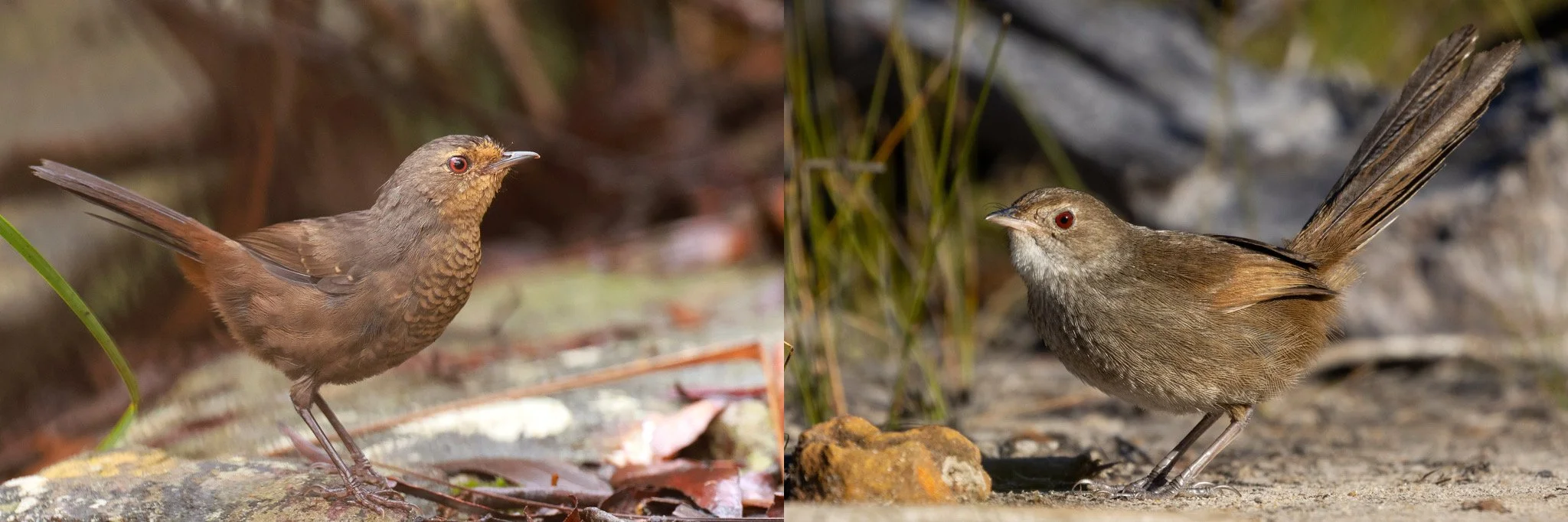
A pilotbird and eastern bristlebird, Dasyornis brachypterus. (© Martin Allen & © James Bennett / Macaulay Library)
Their ancestors likely split in the late Oligocene, approximately 27 to 29 million years ago. What appears to be kinship is instead a case of convergence: the two birds look alike and sound alike because they live similar lives in similar places.
“Note the prevalence of earthy brown and reddish tones,” points out Dr. Leo Joseph, an expert in the evolution of Australian birds. “These are very prevalent in birds of understoreys all over the world, whether for crypsis and camouflage on their dorsal surface [upperparts] or for signalling on their ventral surface [underparts].”
“If it is convergence, what is the evolutionary agent causing it?” asks Dr. Joseph. “Something to do with foraging ecology or something to do with the light environment where they live in dense forests and heathy understoreys?”
Both birds evolved large, strong feet and legs at the expense of their wings, probably to facilitate scratching through soil and litter for invertebrates. And both develop songs that are remarkably loud for their small size, capable of penetrating deep undergrowth. They are similar by way of function, not family.
The only relation Gould got right in his original description was Hylacola, or the heathwrens.
“The current thinking is that the Pilotbird is the sister lineage, which means ‘closest living relative’ of the Speckled Warbler and Redthroat,” says Dr. Joseph. “And that group in turn is related to the Hylacola heathwrens.”
Nested deep within their collective family, the Acanthizidae, is the pilotbird, Pycnoptilus floccosus — completely alone in its genus.
“So, it is a pretty different bird relative to all of its close relatives in some ways,” says Dr. Joseph, “it's a bigger bird and I think the only one of that lot that is in wet forests.”
———
Around 14.5 million years ago, the global temperature dropped by approximately 8°C in an event known as the Middle Miocene Disruption. In Australia, this caused a contraction of rainforests and expansion of drier open environments, shrank the viable habitat, and thus the ranges and populations of many forest-dwelling birds.
We see evidence of this in the fossil record.
In 2019, the fossilized leg bones of an 18-million-year-old bristlebird — Walter's bristlebird, Dasyornis walterbolesi — were unearthed in the Riversleigh World Heritage Area in northwestern Queensland. None of the three bristlebird species living today are found in that area, which is now dry woodland and harsh spinifex.
The same year that bristlebird fossil was discovered, the country saw some of the worst bushfires in recorded history. An area equivalent to the size of the United Kingdom went up in flames. 3,094 homes were destroyed, over 430 human lives were lost to the fires and smoke, and an estimated 3 billion animals were either displaced or killed by the fires.
This ‘Black Summer’ burned from July of 2019 to March of 2020. By the time the last fires went out, the pilotbird had lost over 50% of its suitable habitat.
In 1907, Howe wrote that the pilotbird is “so very shy and retiring in its habits that…one is led to think it is very rare,” but that, in fact, the bird is actually “plentiful enough.”
This may have been true in 1907, and in the 1930s, when Tregellas went searching for it around Melbourne — and maybe even in 2018, when the pilotbird was still listed as a species of Least Concern by the IUCN. Over the three generations following the Black Summer, however, its populations are estimated to have declined by 30-35%. The pilotbird was officially reclassified, and remains today a Vulnerable species.
———
Wilsons Promontory, a rugged peninsula at the southernmost tip of mainland Victoria, was spared from the 2019-2020 fires. The Promontory’s history, however, is full of ecological trauma.
By the mid-20th century, the peninsula's forests had been heavily logged, its coastal woodlands cleared for cattle grazing, and its terrain repurposed as a commando training ground during the Second World War. And while it didn’t burn during the Black Summer, the peninsula has been repeatedly scorched by devastating bushfires, including a massive blaze in 1951 that raged unabated for weeks.
It was in the distant aftermath of such destruction that Roy Percy Cooper, an accountant and amateur ornithologist, went searching the Promontory for pilotbirds. And he found them.
Writing in a 1972 issue of The Australian Bird Watcher, Cooper marvelled that the species had held on at all; that they managed to persist despite a century of clearing and fire. “It is remarkable that these birds could still live on Wilsons Promontory,” he wrote.
How did they manage it?
“Pilotbirds seem quite comfortable in really young regrowth forest,” explains ecologist Dr. Alex Maisey, “which is interesting, a bit counterintuitive. You know, I think they're probably one of the more resilient species to forest degradation.”
Birds that nest in tree hollows or rely on unbroken canopy cover vanish when old trees are lost, and typically don’t return until the trees do. But pilotbirds are inhabitants of the undergrowth.
“They would have been hopping around in the gullies and up on the ridges which weren't logged,” says Maisey. “So, there would have been plenty of habitat for pilot birds on the Prom, despite that big logging impact.”
Since Cooper's time, the Prom has become an increasingly important refuge. In November of 2020, the Victorian Government funded the Prom Sanctuary project to transform the peninsula into Victoria's largest climate and pest-free refuge.
“Because it's so far south, and it juts out into the ocean, it's a little more thermally stable. And it's got that interesting biogeography with big mountains and lots of different vegetation types, and variable conditions that are likely to persist.”
The Prom was even used to shelter the pilotbird’s lookalike — the eastern bristlebird — whose own habitat sat before the burning path of the 2019-2020 fires.
“There will be no doubt more translocations to Wilson's Prom,” says Maisey, “because they're building a fence over the isthmus. I guess it won't be entirely predator-proof, but it'll be a predator-resistant fence. It will slow predators down.”
So the peninsula that survived logging, grazing, and repeated fire has now become one of the safest and most stable sanctuaries in the country for native birds.
Through all these changes, the pilotbird persisted on the Prom. And it continues to persist there alone — that is, without its larger companion.
“Off the top of my head, that's the only place I can think of where there are pilotbirds, but no lyrebirds,” says Maisey.
The pilotbird, so often seen trailing in the wake of the lyrebird, has become defined by that relationship through the writings of Barrett, Tregellas, Howe, Cooper and other naturalists. But like pilot fish, which don’t actually “pilot” any sharks, the pilotbird doesn’t need lyrebirds to get by. Their “cupboard love” is born of opportunism rather than dependence.
“The pilotbird will find a lyrebird and go, oh yeah, I'll follow you around for a bit,” says Maisey. “I'm not sure that they really do rely on lyrebirds. They probably benefit from them, but I'm not sure how tight that association would be.”
The pilotbird has escaped from beneath the lyrebird’s shadow. At least in Wilson’s Promontory.
———
Maisey grew up exploring the forests around Melbourne. And now, like Tregellas nearly a century before him, he conducts research on superb lyrebirds.
“I remember when we were banding lyrebirds,” Maisey recalls, “and the little pilotbirds would shoot past with nest material in their bill…You can't miss them when they're singing in spring, you just can't really miss them, they're so loud and so recognisable.”
But those little birds that were once impossible to miss are now nowhere to be found.
“It's amazing that Tom Tregellas recorded them down where his log was,” says Maisey. “By the time I was in that forest, the log had totally rotted away, so I never saw it, but I know where it was. And, you know, we've never had pilotbirds on that side of the forest — that 400-hectare half of Sherbrooke. In the last 26 years that I've been going there, I've never heard a pilotbird.”
The birds of Sherbrooke Forest have been closely watched for near-on a century. There was Tregellas, who “made the trip to Sherbrooke Forest, a visit to a sacred site, something undertaken with respect, on hands and knees.” In 1958, the Sherbrooke Lyrebird Survey Group was formed with the goal of studying and protecting that magnificent bird. In 1998 alone, a group of around a dozen volunteers spent 1,000 hours surveying lyrebirds in those woods, producing 233 written reports of sightings. They were the “eyes and ears of the forest.”
But as Melbourne’s suburbs sprawled eastward, the Dandenong Ranges became an increasingly fragmented urban fringe. The closeness of the city brought predators: red foxes and roaming domestic cats thrived along the forest edge. Lower elevations became drier, more prone to droughts. And then there were the fires. Since Tregellas’s time in the Dandenongs, major fires have ripped through the area in 1939, 1962, 1983, and 1997.
When a fire burns through a forest, it leaves behind stands of charred trees and fallen logs — it was in such a log, hollowed out from end to end by fire, that Tregellas found his shelter.
“A lot of the general public probably think of dead trees as wasted resources, but they're absolutely integral,” says Maisey. They serve as cover in a burnt landscape. They host communities of invertebrates. And they help forests regenerate after a fire.
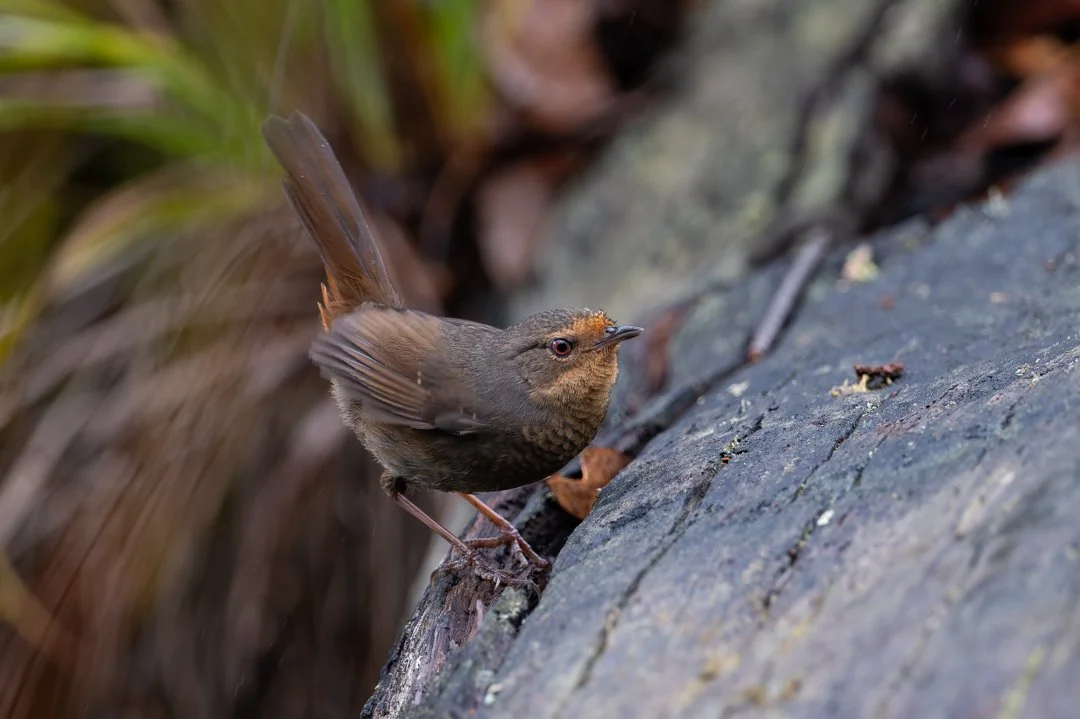
A pilotbird on a burnt log.
“For lyrebirds and pilotbirds, logs are beneficial to pretty well everything in these forests,” explains Maisey, “even if they're lying on the ground.” Come and take away those logs — salvage them for timber, as is still done throughout Victoria — and all of those integral services they provide disappear with them.
“I would argue it's worse than the logging of an unburnt forest because you've got the impact of the fire, which has killed lots of animals, reset the system, and then you've got the logging impacts additional to that.”
And after the fires come the invasive predators. Feral cats in Australia have been recorded traveling to scorched areas to take advantage of vulnerable prey. And a cat or fox will happily take a small bird out in the open — a poor flier, at that, and a naive little thing.
“When you do see pilotbirds, they're usually very tame, even if they're in a pretty wild place,” says Maisey. “They just don't seem to show much fear of humans. And whether that translates to their lack of fear from novel predators, like cats…”
And so the pilotbird seems to have vanished from the Dandenongs.
Its call, however, can still occasionally be heard.
“They certainly do like to mimic the pilotbird,” says Maisey of superb lyrebirds. “It's pretty common in their repertoire.”
Maisey has heard lyrebirds singing renditions of a pilotbird call, very near to the real thing. But while recording on a bushwalking route in Olinda Forest, Maisey noticed a lyrebird doing “a really dodgy pilotbird, where he'd lost entire notes.”
“Because lyrebirds learn culturally, they pass on their calls from lyrebird to lyrebird down the generations,” explains Maisey. “They'll continue to mimic a bird like the pilotbird long after it's gone, potentially decades.”
Over time, however, if there is no model — no pilotbirds — for fine-tuning their mimicry, that mimicry will begin to degrade until, eventually, even that imperfect echo of a pilotbird is lost.
Pilotbird Call
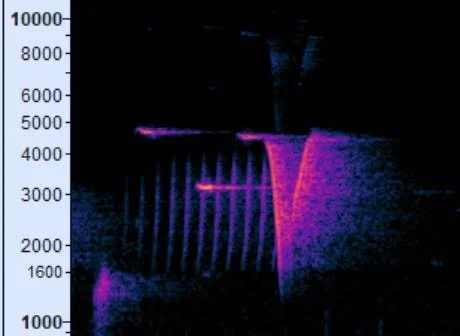
Pilotbird Mimicry
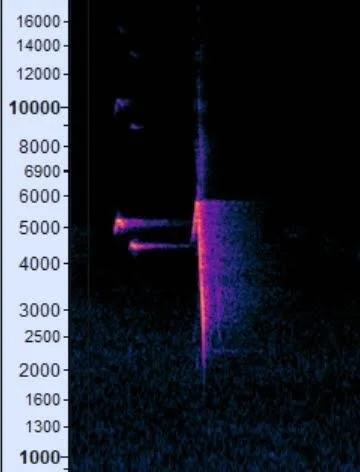
Degraded Mimicry
———
In his 1972 paper on the pilotbird, Cooper reflected on a warning from ornithologist Dr. John Albert Leach: “Bird protection in Australia should be real,” Leach wrote in 1929, arguing that Australians had been “too long neglectful of their unique privileges as regards birds…”
“Forty years have lapsed since Leach wrote these words,” Cooper noted. “The story of the Pilot-bird typifies the need for environmental protection, and clearly shows that we are still ‘too long neglectful of our unique privileges.’”
Another fifty years have passed since Cooper penned his reflection. And since then, much has changed.
From massive annual participation in the Bird of the Year poll to the citizen-science of the Australian Bird Count, avian appreciation is now a part of the nation's identity. It can no longer be said that Australians are neglectful of their unique privileges.
And yet, almost one in six Australian bird species and subspecies are today threatened with extinction. Land clearing is still a major issue, as are invasive species. And the threat has now expanded beyond the scope of a single country.
Fourteen-and-a-half million years ago, a natural dip in carbon dioxide caused the global climate to cool and Australia's ancient rainforests to contract. Today, an unnatural increase in carbon dioxide is causing the global climate to warm. The lowlands are drying out, birds are retreating upslope, and forests are burning.
Cooper wrote that, “If the Pilot-bird is to continue to survive… its environment must be preserved and it must be granted full protection from fire and from man.” That was true in 1972, and it is still true today.
For a species like the pilotbird, that is clearly declining but not yet on the brink, funding for research or protection is pretty much non-existent. “To get any money to work on them, it really falls back on volunteers probably, and enthusiasts,” says Maisey.
Some Australian birds — the emu, laughing kookaburra, superb lyrebird — garner not just national, but global attention. But what about the scrubbirds, heathwrens, and bristlebirds?
Birdwatchers have a name for these small, inconspicuous songbirds: LBJs, or “little brown jobs.” These are species that, for a long time, taxonomists struggled to distinguish, dumped into this family or that, united and scattered, confusing and interchangeable.
They evolved to go unseen, to vanish, and now they are.
It is true that many Australians today care deeply about their birds. But some birds are much easier to care about than others.
“The lyrebirds on social media just get so much interest,” Maisey says. “It's just out of control how people respond to that species.”
And there’s no doubt that protecting the lyrebird will also help the pilotbird, extending its umbrella of attention over their shared habitat. But the pilotbird exists where the lyrebird doesn't, and it has gone extinct where the lyrebird persists. How long can it realistically survive on the crumbs of attention and protection offered to its more popular companion?
“Hopefully, it extends beyond the lyrebirds,” says Maisey. Hopefully, the lyrebird can lead people to the pilotbird, as the pilotbird once led Tregellas to the lyrebird. But will anyone follow?
“As an 11-year-old, I remember filming with an old video camera this little pilotbird at my feet, just walking around my boots at Sherbrooke Falls,” Maisey recalls, “and, you know, to me that's just tragic that we've lost that species.”
“I look at the pilotbird and think, well, nobody even noticed that this species went extinct up here,” he says. “A little brown job that nobody sees. Beautiful little voice...”
Little Brown Jobs (LBJs)
Click a species to explore anatomical adaptations, behavior, and ecological niches.
Species Featured
Hello, World!