An Exceptionally Perfect Wasp-Mimic
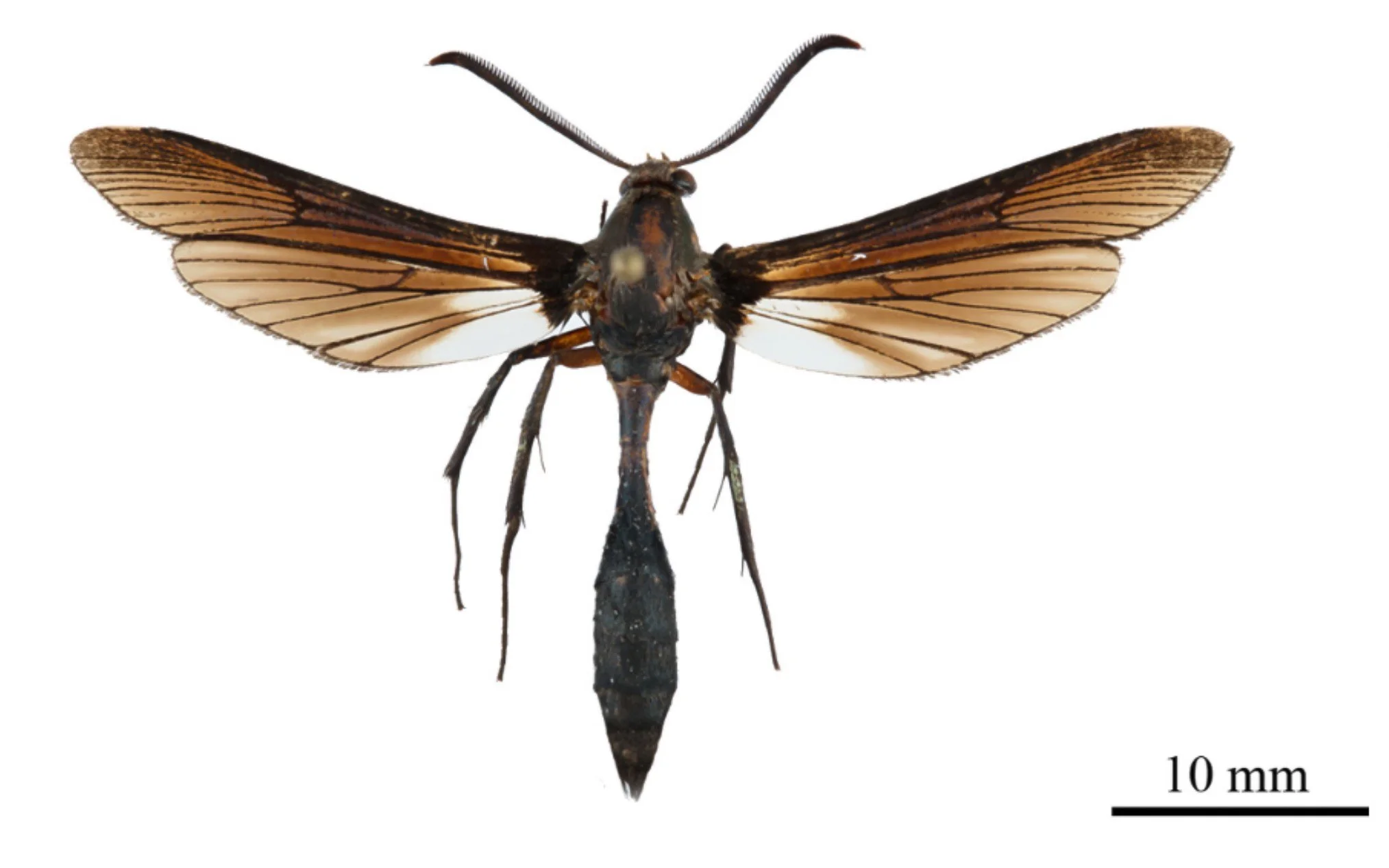
Pseudodelta melas, a new clearwing moth that mimics Africa’s black mud wasp.
Bartsch, D. & Sáfián, S. (2026) A new wasp-mimicking clearwing moth from Uganda (Lepidoptera: Sesiidae: Sesiini). Zootaxa, 5807 (1), 184–188. https://doi.org/10.11646/zootaxa.5807.1.9
Members of the Sesiidae family look very much like wasps: they are clear-winged and narrow-“waisted,” often with bold bands of white, yellow, orange or red, along their bodies.
But they are not wasps. In fact, they belong to an entirely different order than wasps. Whereas wasps belong to Hymenoptera with bees and ants, the wasp-like Sesiidae belong to Lepidoptera: the butterflies and moths.
———
Delta emarginatum, or the black mud wasp, is a species of potter wasp widespread across Africa, first described all the way back in 1758.¹ Pseudodelta melas is a species of clear-winged moth, first collected in August of 2024 in Uganda’s Ziika (Zika) Forest, and officially described on the 8th of May, 2026.²
The great gap between their discoveries mirrors the evolutionary chasm between these two species.
The split between the Hymenoptera (wasps, bees, and ants) and the lineage that would give rise to the Lepidoptera (moths and butterflies) occurred way back in the Carboniferous period — roughly 350 million years ago. We mammals share a more recent common ancestor with birds than these two insect groups do with one another.
And yet these two species — the potter wasp and the clear-winged moth — are difficult to even tell apart. Both insects have almost entirely black bodies. Both are about the same size: around 26 millimetres (~1 in) long. Both have long and slender abdomens. And both have membranous, translucent wings, tinted dark like smoky glass.
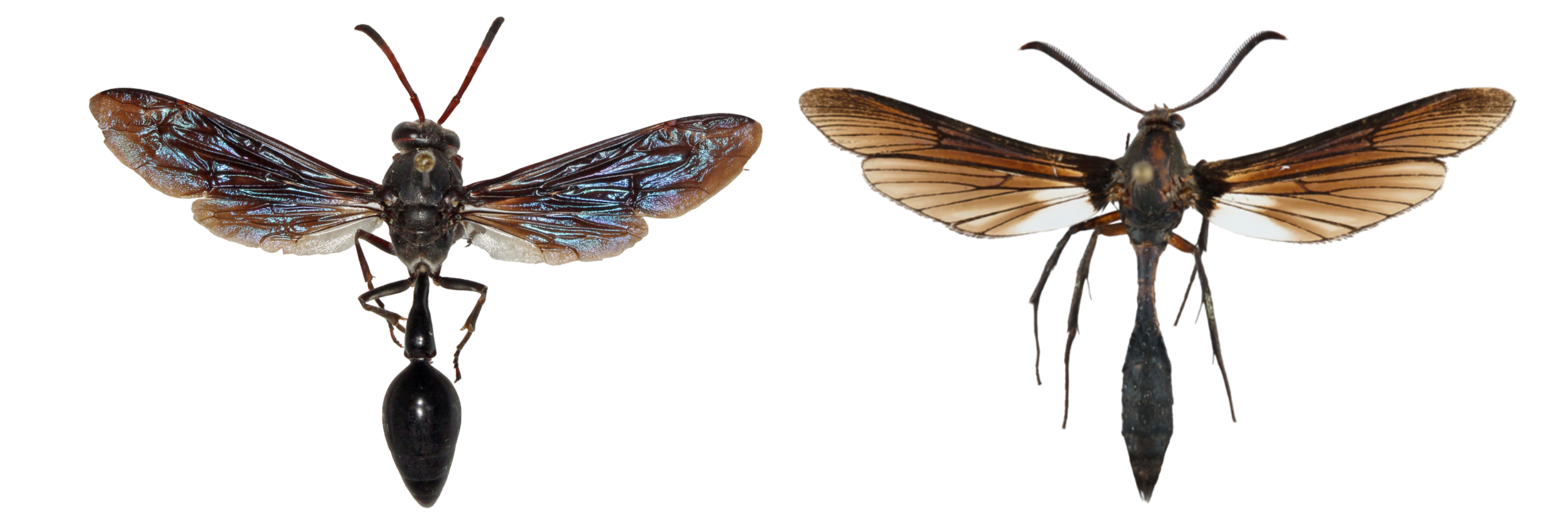
Delta emarginatum (black mud wasp) on the left and Pseudodelta melas (clearwing moth) on the right. (© Bartsch, et al., 2026 and © Johan Pretorius / iNaturalist)
This similarity is down to the fact that Pseudodelta melas is an exceptional wasp mimic. Specifically, it is a Batesian mimic; meaning that it (the moth), is quite harmless, but masquerades as a different, more dangerous species, such as a stinging wasp, to ward off potential predators.³ Indeed, its genus name, Pseudodelta, means “false Delta” — it is a fake version of the wasp genus it mimics.
———
The entire Sesiidae family, the clearwing moths, are notorious mimics.
Many of the over 1,500 known species mimic hymenopterans.
There is Sesia apiformis (the hornet moth), whose black-and-yellow colouration, decurved abdomen, and jerky flight mimic the mien of a hornet. Aurantiosphecia piotrii, whose bright orange colour and wing posture mimic the highly diverse Braconid wasps. Heterosphecia tawonoides is a shiny-blue bee mimic, which even makes a buzzing sound that’s thought to be a kind of acoustic mimicry.
And some Sesiidae species tap into the guises of other insect orders. Scarlata nirvana, scarlet red with “hairy” legs, seems to mimic assassin bugs, while Akaisphecia melanopuncta is a “very good mimic of red-and-black aposematic Hemiptera,” especially those insects known as red or fire bugs.
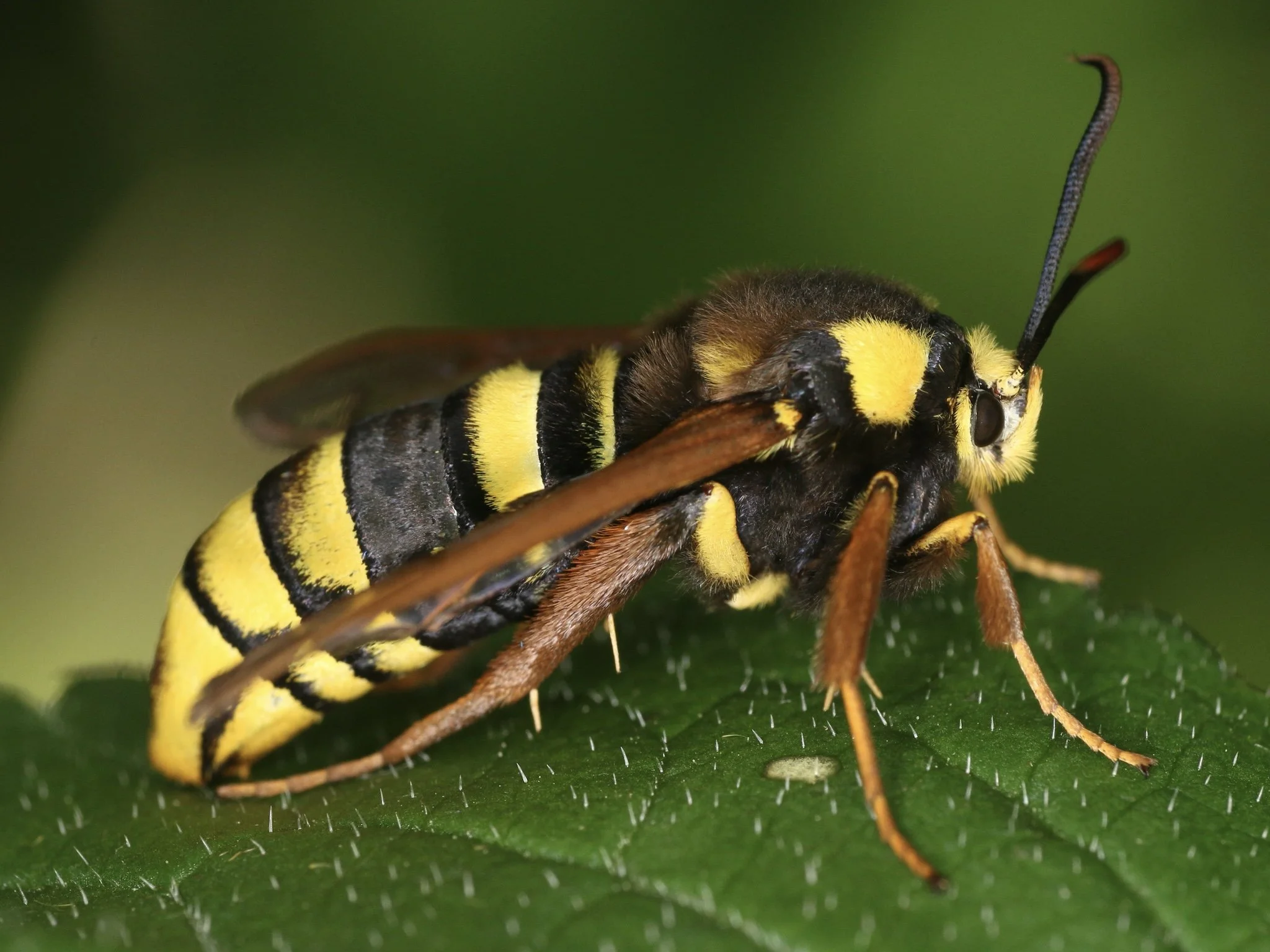
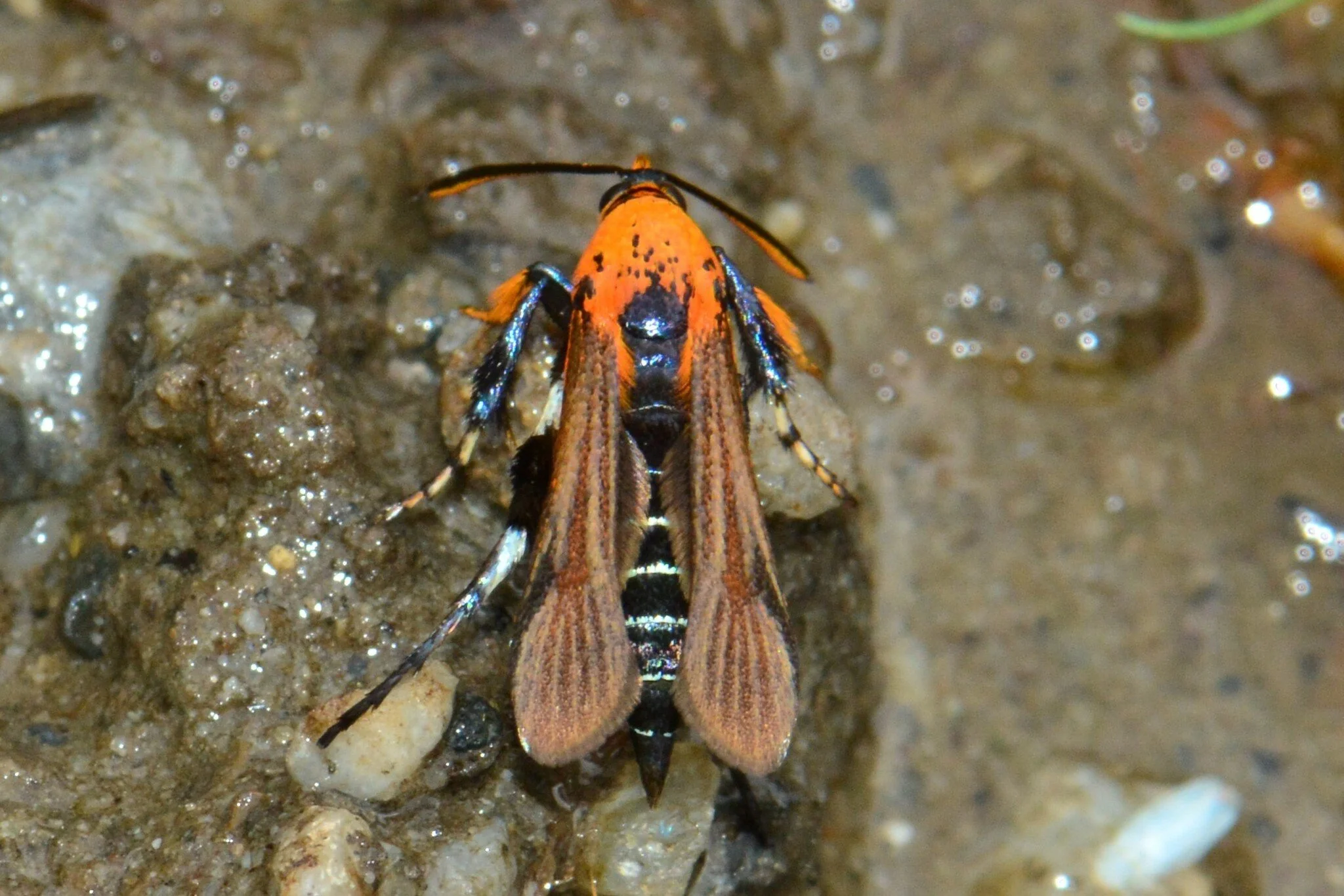
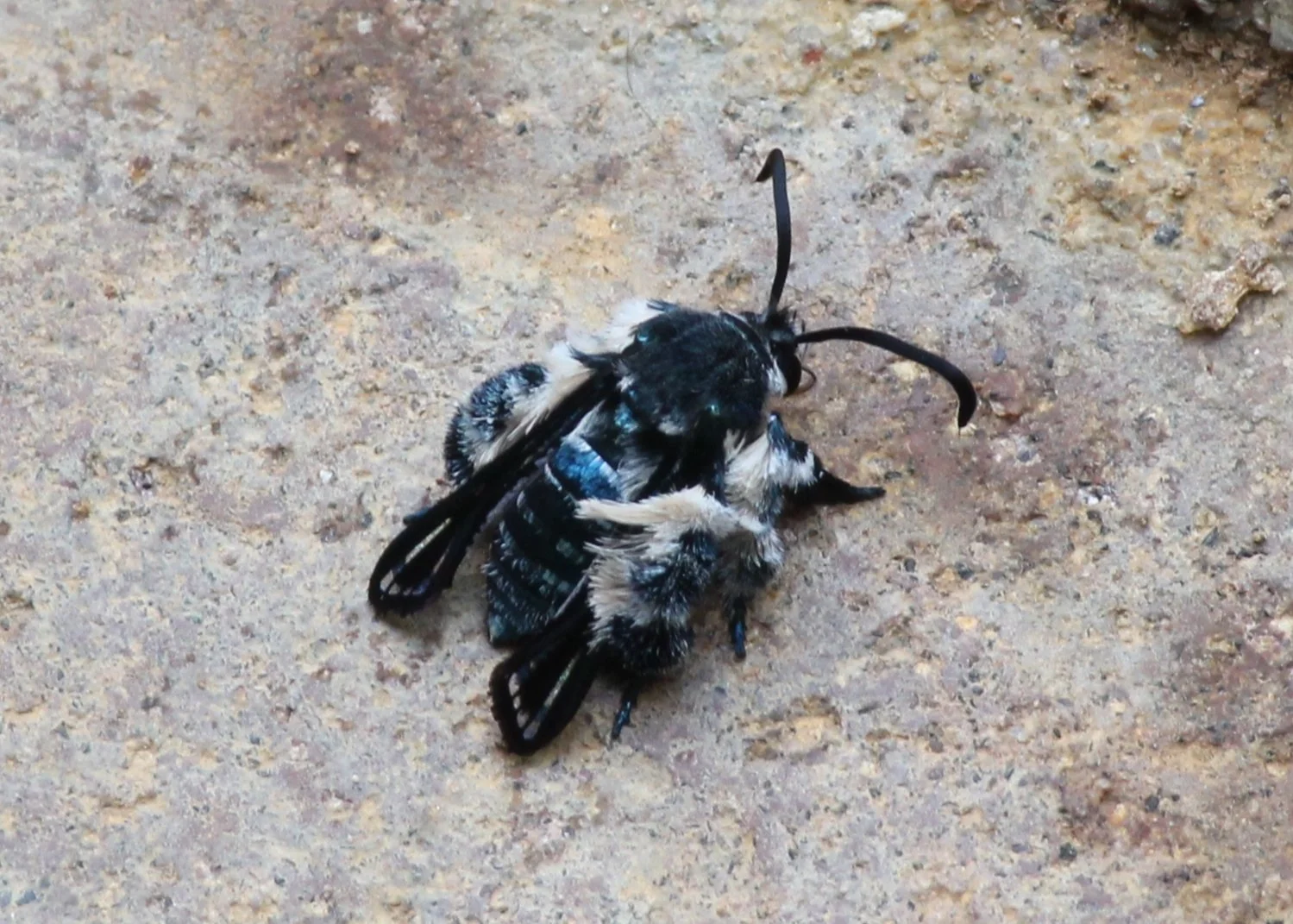
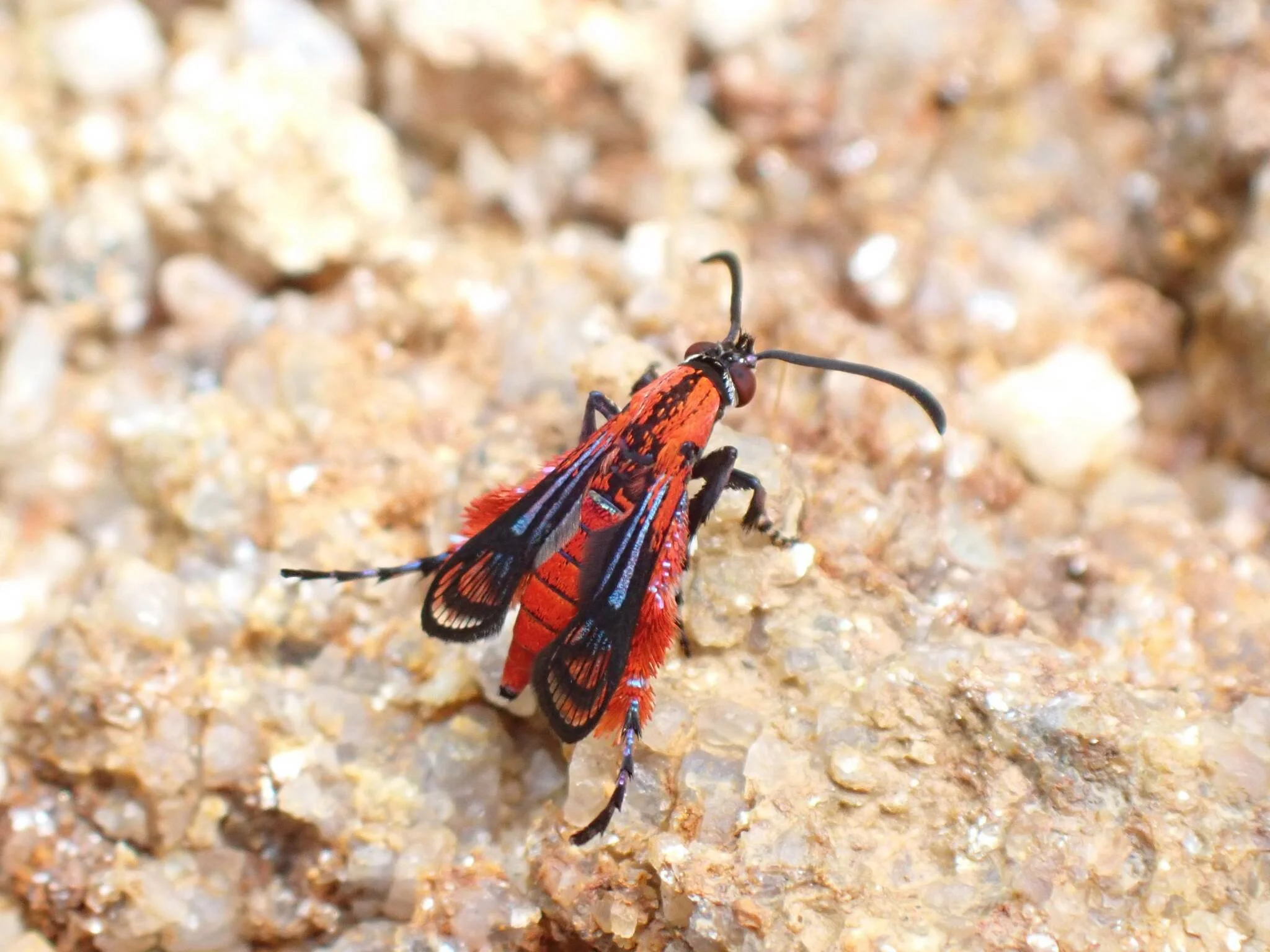
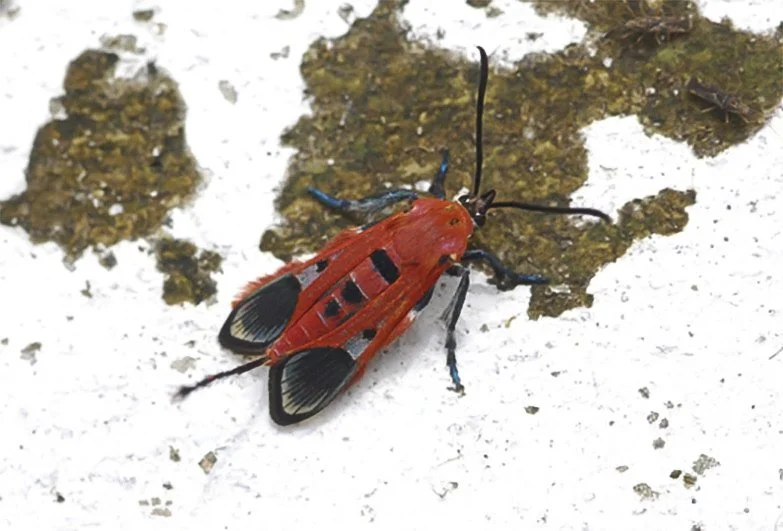
Not only have clearwing moths converge on the same appearances as other insects in order to mimic them, they’ve done so multiple times.
Pseudodelta melas, the newest Sesiidae species as of May 2026, looks very much like a Similipepsis clearwing moth, an existing African genus that likely also evolved to mimic African potter wasps. P. melas is, however, set apart by its exceptionally large size — with a wingspan of 46 millimetres (1.8 in) — its unusually dark and completely scaleless wings, alongside its, quote, “exceptionally perfect wasp mimicry.”
Thus it is a new species (Pseudodelta melas sp. nov) in a completely new genus (Pseudodelta gen. nov.). The “false black Delta wasp” bridges 350 million years of separate evolution to play a high-stakes bluff; a harmless moth that pretends it can sting.
¹ Delta emarginatum (initially described as Vespa emarginata) was among the earliest officially described species, as it was featured in the 10th edition of Carl Linnaeus's Systema Naturae.
² The collection site for Pseudodelta melas was at the edge of the Ziika (Zika) Forest in Uganda — the site where the Zika virus was first isolated. Researchers used synthetic pheromones in sunny weather to lure the specimen.
³ Classic examples of Batesian mimicry include stingless hoverflies appearing like stinging bees, non-venomous kingsnakes appearing like highly-venomous coral snakes, and some pyralid or grass moths mimicking the ultrasonic clicks of poisonous tiger moths to dissuade bats from eating them.