Western Long-beaked Echidna
Zaglossus bruijnii
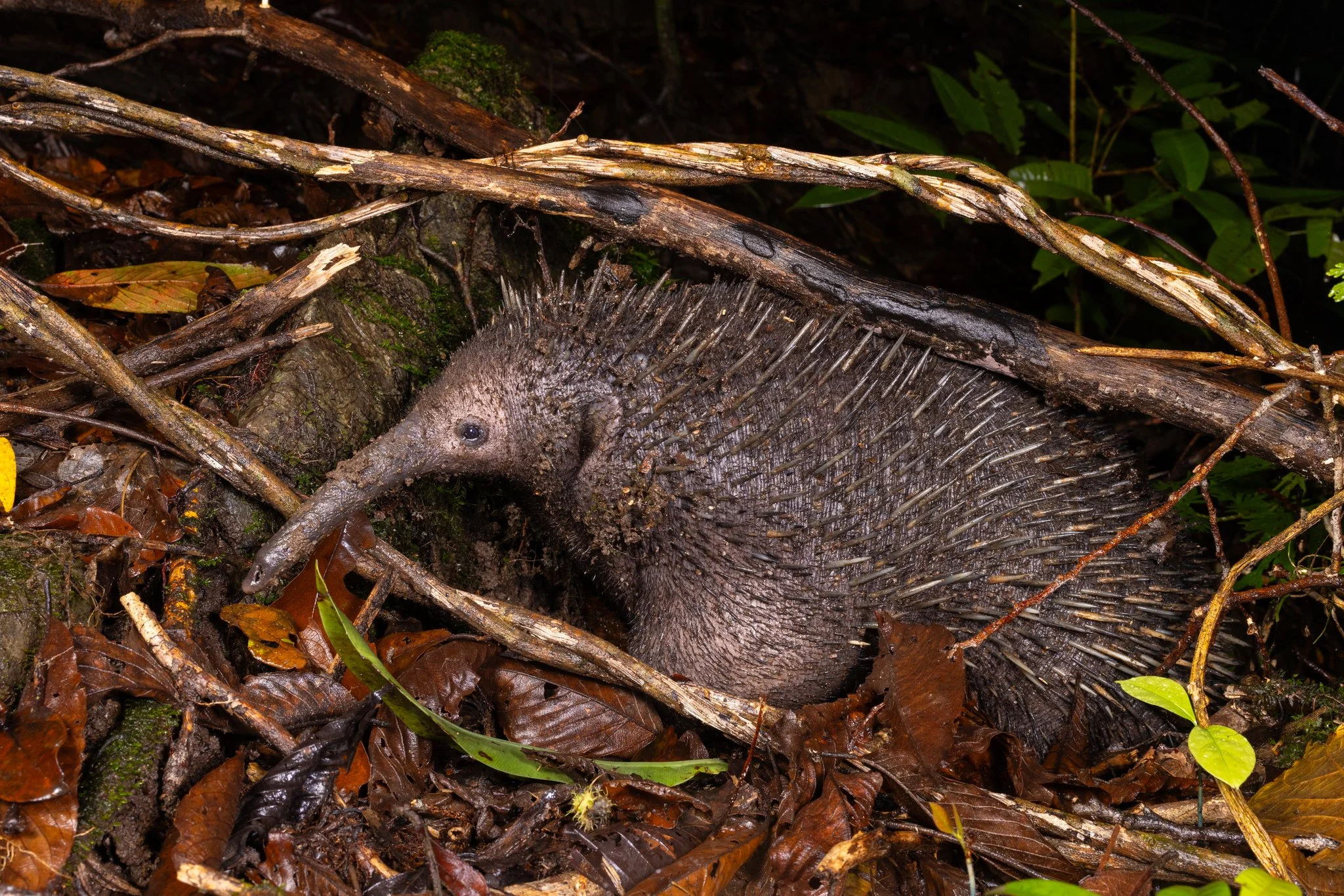
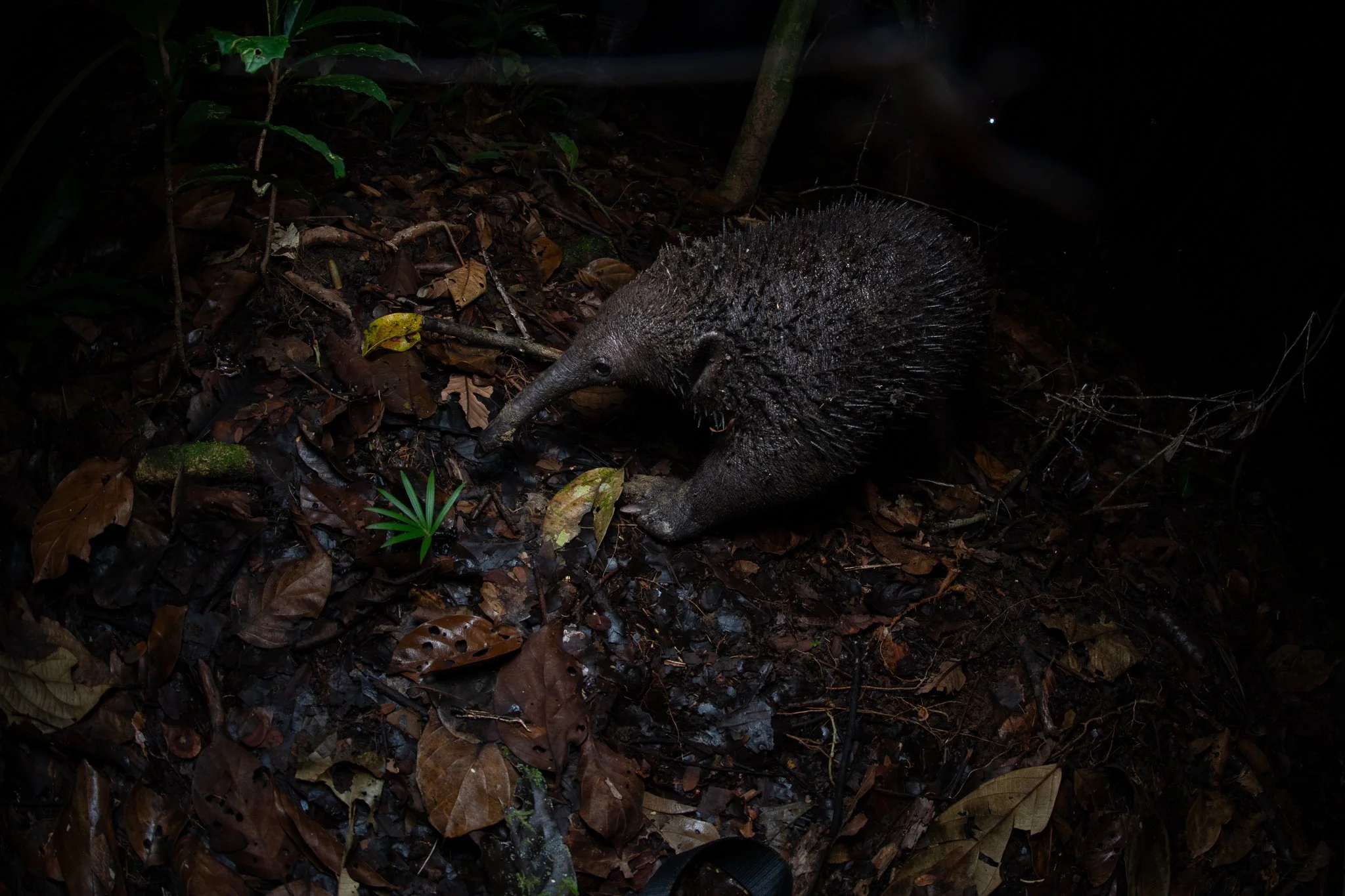
The western long-beaked echidna — the largest of the four living echidnas — uses its elongated snout and spiny tongue to catch slippery earthworms. It is Critically Endangered, and found only in western New Guinea.
An Apocryphal Story of an Impossible Creature
The western long-beaked echidna sounds like it was born from the imagination of a 17th-century European explorer, devised to impress the folks back home.
“My explorations in the Papuan Isles have brought me face to face with a lumbering beast festooned with spikes, it has four tree-trunk legs that end in brutish claws, and its face is a tapering beak so long that it reaches the ground!”
The European public, riding high on the many exotic discoveries of the “Age of Exploration,” is suitably impressed by this new beast from the East. The explorer goes on:
“From its beak slithers a serpentine tongue covered in thorny teeth and, from its rear, it gives birth to young in the form of tiny eggs, which it carries in a pocket like a man might his watch!”
The crowd is wowed by this unlikely animal, but the skeptical thinker has his doubts.
“A furred beast that walks on all fours, with the beak of a bird and a habit of laying eggs?”
The explorer responds by producing the creature itself — not a living one, of course, but a taxidermied model.
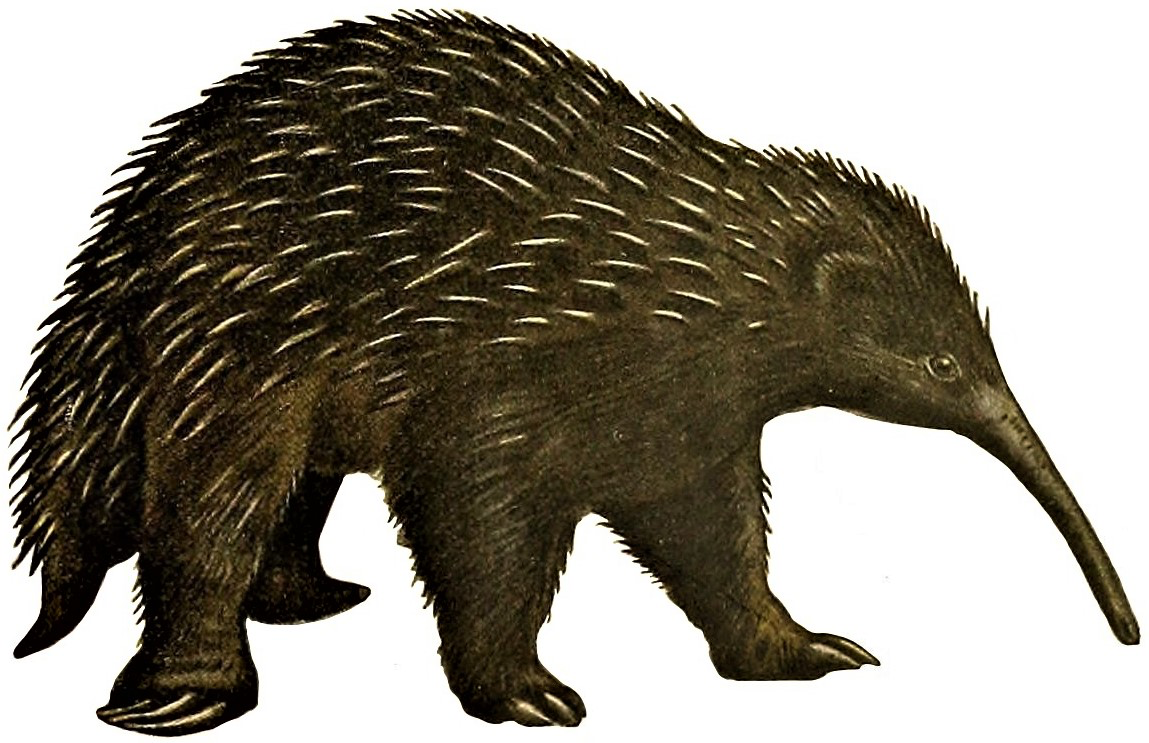
A 1919 drawing of the western long-beaked echidna by Angel Cabrera, from Genera mammalium.
The crowd gasps and gawks. The sceptic isn't convinced. He's familiar with the many chimera-creatures that litter the “cabinets of curiosities” flaunted by wealthy aristocrats. He points out that the beast's stout body and digging legs are just that of a badger, while the spines on its back were stolen from a hedgehog or porcupine. And its beak? Clearly, it comes from some bird; in all likelihood, the beak of an ibis or some such wader.
This animal is obviously a tall tale, some kind of swindle.
You could excuse the sceptic's, well, scepticism. The western long-beaked echidna looks like someone took a kiwi bird, put it on all fours, and covered it in spikes. Without clear, demonstrable evidence of its existence, you might just as soon believe in drop bears or arboreal octopuses. And this echidna only becomes less believable the more you learn about it.
Bird’s Head
To find an improbable creature you must go to an unusual place.
In the far northwest of New Guinea, there is a peninsula known as Vogelkop or Bird's Head — because it's shaped, vaguely, like the head of a bird. It is a land of mangrove fringed coasts that rise to tropical hills and climb ever higher to become montane forests.
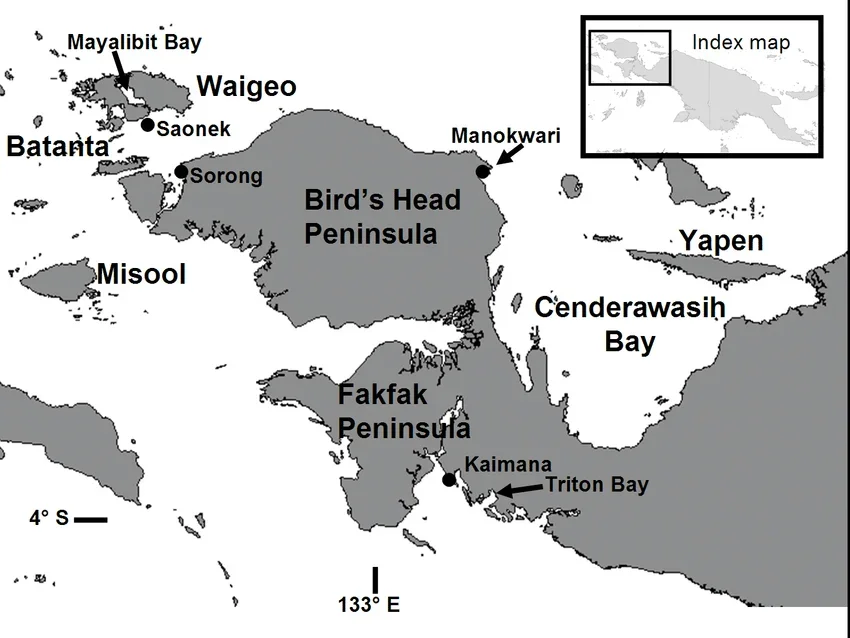
Map of the Bird's Head Peninsula region of West Papua, Indonesia.
Appropriately, Bird’s Head is home to more than 300 species of birds, of which at least 20 are found nowhere else: the Vogelkop melidectes, with bare-blue skin around its eyes and little red wattles at the sides of its neck; the Vogelkop bowerbird, who builds conical huts in the forests; and the Vogelkop lophorina, whose males turn themselves into dancing black voids with neon-blue bibs and glowing “eyes.”
“Is this how you got the beak for your monstrosity,” the skeptic scoffs at the explorer, “stolen from some poor bird?”
“I had no need to bother any fowls,” replies the explorer, “the peninsula is just as rich in furred beasts, most of which are, to the layman, quite incomprehensible, I’m sure.”
Echidna Ecology
You may be familiar with the common, or short-beaked echidna: a cute ball of spines about 35-centimetres (13.7 in) long, bearing a tubular little snout, waddling around on stout legs looking for ants and termites.
The western long-beaked echidna is not that.
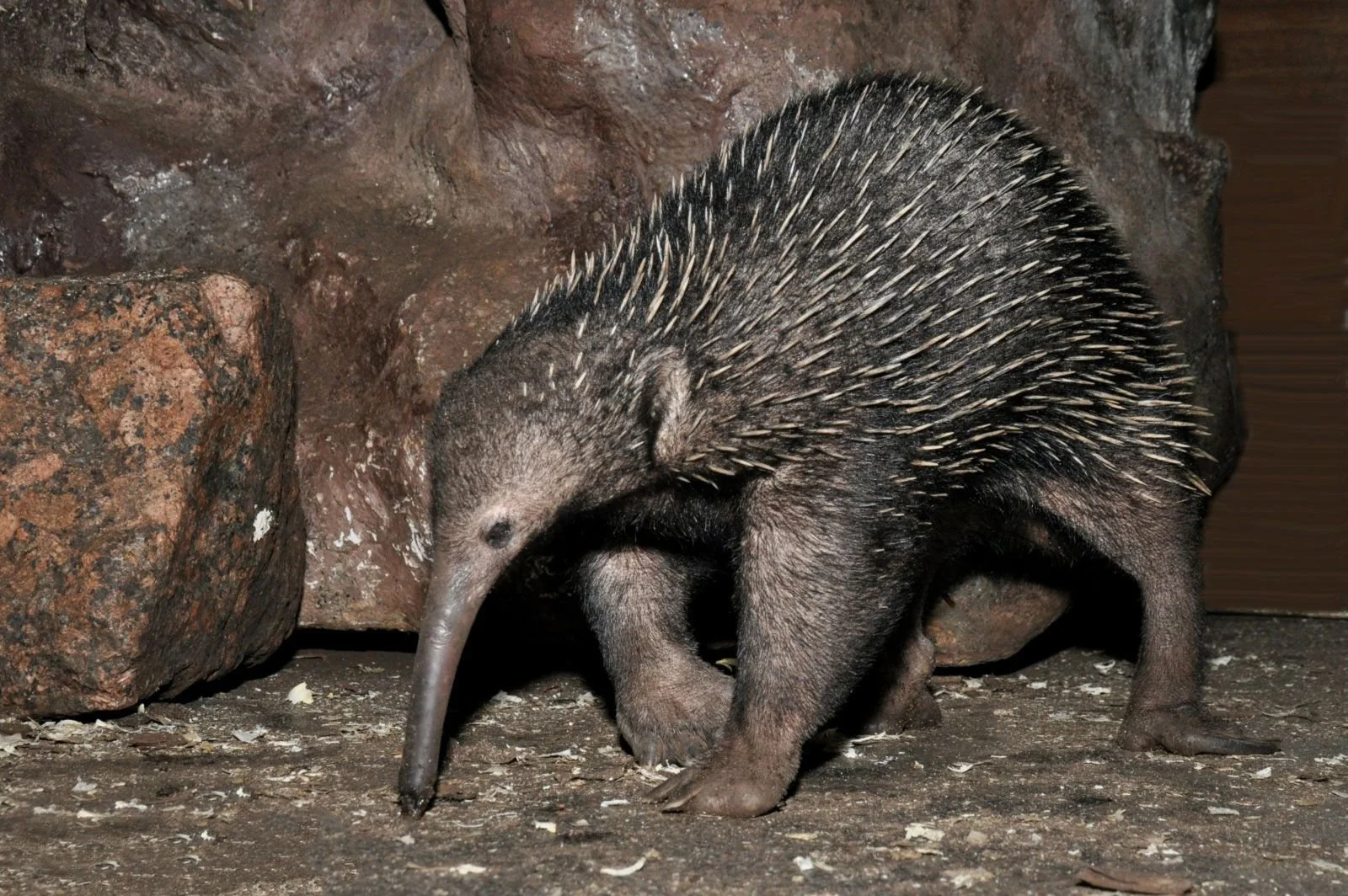
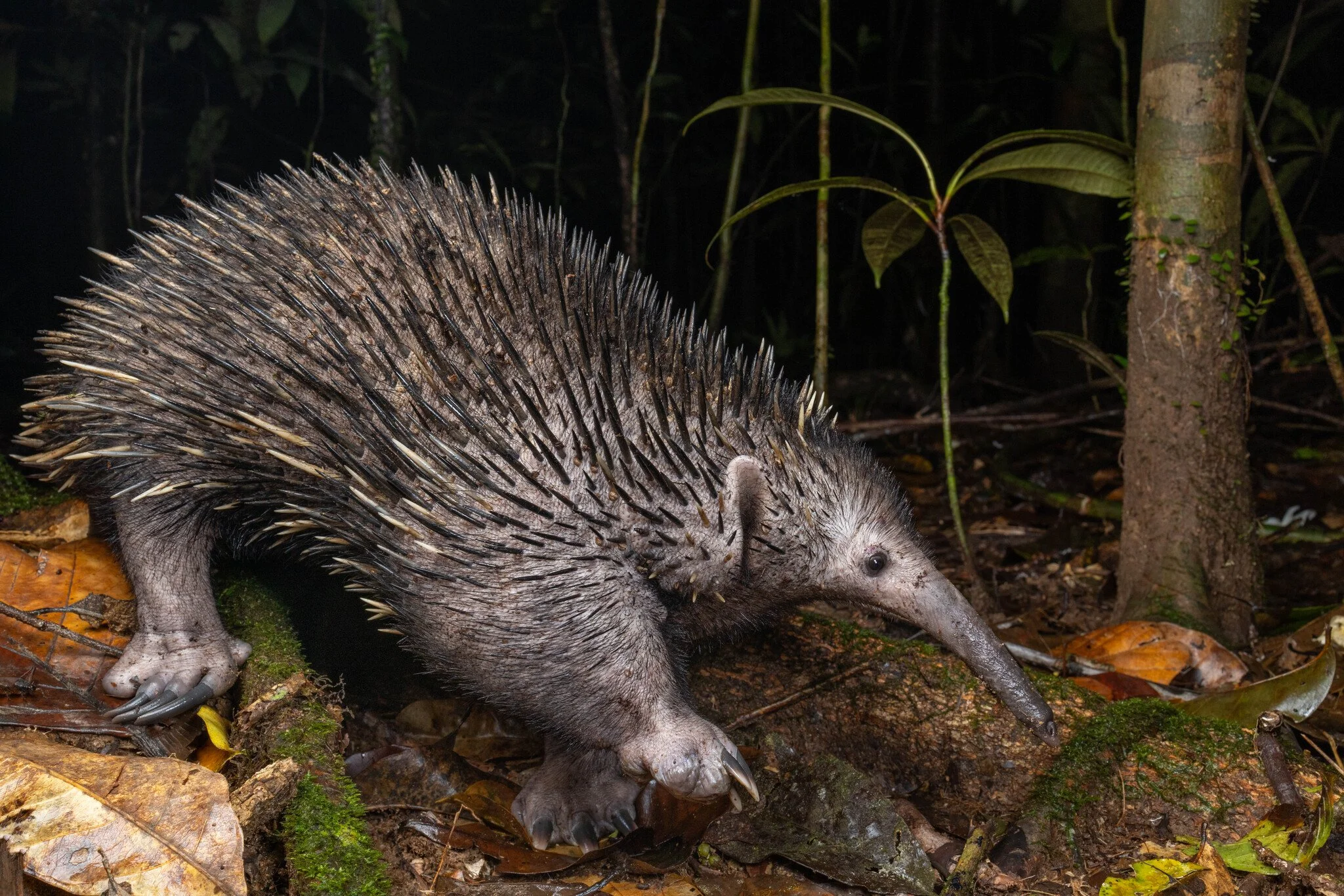
Nearly 90 centimetres (almost 3 ft) long and weighing up to 16 kilograms (35 lb), this behemoth is the largest of the four living echidna species. Its thick legs and wide stance make for a lumbering and slow gait as it stomps around searching for worms. Its long snout, covered in touch-sensors to compensate for poor eyesight, pokes and probes at the earth, feeling for wriggling grubs. Its overlong, worm-like tongue "wrestles" its wormy prey; but the battle is hardly fair, given that the tongue is armed with rows of teeth-like spikes.
In contrast, the echidna's “beak” — the elongated snout which comprises some two-thirds of its total head length — has no teeth. It is instead a specialised straw for sucking up its cylindrical prey. Each worm is manoeuvred to enter head first, before being slurped up like a noodle.
This may not be what you picture when you imagine an apex predator: a lumbering, half-blind worm-hunter. But the western echidna is at the top of its food chain. It’s just that its food chain hops and skips some steps, and stops short: earthworms → echidnas.
(© Klaus Rudloff / BioLib.CZ)
Yellowish-white spines sprout across its shoulders, along its black-furred back, and its stubby tail. However, it’s not quite the spiky bouquet of a porcupine nor the dense prickly carpet of a hedgehog.
“No, not at all,” the skeptic interjects, “those spines are so sparse and short they barely project from its fur. How does the creature survive? Its defences are useless!”
“Until the animal wedges itself into a burrow and presents only its back,” replies the explorer “At which point nothing on the island can move it.”
“Nothing?”
The explorer pauses. “Almost nothing…”
The Human Hunter
Sometime between 19 and 48 million years ago, the echidnas diverged from their shared ancestor with the platypus, setting down their own terrestrial and spiny path.
The first humans arrived in New Guinea around 50,000 years ago.
Suddenly, the echidna's strategy of “stay put and have spines” was flipped upside down, quite literally, by the hands of these new and clever hominids. With our big brains and opposable thumbs, employing our fancy tools and domestic dogs, we can find and, with some effort, unearth a sheltered echidna. We can skin it, de-spine it, and cook it for a fatty meal.
When the human population is relatively low, and the available echidna habitat is plentiful, a sustainable balance can be struck. Having been around in New Guinea for so long, humans had essentially become a quote-unquote natural predator of the echidna.
Unfortunately, predictably, that balance has not been maintained.
Between the years of 2001 and 2019, Indonesian New Guinea — where Bird’s Head is located — lost 2% (0.75 Mha) of its old-growth forests; cleared for industrial plantations, roads, timber extraction, and agriculture. Now granted, 2% doesn't sound like much, but a spatial model (based on deforestation in Indonesian Borneo) predicts that Indonesian New Guinea could lose another 4.5 Mha by 2036 — that's an additional 13.12% loss in just 17 years.
At that rate, there would be no more old-growth forests at all in just 130 years.
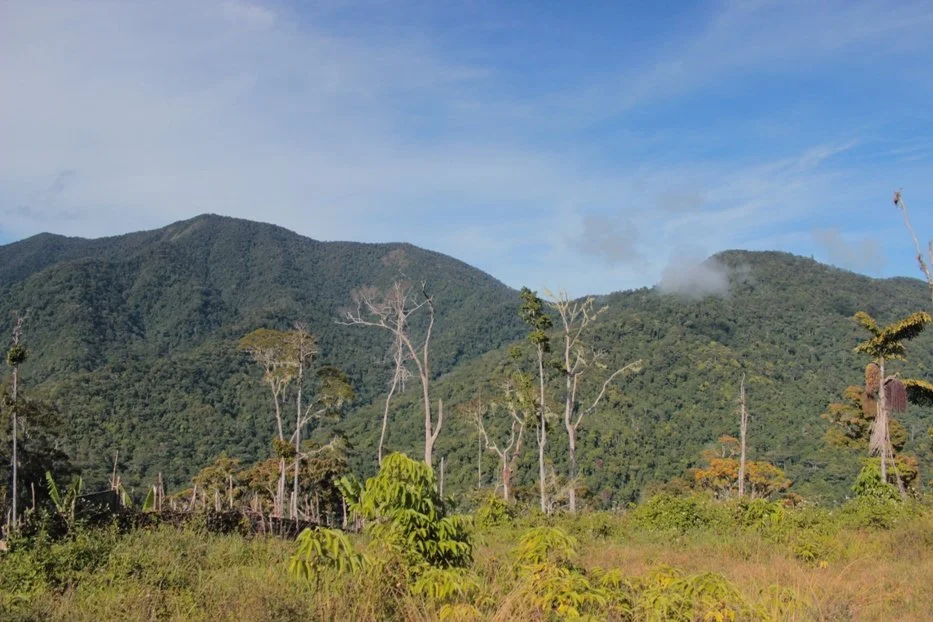
The Arfak Mountain forests of eastern Bird’s Head.
(© David Worabay / Wikimedia Commons)
The less habitat, the fewer echidnas. The fewer echidnas, the more weight is placed upon each individual’s hunched shoulders, and the higher the impact of each echidna's death.
If echidnas vanish faster than they reproduce…well, it’s simple math.
“Then the creature is doomed,” the skeptic says.
“All creatures are doomed,” the explorer replies. “But a dynasty does not rush to its end simply because it is falling.”
Monotremes: Weird Mammals?
For 190 million years, the monotremes have been evolving to be weird. Or so it seems to us placental mammals.
We humans, along with field mice and blue whales and most other furry creatures on Earth, are placentals — we grow our young internally via a complex life-support organ: the placenta. The marsupials, like kangaroos and opossums, opted instead to “finish the job” externally, typically in a pouch.
Throughout those vast time spans, as these newer factions rose to prominence, the monotremes radiated into a humble assortment of species — from the Frankenstein-like “echidnapus,” to the platypus-like Obdurodon, and sheep-sized giant echidna — and then dwindled to the mere five alive today: the platypus and four echidnas.
Monotremes are the third, and by far the smallest dynasty of modern mammals. Like all mammals, the monotremes evolved from egg-laying reptiles. But unlike most mammals, they never stopped laying eggs. And what they use to make those eggs is just as strange.
“Sir,” the 17th-century skeptic jumps up,“this is hardly fit subject matter for mixed company! I came here to evaluate the credibility of your beast, not to endure a lecture on its…its…”
Odd genitalia, is the nice way of putting it.
An echidna penis ends in four separate heads, or penile glans, although a male only uses two at a time — half of his potential — with the specific pair he employs varying between mating sessions. Fortunately, this alienesque appendage remains retracted inside the male's cloaca until its use is required.
Unlike the penises of most mammals, the echidna's is a highly specialised tool employed solely for mating purposes, so its strange structure is almost certainly the result of some evolutionary adaptation to increase reproductive output. Waste disposal is instead done directly via his cloaca, an all-in-one orifice that monotremes share with amphibians, reptiles, and birds. The female echidna has a matching system: a single cloaca on the outside, branching into two distinct vaginas on the inside — which goes some way towards explaining the male's two-by-two “workflow.”
This unusual anatomy dictates an equally unusual courtship and development.
While we know little about the sex lives of long-beaked echidnas, among short-beaked echidnas, males are known to be the pursuing sex — sometimes forming “echidna trains,” wherein multiple males waddle around after a single female.
Once that particular train reaches its destination, development chugs along at speed, before grinding to a crawl.
In the span of less than a month, a mother-to-be develops a specialized pouch on her underside, inside of which she places her single, precious, soft-shelled egg. After just 10 days of incubation, the egg hatches into a tiny puggle.
The puggle stays snuggled in its mother's pouch for two to three months. To grow, it must feed, but its mother has no milk-giving nipples. Thankfully she does have mammary glands — given that she is a mammal — from which she secretes milk directly through patches of her skin; essentially sweating it out for her puggle to lap up.
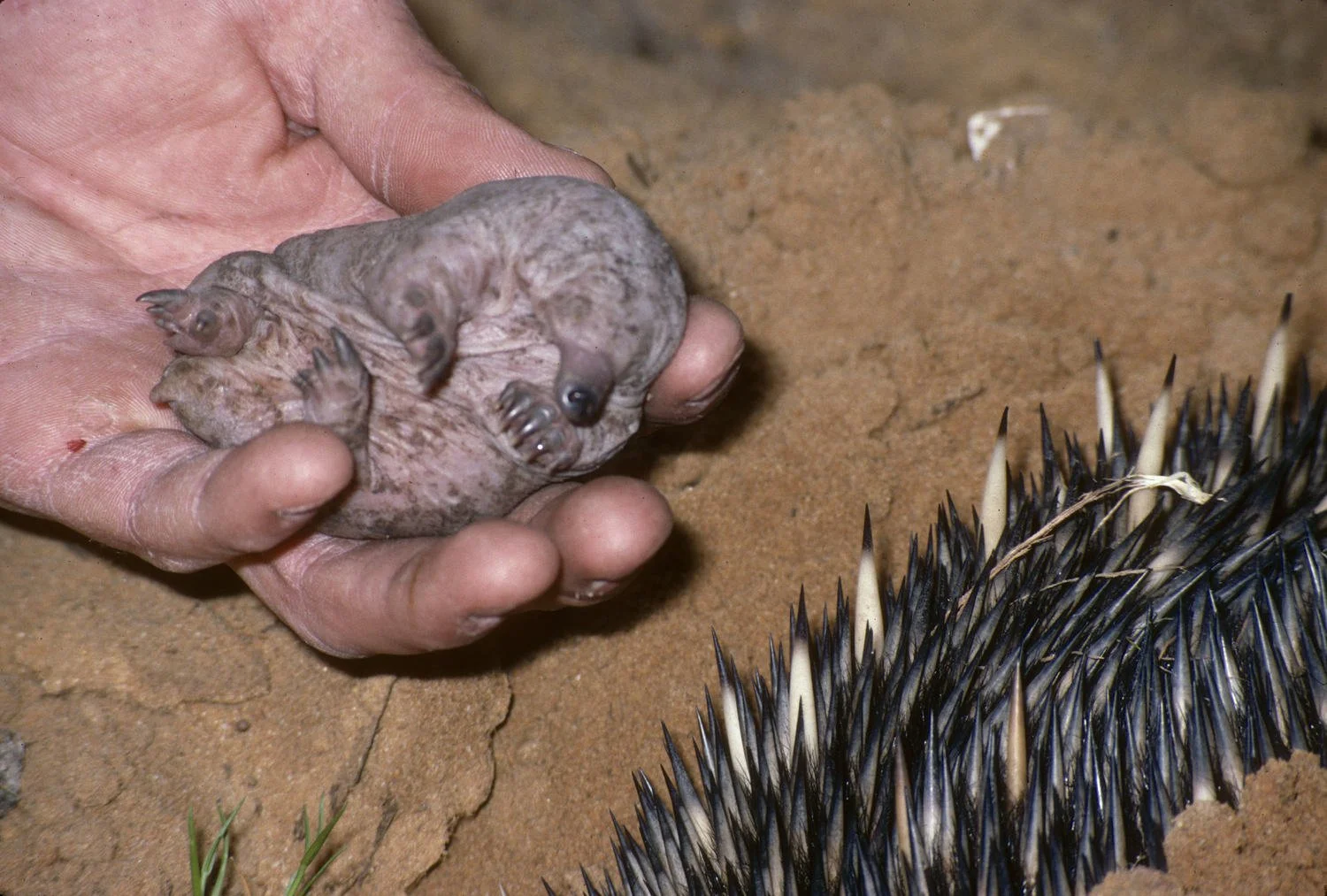
The puggle of a short-beaked echidna.
(© Ian R McCann / Museums Victoria)
By the time the puggle is ready to leave this second womb, it already boasts a back full of defensive spines. It isn't forced to face the world yet, however.
Having only one offspring at a time, the mother is obstinately dedicated to its well-being. The young echidna shelters in a third womb, of a sort, continuing to drink its mother's milk inside her burrow until it turns 6 or 7 months old. Some won't leave until they've hit a year.
This extended childhood is reflected in an echidna's long lifespan: long-beaked echidnas are known to live for over 30 years, while short-beaked echidnas can live for up to 45 years in the wild and 50 in captivity. A less fortunate consequence of this lengthy childhood is languid reproduction.
Monotremes are an older lineage, from a slower world.
To be clear, echidnas (and the platypus) are modern species; as “evolved” as any other living today. But even modern species can be “primitive,” in the sense that they’ve changed so little, and are consequently less adapted to this much-changed, and fast-changing world.
———
Including the western, there are three species of long-beaked echidna — which together make up the genus Zaglossus — all endemic to New Guinea.
The eastern-long beaked echidna, ranging widely across a swath of central New Guinea, is by far the most common of the three — likely making up the majority of the island's echidna population. However, it's still considered Vulnerable, with a population of around 10,000 mature individuals as of 2015.
Our western long-beaked echidna isn't nearly as numerous. Considered Critically Endangered it is seldom seen and very understudied; to the point that we can't even make an estimate of its population.
The last species, Attenborough's long-beaked echidna (named for Sir David Attenborough), is so cryptic that it went unrecorded for over 60 years before the first photographs of the species were captured in 2023. It is also, unsurprisingly, Critically Endangered.
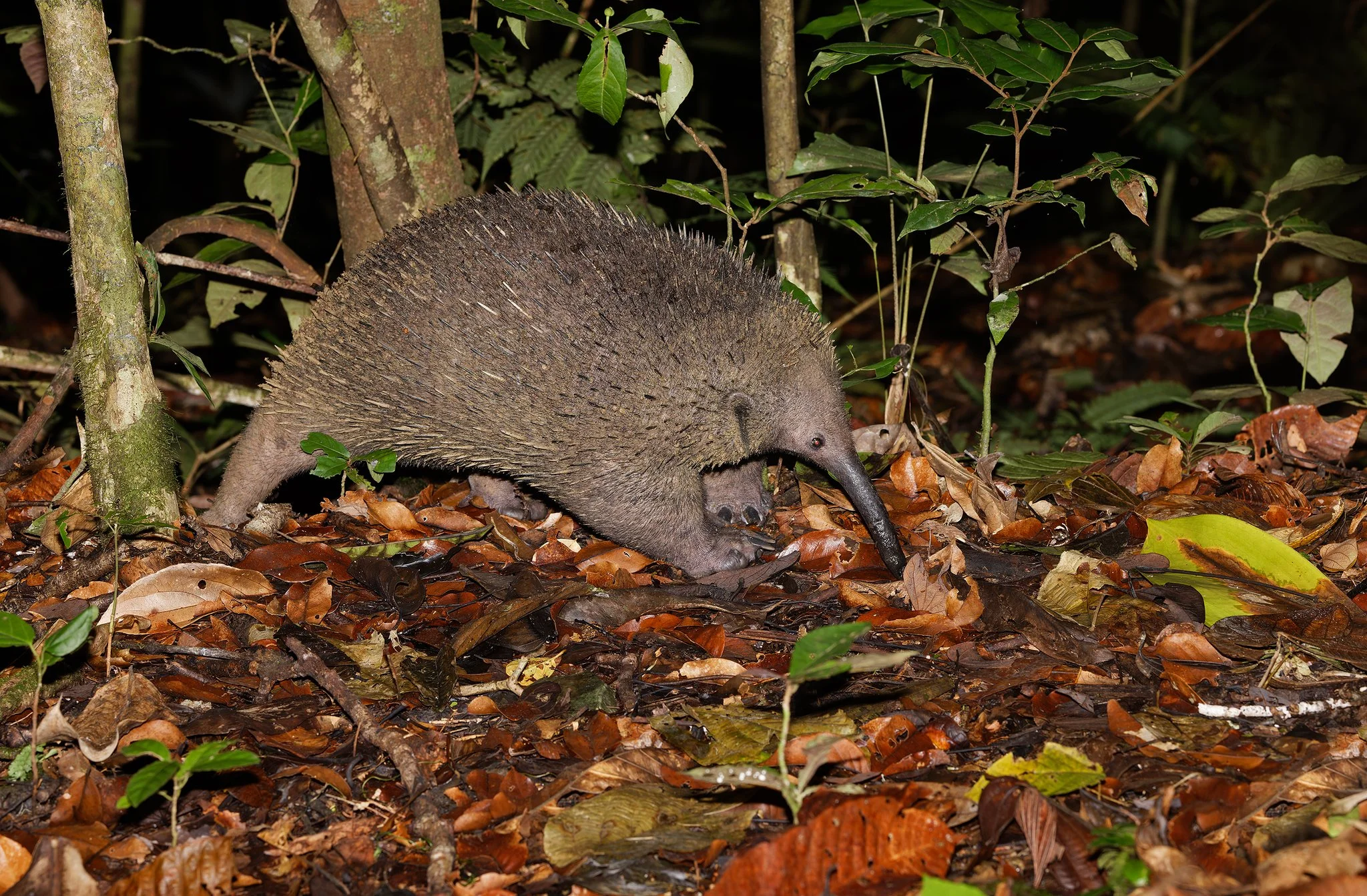
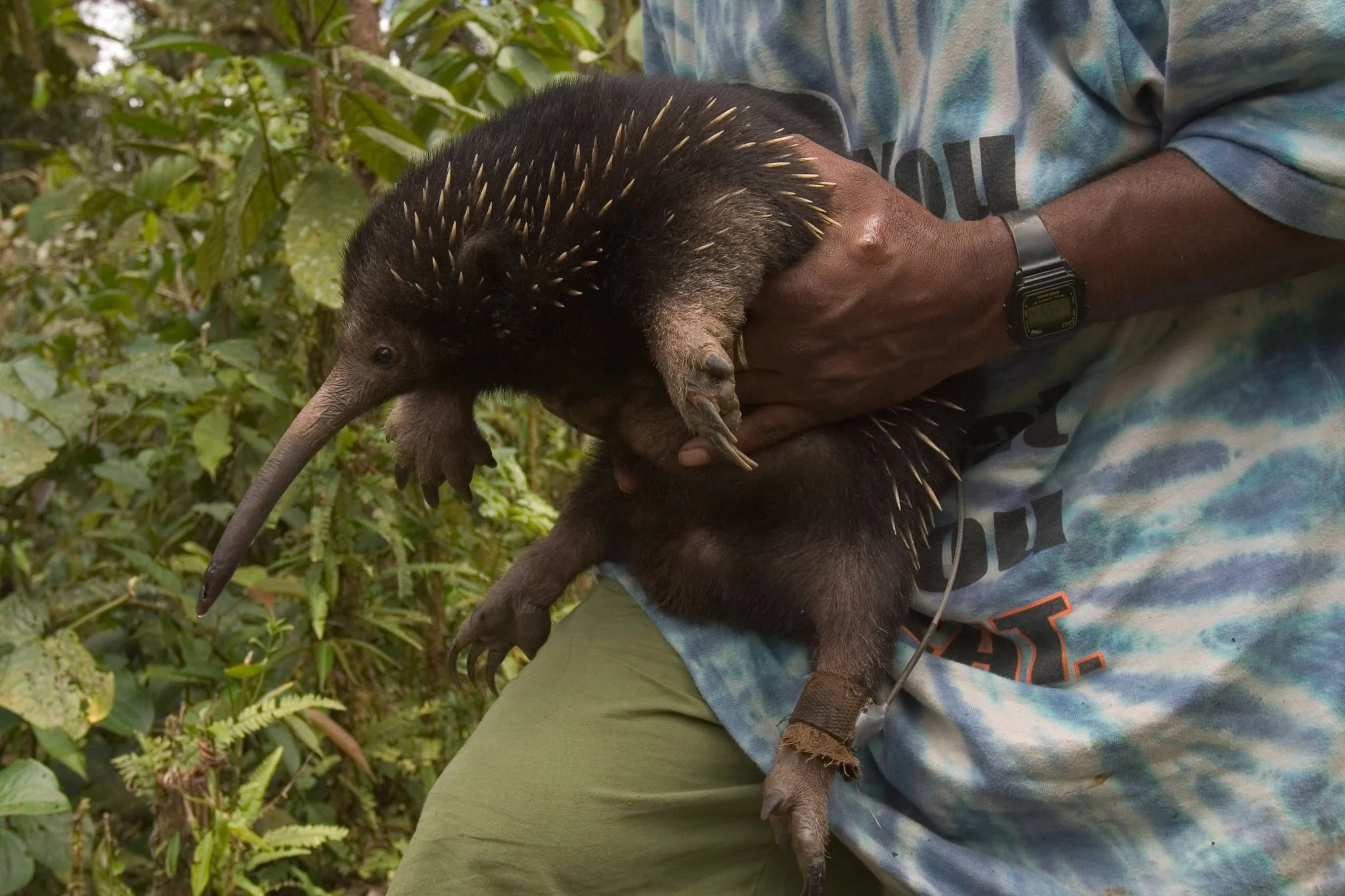
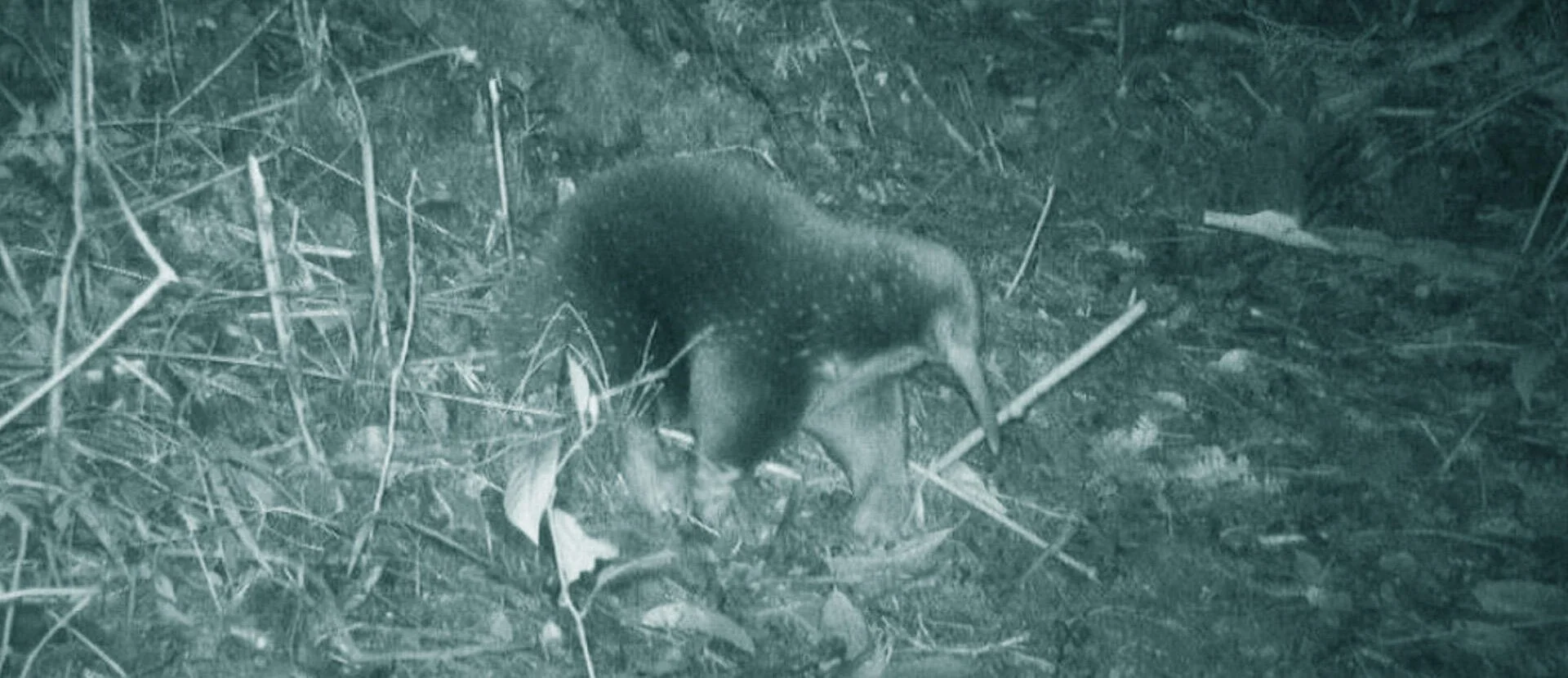
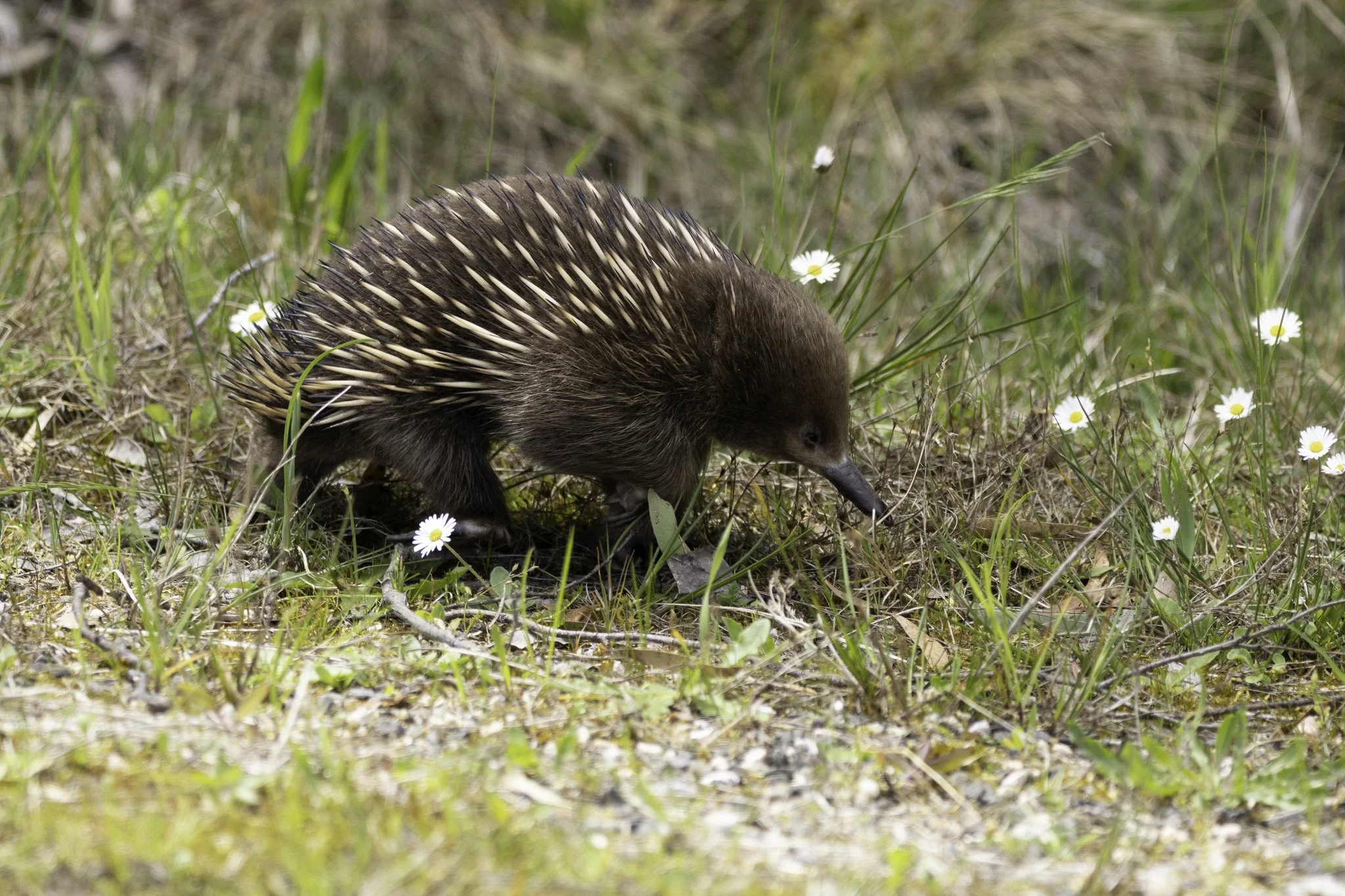
All three species are legally protected. However, hunting for subsistence by traditional methods is allowed and long-beaked echidnas are still relished as oily delicacies by some of the people of New Guinea. But the more habitat these echidnas lose, the less sustainable any kind of hunting becomes, as each individual of the dwindling species become ever more valuable.
———
The fourth and final echidna species, the classic short-beaked echidna, is the only one that lives in the Land Down Under — directly under New Guinea.
But it wasn’t always so lonely down there.
The western long-beaked echidna once lived alongside its smaller cousin, likely in the northern tropical regions, but it was believed to have gone locally extinct in Australia around 10,000 years ago. That is until Kristofer Helgen, the curator of mammals at the Smithsonian Institution, went digging around through the cabinets and collections of the Natural History Museum in London.
Our 17th-century skeptic looked at a taxidermied echidna and confidently declared it a hoax — a stitched-together fraud destined to rot in a dusty cabinet of curiosities. Ironically, a real echidna specimen was all-but ignored for decades, not out of incredulity, but because no one recognized its significance.
Originally labelled as a short-beaked echidna when it was collected, the specimen was re-examined upon entering the museum in London and relabelled as a western long-beaked echidna. It was then quietly put back in the museum's collection to collect dust for over 70 years.
The original collector, naturalist John Tunney, found the animal in the Kimberley region of Western Australia in the year 1901. He labelled the specimen as “Rare," but little was made of the find. It was only through Helgen's museum sleuthing that the specimen's implications were brought to light.
The skin of a western-long beaked echidna had been collected in Australia in 1901, where the species had supposedly been extinct for several thousands of years.
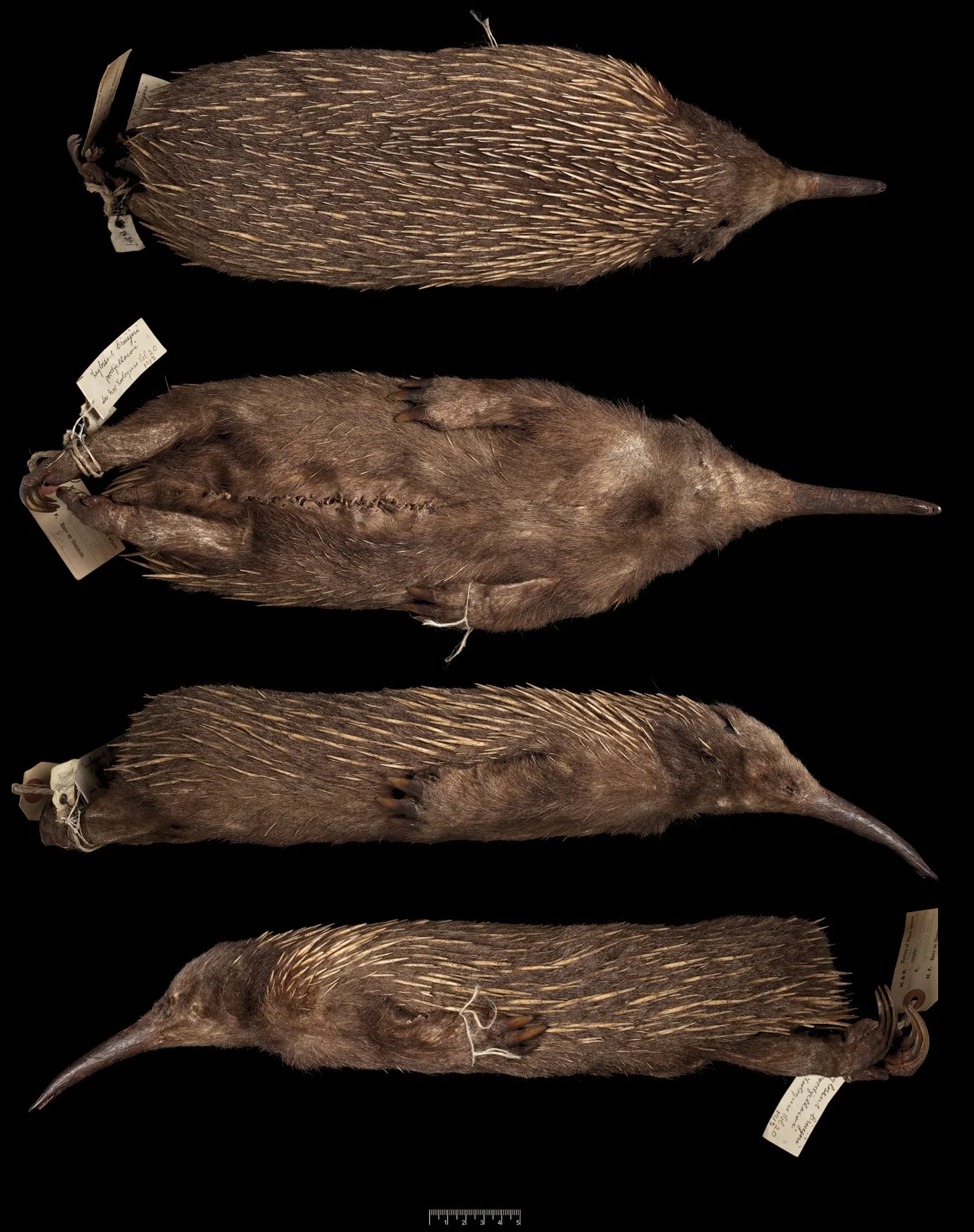
Tunney’s labelled specimen of a western long-baked echidna.
Interviews with Aboriginal elders seemed to corroborate what the museum specimen suggested. One woman recalled that her grandmother “used to hunt the other one.” When asked to clarify, she described a much larger echidna, holding her hand about 40 centimeters off the ground. She noted the animal hadn't been seen for a long time — but a long time here meaning two generations, not 10,000 years.
This revelation, that long-beaks might've been living in the country up until the 20th century, sparked new enthusiasm to unearth a still-living population — Attenborough’s echidna, after all, was rediscovered after more than half a century. So far, no western long-beaked echidnas have been found. But the Kimberley is vast, sparsely inhabited, and fractured by steep, rocky gorges and isolated rainforest patches.
In his paper detailing the discovery, Helgen concluded that the long-beaked echidna “is part of the modern fauna of the Kimberley region of Western Australia, where it apparently survived as a rare element into the twentieth century, and may still survive.” A modern, myth-making tale.
But the skeptic spoke up again.
“Did Zaglossus bruijnii occur in the Kimberley region of Western Australia?” That’s the name of a paper published in 2018 by Andrew A. Burbidge. It was a targeted rebuttal to Helgen, seeking to systematically dismantle this Australian fairy tale.
When Burbidge consulted the Nykina-Mangala elders — the traditional custodians of Mount Anderson where John Tunney supposedly caught the beast — they were very clear: no such creature existed in their language, their traditional knowledge, nor their deep-time lore. Across other Kimberley groups, from the Wunambal to the Gaambera, the verdict was the same: as far as they knew, only one type of echidna has ever walked their country.
Mount Anderson, the specific pastoral station where Tunney collected his specimen, is dry, dusty, and arid, seeing a meager 537 mm of annual rainfall. The western long-beaked echidna, on the other hand, is a specialised earthworm glutton; a creature of damp forests with rich, moist soils.
So who’s right: Helgen, the optimistic explorer, or Burbidge, the skeptic?
On one side, Helgen defends the handwriting on the museum tag, proving Tunney definitely handled the skin. On the other, Burbidge dismisses the whole thing as an 80-year-old clerical error. Because Tunney also collected a common short-beaked echidna at Mount Anderson, Burbidge argues the simplest explanation is an accidental label switch. Sometime after the specimen left Perth, but before it was officially archived in the United Kingdom, the “Kimberley” paper tag somehow ended up on a New Guinean specimen.
Whoever may be right, both explorer and skeptic would undoubtedly be thrilled to find a population of still-living long-beaks lumbering around Australia, even if it seems unlikely at this point.
If the western long-beaked echidna did go extinct in Australia — whether in the past century or 10,000 years — then it’s all the more important that, in Helgen’s words, we “learn more about its recent distribution and history of decline,” both to conserve it in western New Guinea, and to determine if it could be a “candidate for reintroduction” to Kimberley.
The improbable, egg-laying, milk-sweating, worm-slurping creature is real. The mystery now is where, or if, it will survive in the future.
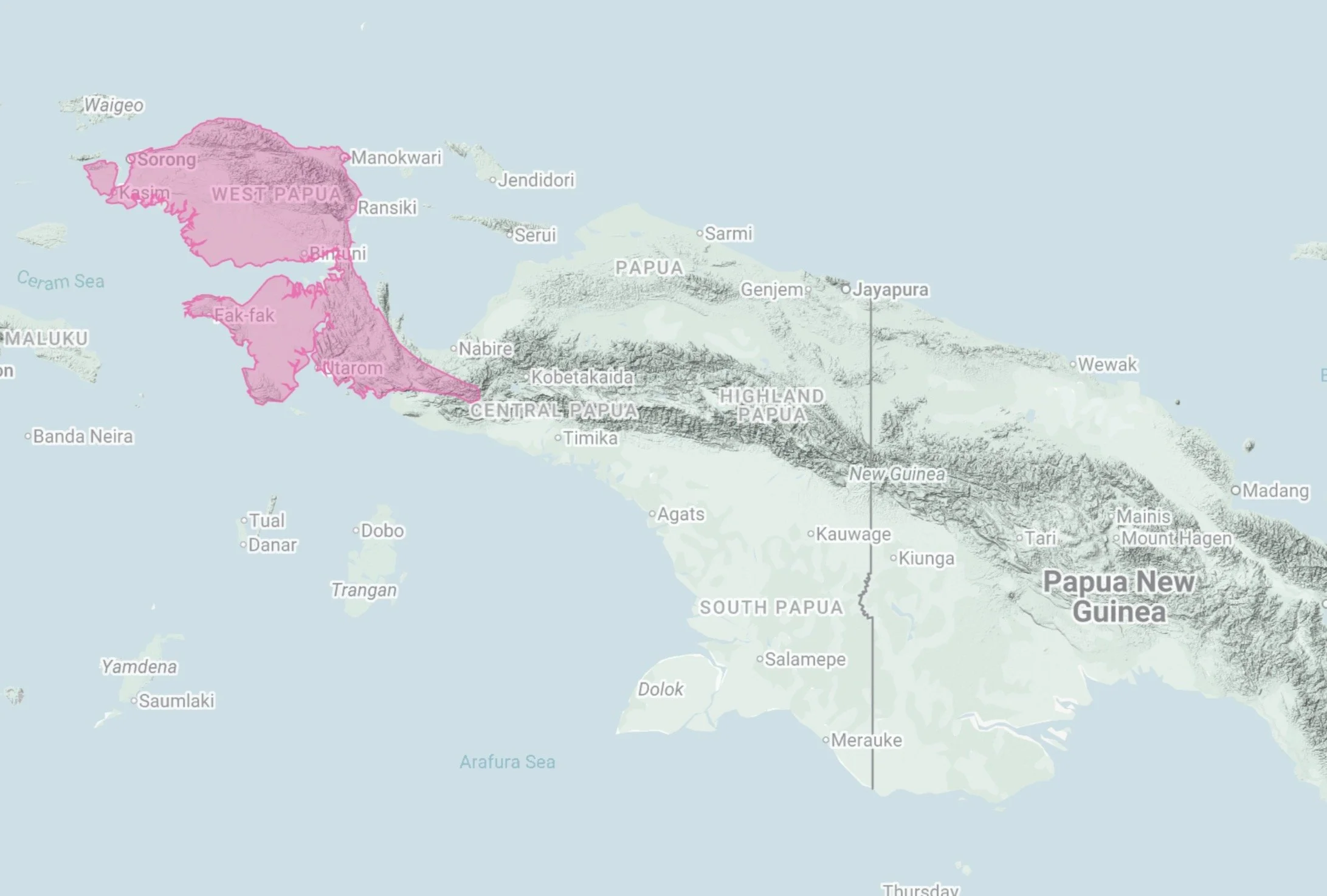
Where Does It Live?
⛰️ Montane and hill rainforests.
📍 Primarily on Bird’s Head or Vogelkop Peninsula, New Guinea, Indonesia.

‘Critically Endangered’ as of 24 July, 2015.
-
Size // Medium
Length // 40 - 90 cm (1.3 - 3 ft)
Weight // 5 - 16 kg (11 - 35 lb)
-
Activity: Primarily Nocturnal 🌙
Lifestyle: Solitary
Lifespan: Over 30 years
Diet: Carnivore (Insectivore)
Favourite Food: Earthworms 🪱
-
Class: Mammalia
Order: Monotremata
Family: Tachyglossidae
Genus: Zaglossus
Species: Z. bruijnii
-
The western long-beaked echidna is threatened by habitat loss and subsistence hunting — considered a fatty delicacy — compounded by its slow reproductive rate. Its exact population isn’t known but it’s listed as Critically Endangered.
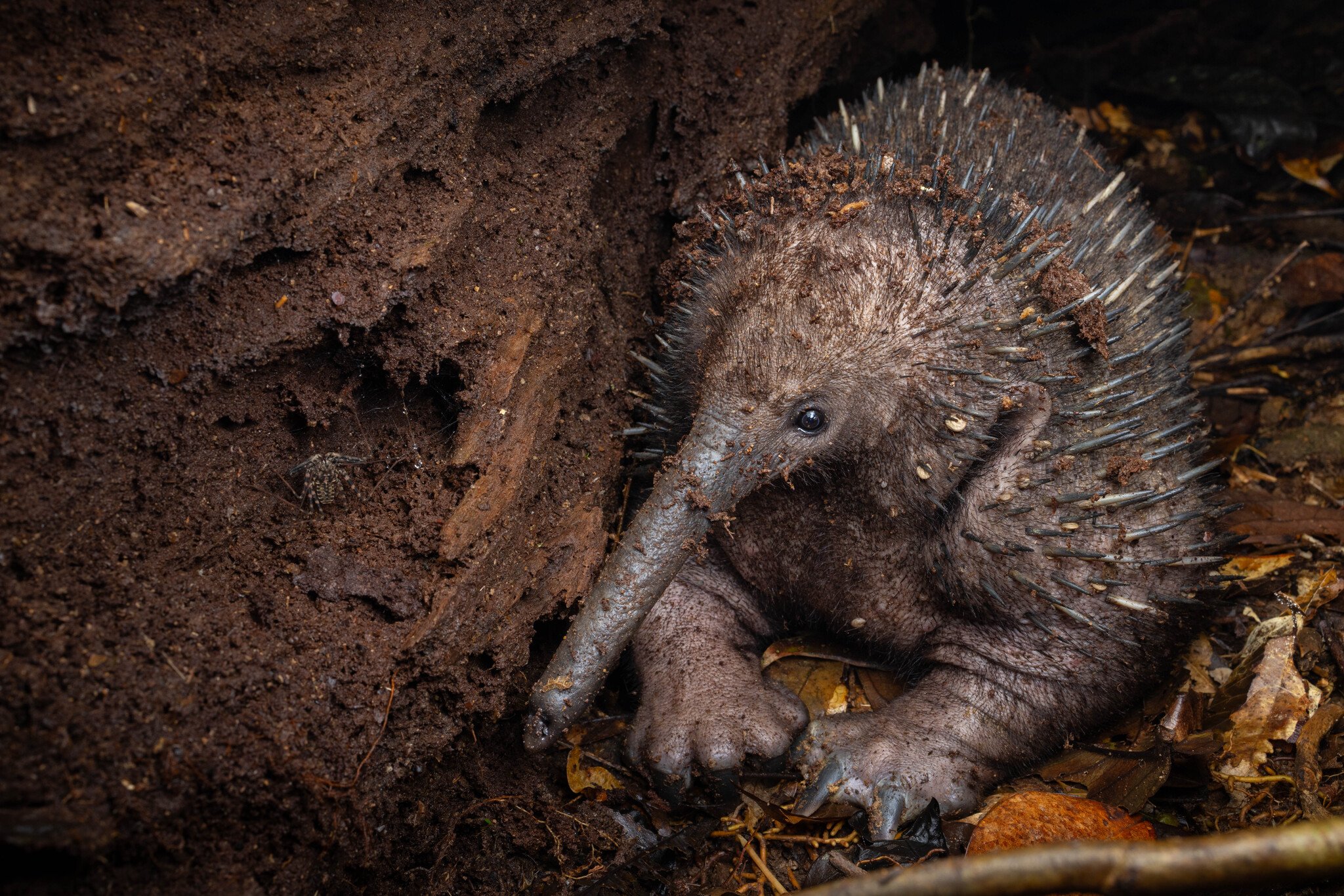
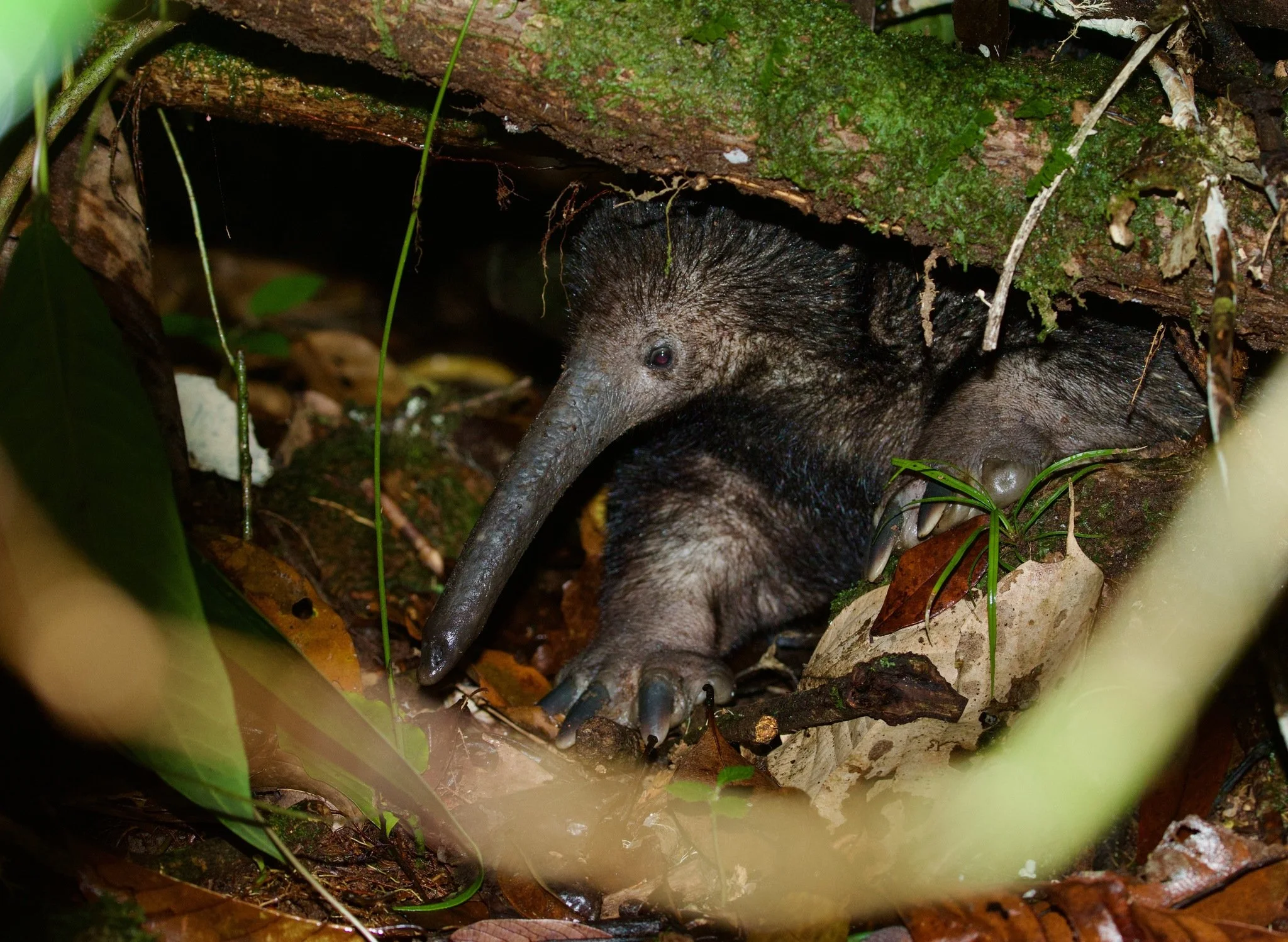
Growing to a length of 90 centimetres (almost 3 ft) and weight of 16 kilograms (35 lb), the western long-beaked echidna lumbers around on trunk-like legs, prodding at the soil with its sensitive snout (its eyes aren’t much help in finding prey). It uses its worm-like, spine-covered tongue to grab and slurp up earthworms.
It is the largest of the four living echidnas, and it’s endemic to western New Guinea. It shares this island with its two long-snouted cousins: the eastern long-beaked echidna and Attenborough’s long-beaked echidna (named after Sir David Attenborough). The short-beaked echidna — the one most people would know — is the only one of the four to be found in Australia.
Or is it?
There’s evidence that long-beaked echidnas once lived Down Under, going extinct around 10,000 years ago. Then a specimen of a western long-beaked echidna was unearthed in London’s Natural History Museum. Its label said it was collected in 1901 in Kimberley, Australia.
This sparked a search for a surviving population of long-beaked echidnas in northwestern Australia. None have been found, however, and some skeptics have pushed back, saying that the uncovered museum specimen was the result of a mistaken label switch and that the locality of the specimen was not fit for this creature of moist-soiled rainforests.
Western long-beaked echidnas probably don’t live in Australia today. But that only makes their conservation on New Guinea all the more important.
-
Leary, T., Seri, L., Flannery, T., Wright, D., Hamilton, S., Helgen, K., Singadan, R., Menzies, J., Allison, A., James, R., Aplin, K., Salas, L. & Dickman, C. 2016. Zaglossus bruijnii. The IUCN Red List of Threatened Species 2016: e.T23179A21964204. https://dx.doi.org/10.2305/IUCN.UK.2016-2.RLTS.T23179A21964204.en.
Pattiselanno F, Iriansul, Barnes PA, Arobaya AYS. Using local ecological knowledge to locate the western long-beaked echidna Zaglossus bruijnii on the Vogelkop Peninsula, West Papua, Indonesia. Oryx. 2022;56(4):636-638. doi:10.1017/S0030605321000351
Helgen, K. M., Miguez, R. P., James L Kohen, & Lauren E Helgen (2012). Twentieth century occurrence of the Long-Beaked Echidna Zaglossus bruijnii in the Kimberley region of Australia. ZooKeys, (255), 103–132. https://doi.org/10.3897/zookeys.255.3774
Flannery, T. F., & Groves, C. P. (1998). A revision of the genus Zaglossus (Monotremata, Tachyglossidae), with description of new species and subspecies. Mammalia, 62(3), 367-396.
Burbidge AA. (2018) Did Zaglossus bruijnii occur in the Kimberley region of Western Australia?. Australian Mammalogy 40, 315–318. https://doi.org/10.1071/AM17053
Arobaya AYS, Paa O, Lagu A, et al. New observations of the western long-beaked echidna on the Vogelkop Peninsula, Indonesian New Guinea. Oryx. Published online 2026:1-5. doi:10.1017/S0030605325000420
Simon, Rachel Veronica. "Cranial osteology of the long-beaked echidna, and the definition, diagnosis, and origin of Monotremata and its major subclades." (2013)
Paul R. Manger, Rita Collins, John D. Pettigrew; Histological observations on presumed electroreceptors and mechanoreceptors in the beak skin of the long-beaked echidna, Zaglossus bruijnii.. Proc Biol Sci 1 February 1997; 264 (1379): 165–172. https://doi.org/10.1098/rspb.1997.0024
WWF — people of new guinea forests
Gaveau, D.L.A. et al. (2021) ‘Forest loss in Indonesian New Guinea (2001–2019): Trends, drivers and outlook’, Biological Conservation, 261, p. 109225. doi:10.1016/j.biocon.2021.109225.
Australian Museum — short-beaked echidna
Animal Diversity Web — Tachyglossus aculeatus (short-beaked echidna)
Palm Oil Detectives — eastern long-beaked echidna
Animal Diversity Web — Zaglossus bartoni (eastern long-beaked echidna)
EDGE of Existence — Attenborough's long-beaked echidna
BBC News — Attenborough’s echidna rediscovered
National Geographic — long-beaked echidna in australia
Western Australian Museum — long-beaked echidna extinction in australia
Smithsonian Insider — long-beaked echidna may not be extinct in australia
Smithsonian Magazine — meet the echidnapus
Phys.org — fossil evidence of the age of monotremes
Taylor & Francis Newsroom — echidnapus identified from an age of monotremes
Pursuit — solving the mystery of the four-headed echidna penis
The Guardian — why only two heads of the echidna penis become erect at one time
CSIRO — quick facts about marsupials
National Geographic — kangaroos have three vaginas
-