A Golden, Day-loving Moth Named After a Greek Goddess of Night
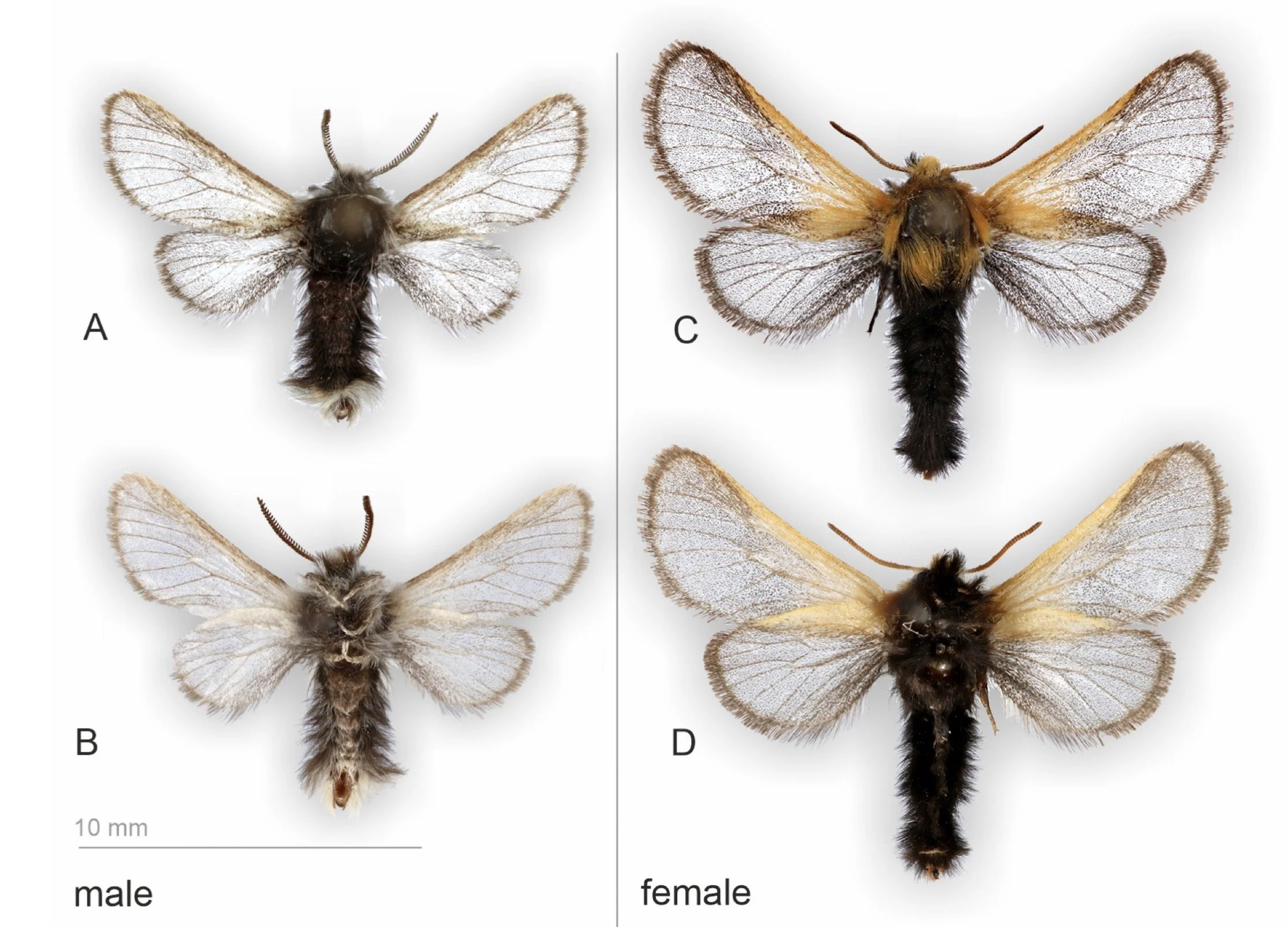
Stygioides hecate, or the Hecate moth, is a new species of diurnal moth whose females are covered in golden scales.
Japaridze, L.-G., Junnilainen, J. & Sihvonen, P. (2026) A golden shadow in the mountains: A new Stygioides Bruand, 1853 (Lepidoptera: Cossidae) from Turkey. Zootaxa, 5821 (2), 274–280. https://doi.org/10.11646/zootaxa.5821.2.8
We often confuse our inability to find a species with its actual scarcity. We look for a parrot in the canopy, a frog in the pond, a moth in the night. But sometimes species don't appear where, or when, we expect them to.
A new moth species was officially described in May of 2026, but it was discovered nearly three decades prior.
In the springs of 1996 and 1997, two Finnish researchers worked their nets across the sun-baked, south-facing slope of central Turkey’s Sultan Dağları Mountains. They swept through sparse scrub in the midday heat — working at an hour when most moth hunters would be resting, awaiting nightfall.
Emerging at dusk to swirl around our igniting lights, moths are classic nighttime critters. Of the 180,000 or so known lepidopterans (that is, moths and butterflies), around 75 to 85 percent are predicted to be nocturnal.
The Finnish researchers, Kari Nupponen and Jari Junnilainen, managed to net a pair of rare outliers on the sparse vegetation beneath the Turkish sun: one female and one male.
Now for the second peculiarity.
While many moth species display no colour differences between the sexes, of the ones that do, it is usually the males who pretty-up with orange, red, or silvery-white wings. Not so for this moth.
The male was small and unassuming, with semitranslucent grayish wings and a white-tipped abdomen. The female, on the other hand, was striking: though her abdomen was black, her head, thorax, and the base of her wings were draped in vivid, golden-yellow scales.
Despite the atypical dimorphism, these moths were not recognized as a new species. At least not for a while. “The specimens were not on display,” says Dr. Lasha-Giorgi Japaridze, lead author of the 2026 paper describing the species. “They had been kept in the private collection of my friend for nearly 30 years.”
Why the delay?
Dr. Japaridze continues. “The discovery came about when I was visiting my friend in Finland and examining his Cossidae collection. I was originally looking for specimens of Dieida, as I had recently discovered a new record of that genus from Georgia and had become particularly interested in it.”
But pulling on the thread of one mystery often unravels another.
“While going through the collection, I recognised that these specimens represented an undescribed species, which eventually led to its description.”
———
The species was named Stygioides hecate, after the Greek goddess Hecate.
Most Greek deities don’t preside over just one domain; Hecate is the goddess of the moon, witchcraft, and crossroads. But she is most commonly associated with the night.
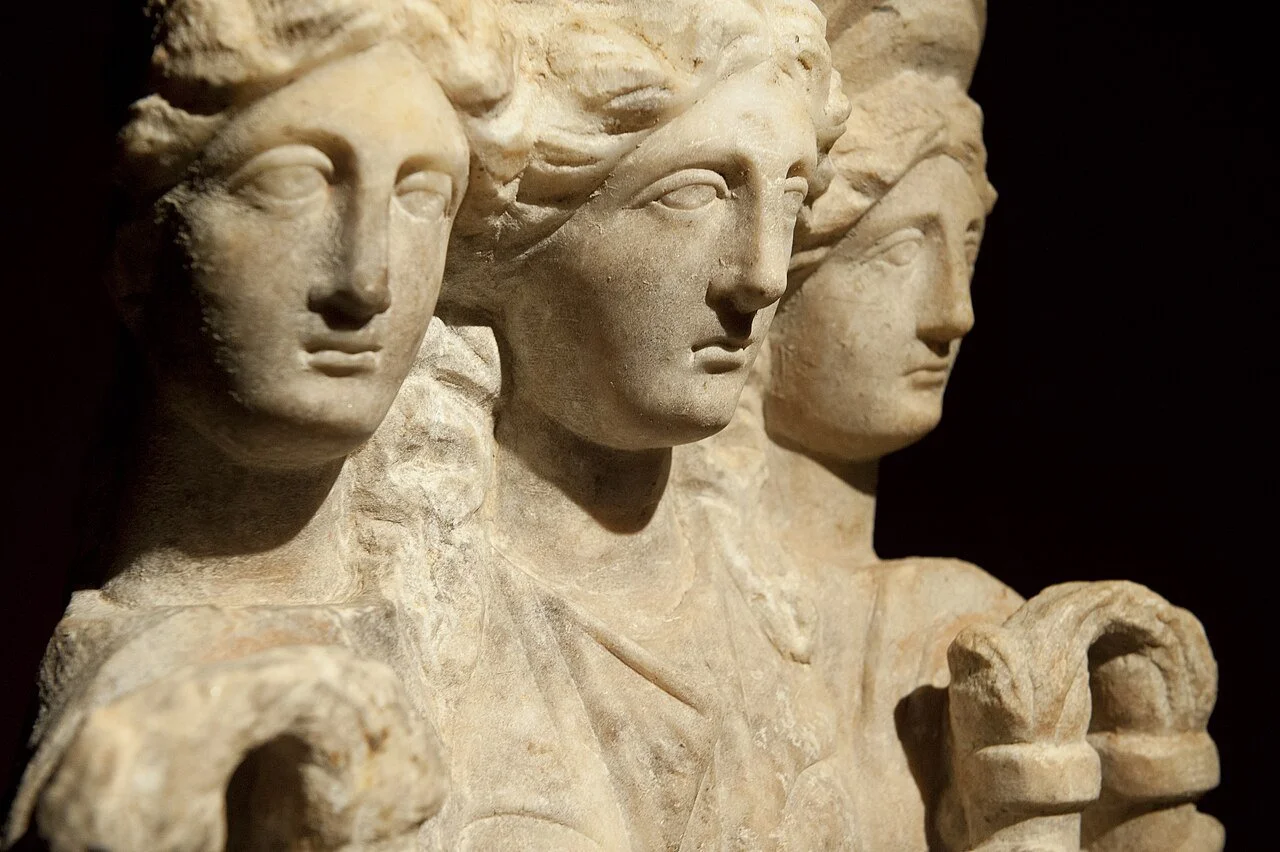
A 3rd-century CE statue of Hecate from the Antalya Archaeology Museum in Turkey.
(© Dosseman / Wikimedia Commons)
A diurnal moth named for a deity of night. Ironic. But, in a way, the contradictory nature of its name is fitting, because the moth’s actual nature is similarly contradictory.
Moths famously exhibit a behaviour known as positive phototaxis — they’re drawn to light sources. While scientists still debate the exact reasons for this behaviour, the prevailing theory goes that artificial lights disrupt a moth's internal system of celestial navigation. Essentially, the moth thinks that it’s being guided by the moon’s rays, when really it’s swirling around a bulb in a car park. Or flying into a hanging white sheet set up by a field researcher.
By far the most common and effective method for surveying moth biodiversity is light trapping. But S. hecate is not out at night, and not attracted to artificial light. It is active in broad daylight, yet it’s harder to find than a moth in the dark.
———
Despite belonging to a large family of nocturnal relatives, S. hecate’s entire genus is composed of day-fliers. These Stygioides moths have been intertwined with Greek myth since the very inception of their genus.
The species Stygioides psyche was described from Uzbekistan back in 1893, named for a mortal woman who was given four impossible tasks by Aphrodite. One of these trials was to fill a crystal vial with the black water of the River Styx. This is the river which birthed the Stygioides — at least etymologically — and that separates the realm of the living from the Underworld; where Sisyphus rolls his boulder and Tantalus reaches for fruit he can never eat.
Stygioides moths suffer from a similarly tantalising condition, known properly as aphagia. They lack functional mouthparts as adults, and so they can neither eat nor drink, living for anywhere between two and sixteen days on the limited fat reserves they accumulated as caterpillars. All they can do is breed and die.
Another of Psyche’s tasks was to travel deep into the realm of the dead, seeking Persephone. In our modern world, that search leads to the Greek island of Crete, where Stygioides persephone was found and described in 1962. The species is referred to as the “rarest European carpenter-moth” and has been officially recorded just four times, most recently more than 25 years ago.
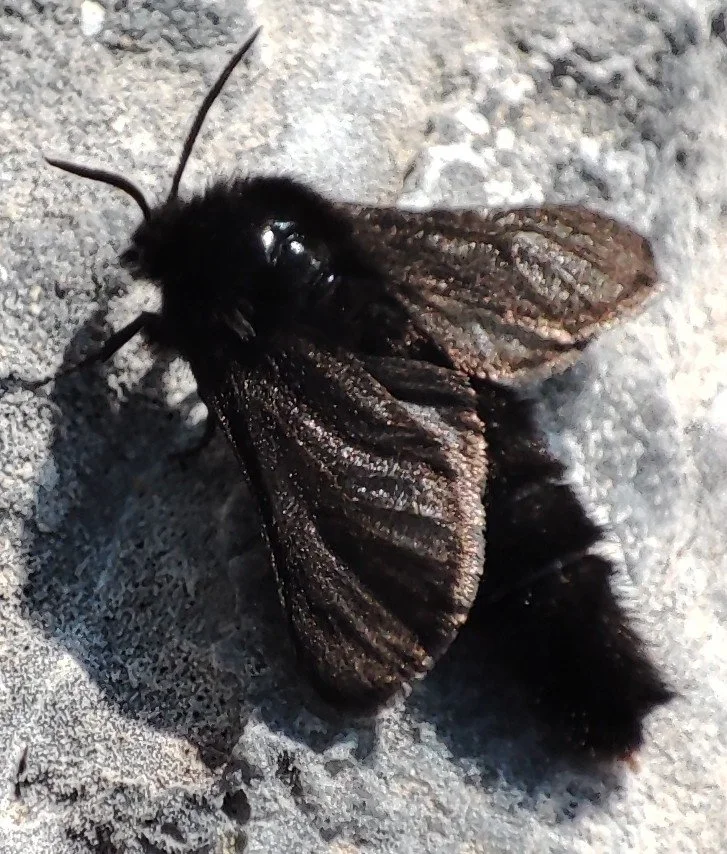
A Stygioides persephone photographed on the Greek island of Rhodes.
(© Simon Kershenbaum / iNaturalist)
In her own Greek myth, Persephone mysteriously vanished one day. Her mother Demeter searched in despair, neglecting her role as goddess of the harvest until the earth itself began to wither. She had no idea that Hades had abducted her daughter, dragging Persephone into the depths of the Underworld.
As Demeter searched for her daughter in vain among the realm of the living, generations of field researchers — trapping by moonlight — have missed the diversity of diurnal moths.
On iNaturalist, observations of Stygioides appear as singular, scattered dots across the Mediterranean, Eastern Europe, and West Asia. Mountain ranges seem to have carved these mythological moths into isolated pockets. Their fleeting midday flights, coupled with the heavy females’ poor dispersal abilities, leave little opportunity for populations to reconnect.
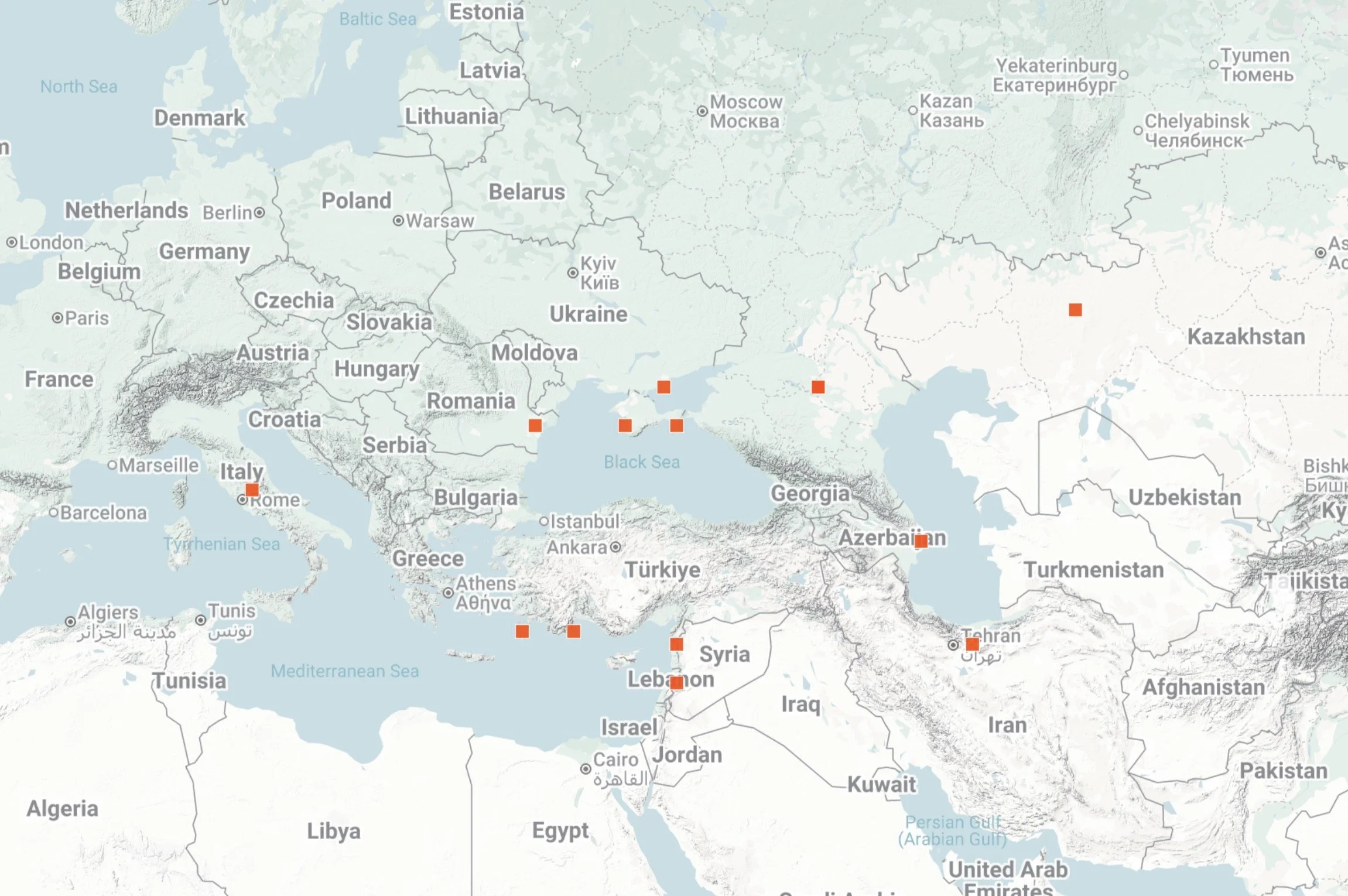
The distribution of Stygioides moth observations on iNaturalist.
This kind of highly-localised isolation tends to breed many species — far more, we’d expect, than the ten we know of today.
———
Hecate is associated with night, but she is not the goddess of darkness. In many depictions, she carries a pair of golden torches, lighting the way through the night, revealing what’s hidden in the dark. It was Hecate who heard the faint echo of Persephone crying in the Underworld. She emerged from her cave bearing her blazing torches, guiding the grieving Demeter to the sun god Helios, who saw all things during the day, revealing to Demeter the location of her daughter.
The existence of S. hecate hints at an entire world of overlooked, daytime moths — the species serves as a metaphorical torch in the dark, its vibrant golden scales mirroring those of its namesake goddess. As Dr. Japaridze and his co-authors note, “the discovery of a new species highlights the continued incompleteness of our knowledge of diurnal Cossidae, particularly those taxa that are inconspicuous and poorly represented in museum collections.” Even in a comparatively well-studied country like Turkey, additional undescribed species are likely waiting to be found.
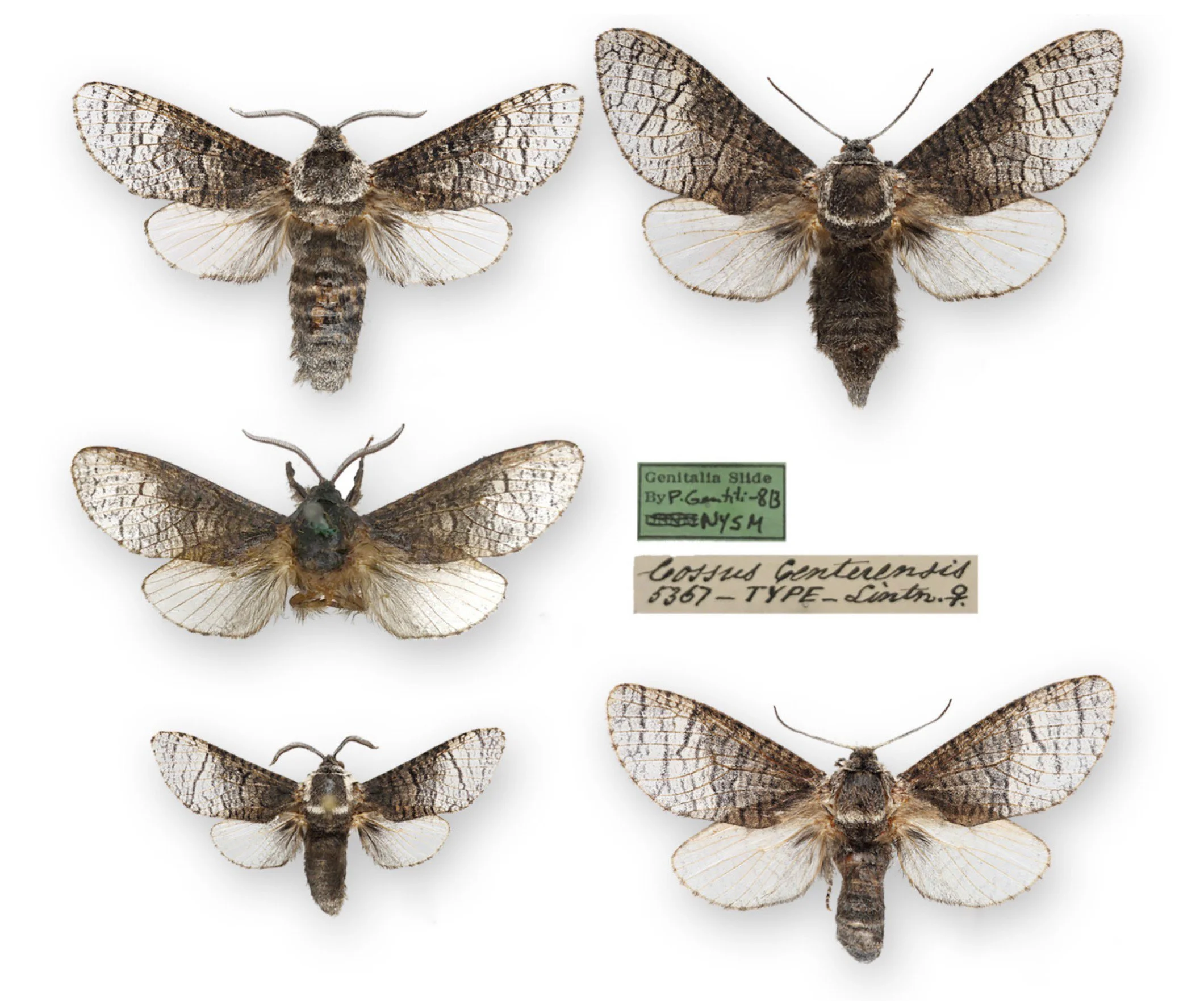
Below are a few examples of recently described diurnal moth species.
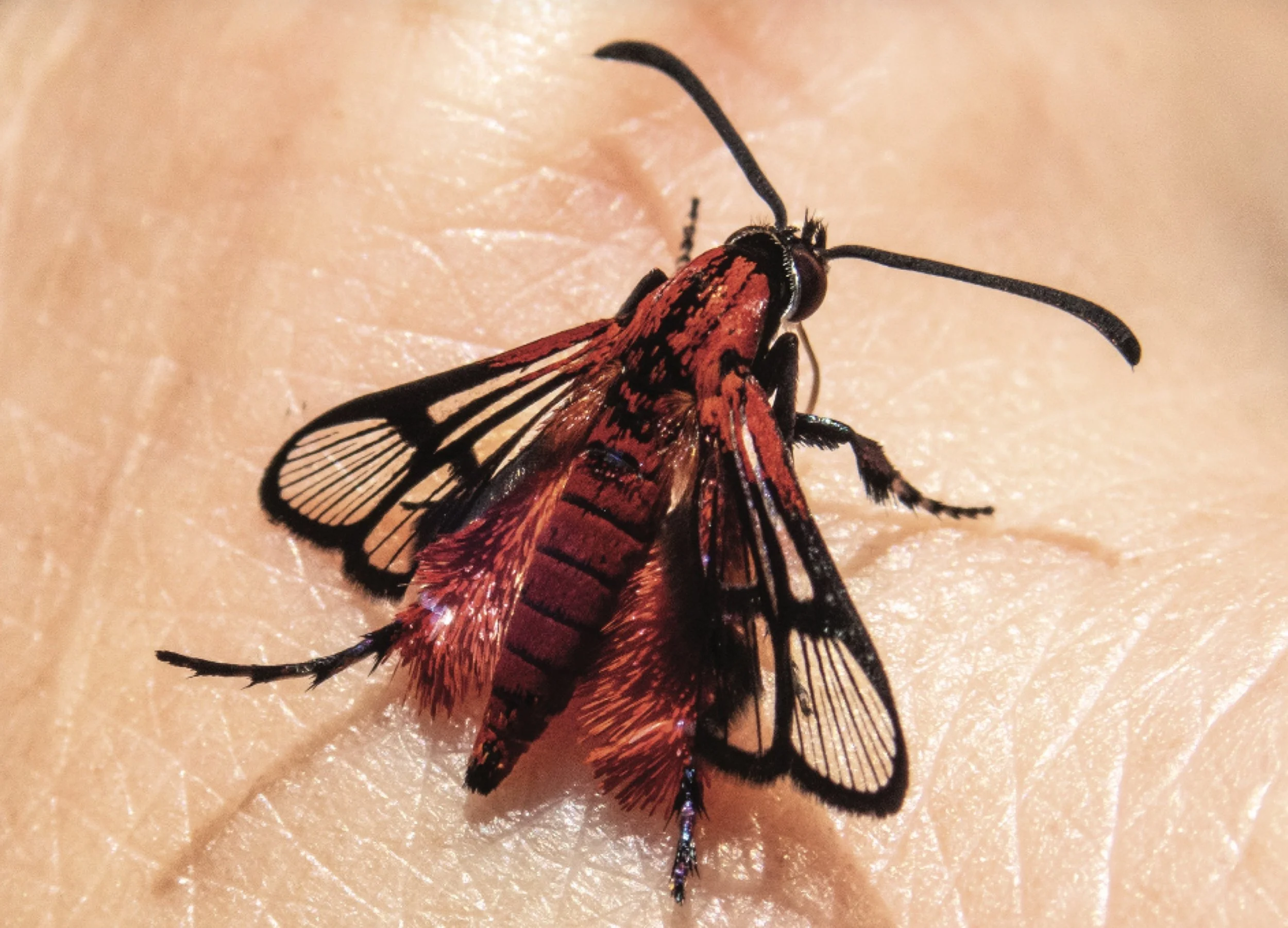
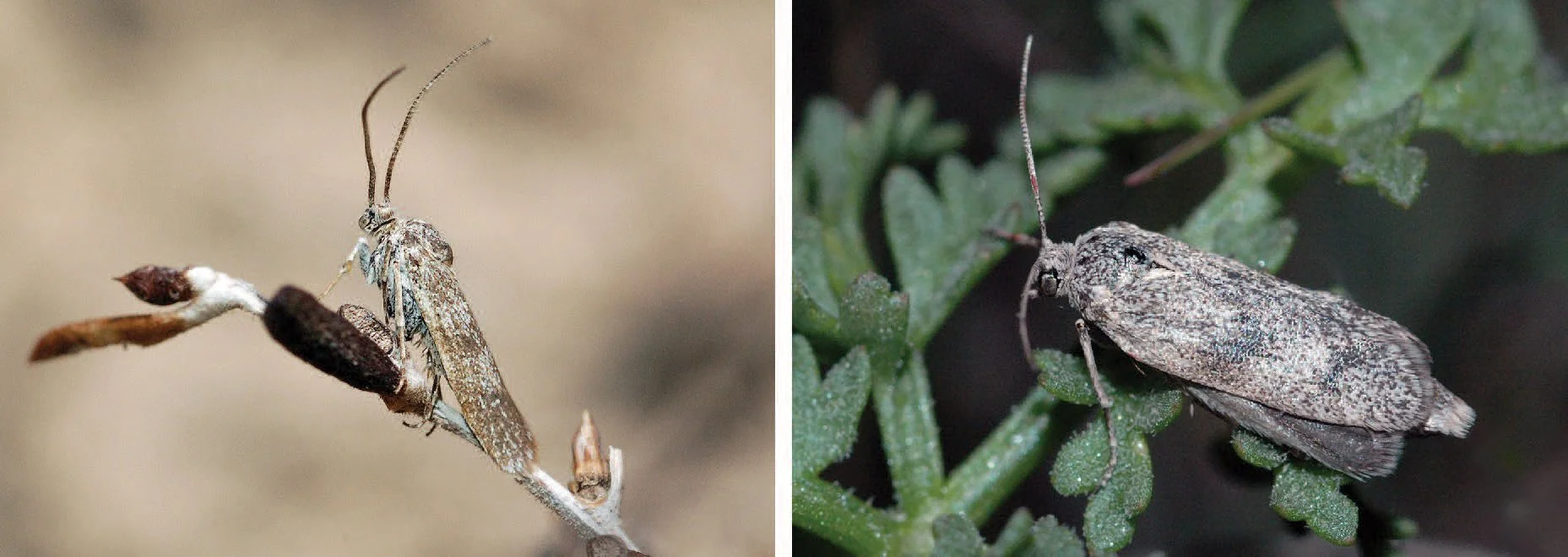
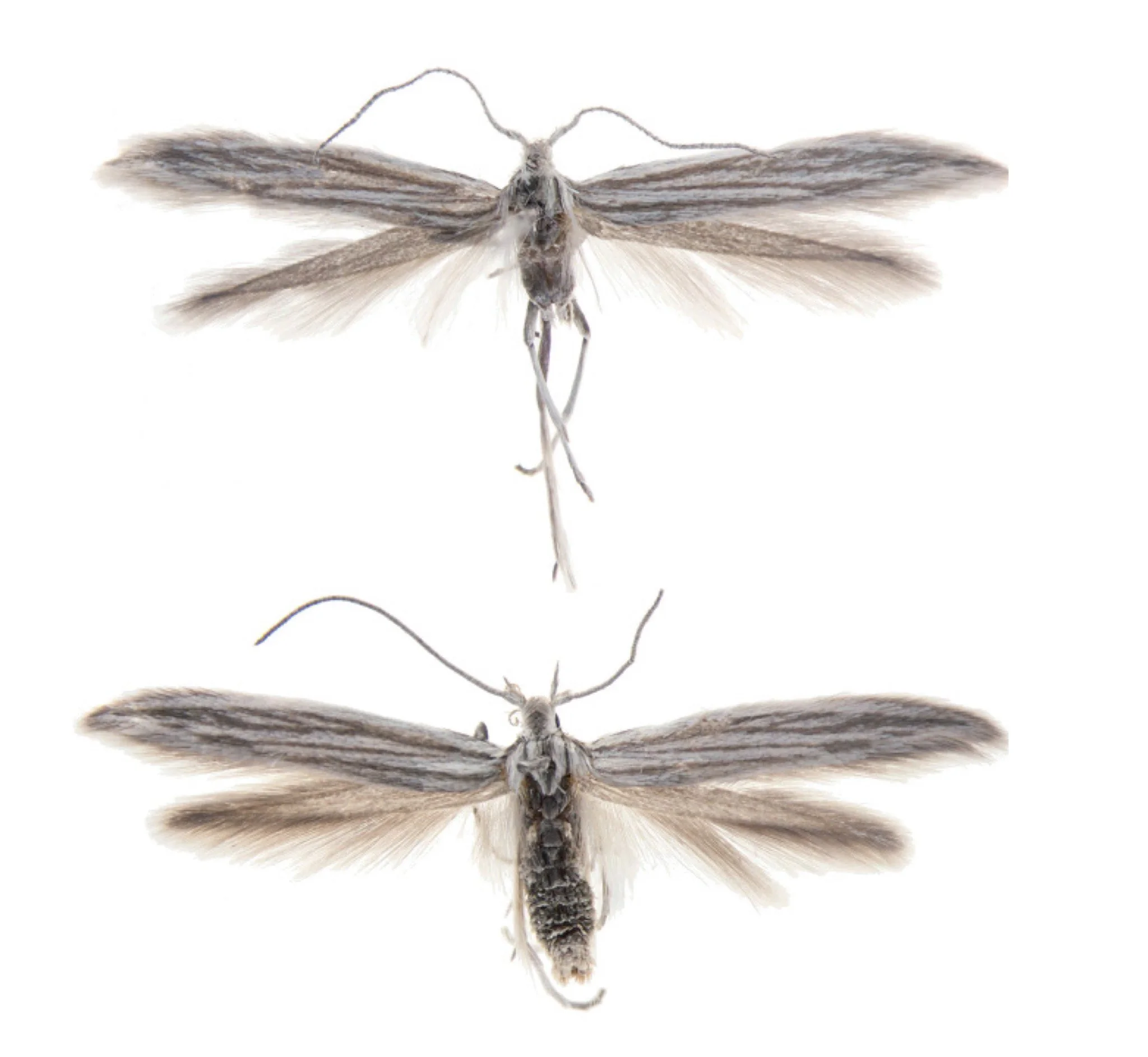
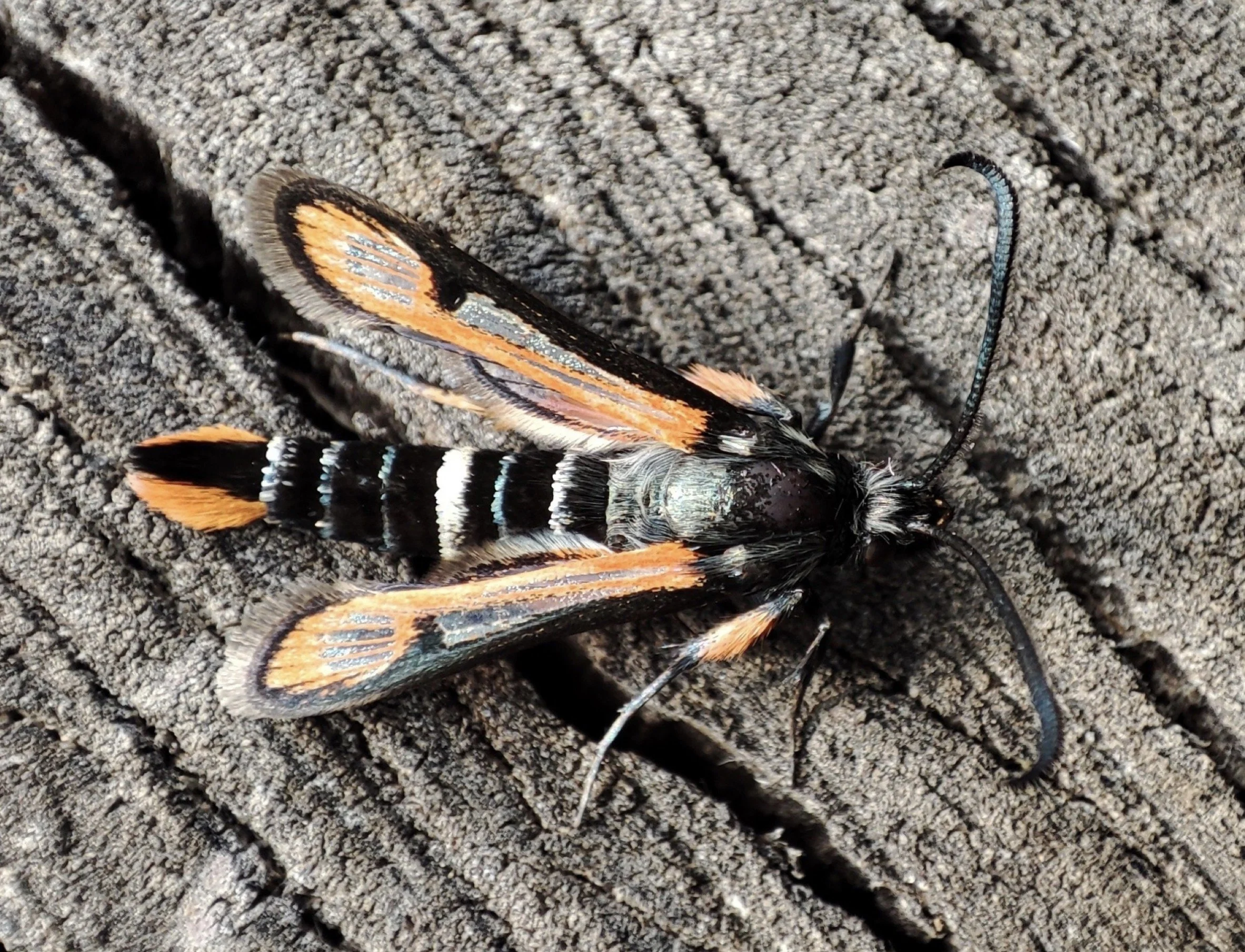
Once we know that diversity exists, we can start looking for it in a more targeted manner. The question then becomes how?
Dragging a net across scrubby vegetation through the blistering midday sun is a painstaking prayer to Tyche, the goddess of luck. And in the case of S. hecate, it has yielded a grand total of two specimens over years of fieldwork. But if Helios’s sun doesn’t reveal their cryptic shapes, and Hecate’s moon doesn’t draw them in, perhaps Aphrodite's influence can attract them.
Most moths use potent, airborne pheromones to attract their mates. Because these diurnal moths can’t see each other easily in the dense scrub, the females release a highly specific chemical signal that the males can detect from great distances.
Scientists have exploited this chemical desire by creating synthetic compounds that mimic the pheromones of specific moth species. Microdrops of these “love potions” are loaded onto small, porous rubber caps, which slowly release the scent over weeks, mimicking a beckoning female and attracting all the surrounding males of the species.
The thing is, to synthesise these potions you first need a sample of the original. And with newly discovered, sparsely-found species like S. hecate, that would require finding another live female in the wild — which would itself realistically require the pheromone to accomplish.
The solution is to use artificial attractants originally synthesised for other groups, such as the diurnal clearwing moths in the family Sesiidae, whose cocktails of alluring pheromones are different, but still similar enough to have the desired effect on several distant lineages, including Stygioides.
It seems, then, that a targeted search using artificial pheromones may reveal an entire pantheon of diurnal Stygioides moths. For now, though, that possibility remains out of reach.
Dr. Japaridze says his team currently has no plans to synthesise pheromones or conduct further fieldwork in search of S. hecate. “Unfortunately,” he says, “obtaining collecting permits in Turkey has become extremely difficult in recent years, making such work practically impossible.”
There is also no guarantee that S. hecate still inhabits the same mountainside. When Dr. Japaridze and his team returned to the locality of another Turkish moth — Dieida versicolor, a species they had also described decades after its initial discovery — they found its habitat had changed considerably. “It is therefore possible that the habitat of S. hecate has also changed,” he says, “although we currently have no evidence to confirm this.”
For now, S. hecate remains known from just two specimens: the male and female collected almost thirty years ago.
In the end, Demeter did not rescue her daughter, at least not wholly. Persephone must descend and remain in the Underworld each year, and each year Demeter awaits her return. The same will likely prove true of these moths, or any new species for that matter: discovery and description will, on their own, not save them wholly. But they may rescue these moths from an eternity of obscurity.
Though they remain elusive, they are known and named.
Stygioides psyche. Stygioides persephone. Stygioides hecate sp. nov.
-
Japaridze, L.-G., Junnilainen, J. & Sihvonen, P. (2026) A golden shadow in the mountains: A new Stygioides Bruand, 1853 (Lepidoptera: Cossidae) from Turkey. Zootaxa, 5821 (2), 274–280. https://doi.org/10.11646/zootaxa.5821.2.8
LINGENHÖLE, ARTHUR & FRIEDRICH, EGBERT & Yakovlev, Roman. (2017). Description of male of the rarest European Carpenter-moth Stygioides persephone (Reisser, 1962) (Lepidoptera: Cossidae). Zootaxa. 4363. 597. 10.11646/zootaxa.4363.4.14.
Kawahara, Akito & Plotkin, David & Hamilton, Chris & Gough, Harlan & St Laurent, Ryan & Owens, Hannah & Homziak, Nicholas & Barber, Jesse. (2017). Diel behavior in moths and butterflies: a synthesis of data illuminates the evolution of temporal activity. Organisms Diversity & Evolution. 18. 13-27. 10.1007/s13127-017-0350-6.
Efetov, Konstantin & Kucherenko, Elena. (2023). Synthesis and field testing of esters of (2R)-butan-2-ol and (2S)-butan-2-ol and monounsaturated fatty acids as sex attractants for the males of Procridinae species (Lepidoptera: Zygaenidae). SHILAP Revista de lepidopterología. 51. 375-384. 10.57065/shilap.474.
Bertaccini, E. (2024). Contribution to the knowledge of Stygioides italica Mazzei & Yakovlev, 2016 (Lepidoptera: Cossidae). SHILAP Revista De lepidopterología, 52(206), 227–234. https://doi.org/10.57065/shilap.898
Gorbunov, Oleg & Efetov, Konstantin & Gorbunov, Oleg & Горбунов, О & Ефетов, К. (2024). Sexual activity of males and distribution of Stygioides colchicus (Herrich-Schäffer, 1851) (Lepidoptera: Cossidae) Половая активность самцов и распространение Stygioides colchicus (Herrich-Schäffer, 1851) (Lepidoptera: Cossidae). Invertebrate Reproduction & Development. 21. 109-117. 10.15298/invertzool.21.1.08.
iNaturalist — Cossidae
The Fitzwilliam Museum: Cambridge — The Story of Demeter and Persephone
Hofmann, H. (2004). Latin fiction: The Latin novel in Context. Routledge.