


Mammals of Japan
Around 170 species of mammals have been recorded in Japan.
They are a mix of mainland familiars — brown and black bears, red squirrels and foxes, wild boars and raccoon dogs — species entirely unique to Japan — snow monkeys, serows, and giant flying squirrels — and a spat of recent invaders — Pallas’s squirrels from Southeast Asia, raccoons from North America, and nutrias from South America.
-
Badger, Japanese
Coypu / Nutria
Cat, Iriomote
Deer, Sika
Flying-Fox, Ryukyu
Macaque, Japanese
Rabbit, Amami
Raccoon Dog
Rats, Ryukyu Spiny
Serow, Japanese
Squirrel, Japanese
Squirrel, Japanese Giant Flying
Weasel, Japanese
Species
Endemic to Japan, the Japanese badger — like other badgers — lives in underground dens called "setts". However, the Japanese badger is known to be more solitary, with even mated pairs often living in separate setts. It is currently unknown why this is the case.
In Japanese, this badger is known as an anaguma (穴熊), which literally translates to "hole-bear". Being the only badger in Japan, this species plays an important role in its ecosystems; it turns over and aerates soil as it digs, making the earth more fertile, it disperses seeds in its scat, and it keeps pest populations in check.
The Iriomote cat is thought to be a descendant of leopard cats that arrived from Taiwan over 90,000 years ago, when a land bridge existed between the two islands. Its sole home is now the small — 284 km² (110 mi²) — but lush island of Iriomote.
With no competition from other predators, the Iriomote cat became an extreme generalist hunter, preying on over 95 different species, ranging from fish to birds to bats to bugs.
Its current population estimated to be around 100 individuals.
The raccoon dog isn’t a raccoon at all — it’s a canid, more closely related to foxes. It’s the only member of the dog family that hibernates and one of the few to use communal latrines, where it leaves behind smelly “messages” about its diet, health, and breeding status for other raccoon dogs to sniff out.
Of the 35+ species in the Canidae (dog) family, the raccoon dog is the only one that hibernates. It can put on 50% of its body weight in fat prior to hibernation, going from 4 to 6 kilograms (9–14 lbs) in summer to a chunky 6 to 10 kilograms (13–22 lbs) as winter approaches. It then climbs into its underground den, often with its partner, and settles down to hibernate.
The Japanese serow is usually a solitary animal. It communicates with other serows via scent markings, rubbed onto leaves from tear-shaped scent glands below each of its eyes.
In the past, these serows were more plentiful throughout the lowlands of Japan. But as human populations spread and grew, deforesting land as they went, the serows retreated to higher and higher ground.
As spring arrives and snow melts, the super-abundant sika deer of Japan make their way up the mountains. They travel in herds — grunting, whistling, and barking — moving into the serows' territories. The serows, naturally quite antisocial, are too disturbed by the bustle of the deer and must retreat to poorer, but more private places
The Japanese giant flying squirrel is one of the world's biggest squirrel species — weighing up to 1.3 kilograms (2.9 lbs) — but, using its flying membrane, it can still glide distances of over 100 metres (328 ft). Young squirrels learn to glide a few days after first emerging from their nests.
The Japanese squirrel is particularly fond of Japanese walnuts — in some areas, 35% of its diet is made up of walnuts.
One study, which provided Japanese squirrels with 720 walnuts, found that the squirrels were habitual hoarders. Over half (50.6%) of the walnuts were stashed away for later, and not in one hoard, but in several scattered across its territory. The squirrel is more likely to hoard larger seeds/nuts and is more willing to carry them farther in order to cache them — this may have resulted in walnuts evolving larger sizes in areas where this squirrel lives.
The Japanese weasel's agility and lithe body allow it to pursue its prey anywhere; down tunnels, up trees, or into water. During winter, it spends its time chasing rodents through snowy tunnels and, after catching and eating its target, it lays down to enjoy the warmth of its prey's burrow.
The Japanese weasel can produce a pungent musk from its anal gland. It rubs this musk across its territory; communicating information like the weasel's gender, age, social status, health, and breeding condition. Its musk also served as a defence, making the weasel unpalatable to keen-nosed mammalian predators. Birds of prey, however, are less picky about how their meals smell, and will readily hunt this weasel.
The coypu, or nutria, is a hefty rodent — weighing up to 10 kilograms (22 lbs) — native to South America. However, it is now invasive and prolific in the United States, Europe, Kenya, and parts of Asia such as South Korea and Japan. It was introduced to Japan during WWII as a food and fur source. Escaping into the wilds and proliferating, as rodents do, coypu now swim and scamper along the waterways of large cities such as Kyoto and Osaka.
The coypu has webbed hind feet for swimming, and unwebbed fore feet for handling food: reeds, cattails, grasses, roots, and aquatic plants. A coypu can dive for up to 10 minutes at a time and is most active at night. It constructs platforms on water, digs burrows in riversides, and makes runways through riverside grasses.
Species
Japanese Macaque
Sika Deer


Meles anakuma

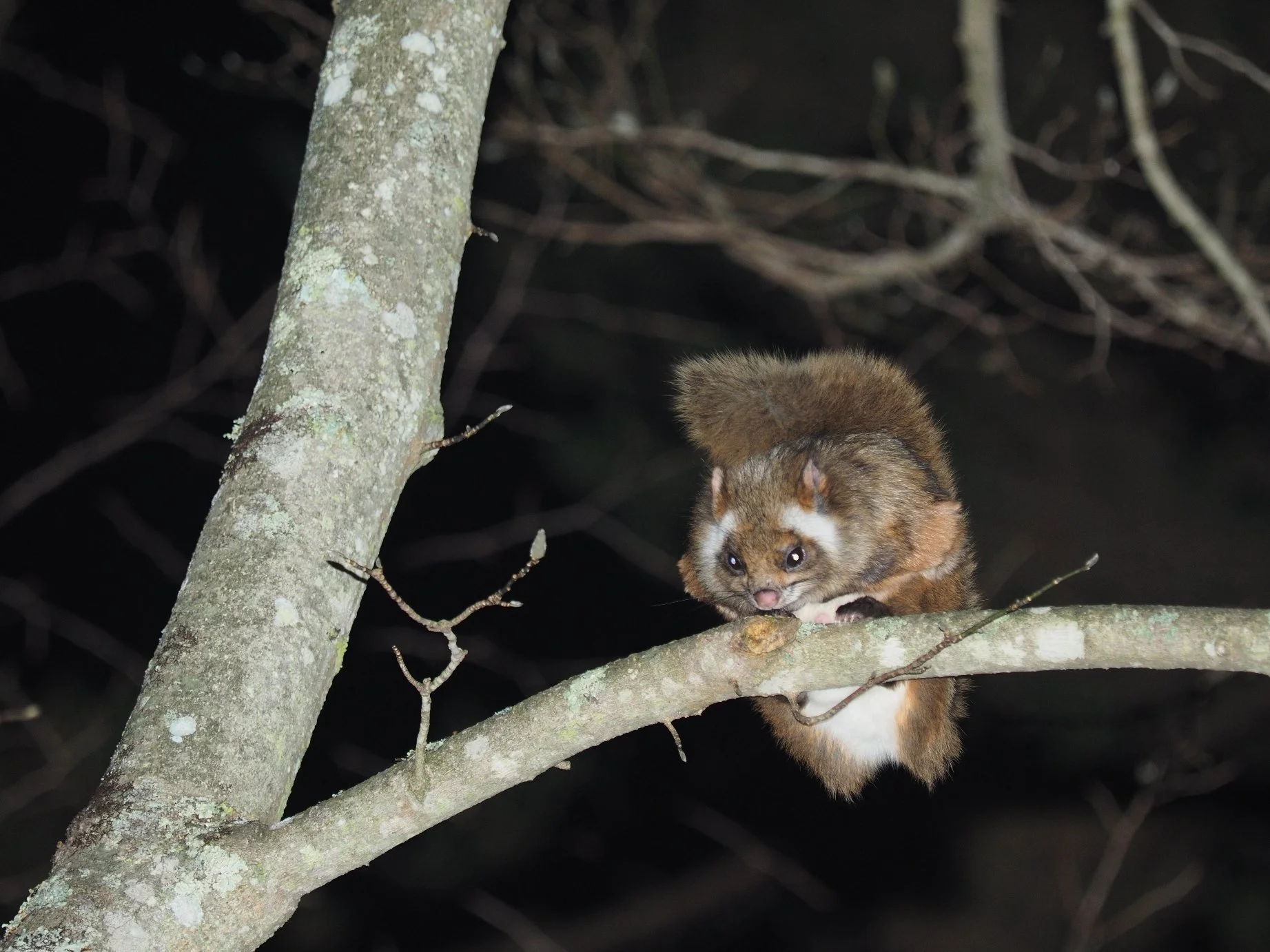
Petaurista leucogenys

Capricornis crispus


❗ Invasive
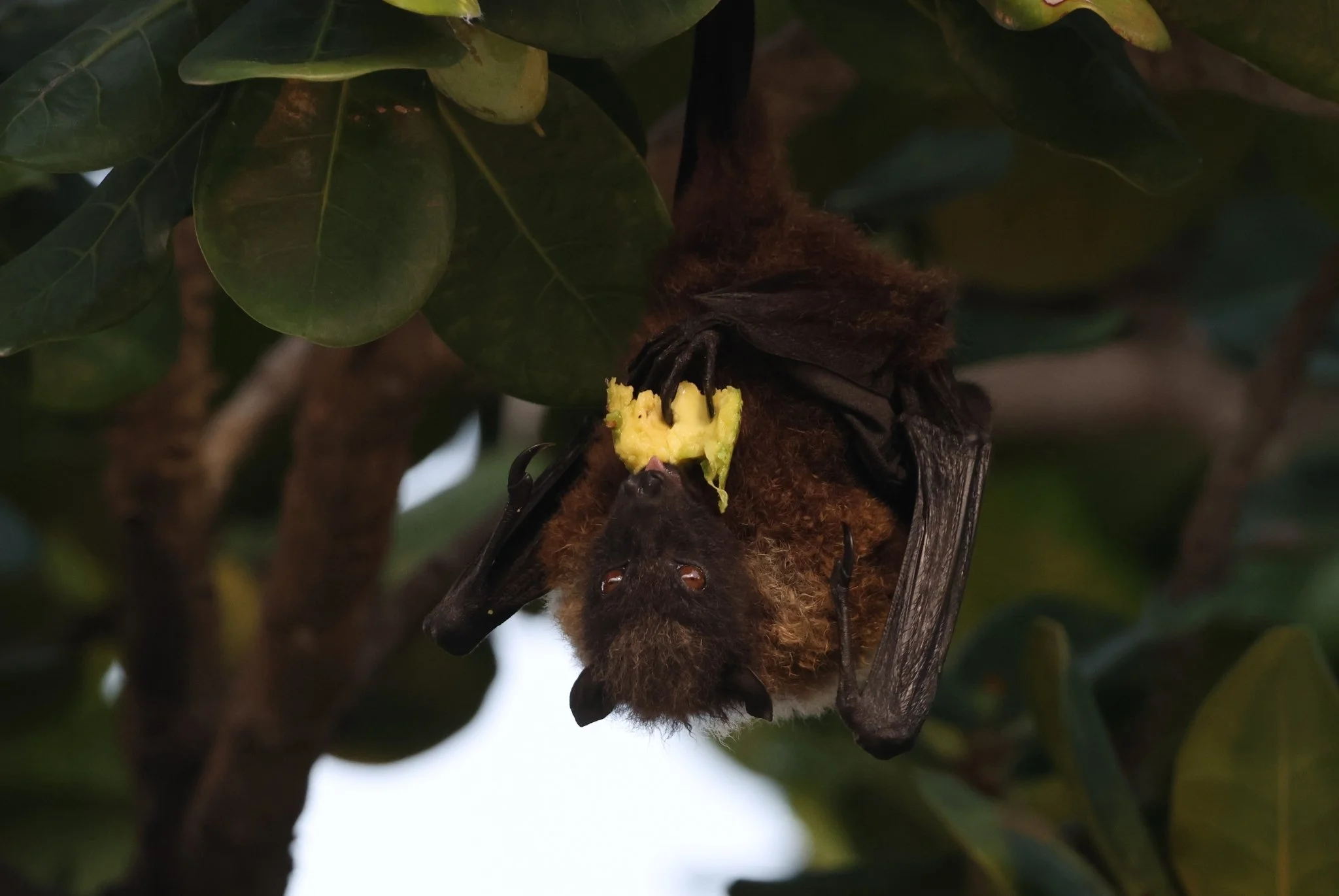

Pteropus dasymallus


Macaca fuscata
Cervus nippon
Japanese Giant Flying Squirrel
Japanese Raccoon Dog

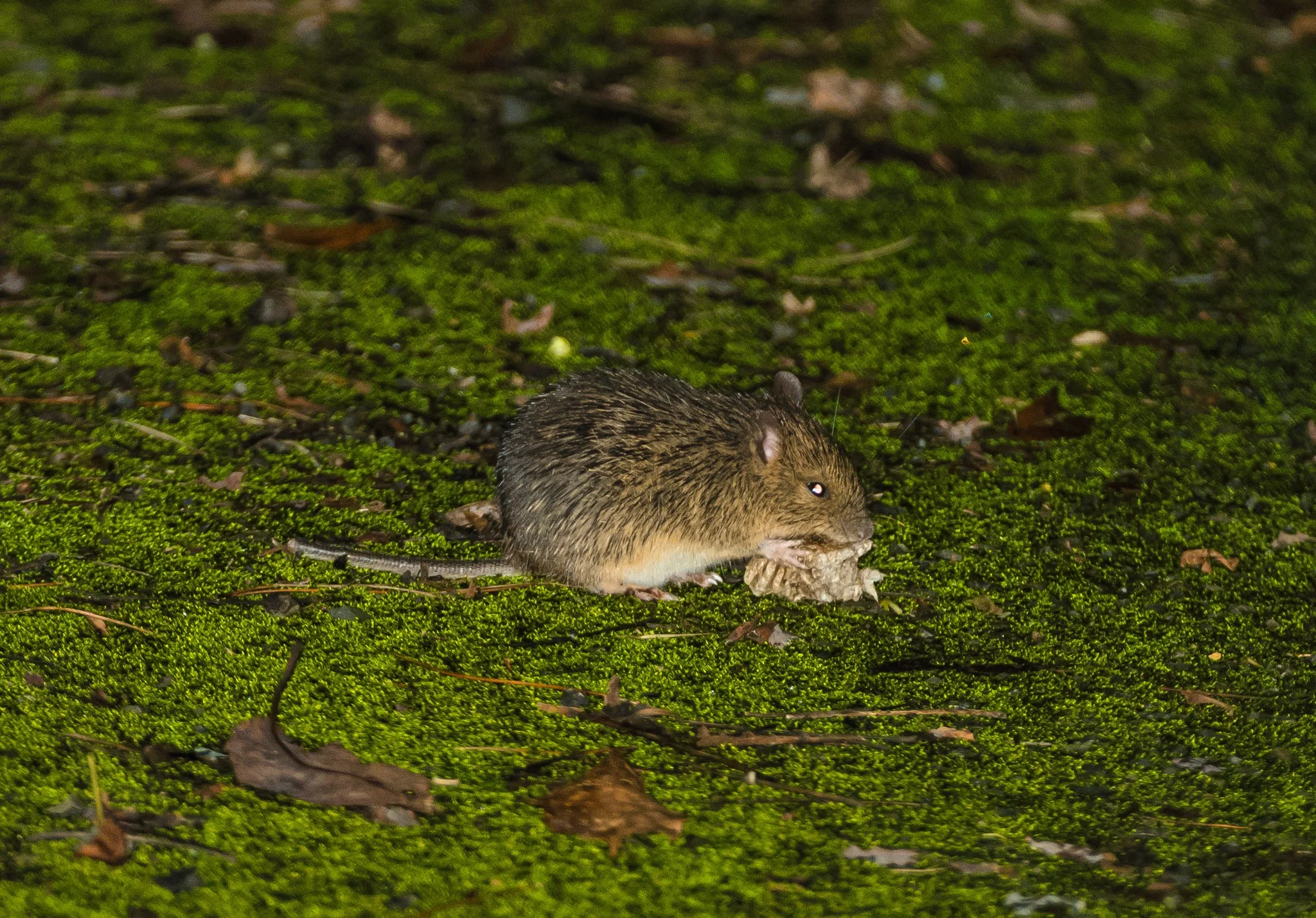
Prionailurus bengalensis iriomotensis
Ryukyu Flying-Fox
Coypu
Tokudaia spp.
Mustela itatsi
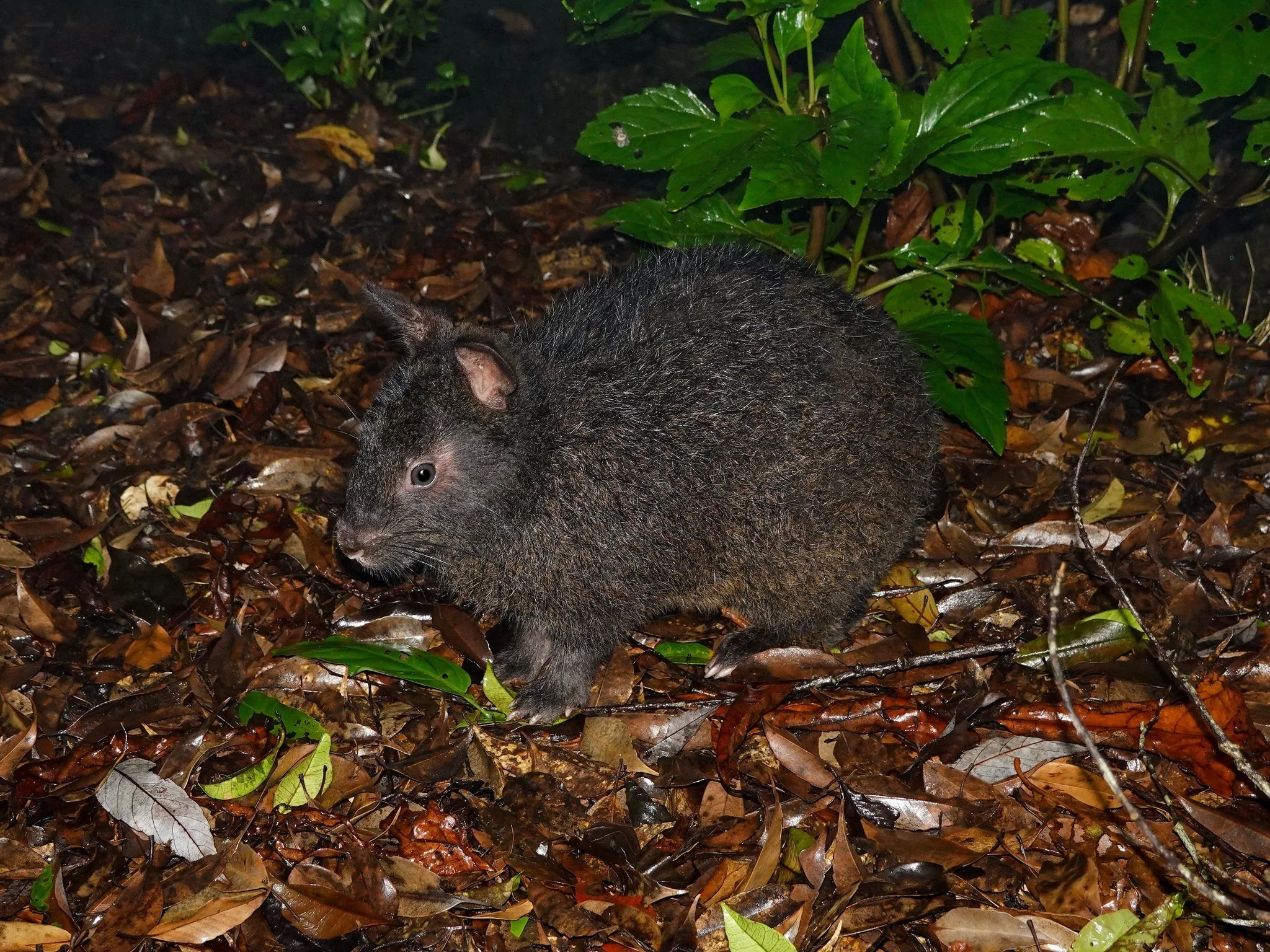
Pentalagus furnessi
Myocastor coypus
Sciurus lis
Japanese Squirrel
Ryukyu Spiny Rats
Mustela itatsi
