Footnotes for The Teardrop White-eye
¹ Below is Hartert’s description:
TEPHRAS RUKI, sp. n.
♂ ♀. Entirely sepia-brown, the inner webs of the remiges and under wing-coverts lighter, inclining to whitish; the primaries darker, the outer webs bordered with the same colour as the back. Bill black; iris red; tarsi and feet orange-rufous; claws mouse-brown. Total length 135-140 mm., wing 79-80, tail 52-53, culmen 21, tarsus 21. The female is a little smaller: wing 77-78 mm., tail 50, culmen 19. Native name “Nikildon.”
² The latter species is endemic to the island of Pohnpei — where Kubary would eventually retire and spend his last days. The Pohnpei fantail now commemorates him via its scientific name: Rhipidura kubaryi.
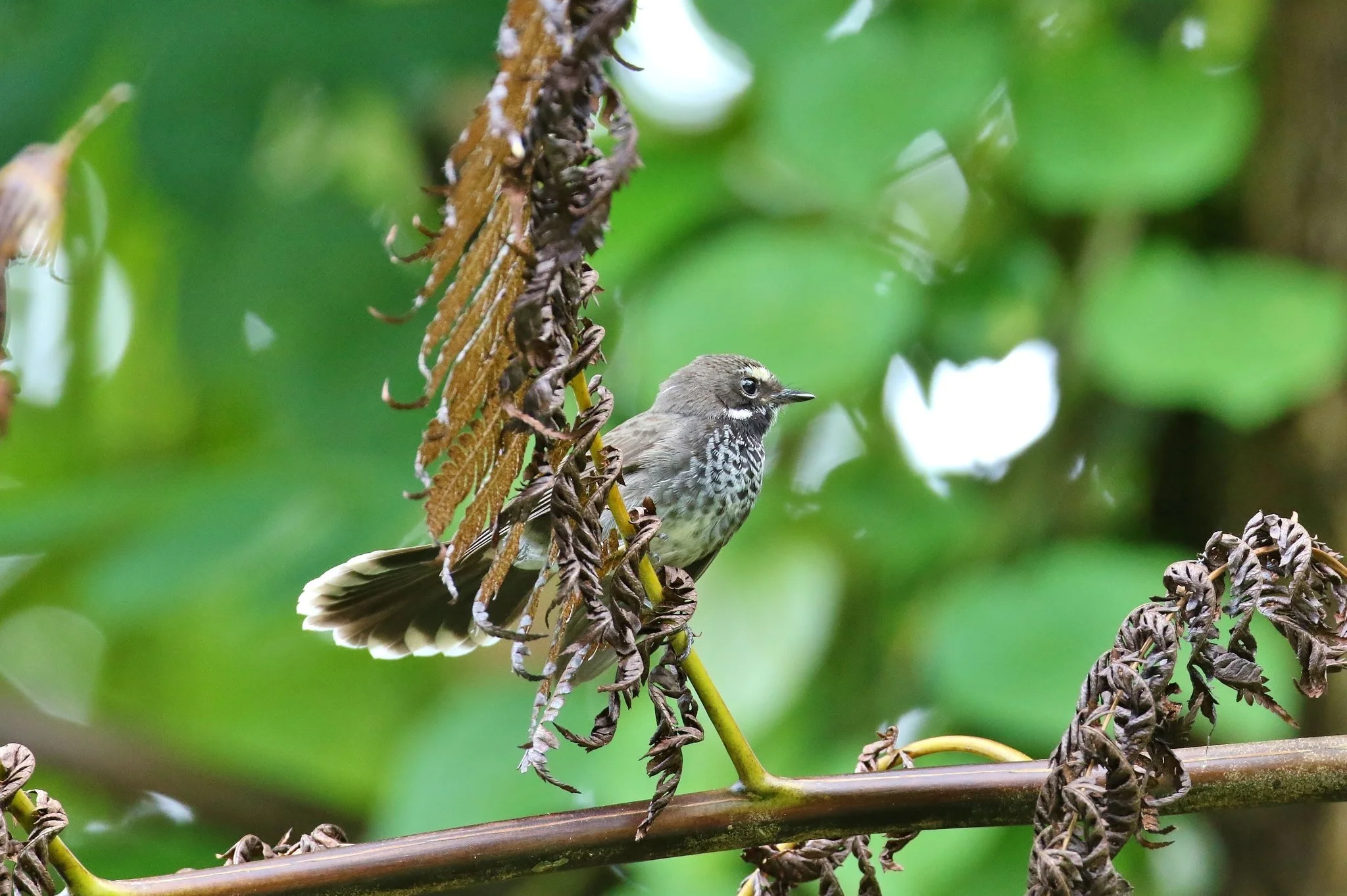
A Pohnpei fantail, Rhipidura kubaryi.
³ Between Ernst Hartert's original description in 1897 and the 1988 paper, the species appeared in the historical record only through brief, sporadic notes rather than substantial accounts:
A small number of specimens were collected from Tol’s summit during the Japanese administration (1914–1945), while John H. Brandt spent two and a half years (October 1957 to March 1960) researching birds across Chuuk without observing or collecting it. An expedition by R. Owen, E. Kridler, H. D. Pratt, and P. Bruner later climbed Mount Winipot in the late 1970s, observing and hearing a small group of white-eyes.
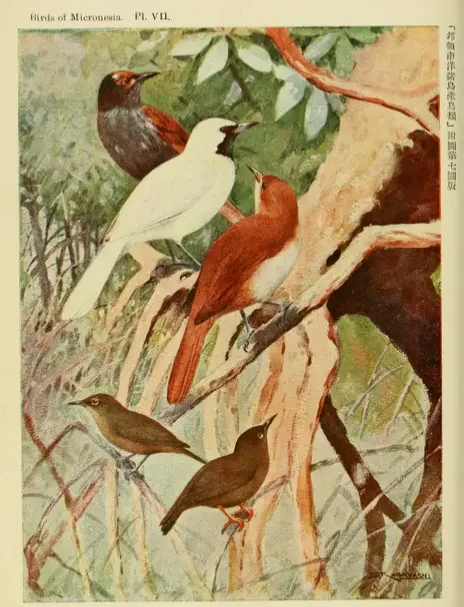
Plate VII from Tokutaro Momiyama's 1922 book Birds of Micronesia (published by the Ornithological Society of Japan). The plate features the Chuuk monarch, (
Metabolus rugensis), the Yap white-eye (Zosterops oleagineus), and the teardrop white-eye, (Rukia ruki).
⁴ “I do not think that there is any local law protecting the tree,” says Akapito. “If conservation law has to be done, it must be put in place by the Tol Municipal Council along with the State of Chuuk, with concurrence or permission from property owners.”