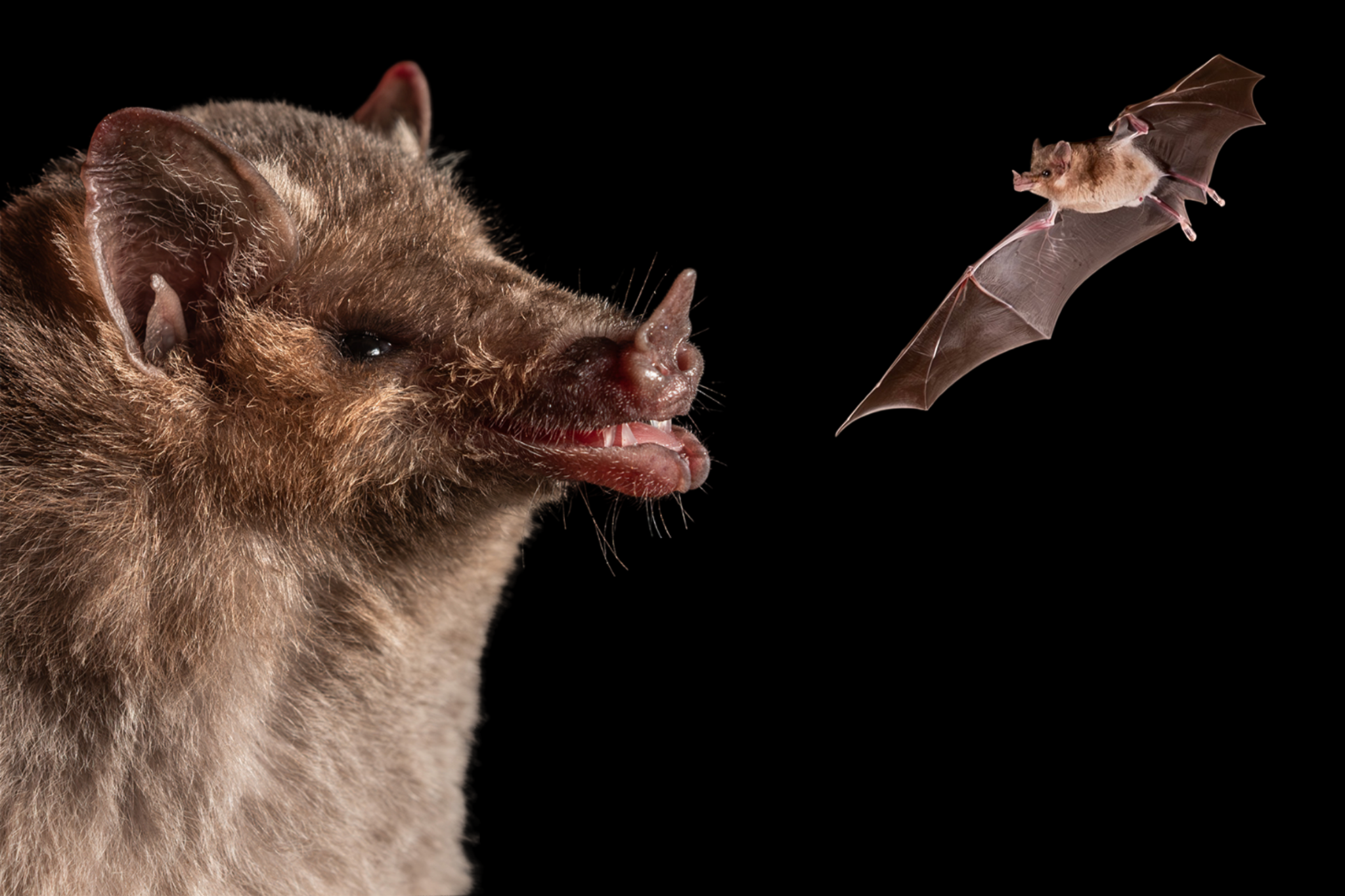
¹ Explore the unique anatomy of the long-snouted bat below.
² Ecologists measure this specialized relationship using a niche breadth score — essentially a “pickiness rating” on a scale from 0 to 1, where 0 represents an extreme specialist relying entirely on a single resource, and 1 represents a generalist that eats everything in equal amounts.
When researchers calculated this score for the long-snouted bat, it received a 0.0164. In other words, it feeds primarily and overwhelmingly on a small group of desert plants.
It doesn’t mean the bats are completely restricted to them, however.
“From our study I can tell that Platalina feeds on other flowers beyond cacti,” says Dr. Maguiña-Conde, “so it could find alternative resources.”
These non-cactus flowers seem to be seasonal supplements rather than full replacements, however. While columnar cacti offer year-round feeding, alternatives like bromeliads and wild nightshades bloom for only two to six months.
Stable carbon isotope analyses of muscle tissue reveal that the bat’s long-term body mass is constructed almost exclusively from CAM plants — the columnar cacti — and the insects that feed upon them. So while non-cactus flora could help support long-snouted bat populations, with their brief flowering windows and smaller nectar rewards, they likely cannot do so alone if a severe El Niño wipes out the bats’ primary cactus bloom.
³ The long-snouted bat faces several threats.
First is the collapse of its food supply. As coastal valleys and desert lomas are converted for agriculture and urban expansion, stands of slow-growing columnar cacti fall. Historical roosting sites, such as El Agustino near Lima, have already been swallowed whole under city pavement. And when cactus groves disappear, the continuous nectar corridors the bat depends on fragment into patches.
Second is the destruction of its roosts. The long-snouted bat relies on a handful of subterranean refuges: deep rock fissures, natural caves, and abandoned copper mine shafts. Across its range, these roosts are frequently sealed off by mining projects and disturbed by human intrusion.
“Currently, the populations of P. genovensium along their distributional range are threatened by vandalism because some populations are set on fire or their roosts are damaged or closed,” write Aragón and Aguirre.
Third is targeted hunting for traditional medicine. In local markets, nectar bats are occasionally sold for folk remedies, putting direct hunting pressure on a species whose populations are already naturally small and sparse.
Compounding all of these chronic pressures are the sometimes extreme climatic effects of El Niño events.
⁴ Learn more about El Niño at the source below.