“These great petrels were seen killing and devouring young gulls…”
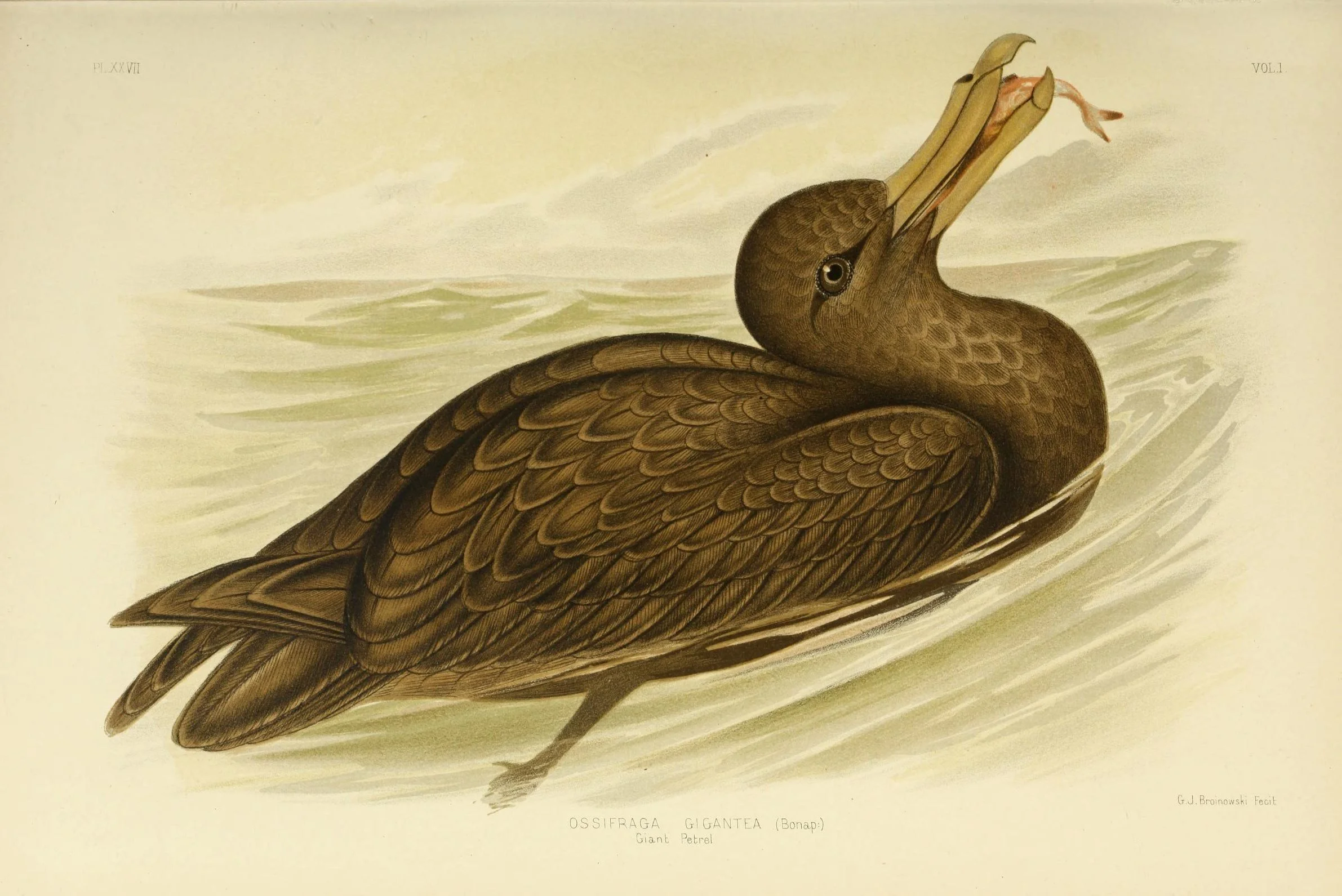
“These southern seas are frequented by several species of Petrels: the largest kind, Procellaria gigantea, or nelly (quebrantahuesos, or break-bones, of the Spaniards), is a common bird, both in the inland channels and on the open sea. In its habits and manner of flight, there is a very close re-semblance with the albatross; and as with the albatross, a person may watch it for hours together without seeing on what it feeds. The "break-bones" is, however, a rapacious bird, for it was observed by some of the officers at Port St. Antonio chasing a diver, which tried to escape by diving and flying, but was continually struck down, and at last killed by a blow on its head. At Port St. Julian these great petrels were seen killing and devouring young gulls.”
During his five-year voyage on the HMS Beagle, Charles Darwin spent some 3 years and 3 months on land, and about a year-and-a-half at sea.
He must have appreciated his long sojourns on land, for more than a bit of Darwin’s time at sea was spent sick, as he wrote in a letter to his father: “The misery I endured from sea-sickness is far beyond what I ever guessed at… nothing but lying in my hammock did me any good … I must especially except your receipt of raisins, which is the only food that the stomach will bear.” Aside from his hammock and raisins, perhaps Darwin was comforted, or at least distracted, by some of the life inhabiting the skies above the waves.
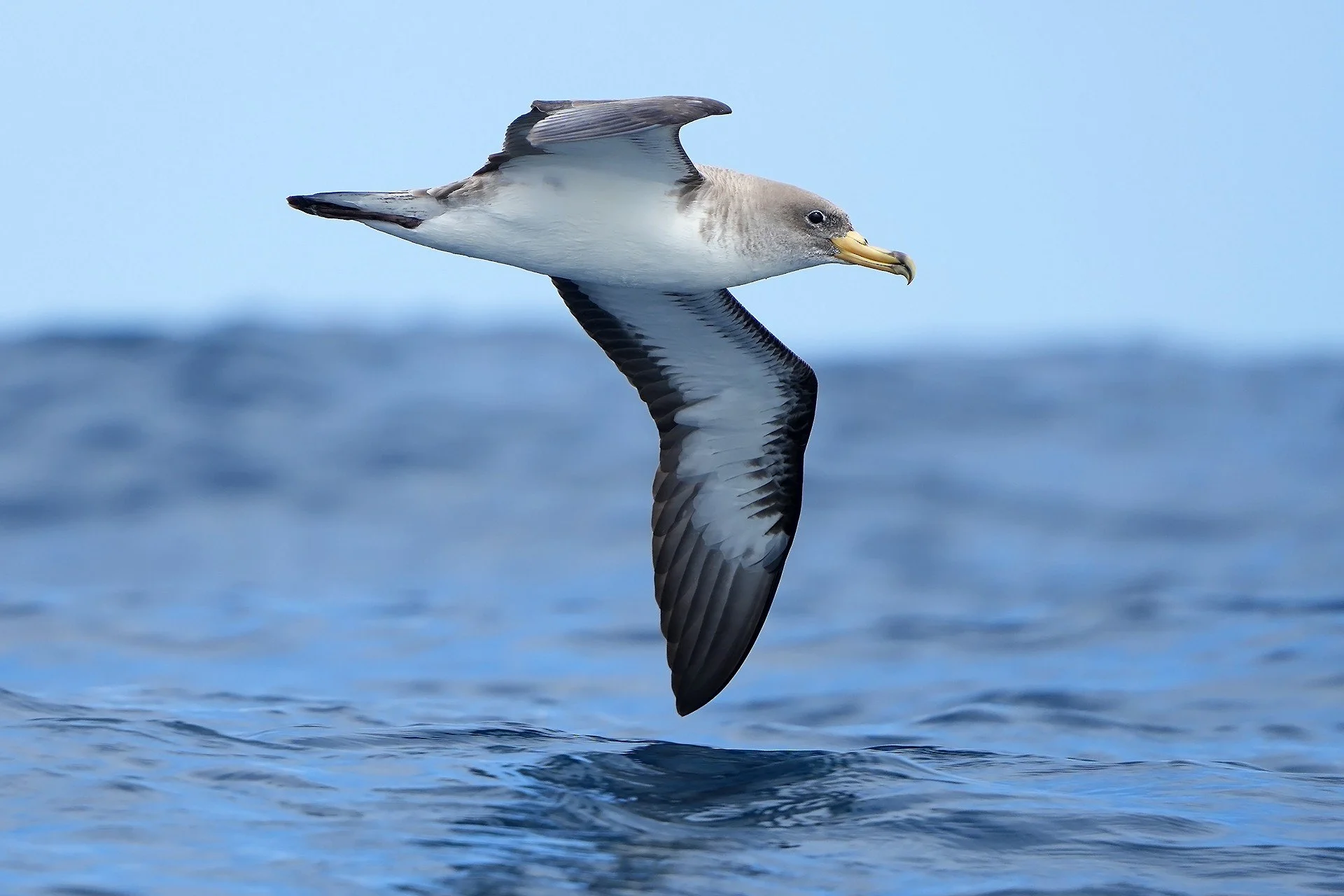
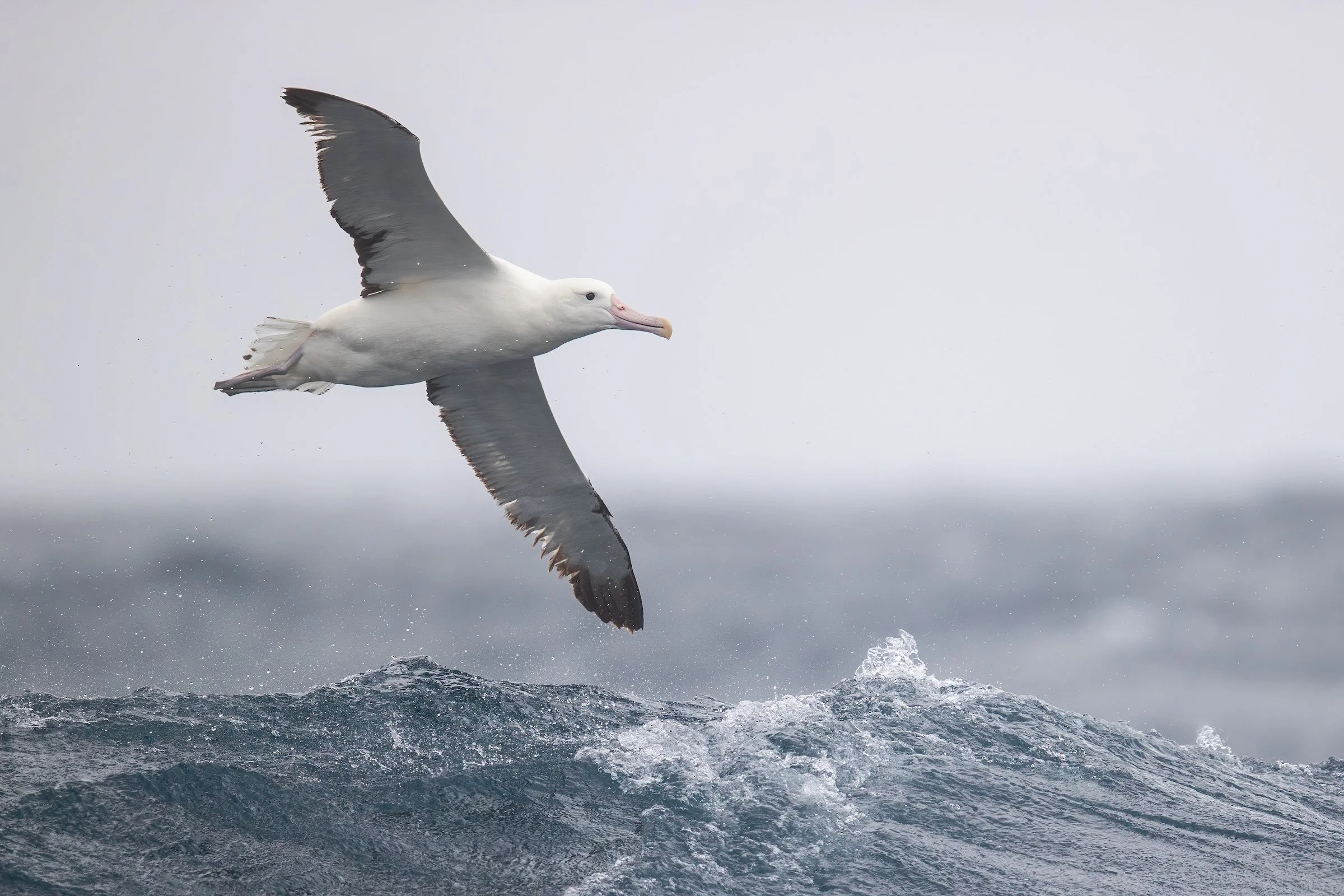
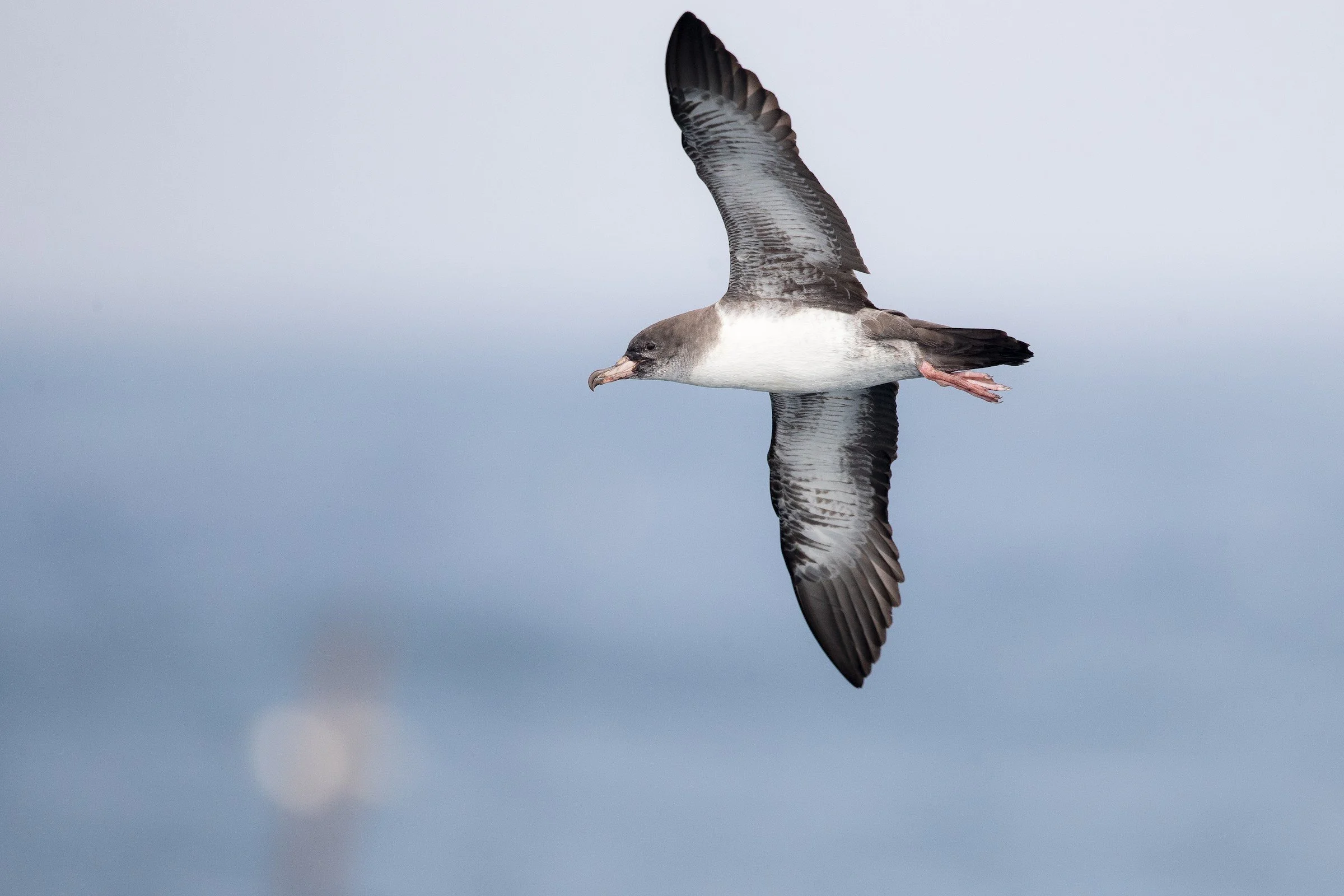
After a year-and-a-half at sea, Darwin would have spotted hundreds of species of seabirds (whether he could tell them all apart or not): Cory's shearwaters around Madeira and the Canary Islands, southern royal albatrosses between the shattered isles of Cape Horn and the Falklands, pink-footed shearwaters along South America’s western coast, Murphy's petrels in the South Pacific, fluttering shearwaters in the oceans around Oceania, and shy albatrosses around South Africa’s Cape of Good Hope. Some cosmopolitan species, such as sooty shearwaters and Wilson's storm-petrels, would have been near-constant companions during much of Darwin’s world-spanning voyage, while others would disappear and reappear like old friends as the Beagle dipped in and out of the southern latitudes.
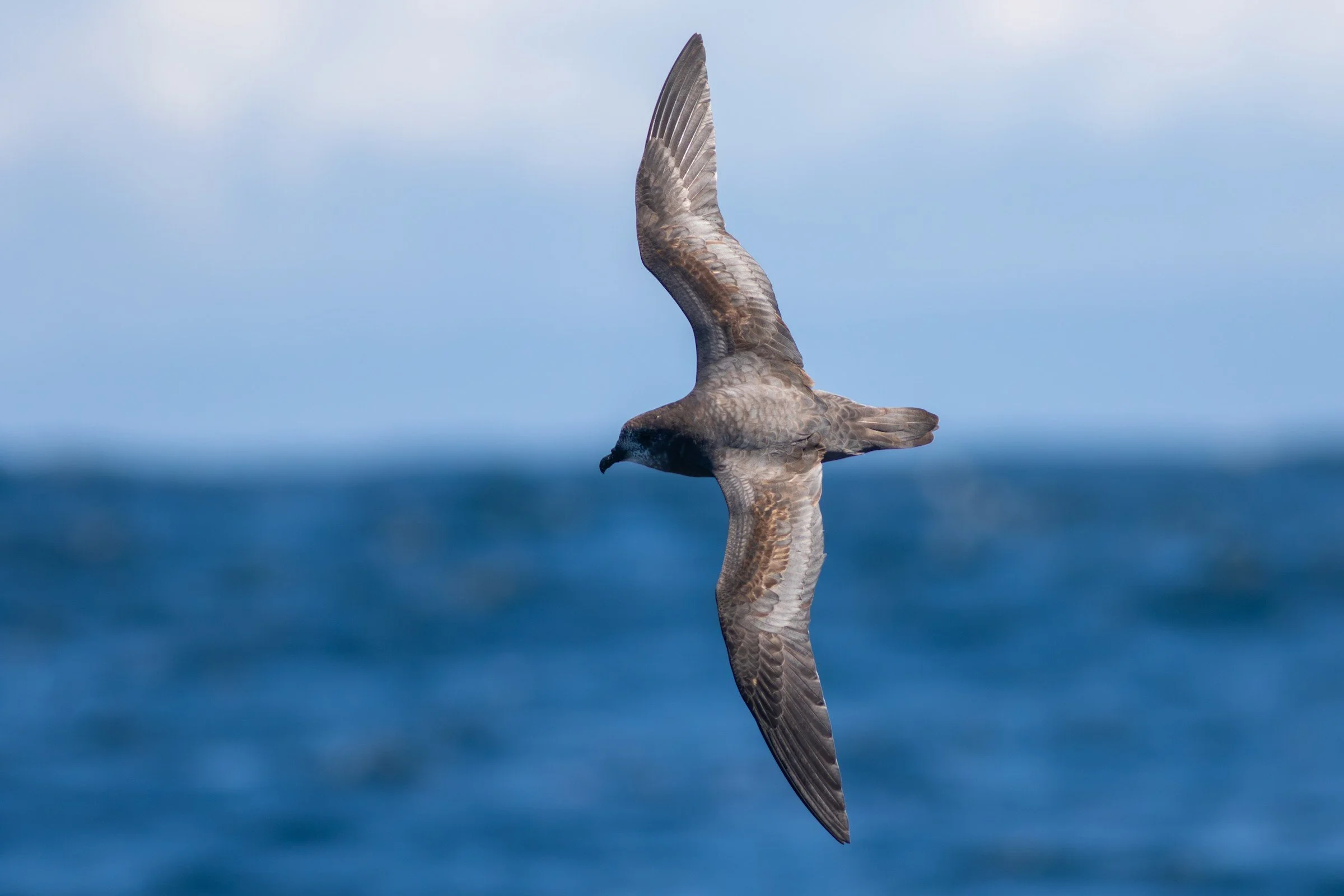
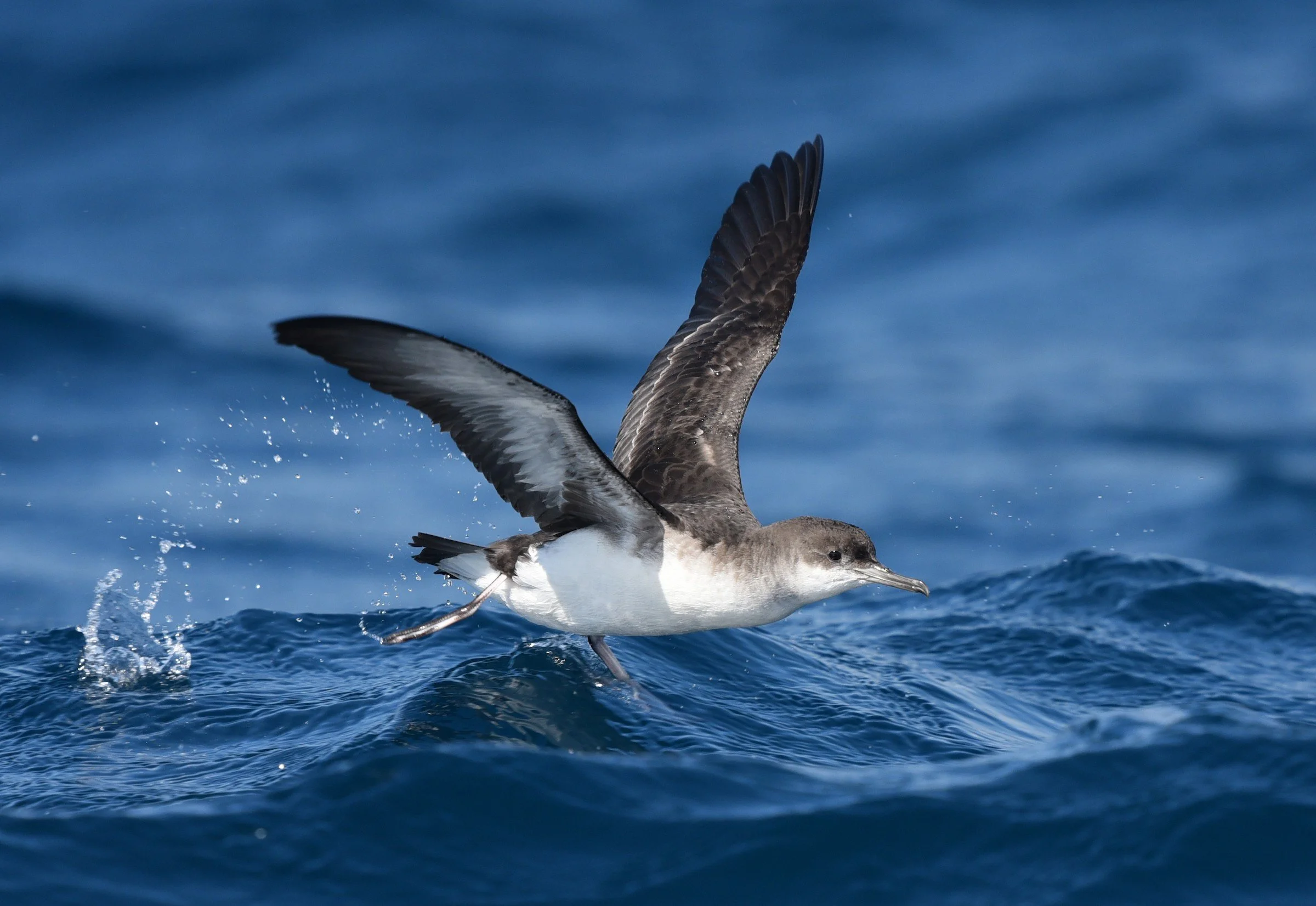
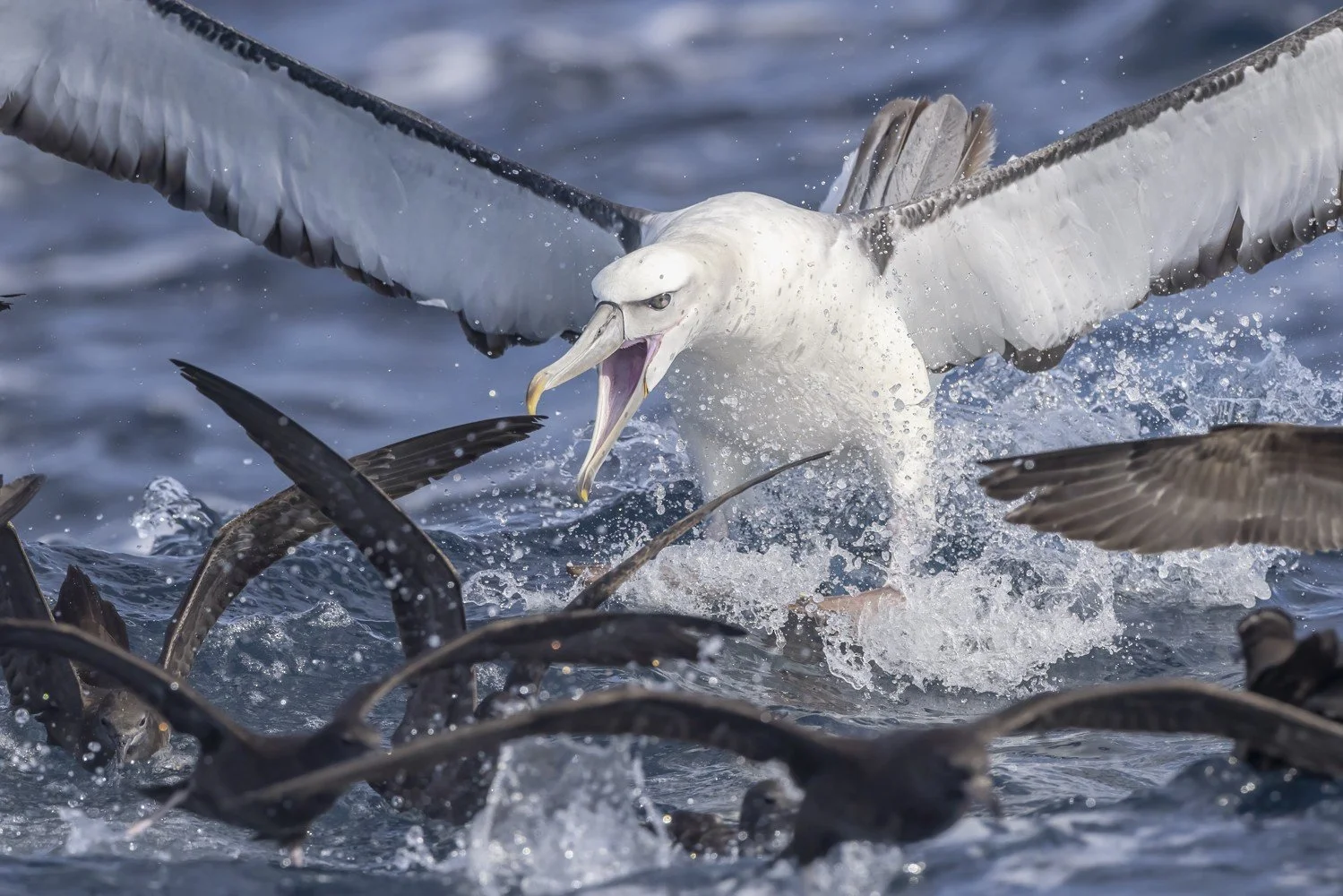
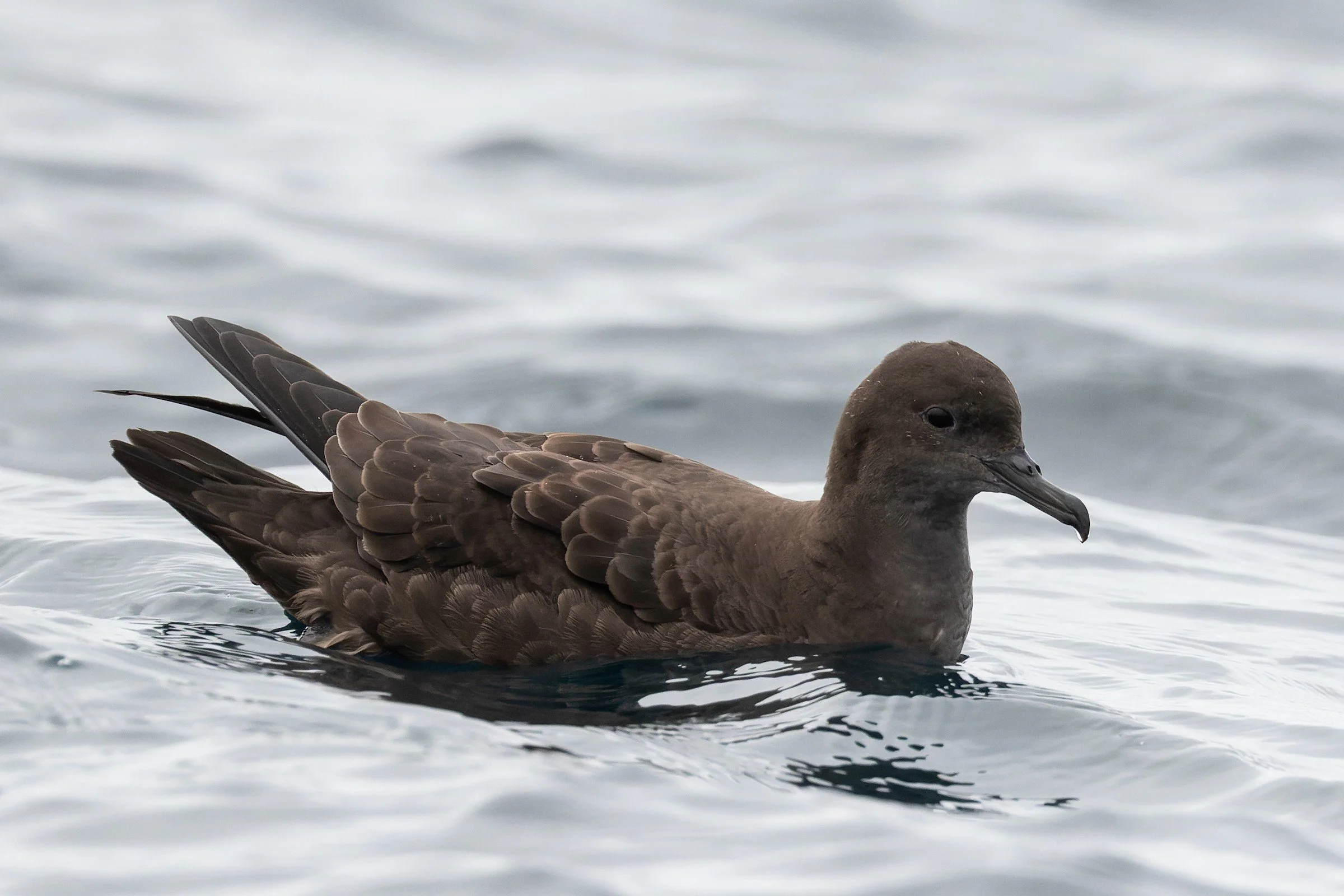
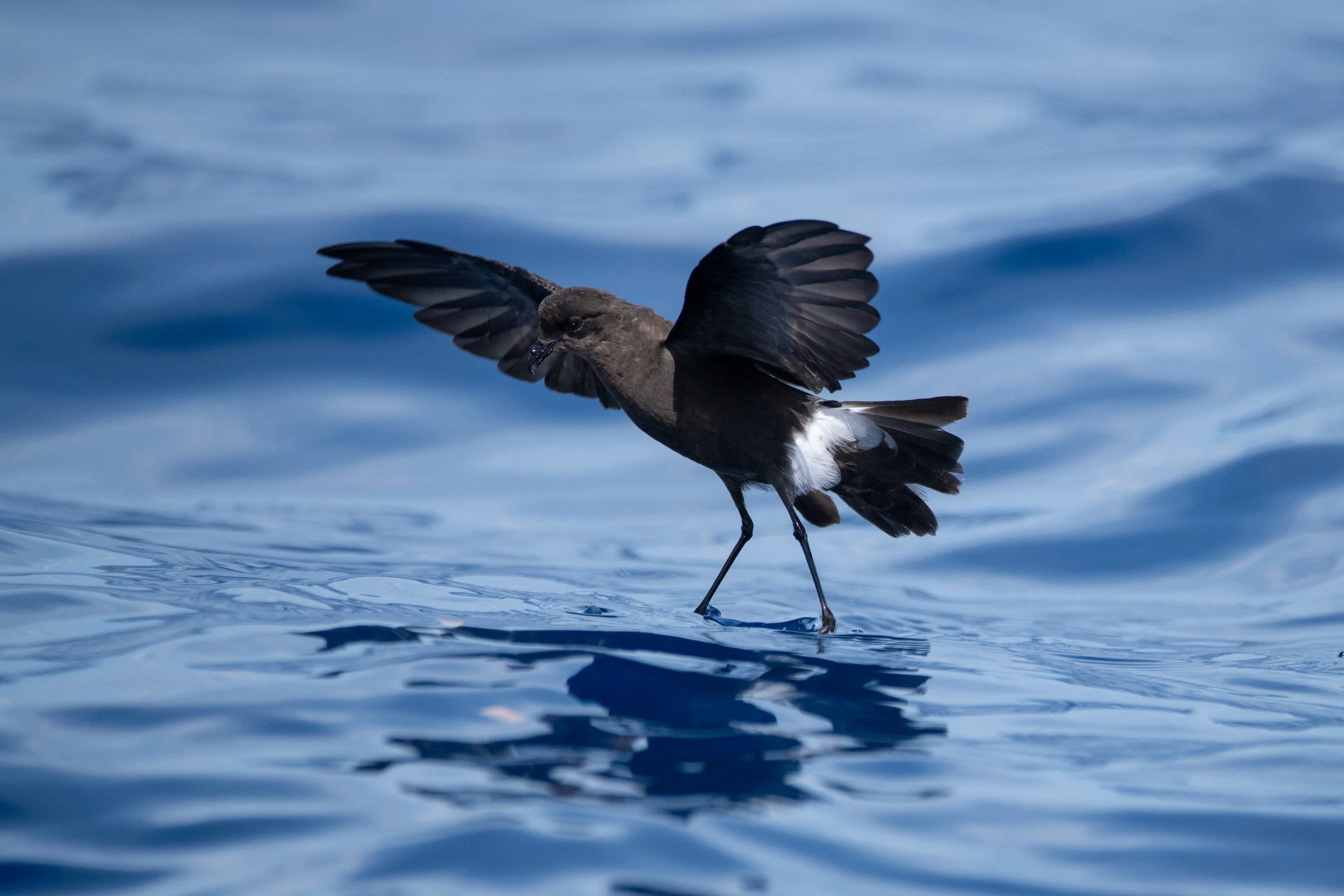
With so much time spent sailing through the Southern Ocean, Darwin would have surely been familiar with a species known as the Cape petrel: its plumage black-and-white, appearing painted with brushes of varying sizes, its inky beak dainty, its wingspan stretching to some 90 centimetres (3 ft) at most. But if he was familiar with the cape petrel — not a shy bird by any means, with its habit of circling vessels for hours on end — he never made note of it in his 1839 book, The Voyage of the Beagle, which chronicled his journey on the titular ship.
He did, however, write about the giant petrel.
Specifically, he devotes a paragraph to the ‘nelly,’ more properly known as the southern giant petrel.¹ This is one of two species of giant petrel, with the other known as the northern giant petrel — although “northern” is relative, in this case, since both species are limited to the Southern Hemisphere (“common…both in the inland channels and on the open sea,” Darwin notes), it’s just that the southern giant petrel tends to nest further south.
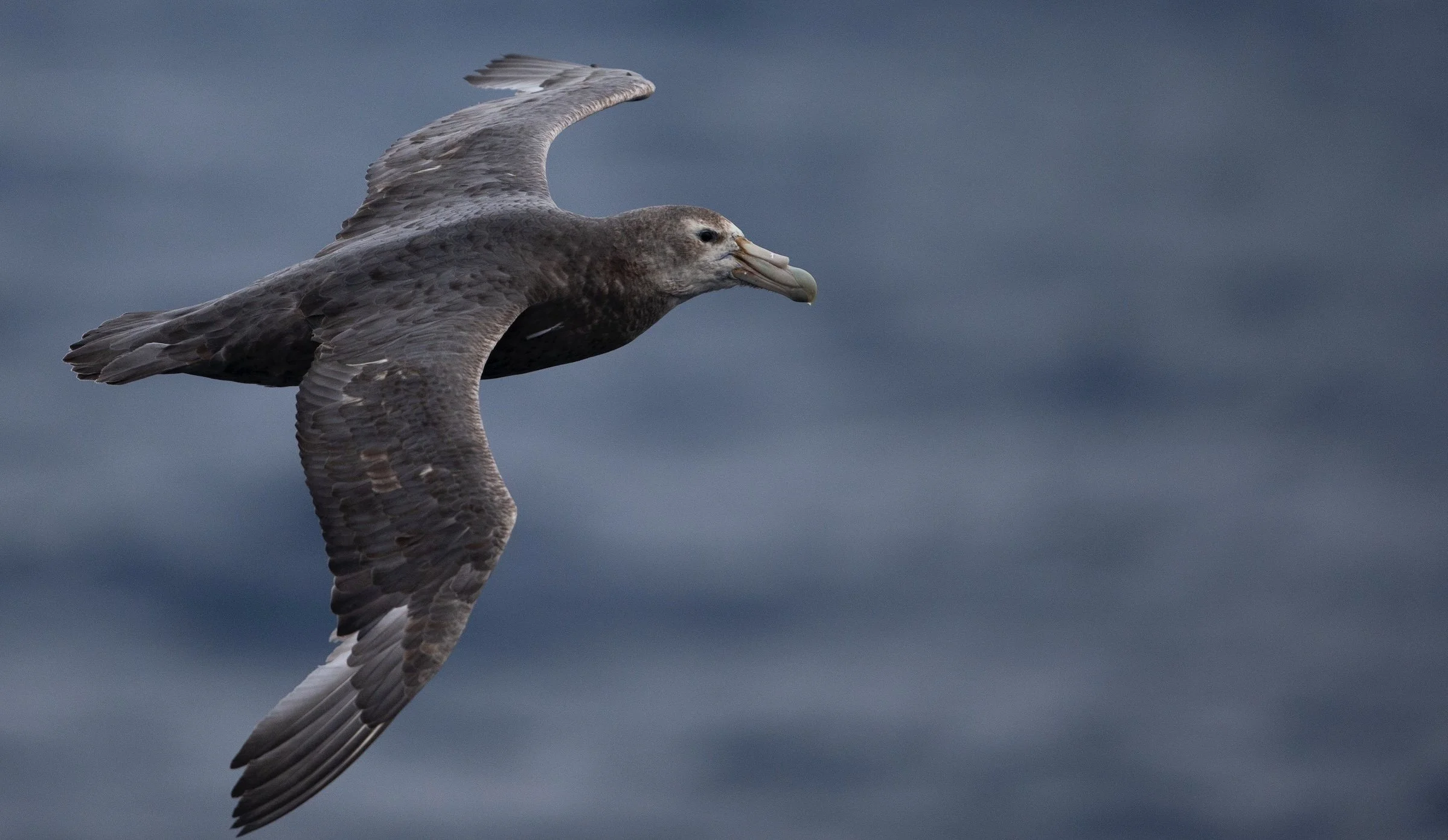
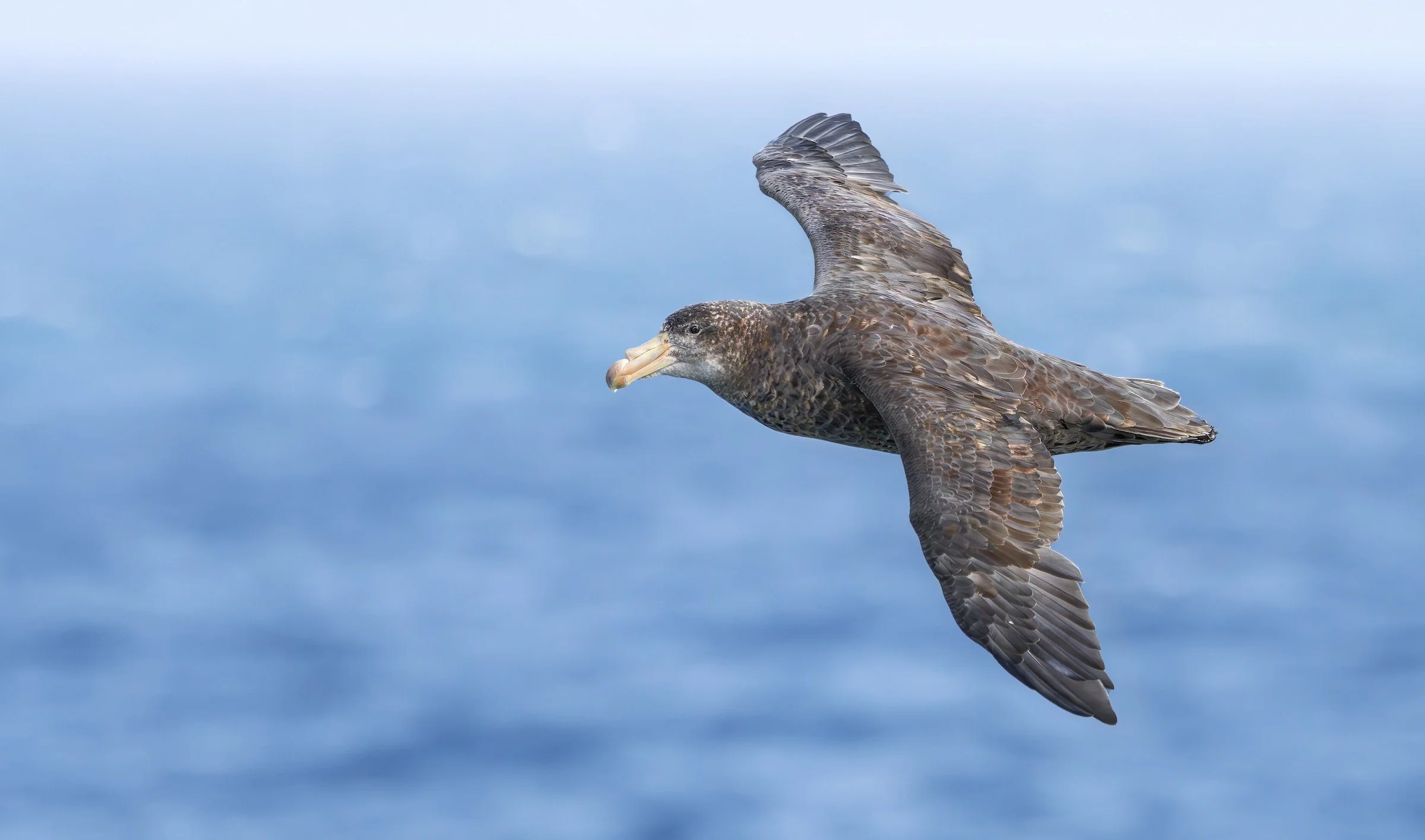
As per their names, both giant petrels are behemoths relative to their petrel relatives, reaching maximum wingspans of over two metres (6.6 ft). They’re surpassed only by the great albatrosses, whose largest species span over 3 metres (9.8 ft) with open wings. Those majestic albatrosses, named for their snowy-white feathers and regal demeanors, stand in stark contrast to the brutish giant petrels: plumage ashen, backs hunched, bills thick and patchworked, eyes small and beady. It is a suitably sinister look for a pair of carrion-eating, skull-cracking brutes.
Darwin notes that the Spanish referred to the southern giant petrel as the “quebrantahuesos,” or break-bones,² and recounts an anecdote where one was seen “chasing a diver,³ which tried to escape by diving and flying, but was continually struck down, and at last killed by a blow on its head,” and, at a different port, he writes that “these great petrels were seen killing and devouring young gulls.” Records of such heinous acts have only accrued over time, with modern observations echoing Darwin's sentiments. A 2002 study, for instance, describes how a southern giant petrel was seen standing atop a much smaller Australasian gannet, holding it below the water for upwards of 10 minutes until it stopped struggling, then plucking its dead body and eating it (as well as driving off a sea-eagle which attempted to steal its meal).⁴ Another event, published in an ornithology journal in 1978, saw a giant petrel approach a black-browed albatross as it slept, right before the “Southern Giant-petrel flew in and landed on the back of the albatross, grasped the bird by the neck, and forced its head underwater until the victim drowned.” A smaller bird, meanwhile, such as a Cape petrel, is beaten into submission by the giant petrel's massive wings or “grasped by [its own] wing and battered against the surface.”
Giant petrels are certainly carnivorous, and while they may revel in death, they don’t necessarily lust for murder — especially when they can find a free meal without the effort of having to kill it. In fact, giant petrels are the principal scavengers in subantarctic and Antarctic waters, happy to take a keeled over penguin corpse, a bloated whale carcass on the beach, a seal cadaver floating at sea, or the remains of a downed albatross, wings outspread like a fallen angel. Unlike the other seabirds in their family,⁵ who primarily hunt at sea on the wing, the giant petrels have strong legs for striding along the shore in search of the recently deceased. Upon finding a body, a giant petrel slices it open with its hook-tipped bill and plunges its head deep inside to gorge. A more apt epithet for this bird is “sea vulture,” its entire head dripping bright, bloody red after a meal.⁶
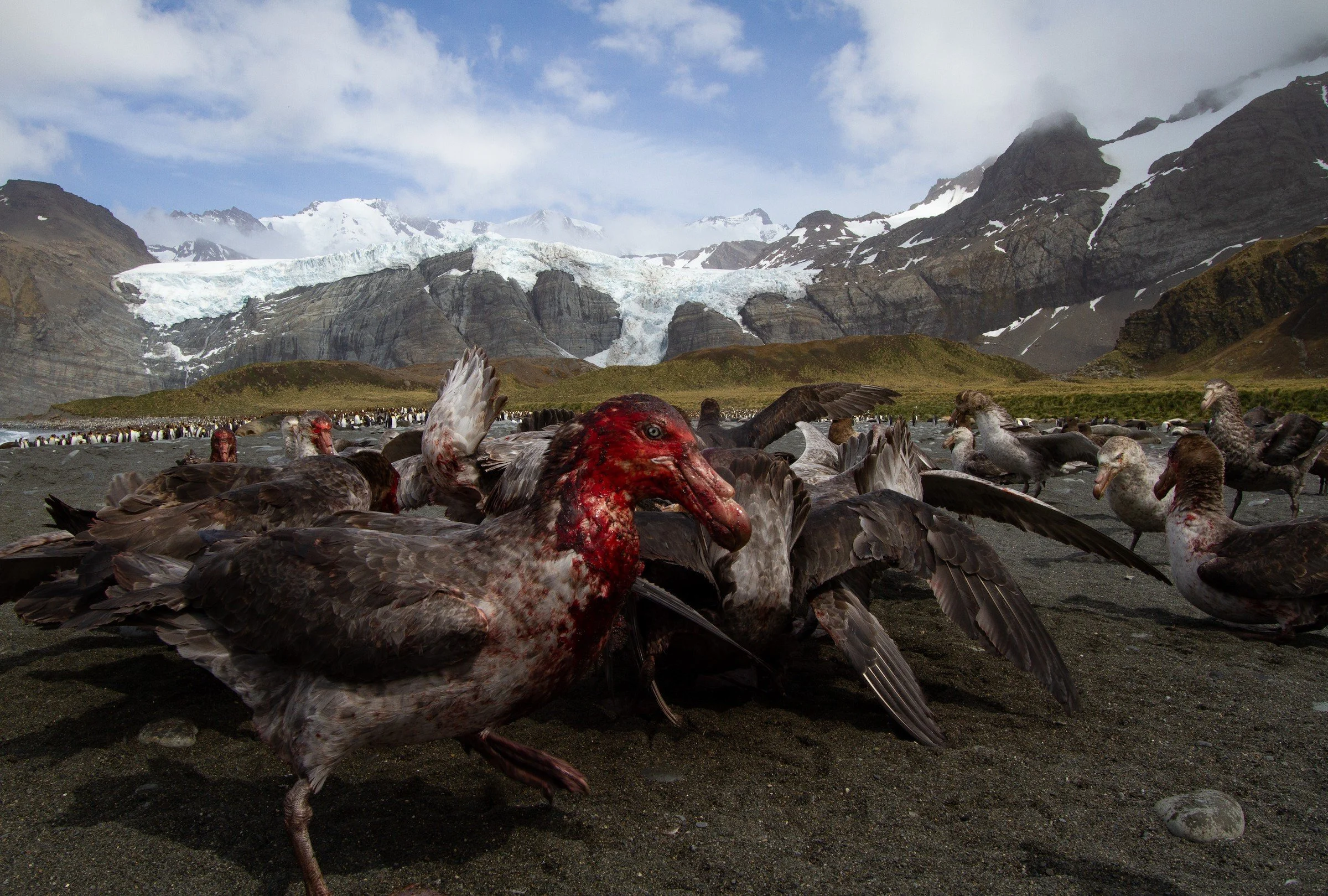
“Giant petrels are the principal scavengers in subantarctic and Antarctic waters…”
In the past, the giant petrel was rarely referred to by a proper name, but was instead “more generally known by a variety of opprobrious or derisive names,” as the seabird ornithologist Robert Cushman Murphy writes in his 1936 book Oceanic birds of South America, going on to say that “to English-speaking sailors…it is most commonly known as the “Stinker,’’or an equivalent thereof.”⁷ Obviously, the giant petrel is not a pleasant smelling bird, and while smothering its feathers with blood and guts probably doesn’t help, this particularly derisive name refers to the petrel's habit of vomiting a stream of rancid-smelling oil whenever it feels threatened.
This bird seems to possess all the qualities that would make it as unlikable as possible to an observer — indeed, Murphy continuously disparaging the giant petrel, calling it “ungainly and uncouth…scarcely more popular [among sailors] as a bird than a shark is as a fish.” To sailors of the southern seas, giant petrels may have been more of a threat than sharks, as they were known to attack the faces and eyes of seamen who fell overboard, slicing the flesh on their arms into ribbons with their hooked-bills, and, in one case, ganging up to drown a boatswain who fell overboard the HMS Erebus during an Antarctic survey in 1840.
Our observations have so far painted a pretty bloody portrait of the giant petrel. However, this monstrous bird also has a more tender side. Both species are monogamous, often staying with the same partners their entire lives and returning to the same places to nest. Both male and female take long turns to sit their single egg while the other hunts, and remain nearby to guard their chick for weeks after it hatches. When it comes to romance and devotion, at least, angelic albatross and putrid petrel are equals.
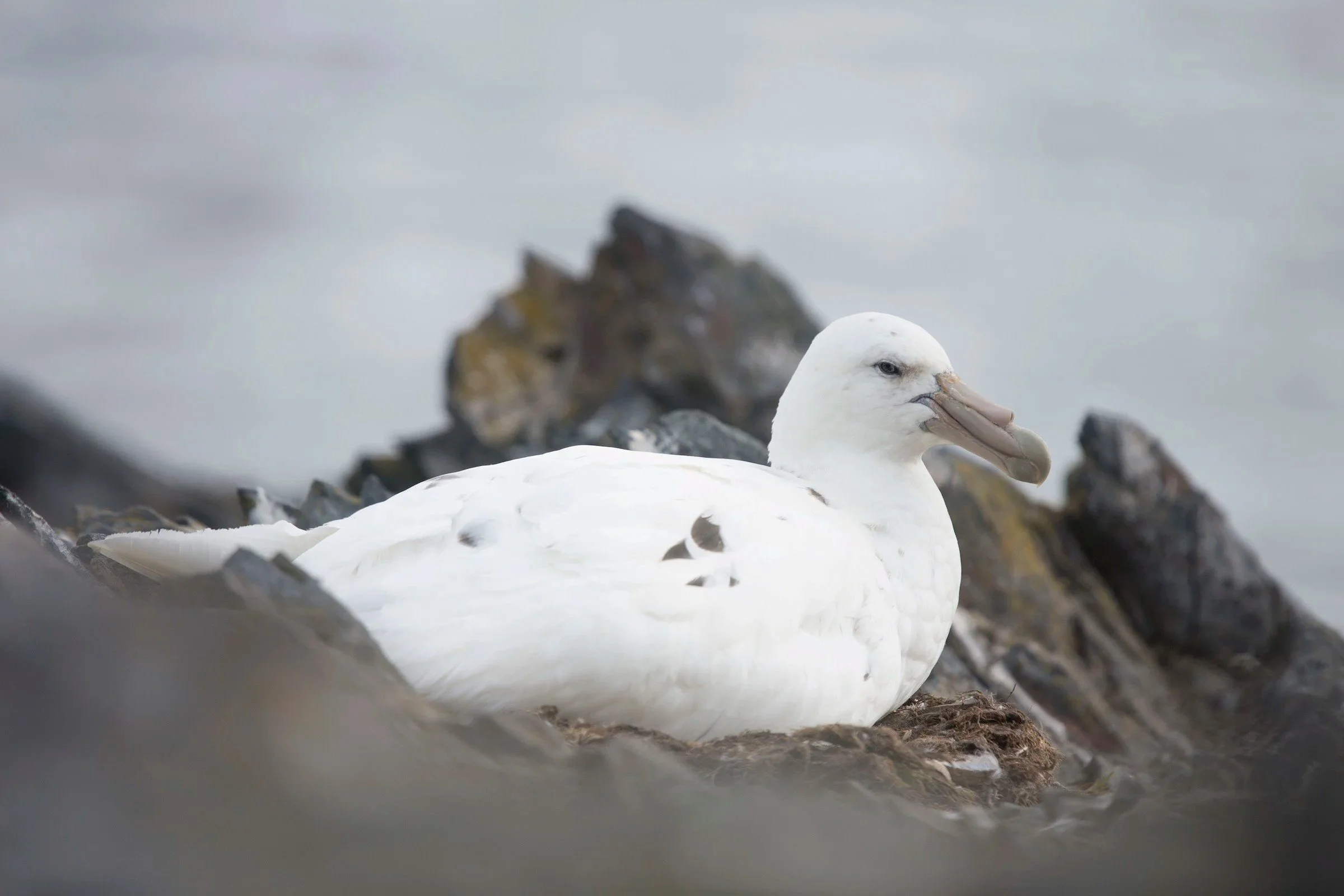
“Both male and female take long turns to sit their single egg while the other hunts, and remain nearby to guard their chick for weeks after it hatches.”
But before any reproduction or rearing, upon every reunion, a giant petrel couple must court to renew their bonds to one another. The two stand close, necks stretched up, massive wings slightly open. They preen each other’s heads and necks, they grunt and they hiss; a melody that is romantic to petrel ears only. During this display, their brutish, flesh-tearing bills become gentle instruments, knocked together rhythmically, as if in assurance that the other partner is really truly there after such a long separation. Even Murphy, who had few nice things to say about the giant petrels, couldn’t help but find this display touching: “The fact that the creatures were hideously smeared with blood and grease from the man- killed seal carcasses upon which they had been feeding did not in the least dampen their sentimental exhibition…”
The giant petrel is without a doubt a “rapacious bird,” as Darwin describes it. But beneath its menacing appearance, aside from its tendencies towards grisly murder and sticking its head into corpses, there's still a tenderness to the giant petrel. Not every creature finds the most agreeable niche, but each animal, no matter how seemingly repugnant, does have some redeeming quality. Even the break-bones, the sea-vulture, the stinker.
¹ Darwin notes the southern giant petrel's scientific name as Procellaria gigantea, which would have placed it in the same genus as all other petrels at the time. These were later split up into separate genera to better reflect their relatedness — leaving only five species of Southern Ocean petrels in the genus Procellaria.
This taxonomic revision placed the two giant petrels into their own genus, and saw the southern giant petrel renamed to Macronectes giganteus (makros meaning "great" and nēktēs meaning "swimmer").
² Today, “quebrantahuesos” refers to the bearded vulture or lammergeier, a large bird-of-prey that ranges across Europe, Asia, and Africa. The bearded vulture is indeed known for breaking bones, although, unlike the giant petrel, the bones it breaks belong to the deceased. This scavenger picks up large bones and carries them to a great height before dropping them, spirals down to check if they shattered, and repeats until they do. Once a bone has broken into sufficiently small pieces — not necessarily tiny, for the vulture can still swallow bones over 20 centimetres (7.9 in) long — the vulture scoffs them down. Indeed, it scoffs down little else, for up to 90% of a bearded vulture’s diet can consist of bones (the only bird to primarily eat bones).
³ The “diver” Darwin is referring to is some kind of diving bird. Loons are often referred to as divers, but given the location — Port St. Antonio is on the northern coast of Argentine Patagonia, where there are no loons — Darwin is likely referring to a species of grebe (perhaps the white-tufted, silvery or great grebe), a bird also known for its diving abilities.
⁴ Here is a full account of the event:
“At 1630 hours a juvenile Giant-petrel was observed in an agitated state on the water approximately 20m from shore. Closer inspection revealed a greenish tip to the bird’s bill indicating that this individual was a Southern Giant-petrel Macronectes giganteus. The cause of the bird’s agitation soon became clear as it was in the process of drowning an Australasian Gannet. The much larger Petrel was standing/sitting on the back of the Gannet, which at this stage was still very much alive and struggling to free itself. The Petrel held the neck of the Gannet in its bill and was forcing the head of the bird beneath the surface of the water. After about 5 minutes the struggles of the Gannet diminished and by 10 minutes the bird was completely limp. During the entire time its head was held underwater. While the Gannet was struggling vigorously the Giant-petrel had its wings spread, presumably for balance. After the Gannet was dead the Petrel released its hold and proceeded to pluck the carcass at the base of the neck just forward of the right wing. It continued to straddle the bird while it performed this operation. After approximately 10 minutes of plucking the Petrel began feeding on the carcass from the plucked area. Observations were continued for a further 10 minutes as the Giantpetrel continued to feed. This entire event was only interrupted once (during the plucking stage) when a White-bellied Sea-Eagle Haliaeetus leucogaster attempted to steal the prey and approached very close to the Giant-petrel. After approximately 30 seconds of an aggressive response from the Giantpetrel (jabbing with its bill), the Sea-Eagle departed.” (Anderson 2002)
⁵ The giant petrels belong to the family Procellariidae (petrels, shearwaters, and prions), within the larger order of Procellariiformes (which also includes albatrosses). Collectively, these birds are known as ‘tubenoses,’ for they have pairs of external tubular nostrils atop their bills. These house a complex olfactory system to smell out a compound called dimethyl sulphide (DMS), released by their prey beneath the ocean’s surface, as well as serving to channel concentrated brine released from the salt glands below the tubenoses’ eyes.
⁶ Curiously, there is a split in feeding behaviour among southern giant petrels, with males more likely to scavenge carrion along the shore and females more likely to hunt for fish and squid at sea. This may be the result of “bullying” by the males, or at least resource guarding, as the (up to 20%) larger males are known to chase females away from carcasses, perhaps forcing them to hunt for their food instead.
⁷ One equivalent thereof being “stinkpot.”
-
Birds of the World — Southern giant petrel
Audubon — Southern giant petrel
New Zealand Birds Online — Southern giant petrel
Falkland Conservation — Southern giant petrel
Birds of the World — Northern giant petrel
The Darwin Project — The Beagle Voyage presentation
The Peregrine Fund — Bearded vulture
Vulture Conservation Foundation — Bearded vulture swallowing bones