“I was now in hopes that I had made the little orphan quite happy; and so it seemed for some time, until it began to remember its lost parent…”
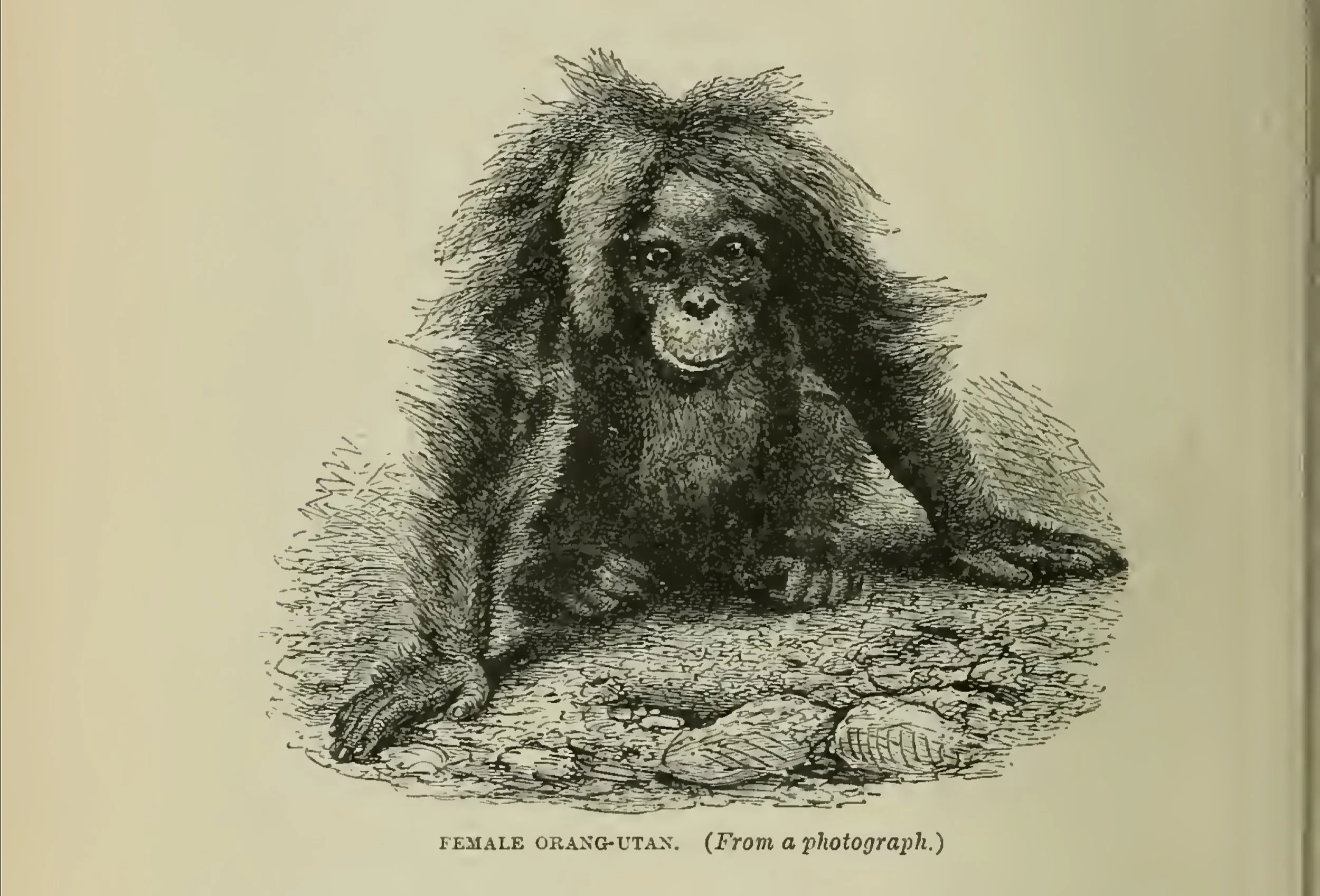
“Finding it so fond of hair, I endeavoured to make an artificial mother, by wrapping up a piece of buffalo-skin into a bundle, and suspending it about a foot from the floor. At first this seemed to suit it admirably, as it could sprawl its legs about and always find some hair, which it grasped with the greatest tenacity. I was now in hopes that I had made the little orphan quite happy; and so it seemed for some time, until it began to remember its lost parent, and try to suck. It would pull itself up close to the skin, and try about everywhere for a likely place; but, as it only succeeded in getting mouthfuls of hair and wool, it would be greatly disgusted, and scream violently, and, after two or three attempts, let go altogether…”
The year was 1855, and Alfred Russel Wallace was hunting orangutans through the rainforests of Borneo.
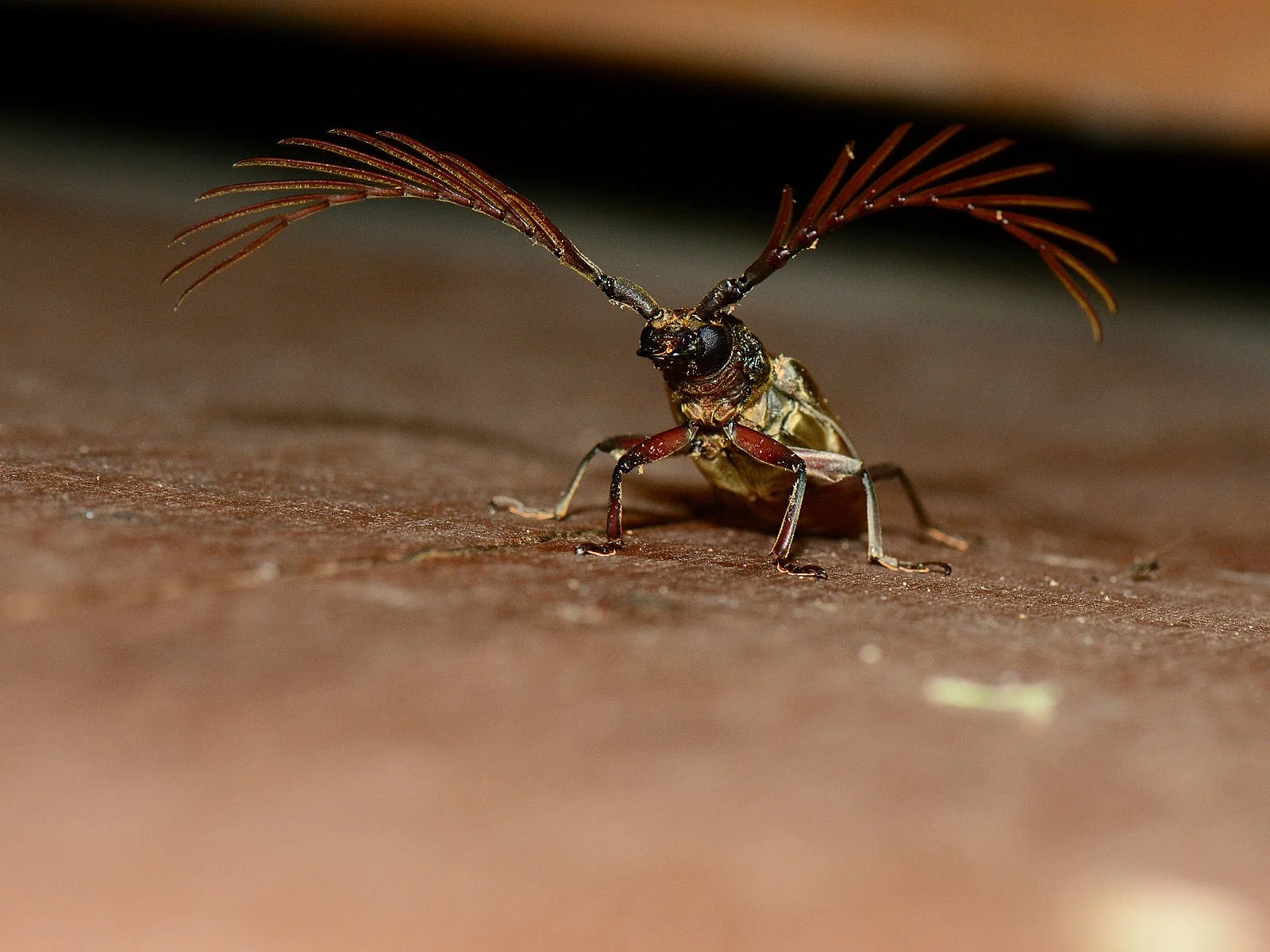
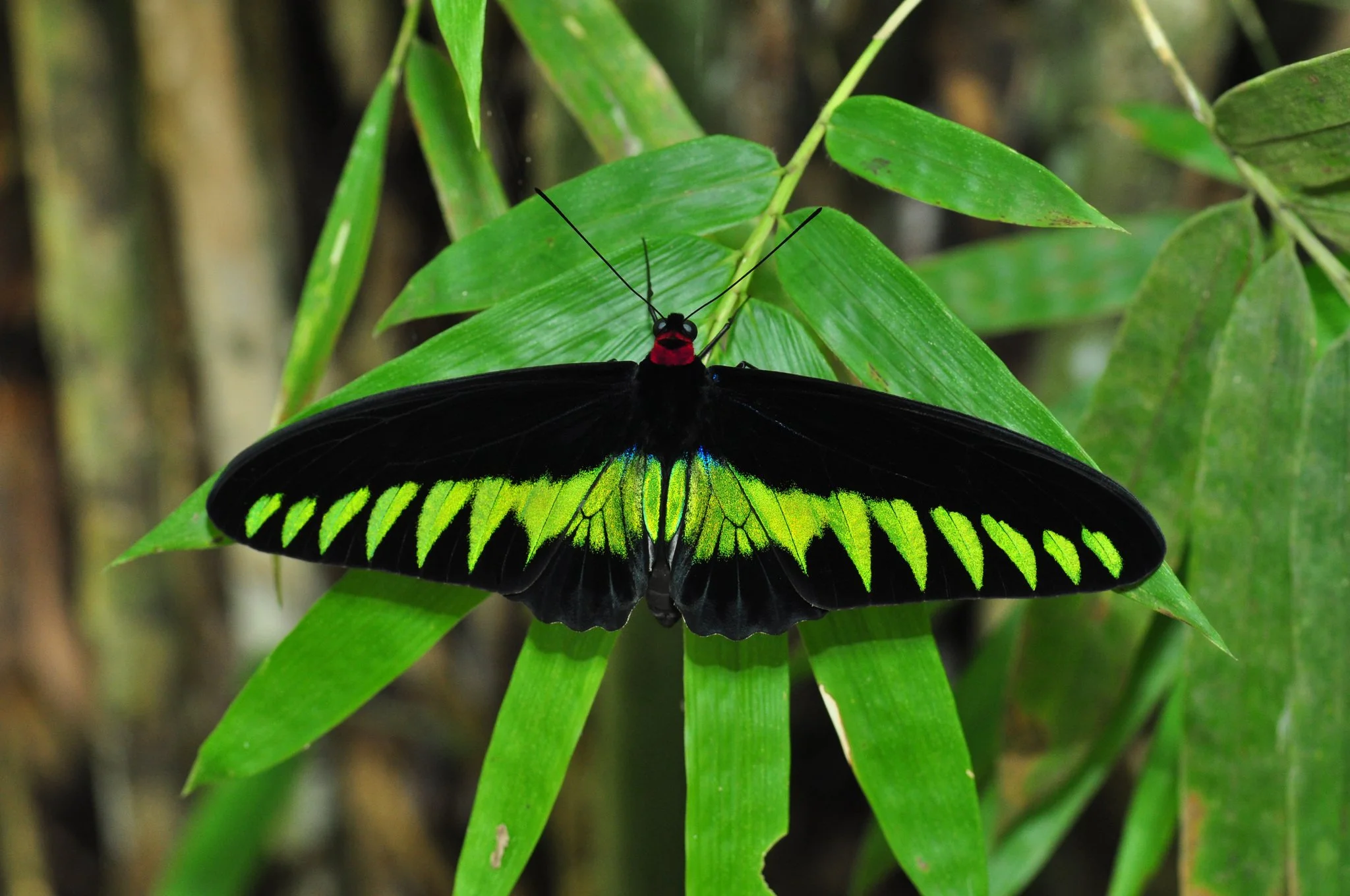
Journeying across this large island, through “part of the interior seldom visited by Europeans,” Wallace had so far collected many “rare and very handsome insects”; including over 2,000 kinds of beetles, many with “graceful forms and long antenna…remarkable for their large size, strange forms, and beautiful colouring,” and a species of butterfly he described as “one of the most elegant species known,” with “very long and pointed wings…deep velvety black, with…spots of a brilliant metallic-green.”
He obtained squirrels, tigercats, and a moonrat, “which looks like a cross between a pig and a polecat,” as well as “a rare, otter-like animal, with very broad muzzle clothed with long bristles” — referring to the truly bizarre otter civet.
He was gifted a “most curious and interesting reptile” — actually a large tree-frog — which he was told had flown down from a tree using “toes very long and fully webbed to their very extremity, so that when expanded they offered a surface much larger than the body.”
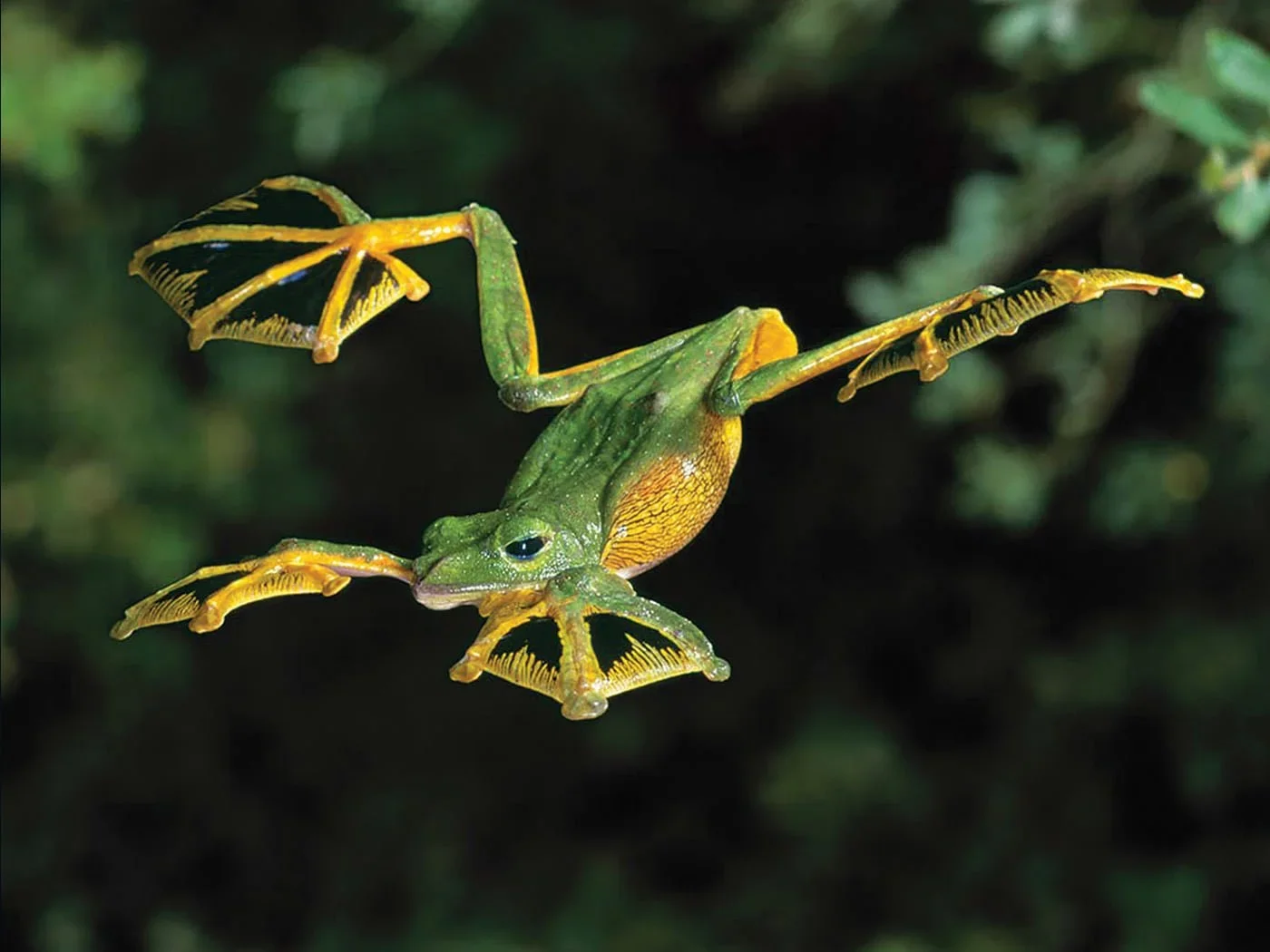
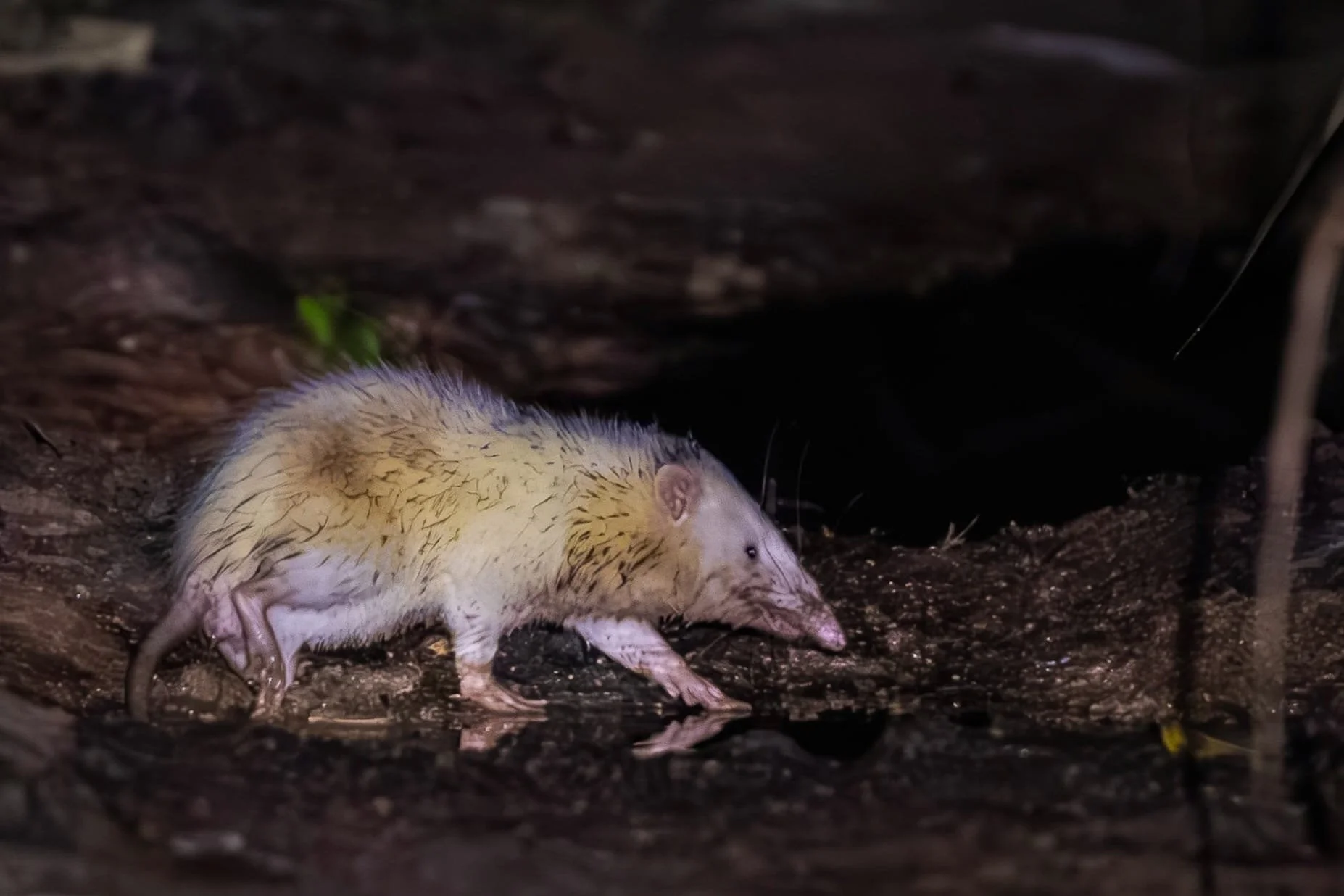
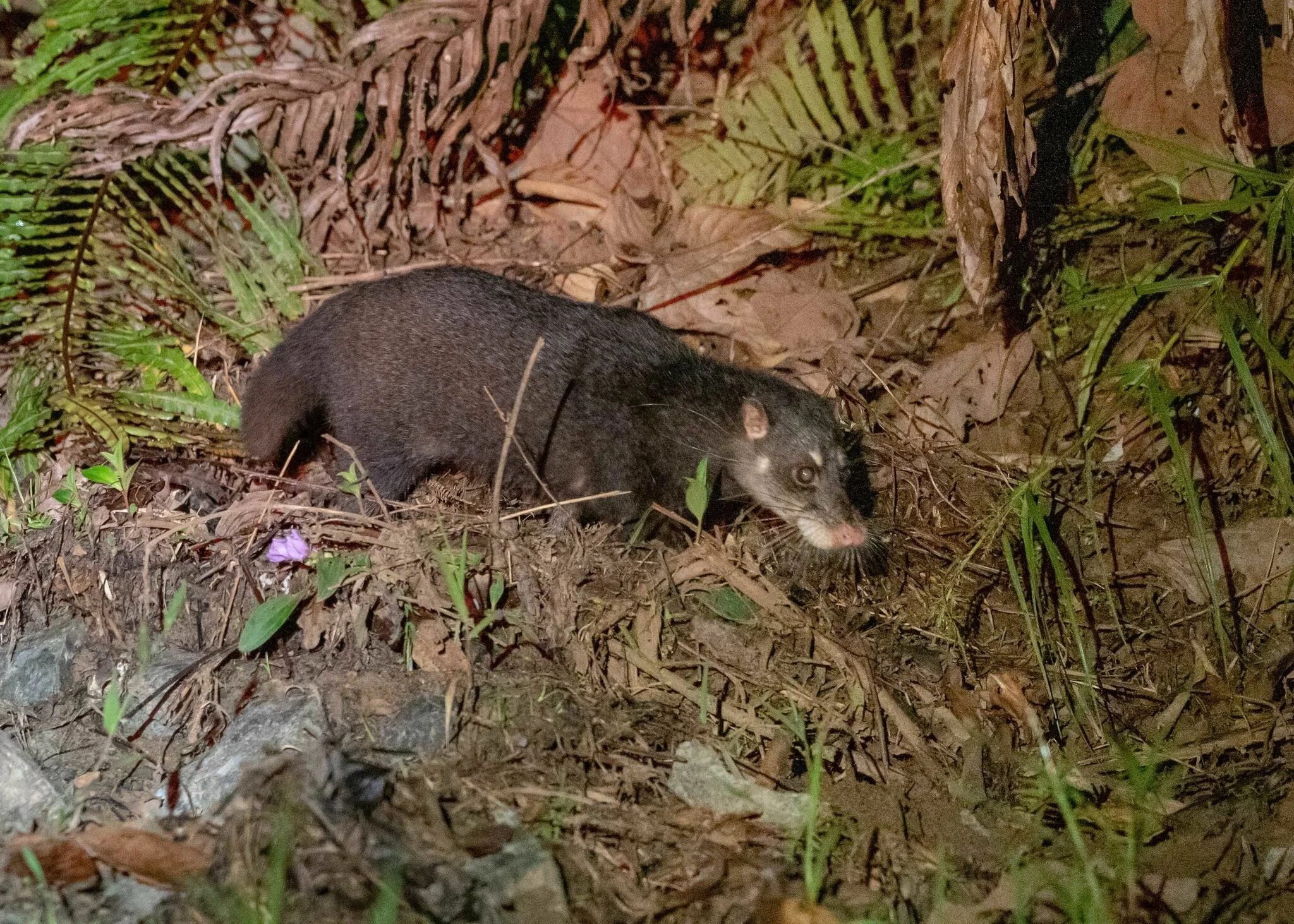
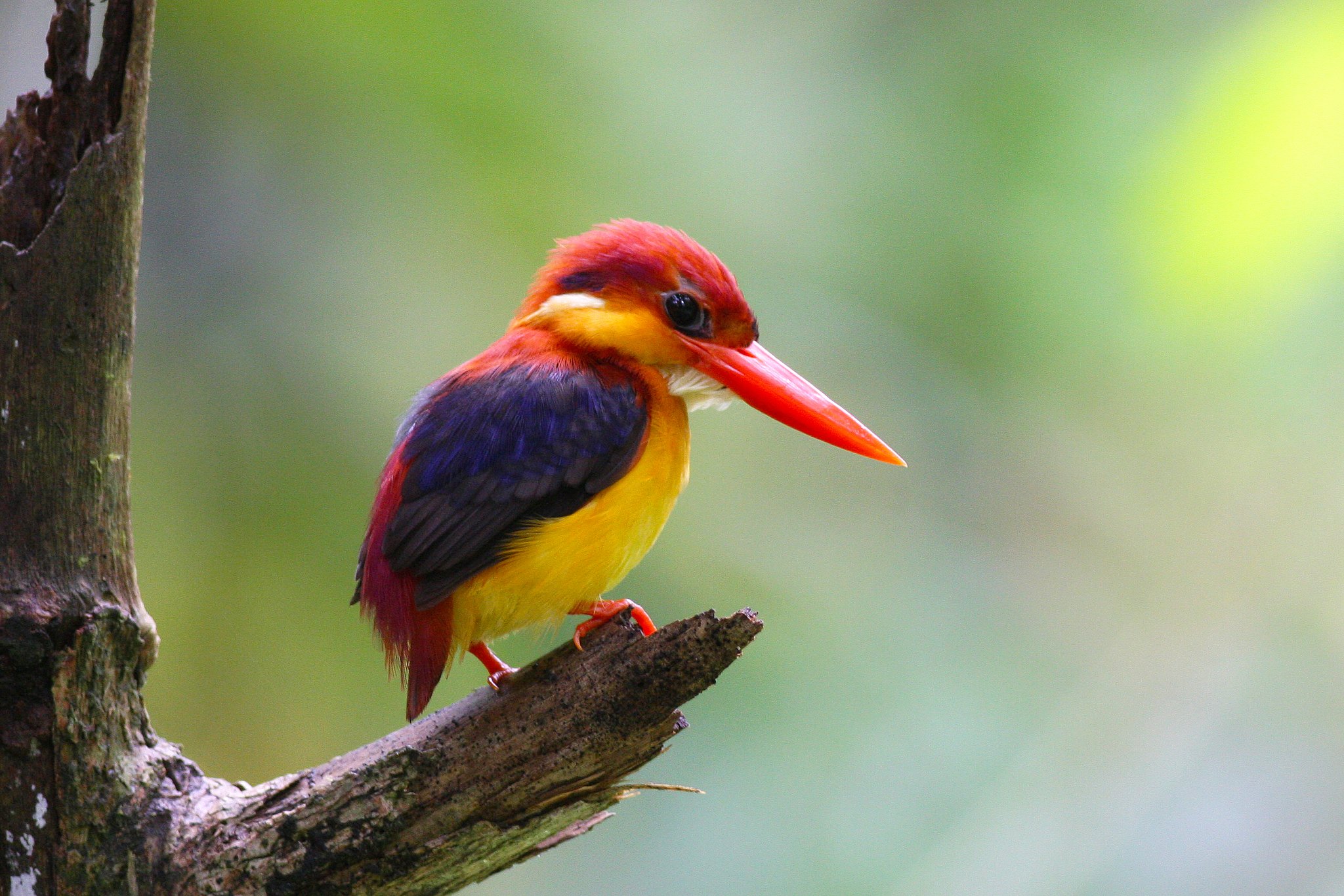
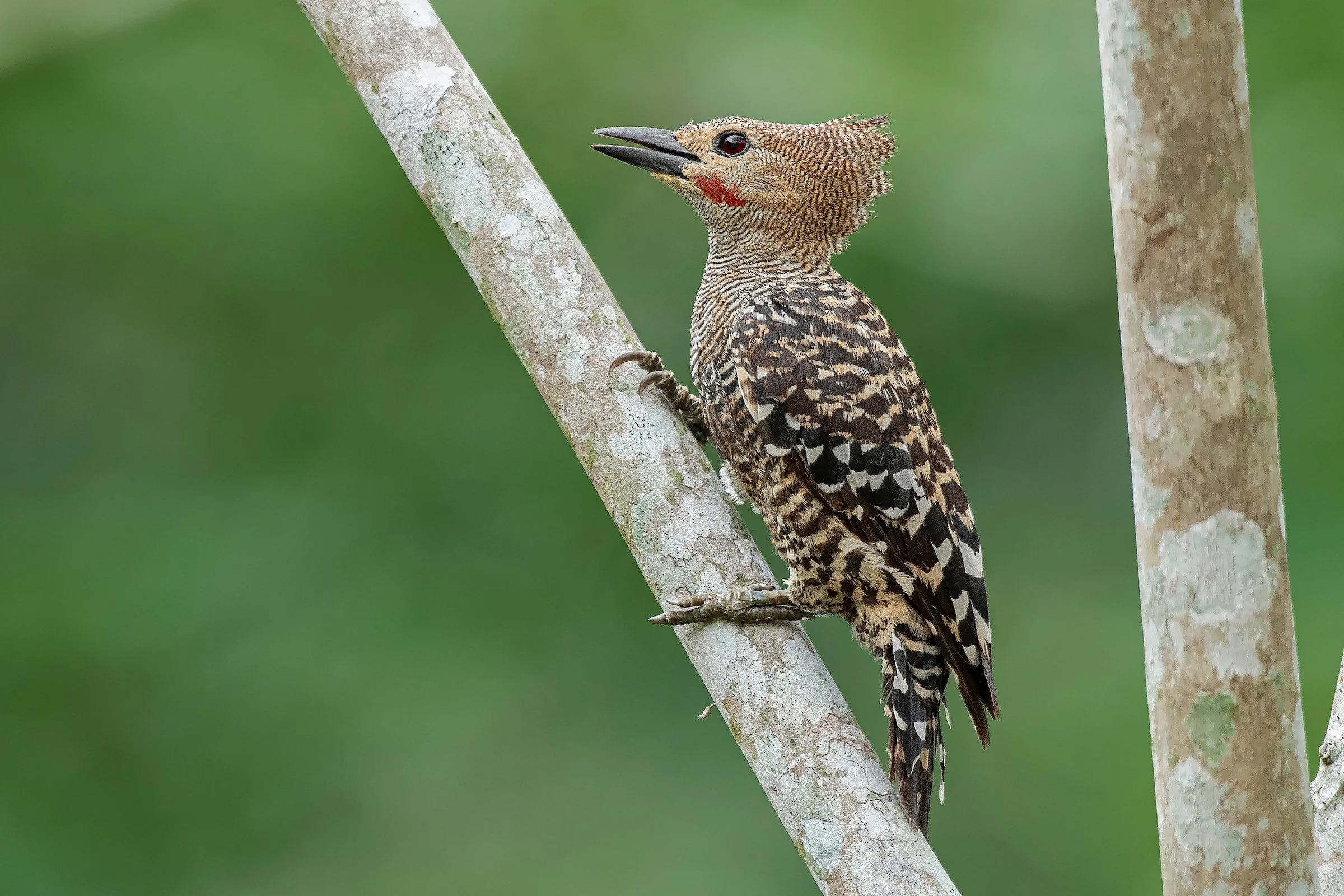
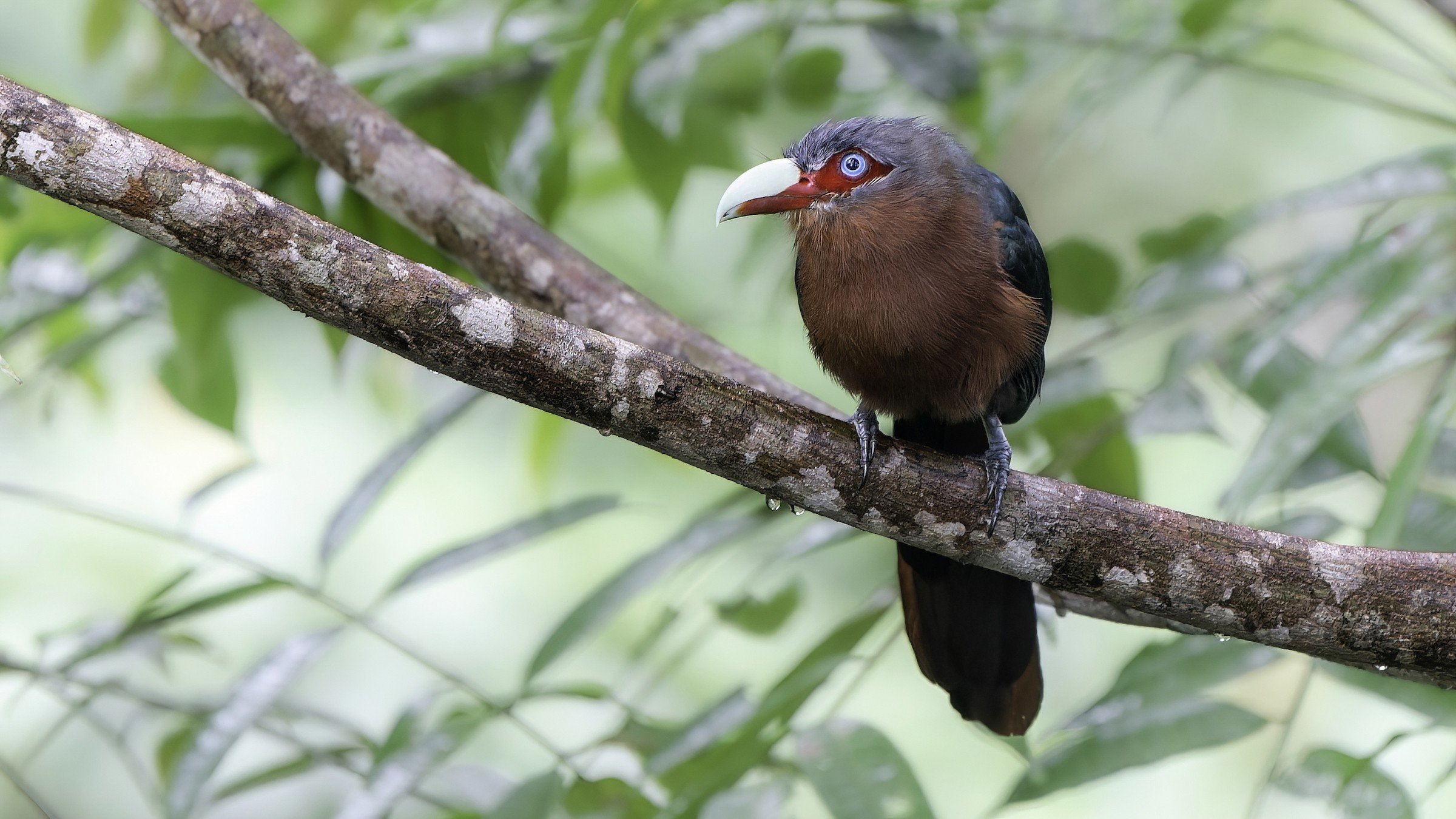
“Handsome woodpeckers and gay kingfishers, green and brown cuckoos with velvety red faces and green beaks, red-breasted doves and metallic honeysuckers, were brought in day after day, and kept me in a continual state of pleasurable excitement.”
And still, he had yet to find an orangutan.
———
“The Orangutan,” writes Wallace, “is known to inhabit Sumatra and Borneo, and there is every reason to believe that it is confined to these two great islands…”
Split between the countries of Malaysia and Indonesia, the island of Borneo is the main stronghold for orangutans — of the three species recognised today, the Bornean orangutan has a population of over 100,000, while the other two species, found on the island of Sumatra to the west of Borneo, together number less than 15,000.
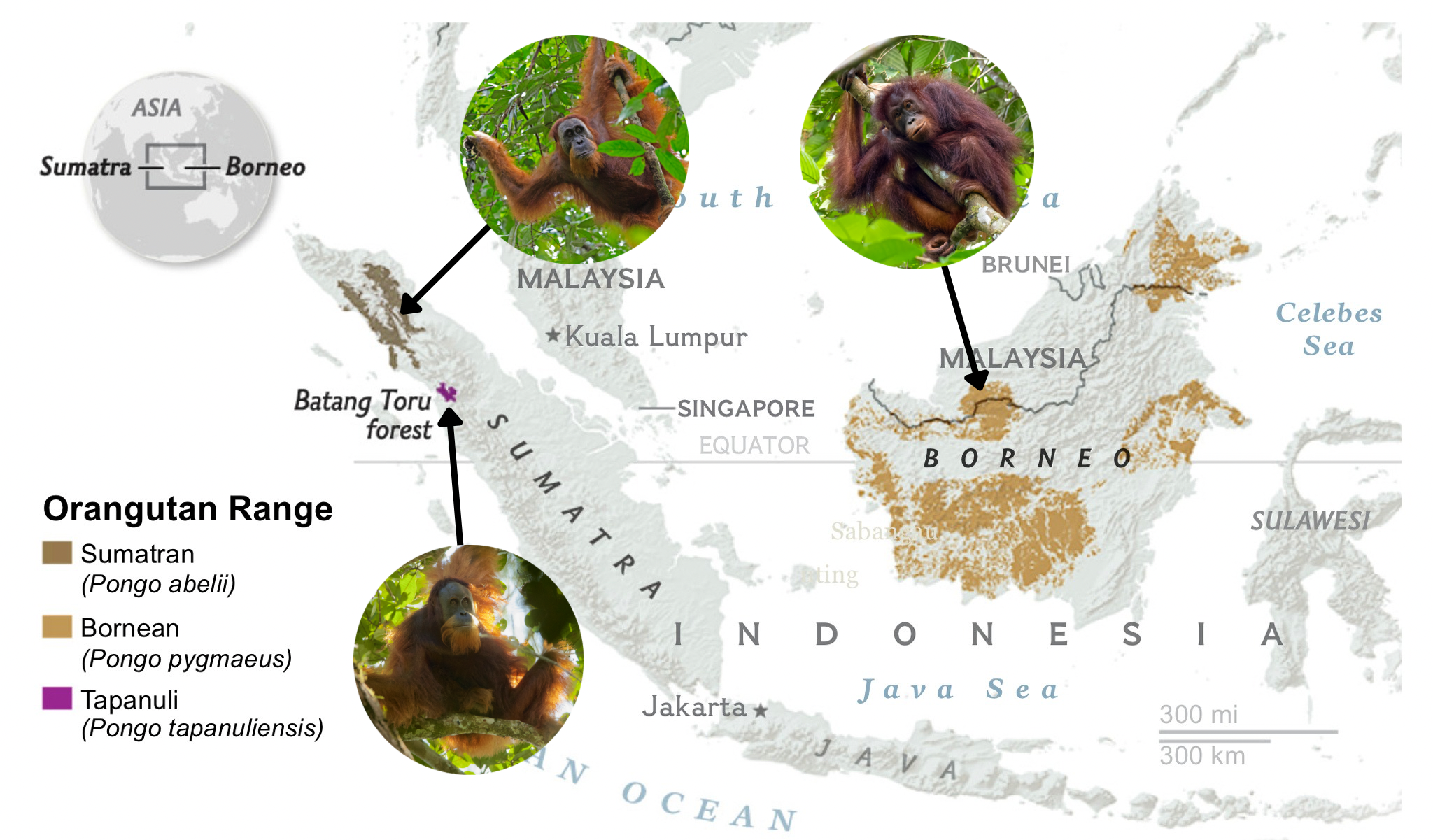
The three orangutan species: Bornean orangutan, Sumatran orangutan, and Tapanuli orangutan.
(© Global Conservation + © ayuwat, © Lip Kee, © Tim Laman / iNaturalist)
These numbers were likely much higher in Wallace’s time — just 100 years ago (much less 170 years ago), we know that orangutan populations across both islands were roughly double what they are today. Back then, orangutans were not the icons of threatened Southeast Asian rainforests, as they are today. They certainly weren’t yet considered critically endangered. This was a time when animals were more often collected than conserved.
So when Wallace wrote that one of his chief objectives “was to see the Orangutan (or great man-like ape of Borneo) in his native haunts, to study his habits, and obtain good specimens of the different varieties and species of both sexes, and of the adult and young animals,” he meant to accomplish said objective by the power of his double-barreled guns and a troop of local Dayak hunters.
The recounting of these hunts, the killing of these kindred creatures, read as not-a-little distressing today; a reminder, perhaps, of how our circle of empathy has since expanded.
Wallace’s first encounter with an orangutan — or a Mias, as the local Dayaks called it — was a rustle in the trees, and a sighting of a “large red-haired animal moving slowly along,” until it “passed on from tree to tree” into an area of impassable swamp. A fortnight or so after this peaceful meeting, Wallace was informed of an orangutan that had been seen feeding in a particular tree. Going to this tree to look, he found it was still there, attempting to “conceal itself among the foliage” as Wallace approached. He shot it — “the second barrel caused it to fall down almost dead, the two balls having entered the body” — and so he had his first orangutan specimen: “a male, about half-grown, being scarcely three feet high.”
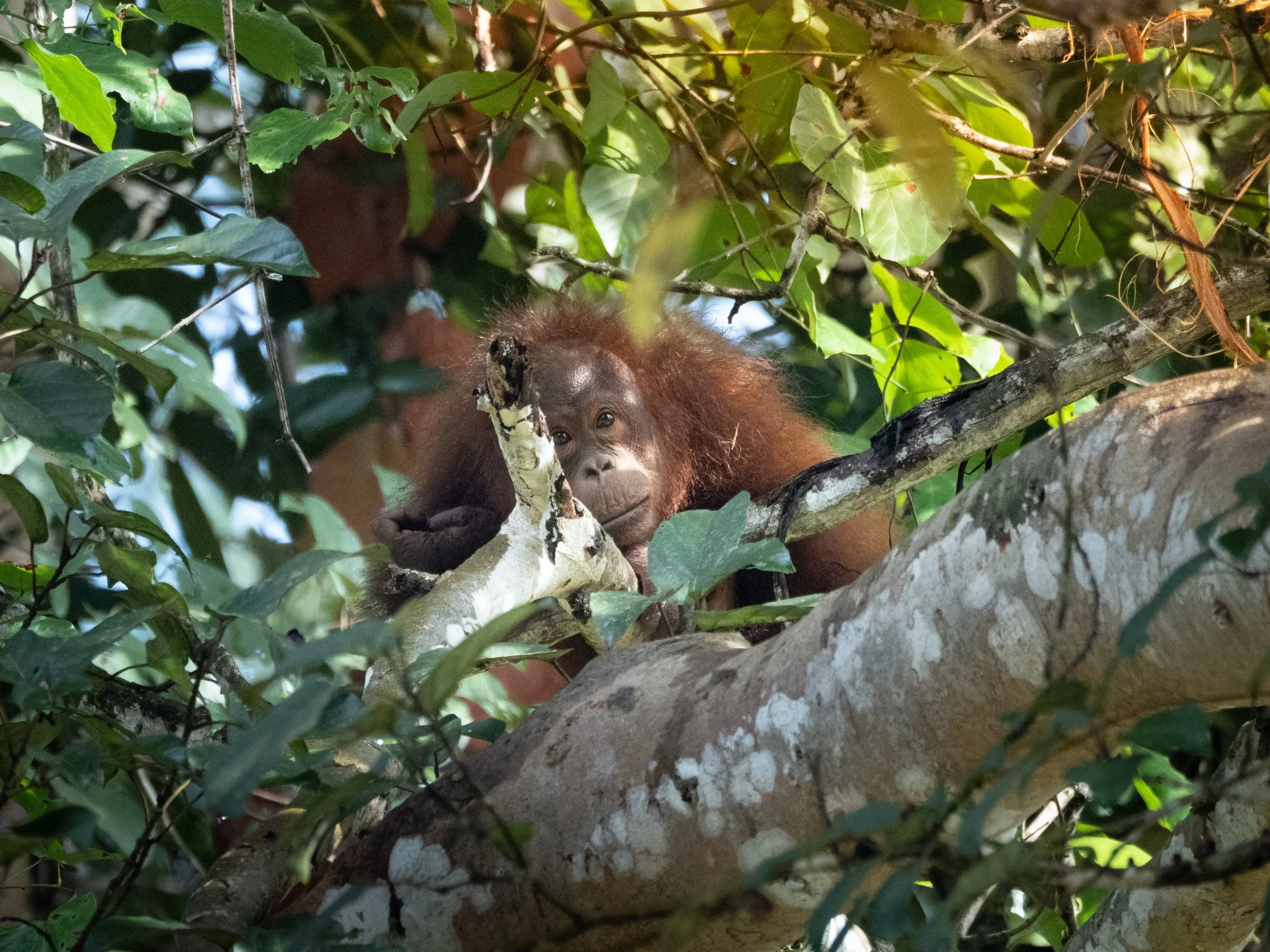
“…I heard that one was feeding in a tree in the swamp just below the house, and, taking my gun, was fortunate enough to find it in the same place. As soon as I approached, it tried to conceal itself among the foliage; but, I got a shot at it, and the second barrel caused it to fall down almost dead, the two balls having entered the body. This was a male, about half-grown, being scarcely three feet high.”
Orangutans, semi-solitary and shy animals, are generally considered to be among the least dangerous of the great apes — compared to potentially violent chimpanzees and usually docile, but incredibly powerful gorillas.¹ Of an orangutan’s leisurely lifestyle, Wallace writes that he “does not leave his bed until the sun has well risen and has dried up the dew upon the leaves. He feeds all through the middle of the day, but seldom returns to the same tree two days running.” Wallace also notes that orangutans “do not seem much alarmed at man, as they often stared down upon me for several minutes, and then only moved away slowly to an adjacent tree.” When they feel threatened, they either retreat away through the trees, or up into the highest branches; from where they can scream and fling things at the source of their displeasure. Wallace, firing off shots into the treetops, certainly aroused their displeasure.
One orangutan, that was “howling and hooting with rage, and throwing down branches,” Wallace shot five times, its dead body slumping into a fork in the branches. Employing some Dayaks to climb up and get it down, Wallace had acquired his first-full grown specimen. However, he wrote with some apparent disappointment that “it was a female, and not nearly so large or remarkable as the full-grown males” — indeed, orangutans are the most sexually dimorphic of the great apes, with males often weighing twice as much as females and often exhibiting large, fatty tissue pads (known as flanges) on the sides of their faces. Nonetheless, the female’s “perfect skeleton” was shipped half a world away from her island home to be displayed in a museum in England.
Just four days later he would kill another adult female with three shots from his gun. But as he and the Dayaks were preparing to carry away her body, they found another orangutan — a baby, only a foot long — lying “face downwards in the bog.” Lifting it up, Wallace noticed that it didn’t appear to be wounded, and after cleaning the mud from its mouth, the infant orangutan began to cry out. With its little hands grasping his beard, Wallace took this orphaned orangutan with him, its dead mother carried in tow.
———
The first few nights with the baby orangutan were much like any new parent’s nights: “very restless and noisy.”
Whenever the baby ape was laid down it would invariably begin to cry, but when “handled or nursed, it was very quiet and contented.” Wallace washed the infant every day, watching as it would “make ridiculously wry faces while the stream was running over its head.” He would dry it and brush its hair, and the baby would be “perfectly happy, lying quite still with its arms and legs stretched out while [Wallace] thoroughly brushed the long hair of its back and arms.”
He fashioned a cradle out of a box, laying down a soft mat at the bottom. But the young orangutan, laying in its cradle, kept reaching out to grab something, struggling about “with its hands up in the air trying to find something to take hold of” and “for want of something else, it would often seize its own feet.” Wallace had to be cautious when he, and particularly his beard, were in reach of the infant's grasping finger, for they “clutched hold of hair more tenaciously than anything else, and it was impossible to free [himself] without assistance.”
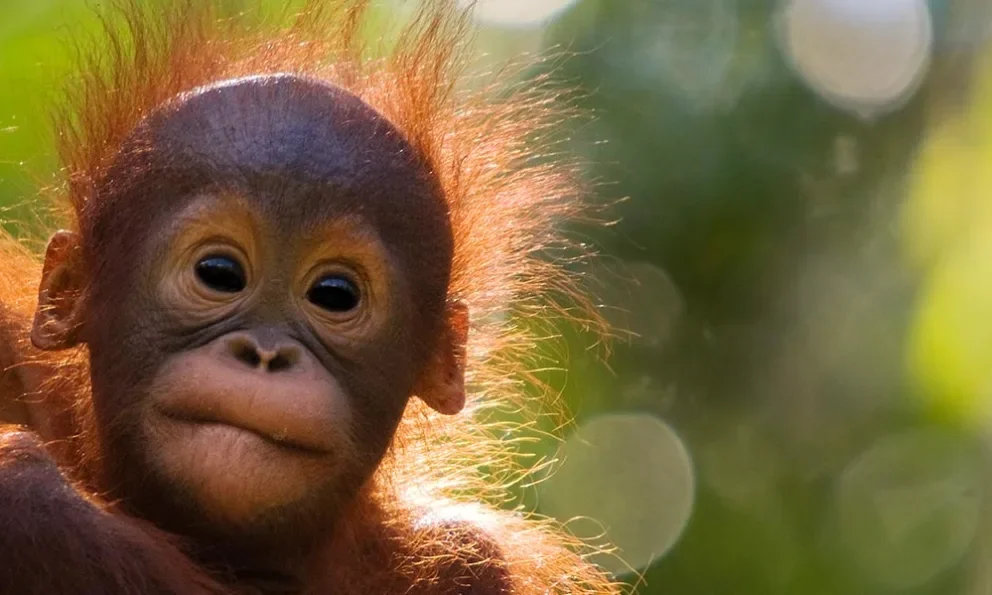
An orangutan in the wild makes itself a nest of leaves and branches, a new one every night, in which it sleeps. A baby orangutan, however, isn’t laid to rest in some cradle of leaves, but clings almost constantly to its mother’s body with its grasping fingers — “habitually bent inwards at the last joint so as to form complete hooks” — allowing the baby to passively hold on even while it sleeps to prevent a potentially fatal slip and fall. Wallace’s orphaned infant likely only survived its tumble from the treetops because it clung so tightly to its mother on the way down.
The infant was likely no more than two months old, and perhaps only a few weeks old, when Wallace found it, given its size and the fact that it had “not a single tooth” and only “a few days afterwards [did] it cut its two lower front teeth.” At this very young age, an orangutan has an extremely strong clinging reflex and, being so dependent, becomes immediately distressed when separated from its mother — or in this case Wallace — crying out, quite like a human baby cries out to get attention.
Wallace’s solution was to “make an artificial mother, by wrapping up a piece of buffalo-skin into a bundle, and suspending it about a foot from the floor.” This fake mother provided the infant with a furry body to cling to, but it was hardly a substitute for the real thing, especially when the infant “began to remember its lost parent, and [tried] to suck.”
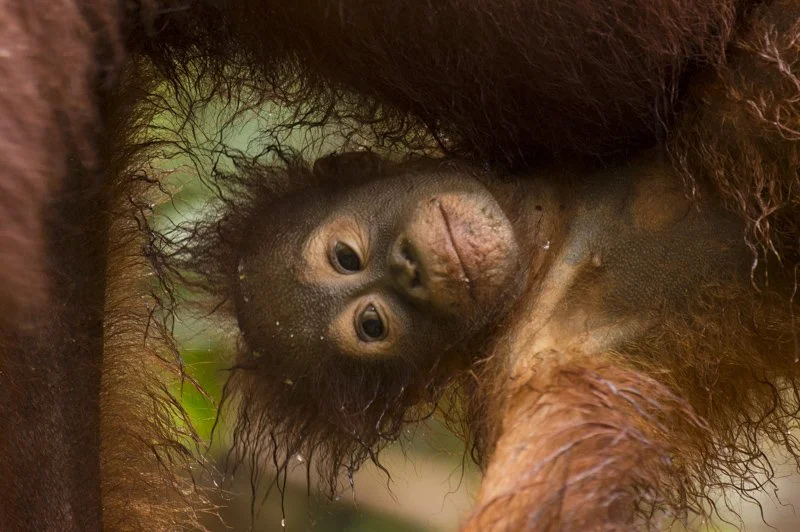
An orangutan depends solely on its mothers milk for at least the first three months of its life. Wallace, lacking milk and failing to find a surrogate mother that could provide any, instead gave his infant “rice-water from a bottle with a quill in the cork,” adding some “sugar and cocoa-nut milk occasionally, to make it more nourishing.” But this was, in Wallace’s own words, a “very meagre diet, [that] the little creature did not thrive well on,” and no wonder, as it would normally be nourished by the rich, fatty, and sugary milk of a real orangutan mother — milk that changes composition across the offspring’s life in accordance to its nutritional needs.
The buffalo-skin “mother,” however, only gave the infant mouthfuls of hair, and the young orangutan “would be greatly disgusted, and scream violently, and, after two or three attempts, [would] let go altogether.” After an incident when the infant got hair in its throat and nearly choked to death, Wallace took apart his attempt at a motherly substitute.
But while the young orangutan may not have been thriving, it was slowly maturing. Soon it would take more solid food from a spoon, in the form of “well-soaked biscuit mixed with a little egg and sugar, and sometimes sweet potatoes” — an imitation of the pre-chewed food an orangutan mother would give her 3–4 month old. But not every meal met the standards of Wallace’s infant, and it would often make its preferences be known: “The poor little thing would lick its lips, draw in its cheeks, and turn up its eyes with an expression of the most supreme satisfaction when it had a mouthful particularly to its taste. On the other hand, when its food was not sufficiently sweet or palatable, it would turn the mouthful about with its tongue for a moment as if trying to extract what flavour there was, and then push it all out between its lips.”
Wallace, during his expedition in the remote rainforest wilderness, had essentially taken on the care of an infant; one that would often “set up a scream and kick about violently, exactly like a baby in a passion.” And after just three weeks under Wallace’s care, this infant orangutan — already a handful, requiring regular feeding, daily washing, and near-constant attention — would receive an unlikely sibling.
———
Orangutans are far from the only primates on Borneo.
There are white-bearded and grey gibbons that brachiate through the trees using their long and slender arms, leaf monkeys with fur of silver and fiery orange, nocturnal tarsiers and slow lorises with massive eyes, and endemic proboscis monkeys, whose males have “fleshy nose[s] longer than that of the biggest-nosed man.” Yet one of the island’s most familiar primates is also among the most widespread beyond Borneo.
The long-tailed macaque, also known as the crab-eating macaque, ranges across most of Southeast Asia; from the mainland peninsula to the maritime islands. If you spot a monkey in this region, chances are it's a long-tailed macaque.²
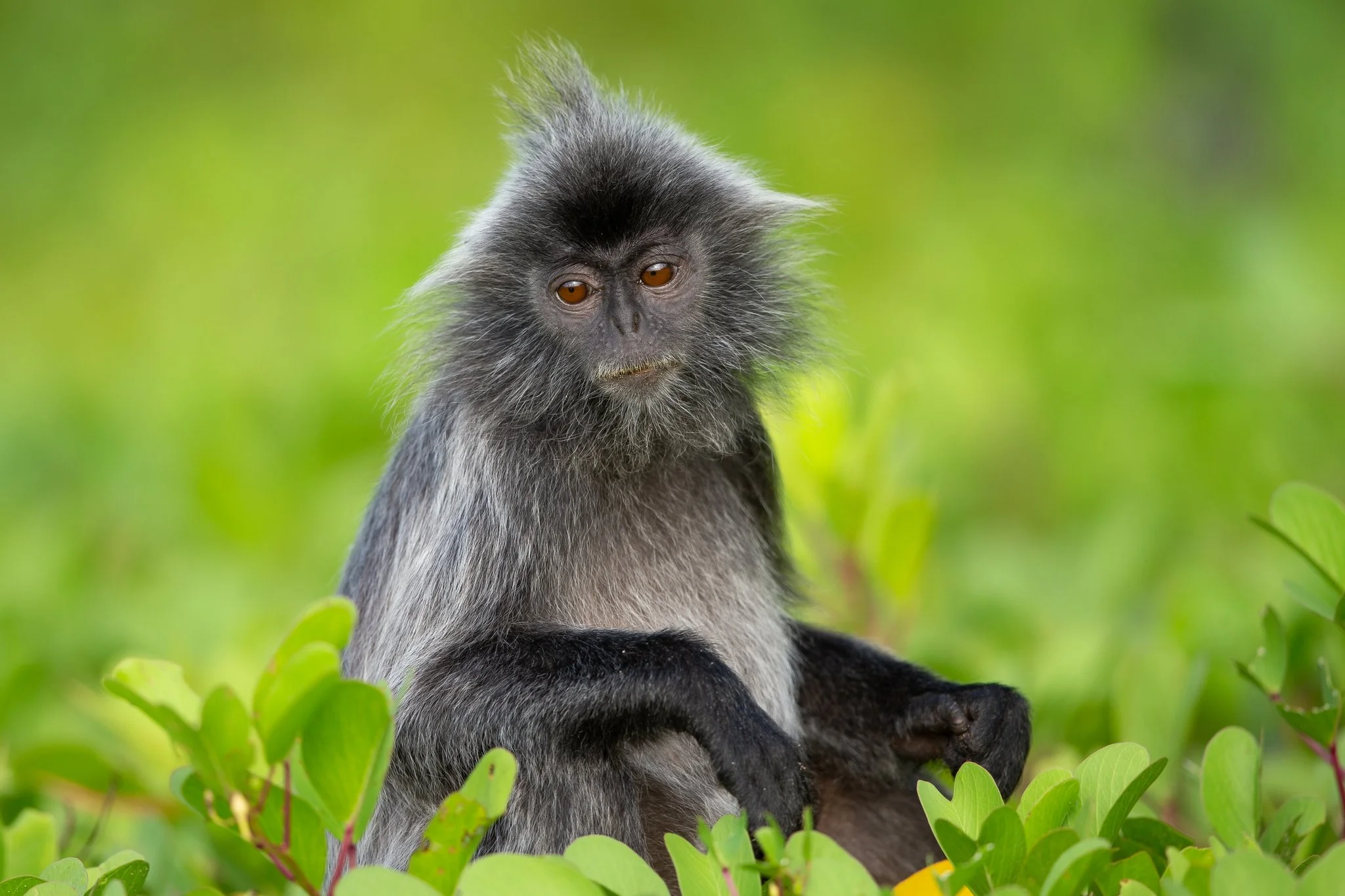
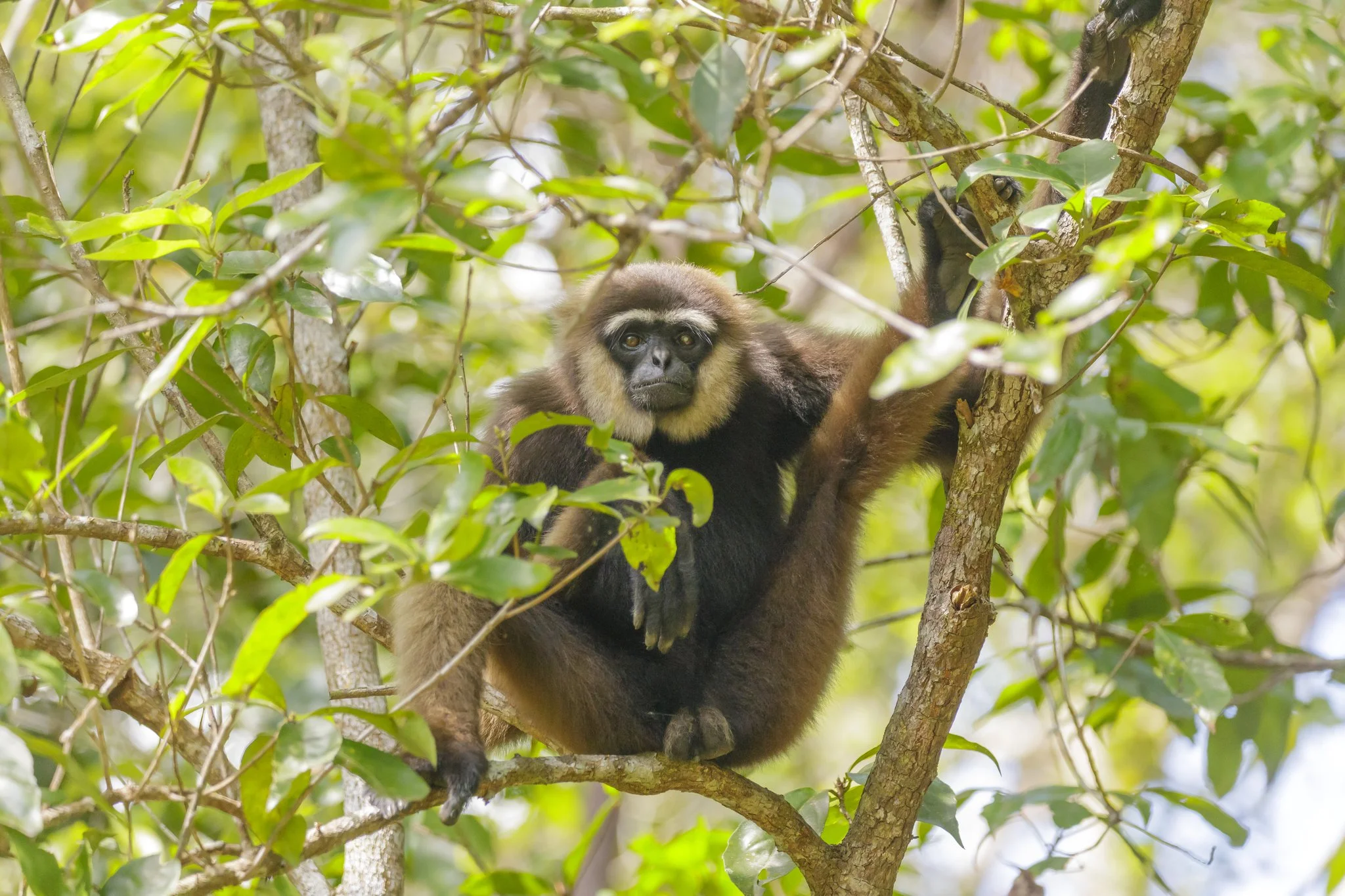
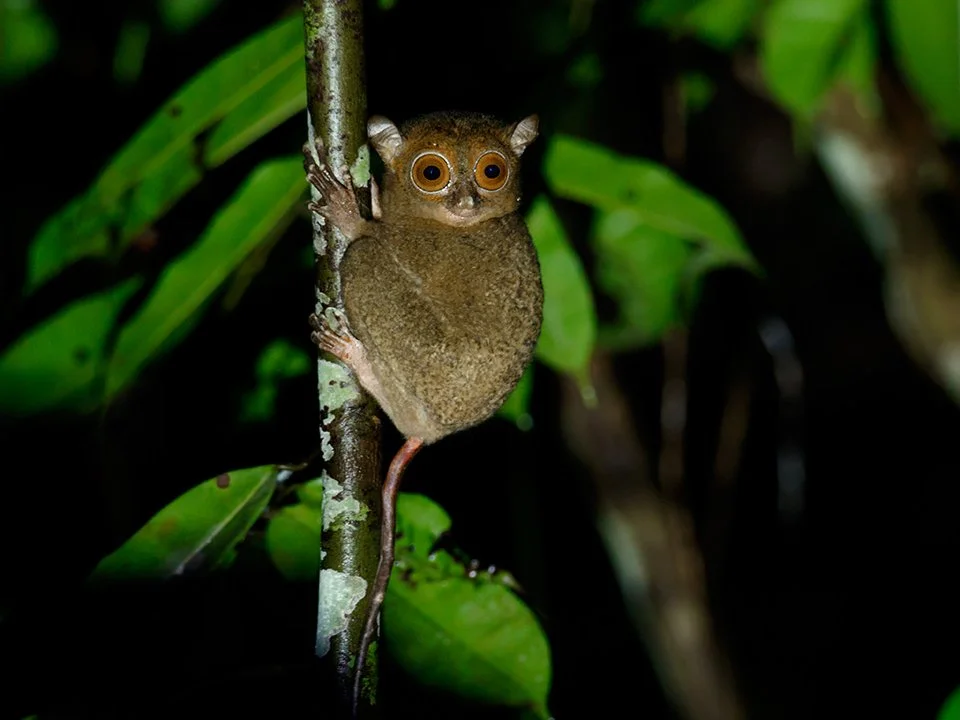
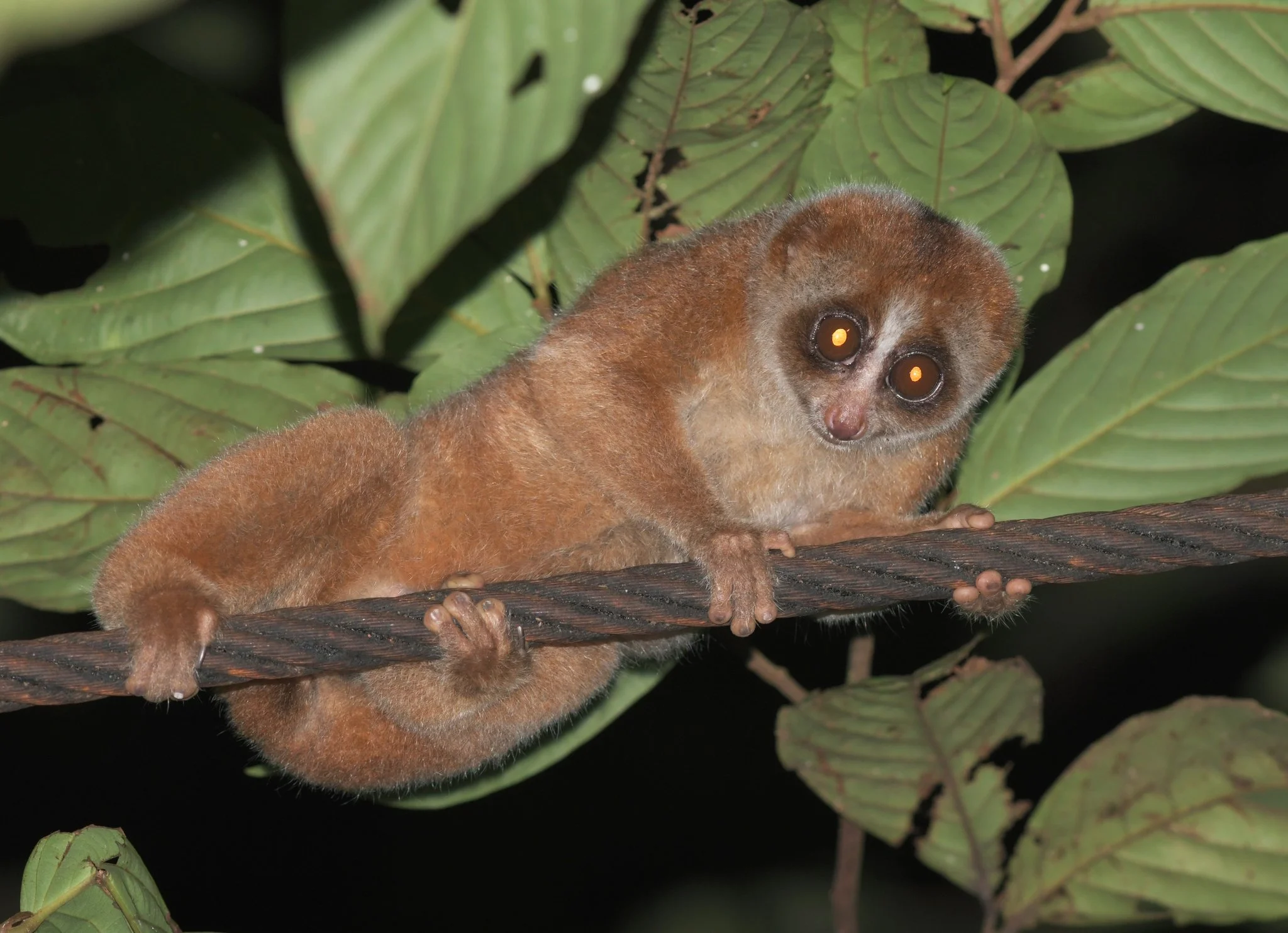
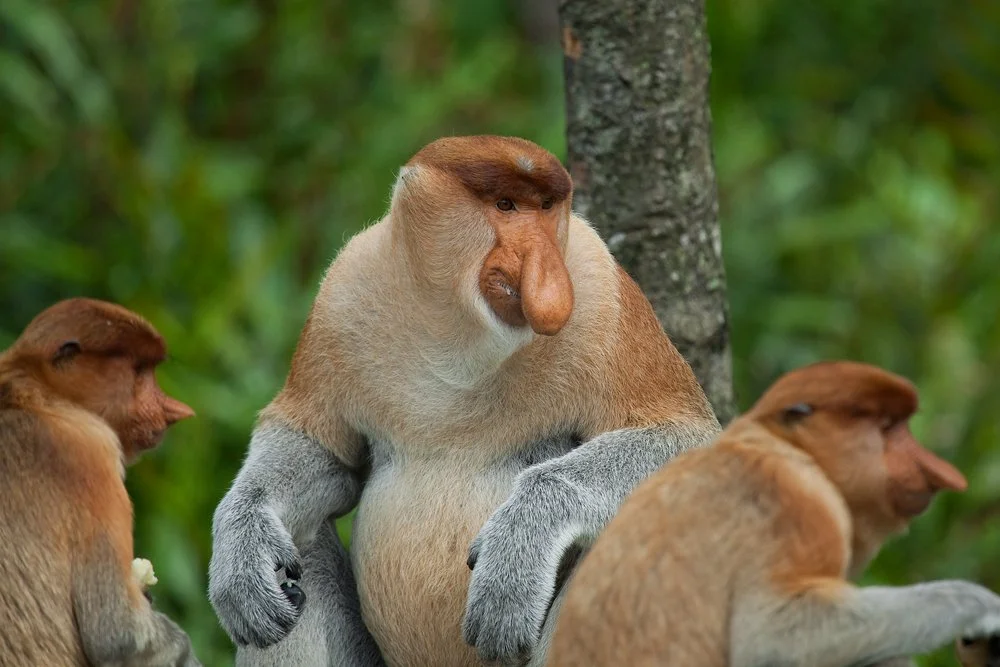
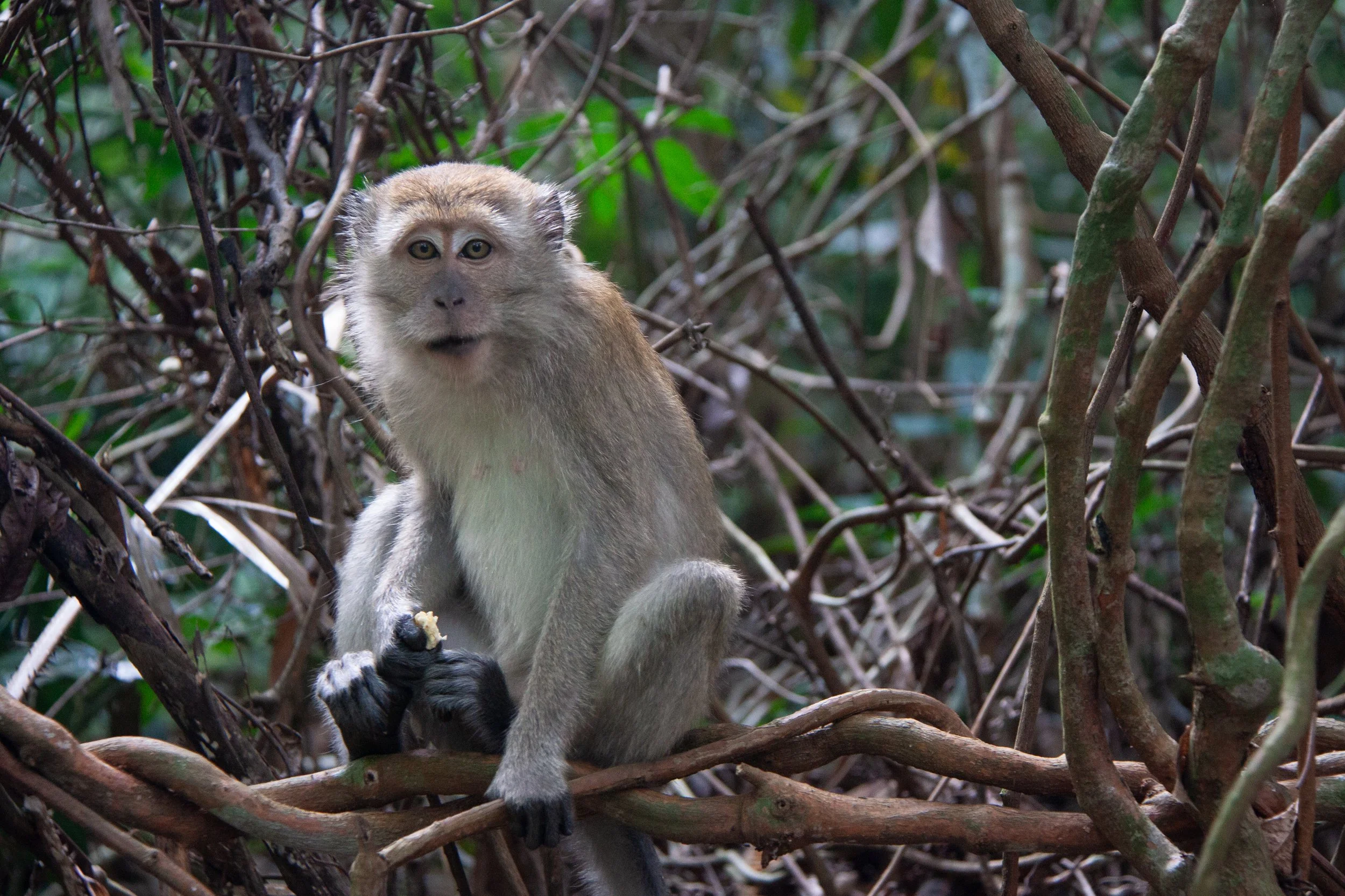
Given the solitary nature of wild orangutans, these great apes likely avoid macaques travelling in their large and noisy troops — which can number between 20 and 100 individuals.³ And yet, Wallace writes that the young orangutan and his new macaque sibling “immediately became excellent friends,” recounting how the “little monkey would sit upon the other's stomach, or even on its face, without the least regard to its feelings” and “would pick off what [food] was left sticking to the Mias' lips, and then pull open its mouth and see if any still remained inside; afterwards lying down on the poor creature's stomach as on a comfortable cushion.”⁴
“The little helpless Mias would submit to all these insults with the most exemplary patience, only too glad to have something warm near it, which it could clasp affectionately in its arms.”
These were two orphans finding solace in one another, despite their difference of species.
But the differences were there.
While macaques and orangutans belong to the same order of Primates, they are members of different families within that order. The macaques belong to the family Cercopithecidae, the Old World monkeys, alongside savannah and leaf monkeys, colobuses and mangabeys, baboons and mandrills, snub-nosed monkeys and the pendulous-nosed proboscis monkey. The orangutans, meanwhile, are members of the family Hominidae, the so-called great apes, along with gorillas, bonobos, chimpanzees, and us humans.
The macaque, although “it could not have differed much in age” with the young orangutan, was noticeably far more active, coordinated, and independent.
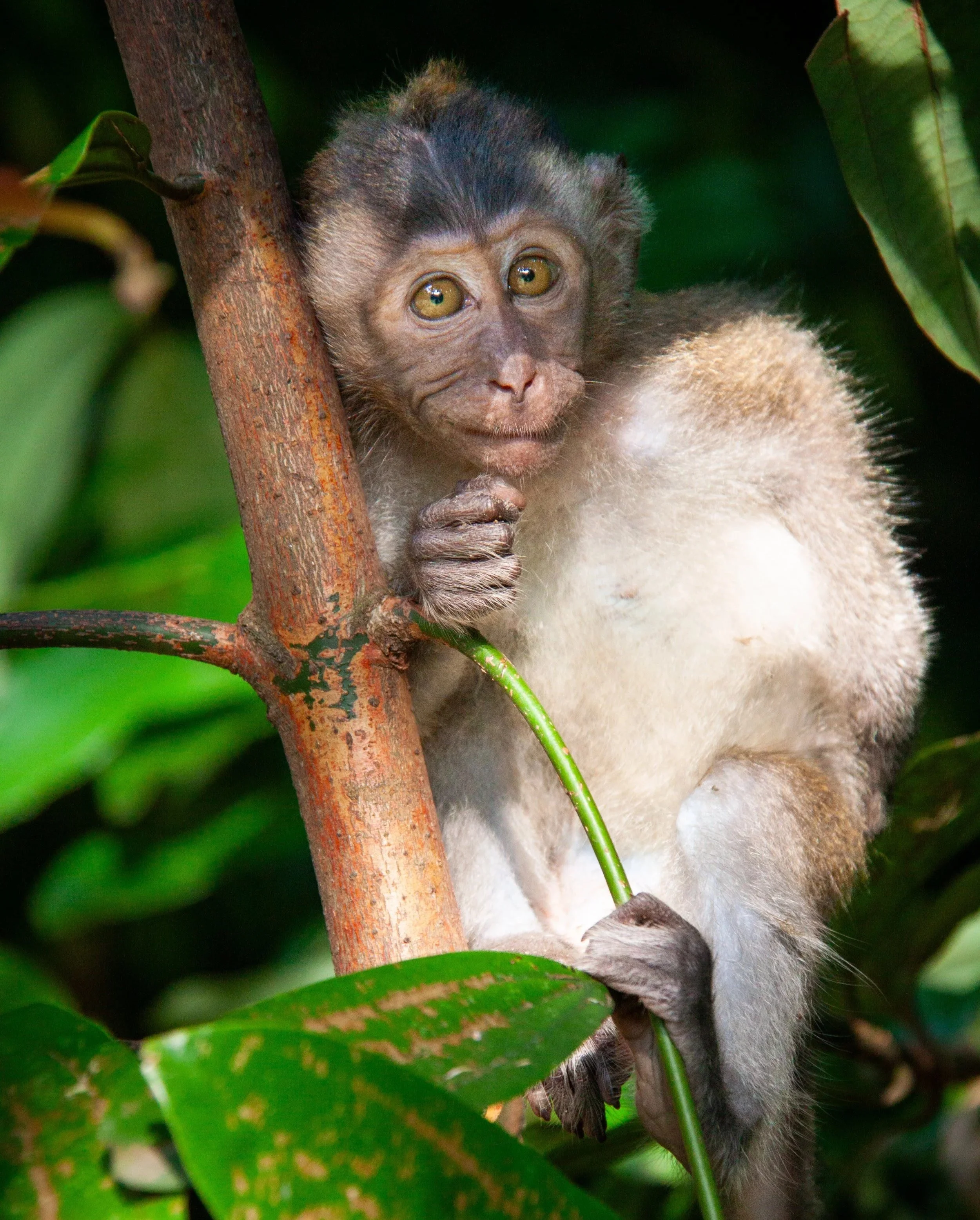
“The Mias, like a very young baby, lying on its back quite helpless, rolling lazily from side to side, stretching out all four hands into the air, wishing to grasp something, but hardly able to guide its fingers to any definite object; and when dissatisfied, opening wide its almost toothless mouth, and expressing its wants by a most infantine scream. The little monkey, on the other hand, in constant motion, running and jumping about wherever it pleased, examining everything around it, seizing hold of the smallest object with the greatest precision, balancing itself on the edge of the box or running up a post, and helping itself to anything eatable that came in its way. There could hardly be a greater contrast, and the baby Mias looked more baby-like by the comparison.”
This difference of ability, despite the two primate’s closeness in age, is the result of very different life histories.
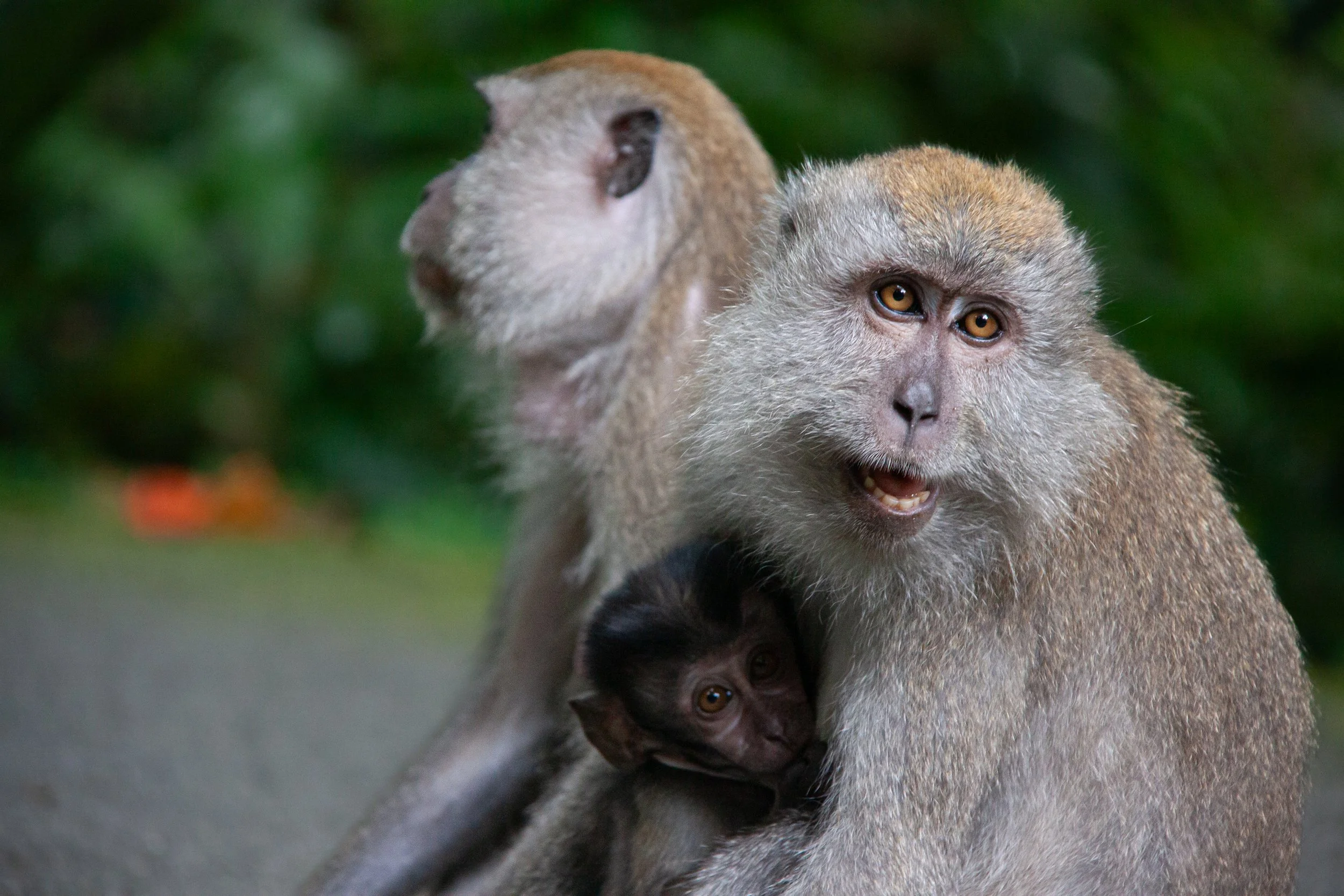
The gestation period of a long-tailed macaque typically lasts between five-and-half to six months. From birth, a macaque infant is immersed in a noisy, multi-generational society. For the first few months it may cling to its mother wherever she goes, but by months three or four it begins to wander on its own. By about thirteen to fourteen months it has weaned off its mothers milk — at which time its mother may have another child — and it reaches sexual maturity around the age of six if it's a male, and age four if it's a female.
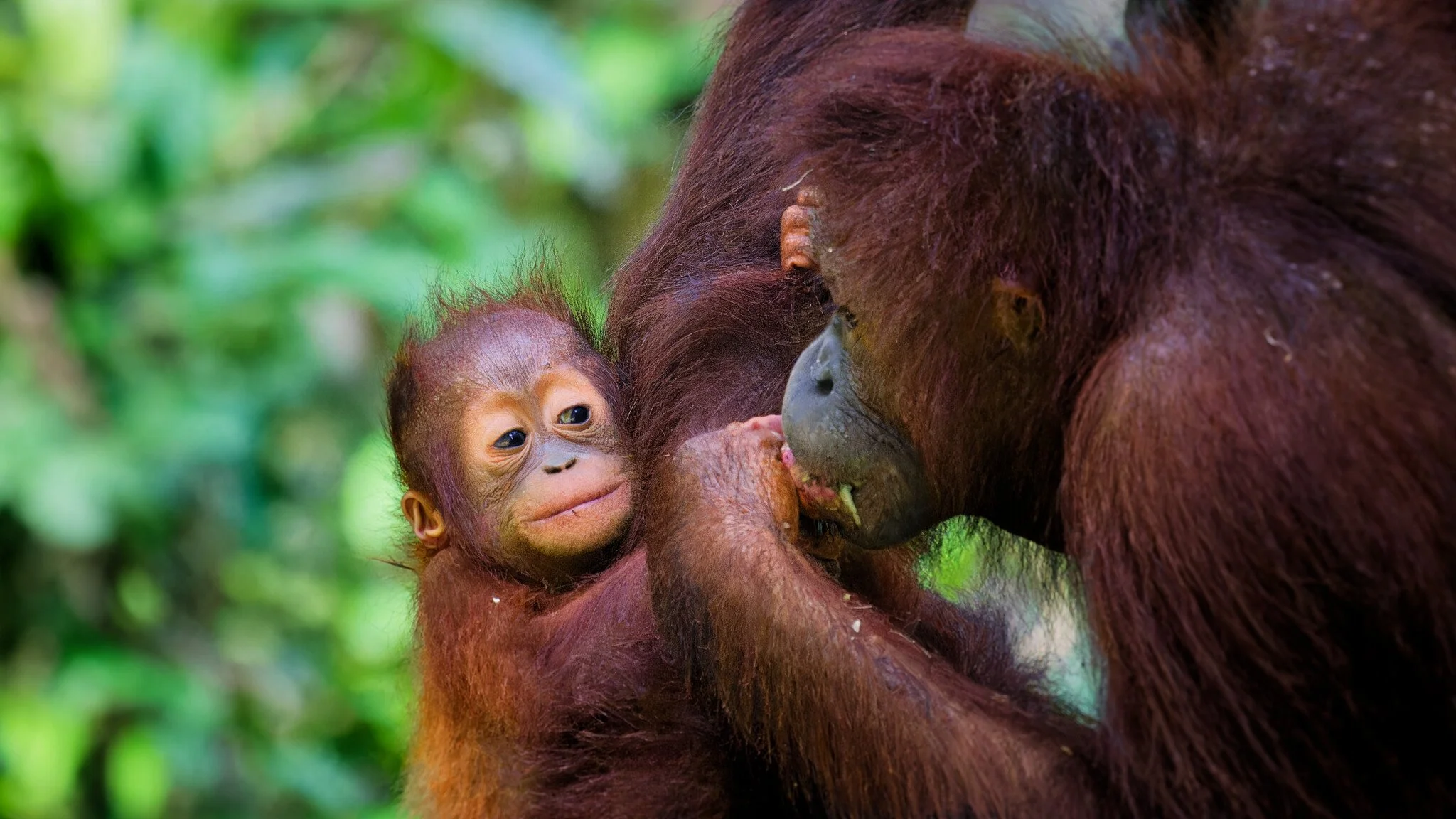
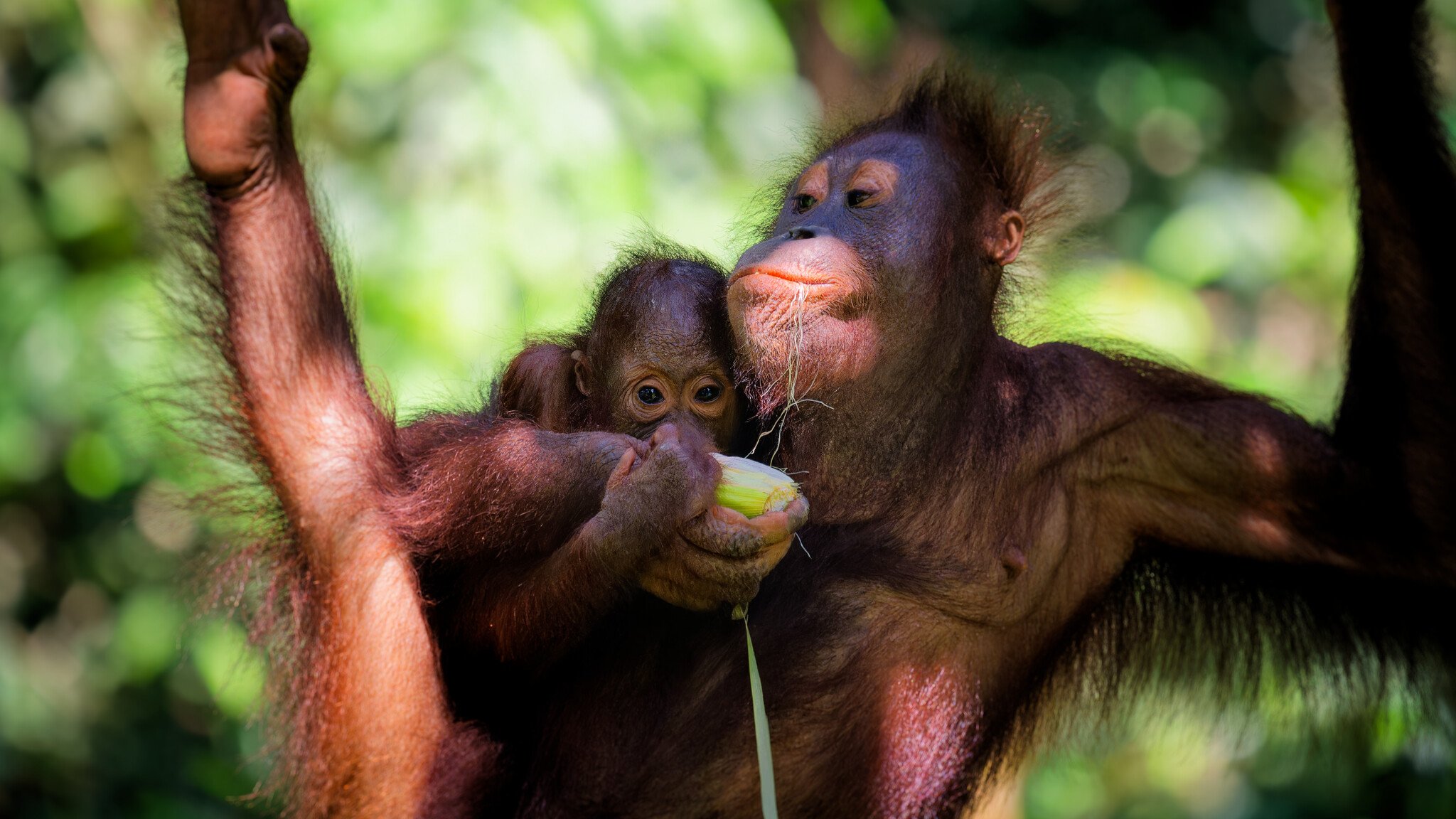
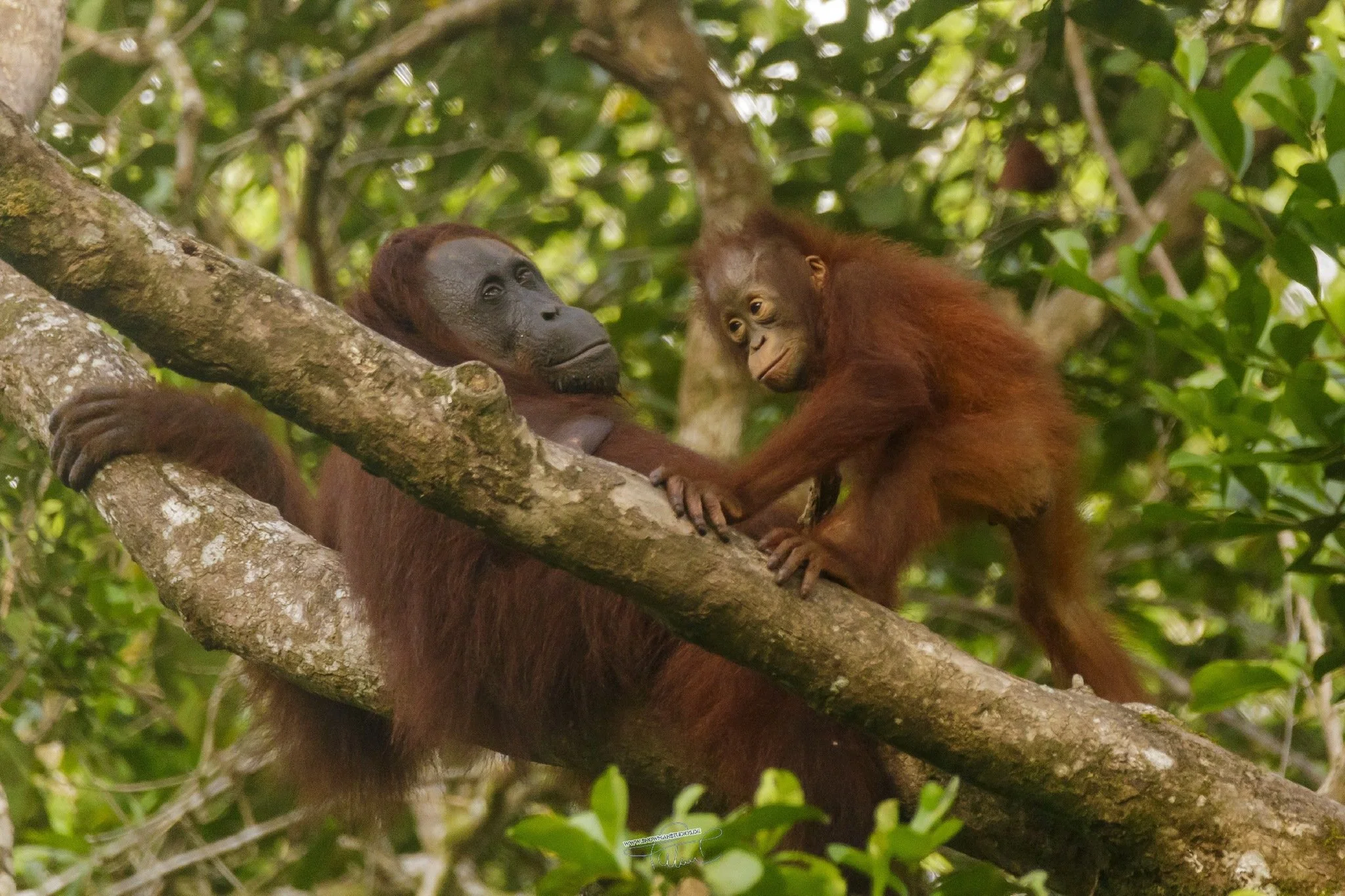
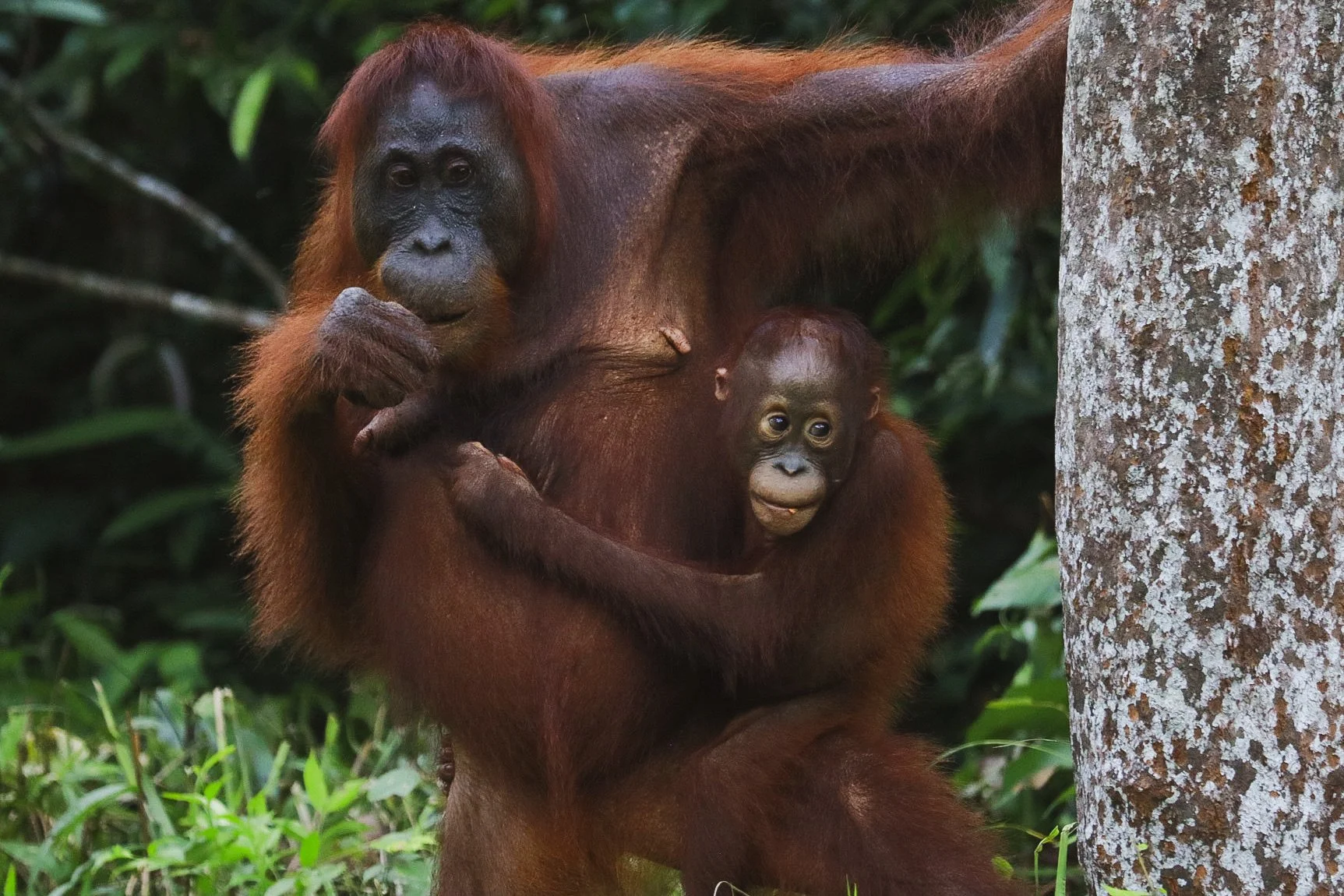
In contrast, an orangutan’s gestation lasts around eight-and-a-half or nine months — similar to humans — and the infant is not born into a bustling troop of aunts, uncles, cousins and playmates. A newborn orangutan’s entire world is its mother. The infant clings constantly to its mother’s body, day and night, rarely leaving her grasp for the first six to eight months of life. For the first two years, the young orangutan is completely dependent on its mother for transport and food, clinging to her fur as she clambers through the trees, nourished by her breast milk.
And while a young orangutan will begin to climb more confidently at the age of one-and-a-half, and already begins to try solid food at three or four months (doing so consistently at about a year old), a mother may keep carrying her offspring until it's five years old and feeding it milk until the age of eight. In the end, an orangutan may remain with its mother for up to nine or ten years, before finally striking out on its own — and if the offspring is a female, may keep returning to visit her mother until the age of fifteen, around the time she might have her own first offspring.
An orangutan is not a long-horned beetle or birdwing butterfly, whose generation times range from a few years to a few months; it's not a flying frog, which can lay 800 eggs at a time; or a moonrat, capable of producing two litters a year, with a gestation time of just over a month for each. It’s not even a macaque, whose care extends for maybe a year-and-a-half, and reaches sexual maturity between the ages of three and six years.
Orangutans have the longest child dependency and longest birth interval — as a mother only cares for one child at a time — of any non-human primate, and, consequently, among the slowest reproduction rates of any mammal alive today.
“When I had had it [the infant orangutan] about a month,” writes Wallace, “it began to exhibit some signs of learning to run alone. When laid upon the floor it would push itself along by its legs, or roll itself over, and thus make an unwieldy progression. When lying in the box it would lift itself up to the edge into almost an erect position, and once or twice succeeded in tumbling out.”
At this point, Wallace’s orangutan was likely no more than four or five months old. In the natural state of things, it would still be clinging constantly to its mother and rely almost exclusively on her rich milk — very much an infant, like a human of the same age would be.
“When left dirty, or hungry, or otherwise neglected, it would scream violently until attended to… If no one was in the house, or its cries were not attended to, it would be quiet after a little while, but the moment it heard a footstep would begin again harder than ever.”
Taking this infant into his care, Wallace took on a great responsibility. He was attempting to replace the longest-lasting and most intensive mother–infant relationship in the animal kingdom — one that requires near-constant contact, engagement and education, a specific and nourishing diet, and that endures for at least seven years.
———
“After five weeks it cut its two upper front teeth, but in all this time it had not grown the least bit, remaining both in size and weight the same as when I first procured it. This was no doubt owing to the want of milk or other equally nourishing food.”
The young orangutan would sometimes become sick from its diet of “rice-water, rice, and biscuits…and the expressed milk of the cocoa-nut,” suffering attacks of diarrhoea. Wallace treated its upset stomach with castor oil, which “operated well, and cured it,” but soon the infant fell more seriously ill, with symptoms of “intermittent fever, accompanied by watery swellings on the feet and head.”
It may well have caught something from the humans it was living among. Orangutans are our very close relatives — in the same family, Hominidae, and sharing 96.4% of our DNA — which unfortunately means they’re also susceptible to many of the same diseases. Hepatitis and measles, as well as respiratory infections like tuberculosis and coronavirus are easily transmitted to orangutans that live among humans. Having evolved apart from dense social contact, orangutans have had less exposure to crowd-borne pathogens, and so these diseases are often more lethal to them. Weakened by an insufficient diet, even a mild infection could be serious.
Wallace’s infant orangutan soon “lost all appetite for its food, and, after lingering for a week a most pitiable object, died…”
It had been under Wallace’s care for three months. These were three months of snatching at beards, pulling wry faces at Wallace’s cooking, and playing with its adopted monkey sibling. “It had afforded me daily amusement,” Wallace reminisces, “by its curious ways and the inimitably ludicrous expression of its little countenance.” But they were also three months of crying and grasping for comfort, of meagre meals, and of illness.
Knowing an orangutan's life history, the end of this story — of Wallace and his adopted orangutan — should come as no surprise. The infant didn’t have the proper diet and, perhaps just as crucially, it didn't have a strong maternal relationship.
Over an orangutan's prolonged childhood, a mother teaches her offspring everything there is to know about being an orangutan. She teaches her child what to eat, how to find it, and when to eat it. She teaches them to climb, to judge distances and test branches, and where in the forest to go. She teaches them how to build nests for sleeping and, in some cases, how to craft and use tools.⁵ She teaches her child the entire forest and how to make use of it. She is her child’s only caretaker, and only teacher.
Had Wallace been able to raise the infant orangutan in good health, he still could not have taught it how to be an orangutan, even if he wanted to — which, it seems, he did not. “I much regretted the loss of my little pet,” he writes, “which I had at one time looked forward to bringing up to years of maturity, and taking home to England.”
The last time Wallace mentions his young orangutan, his amusement and affection towards it give way to his mission. The infant would never leave Borneo alive, but it would be brought to England as a set of statistics, and as a specimen.
“Its weight was three pounds nine ounces,” Wallace notes dispassionately, “its height fourteen inches, and the spread of its arms twenty-three inches.” It was measured, and its skin and skeleton were preserved.
In the process, Wallace discovered that it had broken an arm and a leg during its fall from the trees. Had Wallace not found it and given it care, it surely would have died. Had Wallace not killed its mother, it would have almost certainly lived.
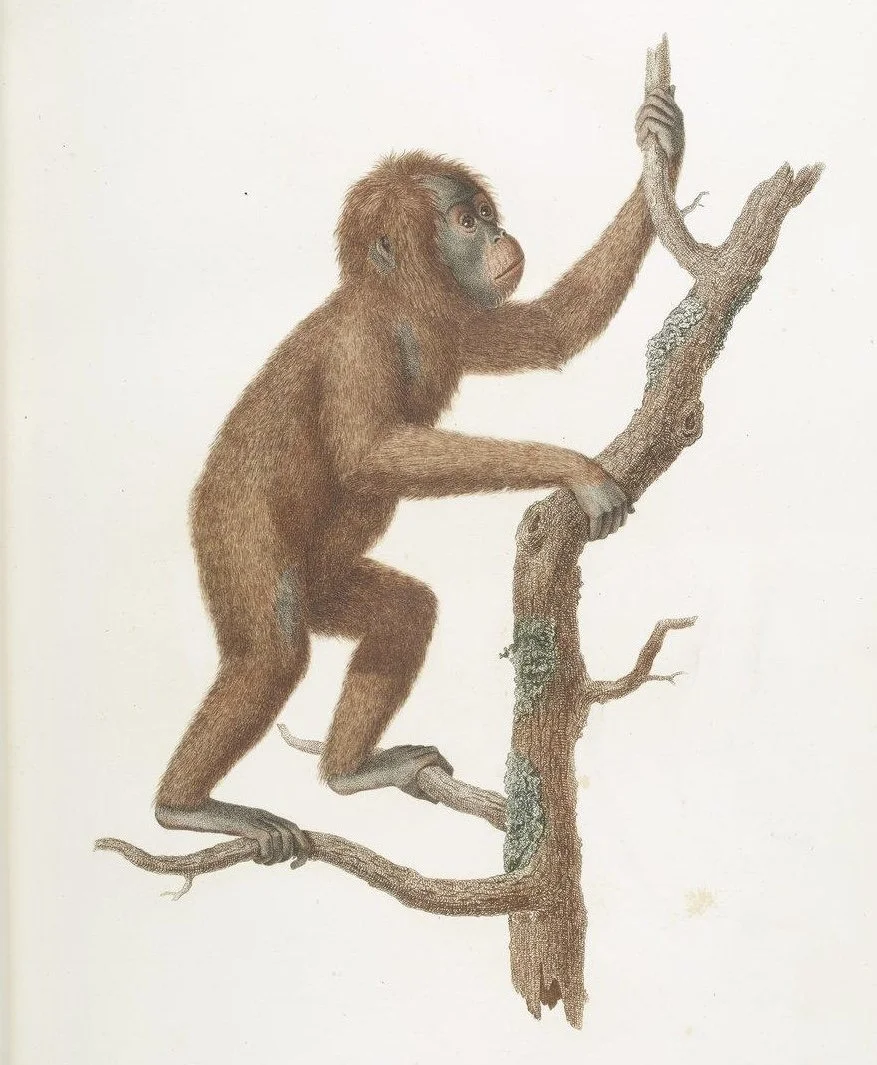
“Its weight was three pounds nine ounces, its height fourteen inches, and the spread of its arms twenty-three inches. I preserved its skin and skeleton, and in doing so found that when it fell from the tree it must have broken an arm and a leg, which had, however, united so rapidly that I had only noticed the hard swellings on the limbs where the irregular junction of the bones had taken place.”
(Jean-Baptiste Audebert / Histoire naturelle des singes et des makis)
———
Alfred Russel Wallace was, first and foremost, a naturalist.
At that time, in the mid-19th century, being a naturalist largely entailed collecting specimens to bring back home. A botanist would cut or uproot plants, often pressing and drying them for the sake of preservation. A zoologist would sometimes catch and transport live animals, but, for the most part, he would kill them — pinning insects to boards, sealing bodies in jars of spirits, mounting skins, or reducing animals to skeletons fit for shipment and study.
Whereas a naturalist today may shoot wildlife with a camera and capture them using a camera trap, back then, a naturalist shot wildlife with firearms and captured them in nets and snares.
Wallace and his contemporaries operated within a culture that viewed the collection of animal specimens as both scientific necessity and professional duty. These past practices, judged through a modern moral lens, come out looking pretty cruel and destructive — in most cases today, traipsing into the jungle and shooting exotic birds would make you a poacher, not a scientist. But focusing solely on morality risks missing a more concrete, and perhaps more important question. Regardless of intent or historical morality, expeditions like Wallace’s still had some tangible impact on the places they went and species they encountered. What was that impact?
During his Malay Archipelago expedition, Wallace collected a total of 125,660 specimens.⁶ This is not a small number. However, the majority of his collection consisted of small invertebrates: “83,200 beetles, 13,100 butterflies and moths, 13,400 other insects” (as well as 7,500 "shells"). Still, he collected some 8,050 bird specimens and 310 mammals, which doesn’t include those animals he may have injured, but could not collect.
While this is a pretty devastating tally, considering each one marks a death, it would not have appreciably reduced animal populations in the tropics, especially considering the breadth of space (some 22,500 km/14,000 mi) and time (eight years) over which it was done.
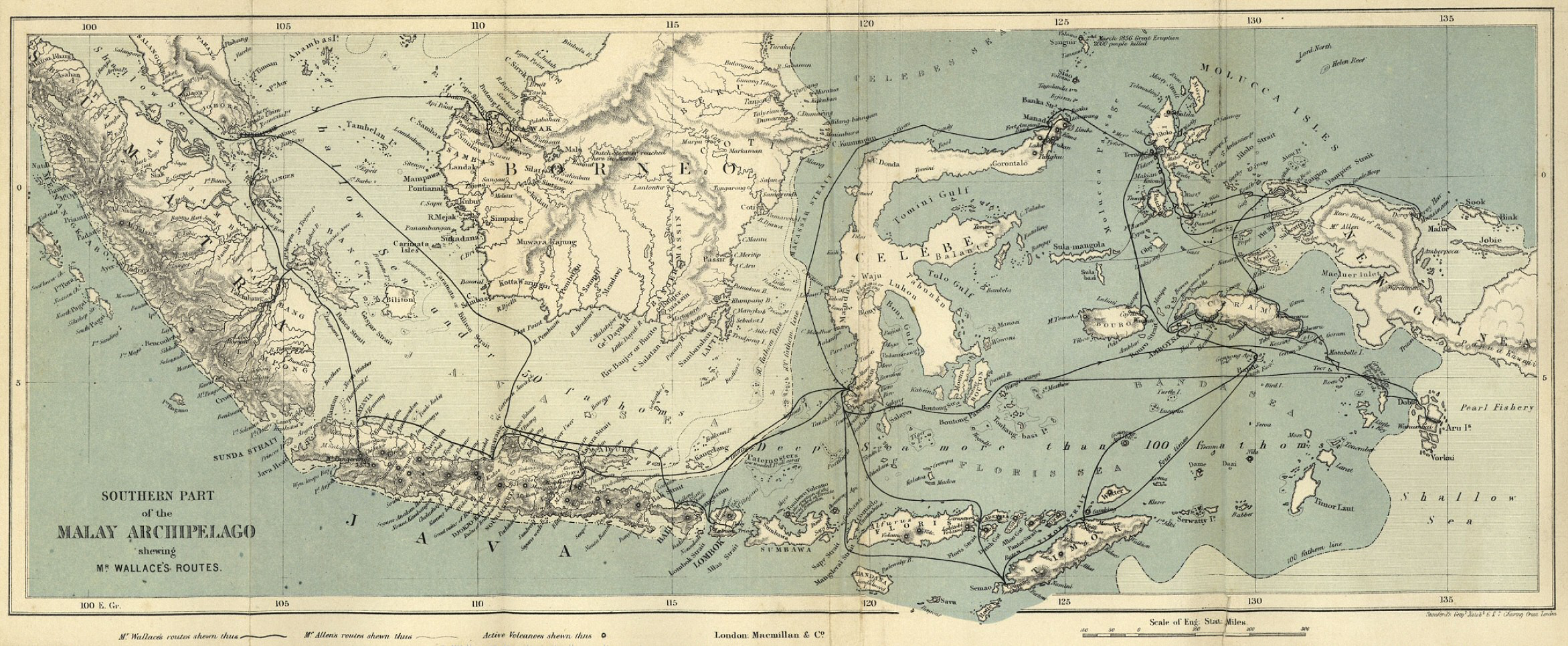
A map of the “Malay Archipelago.”
(Macmillan 1869 / The Malay Archipelago)
In The Malay Archipelago, Wallace’s book recounting this expedition, he describes collecting around twenty individual orangutans — about ten of which he personally shot, among them the mother of the infant he adopted. The emotional toll was certainly much heavier than the ecological one.
Today, between 200 and 500 orangutans are snatched from Indonesian Borneo for the illegal pet trade every single year. The events that led to Wallace acquiring his infant orangutan are now tragically all too common, the only differences being intention and scale. The vast majority of captive orangutans in the pet trade are young orphans whose mothers have been killed.
If an infant survives its impact with the forest floor, it is pulled from its mother's limp body and stuffed into a rice sack. It sits in a plastic crate or wire cage for hours or days as it's transported by motorbike, truck, and/or boat. It’s fed a diet of bananas, rice, and sweet tea or condensed milk, causing bloating, diarrhoea, and vitamin deficiencies. Traumatised by its separation from its mother, the infant may be given the “comfort” of a cloth or blanket to cling to. Alternatively, its hands may be tied to prevent clinging, its teeth filed or broken to prevent biting.
This kidnapped infant, and the majority of orangutans in the pet trade, will likely meet the same end as did Wallace’s orphan — whether they survive to be sold or not.
Hundreds of orangutans suffer through this experience, and die from it, every year. But the illegal pet trade casts an even larger and bloodier shadow than that initial statistic suggests.
Wallace recounts his second attempt to collect an orangutan specimen: a young male who had been shot twice, fallen from a tree twice, and broken his arm. The Dayak hunters moved in to restrain the animal. But an orangutan's lanky and pot-bellied build belies an unexpected power — an adult is estimated to be five to seven times stronger than a human. The male, half-grown and injured, still proved too strong for the Dayaks and they were forced to release him lest they be bitten. “It now began climbing up the tree again,” writes Wallace, “and, to avoid trouble, I shot it through the heart.”
If given no other choice, an orangutan will fight to stay alive, and a mother will certainly fight to protect her child. For every infant orangutan caught alive, it's estimated that between one and six orangutans are killed in the process — to avoid trouble.
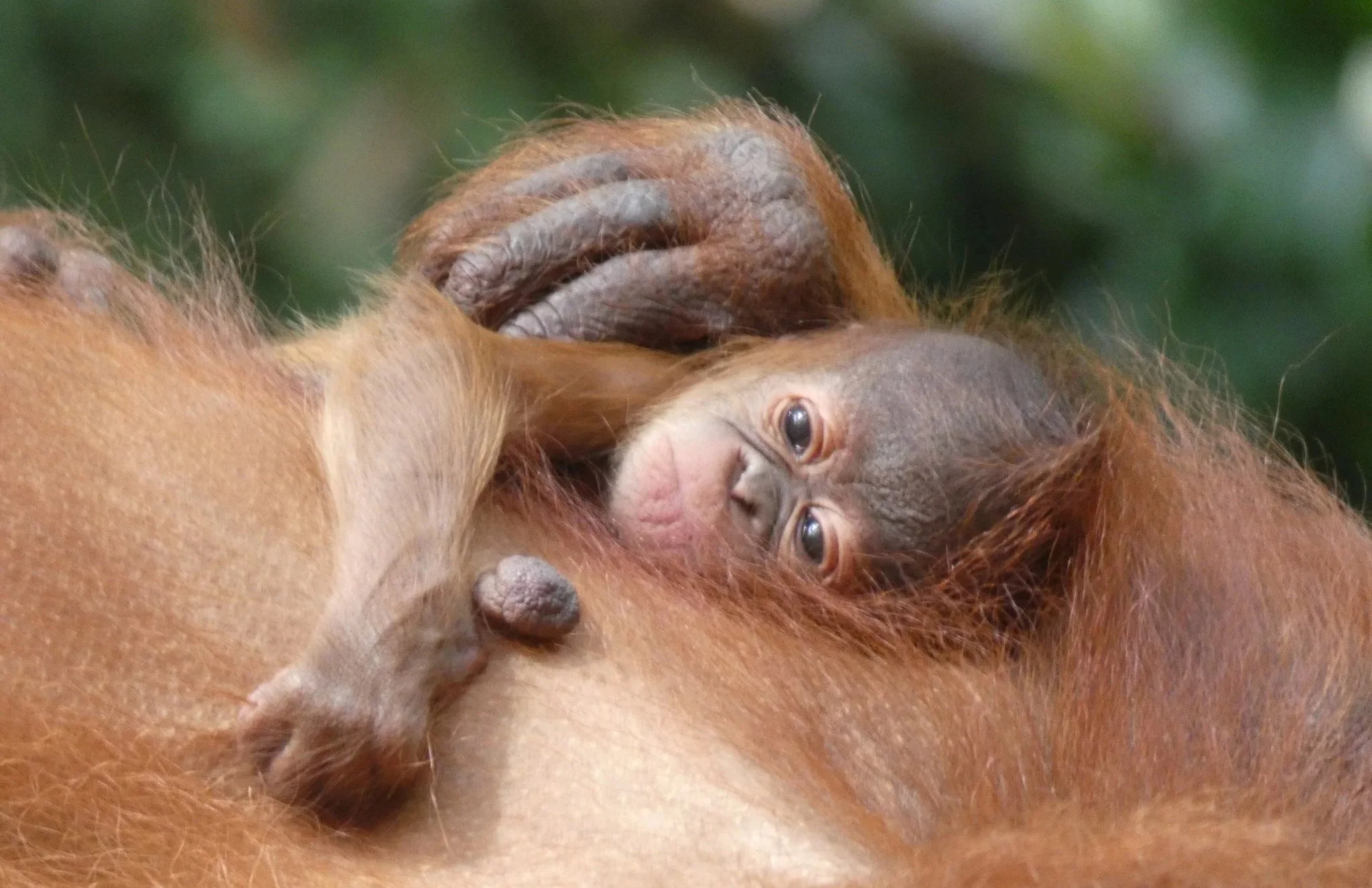
Those orangutans that do survive their capture and transport, and live long enough to be sold as a pet, will eventually grow up. In the vast majority of cases, they are then either sold on, abandoned, or outright killed. A small, lucky minority are taken into the care of a sanctuary.
———
A rescued orangutan, arriving at a sanctuary underweight, sick, and distressed, is first put into quarantine, usually for a period of around 30 days.
External injuries are treated and patched up. Blood, feces, and urine are analysed. Tests are done for hepatitis, tuberculosis, and other diseases, and intestinal parasites are removed. Quarantine is a distressing time, especially for an infant craving contact: some rock in the corners of their cages out of stress, some refuse to eat solid food at first, while others won’t let go of the first human that interacts with them. And quarantine is profoundly unnatural, consisting of a simple sterile cage, humans in masks, strictly scheduled meals and tests. But it’s absolutely necessary to treat any health issues a new arrival may have, and prevent any illnesses they may have had from spreading to other orangutans at the sanctuary.
Once a new arrival has been checked and confirmed healthy, they’re moved into an indoor-outdoor enclosure with climbing frames, ropes, hammocks, and tyres. There is constant access to water, shade, and soft surfaces to rest or sleep on. Here they also meet other orangutans their age.
Orangutans are exceptions among the great apes, and among primates in general, in that — save for mothers and their young — they are mostly solitary throughout their lives.⁷
In the wild, there are no orangutan daycares where mothers can drop off their toddlers.
There are instances where adolescents form temporary groups that travel together, or situations where multiple orangutans must share a large fruiting tree like patrons tolerating one another at a buffet, but, in most cases, young orangutans generally don’t socialise with anyone but their mothers. Nonetheless, if you put a bunch of orangutan toddlers into a room (or enclosure), they will cling to one another, wrestle, and play-fight as if they were the most social of animals. These orphans find bonds in one another just as Wallace’s orangutan did with the young macaque.
But playmates can’t replace a maternal bond, and being so desperate for a mother’s love, young orangutans at a sanctuary often bond with the closest thing to a mother they have: their caretakers. The worry, however, is that orangutans will get too attached to their caretaker, and take after them — becoming “humanised.”
One method to remedy this is for caretakers to minimise any unnecessary contact, although this can be difficult with clinging infants. Another is to enroll young orangutans in what some sanctuaries call “forest school.”
This is where they’re taught how to be an orangutan. They’re immersed into the rainforest environment, surrounded by its sights, sounds, and smells, and free to go where they please (under supervision, of course). They’re taught how to find and eat the food that naturally grows in the rainforest — each new food item tallied for every orangutan “student.” They’re taught to move from branch to branch, to build leaf nests, and to fashion and use tools. They’re given all the lessons their mothers would have given them, over the seven to nine years they would have had together.
More than 1,200 orangutans have been brought into Borneo Orangutan Survival Foundation (BOSF) rehabilitation centres over the past three decades. They are well fed, comfortably housed, provided with enrichment, and given the best medical care. But sanctuaries aren’t really a solution. They’re necessary, to be sure; they save thousands of orangutans from short and awful lives in captivity. But while they offer rescue, they can’t provide full restoration.
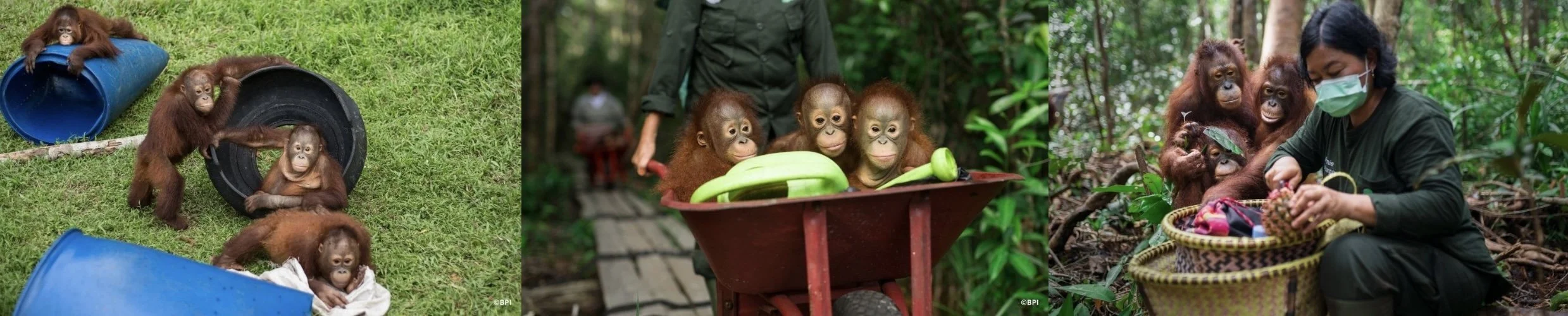
A portion of orangutans won’t ever be suitable for release: nearly 200 remain in permanent care at BOSF sanctuaries because they are too old, sick, or behaviourally damaged to return to the wild. Those that are judged fit to return to the wild, despite the best efforts of their caretakers, still carry on their hunched shoulders the weight of their histories: the loss of their mothers, abuse by their captors, and absence of a natural childhood and education.
Sanctuaries have to exist because of a much larger failing.
If the current state of affairs on Borneo continues, there will always be more orphans than sanctuaries can ever hope to raise, right up until there are none left at all.
———
Wallace was writing at a time when the idea of protecting animal species was not widespread, and when the killing of animals was an acceptable part of a naturalist's job.
Today, more people than ever extend their empathy towards wild animals, and the conservation of animal species is a major part of a now pervasive environmentalist mindset, with appreciable results: all three Critically Endangered species of orangutans are legally protected in Malaysia and Indonesia from killing and trade. And yet, orangutans have never been more threatened than they are today.
Over the past ten years, in Indonesia alone, at least 20,000 orangutans have been purposefully killed or captured. But while poaching and illegal trade certainly reduce orangutan populations, they don't make up the bulk of human-caused deaths. The larger threat is much less directed.
During his trek across Borneo, Wallace describes scenes of “luxuriant forests” which “abound with gigantic trees.” He expresses his wonder at the “fig-tree,whose trunk is itself a forest of stems and aerial roots,” and “trees which appear to have begun growing in mid-air…[which] send out wide-spreading branches above and a complicated pyramid of roots descending for seventy or eighty feet to the ground below, and so spreading on every side, that one can stand in the very centre with the trunk of the tree immediately overhead.”
He notes that, across this richly forested island, the orangutan “has a wide range, inhabiting many districts on the southwest, southeast, northeast, and northwest coasts, but appears to be chiefly confined to the low and swampy forests.” He then brings into question why this great ape “should be quite unknown in the Sarawak valley,” when it is present in most other locales.
“Now the Sarawak valley has this peculiarity,” Wallace explains, in that “the lower portion though swampy, is not covered with a continuous lofty forest, but is principally occupied by the Nipa palm; and near the town of Sarawak where the country becomes dry, it is greatly undulated in many parts, and covered with small patches of virgin forest, and much second-growth jungle on the ground, which has once been cultivated by the Malays or Dyaks.”
When Wallace visited the island in the mid-19th century, he saw lowlands cleared for rice-fields, and hill-slopes used for growing vegetables and tobacco. He saw palm plantations, coal mines, sawpits turning trees into beams and planks, and a wide opening in the forest being cleared for the construction of a railroad. But still, “for hundreds of miles in every direction,” Wallace could gaze upon “ a magnificent forest extended over plain and mountain, rock and morass…”
At the turn of the 20th century, forest cover across Borneo was around 96%.
As of 2020, only around 50% of the island is still forested.

In just a few decades, vast tracts of continuous rainforest have been logged, burned, or converted into plantations. The deforestation has been rapid, but it has not been even: the majority has occurred recently in Indonesian Borneo, meanwhile many parts of Malaysian Borneo — where Wallace witnessed the beginnings of industry underway — had been cleared much earlier, and have yet to recover in over a century.
And while many lowlands are completely cleared of primary forests, others are broken up into bits and pieces.
Female orangutans live in stable home ranges that can extend from 150 hectares (370 acres) in some forests up to 850 hectares (2,100 acres) in others, meanwhile males roam more nomadically across territories that overlap with those of several females. These aren’t animals that can live in small forest fragments.
Wallace writes that, from the swamps of Sadong in Malaysian Borneo “rise many isolated mountains, on some of which the Dyaks have settled and covered with plantations of fruit trees. These are a great attraction to the Mias, which comes to feed on the unripe fruits, but always retires to the swamp at night.”
As more plantations come to replace forest, more orangutans are forced to enter what is now human territory. And they often don’t get the chance to “retire to the swamp at night,” killed as crop pests, or for profit.
Old growth forest is sliced apart by roads that reach deeper and deeper into what were once inaccessible interiors. And roads bring more people. Poaching becomes easier and more profitable as orangutan habitat becomes more accessible. Skulls, hands, and even genitalia are traded; mothers are killed and babies are sold as pets.
———
It’s true that museums around the world (and particularly in Europe) contain millions of animal specimens. The ethics of these collections are open to debate: whether the lives taken are worth the knowledge gained. But statistically, the number of animals killed for museums over the centuries is just a small percentage of those killed for commercial purposes — directly via poaching or inadvertently from habitat destruction — in just the last few decades.
Between the years of 1999 and 2015, anywhere from 100,000 to 150,000 orangutans were lost on Borneo alone.
Just as Wallace’s infant couldn't thrive under human care because of its life history, orangutans can’t survive under human dominion because of their evolutionary history.
They are residents of tropical rainforests, in regions where economic growth is tied to the use of land and its resources. They’re cute and expressive, especially as babies, making them appealing to humans in want of exotic pets. Aside from mothers and their young, they are generally solitary, living across vast ranges at low population densities. Their childhoods are long, care for young is intensive, and their rate of reproduction is among the slowest of any animal.
Species survival ultimately boils down to numbers: are there more orangutans being born than those that die? And how many of those born survive long enough to have offspring of their own?
The lower a species’ natural population density, the larger the effect of each individual death, and the slower the reproductive rate, the longer it takes for a population to recover from loss if it’s even given the chance.
It takes nearly a decade to nurture an orangutan, and only a second to end its life — the number of births tick by like the hour hand of a clock, and the deaths like the minute hand. The space between generations grows wider, until there are fewer mothers, fewer infants; fewer orangutans left to replace those killed. And then it's only a matter of time before there are no orangutans at all.
———
It’s one thing to read a large statistic: 2,000 to 3,000 orangutans are killed every year.
It's another to follow the story of a single young orphan, found face down in a bog after its mother was shot. To know its happiness, its joy at being pampered and its bond with its monkey friend; and its suffering, its crying and grasping for affection, its malnutrition and sickness. And, finally, its avoidable death.
Wallace had killed a mother to collect a specimen and orphaned an infant in the process. Today, thousands of orangutan mothers are killed to supply some market or another, and even more die as their homes are torn down around them. The consequence is still the same for the infant, just multiplied thousands of times over. Each one of them, for however long they live, has a story of their own, it's just that we never get to hear most of them.
And whether their tales are long and happy or short and tragic, taken together, they tell the story of all orangutan-kind, and how and when that story reaches its ending.

¹ Of the great apes, the bonobos are considered the most peaceful. This smaller sister species to the chimpanzee — formerly known as the "pygmy chimpanzee" — also differentiates itself through the structure of its social groups. Bonobos live in non-territorial matriarchal societies, wherein females “gang up” to prevent male aggression and, famously, resolve most of their disputes through sexual interactions, rather than violent ones.
² About the long-tailed macaque, or the common/hare-lipped monkey as Wallace calls it, he writes that it “is found in all the Indo-Malayan islands, and has spread from Java through Bali and Lombock to Timor. This species is very frequent on the banks of rivers, and may have been conveyed from island to island on trees carried down by floods.”
³ “Troops of monkeys (Macacus cynomolgus) [long-tailed macaques] may often be seen occupying a tree, showering down the fruit in great profusion, chattering when disturbed and making an enormous rustling as they scamper off among the dead palm leaves…”
⁴ “It [the young orangutan/Mias] sometimes, however, had its revenge; for when the monkey wanted to go away, the Mias would hold on as long as it could by the loose skin of its back or head, or by its tail, and it was only after many vigorous jumps that the monkey could make his escape.”
⁵ From observations in the wild, tool use in orangutans was thought to consist of a couple behaviours: antagonistic (“…breaking off branches with its hands and throwing them down”) and nest building (“…breaking off good-sized boughs with the greatest ease, and laying them back across each other, so that in a few minutes he had formed a compact mass of foliage, which entirely concealed him from our sight.”)
Into the early 1980s, these behaviours, as well as a case where “an adult male broke off the end of a dead branch and scratched himself in the vicinity of his anus for 30-35 seconds, before putting the stick in his mouth and biting a piece off” were thought to be the extent of orangutan tool use.
More recently, however, captive and semi-wild populations have been observed modifying sticks to use in extracting honey and insects from tree crevices, bending branches and twisting vines into “seats” that they can raise and lower akin to a pulley system, and crafting gloves from leaves to grab prickly fruit. All the way back in the 1850s, Wallace took note of orangutans reportedly fashioning makeshift umbrellas: “The Dyaks say that, when it is very wet, the Mias covers himself over with leaves of pandanus, or large ferns…”
These behaviours are part of the education that a mother gives her offspring, and so may differ from population to population — in other words, these behaviours are cultural. And because these behaviours are learned, orangutans have also have the capacity to pick up new tool-using techniques. They are “expert imitators, with orangutans at Tanjung Puting being observed putting together make-shift clothes out of leaves and rags, putting rice on to ‘plates’ of bark, trying to put mosquito nets overnight nests, breaking in to buildings and commandeering dugout canoes.” (Orangutan Republik Foundation)
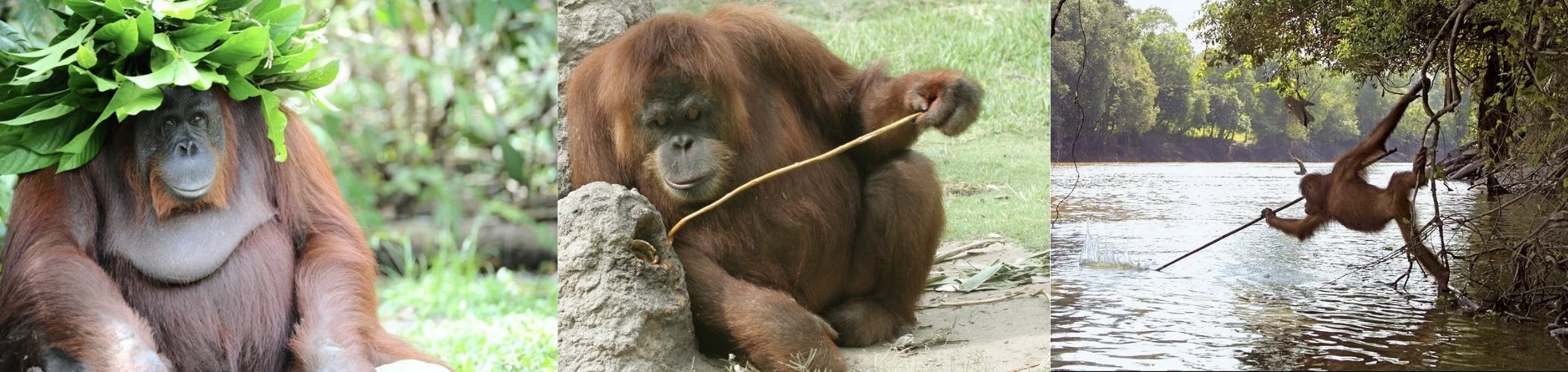
(© Orangutan Republik Foundation, © William H. Calvin / Wikimedia Commons, and © Sue Floyed, Fleur Butcher / BOS Australia)
⁶ “I was just eight years away from England, but as I travelled about fourteen thousand miles within the Archipelago, and made sixty or seventy separate journeys, each involving some preparation and loss of time, I do not think that more than six years were really occupied in collecting.
I find that my Eastern collections amounted to:
310 specimens of Mammalia.
100 specimens of Reptiles.
8,050 specimens of Birds.
7,500 specimens of Shells.
13,100 specimens of Lepidoptera.
83,200 specimens of Coleoptera.
13,400 specimens of other Insects.
125,660 specimens of natural history in all.”
Many of those specimens were species new to science; 307 of which Wallace personally named or helped to describe. At least 4,700 other species collected by Wallace and his assistants were formally described by other naturalists (who often named those species in honour of Wallace).
One such is the standardwing bird-of-paradise (a.k.a. Wallace’s standardwing), which Wallace obtained the type specimen of on the Bacan Islands of the North Malukus: “I saw a bird with a mass of splendid green feathers on its breast, elongated into two glittering tufts; but, what I could not understand was a pair of long white feathers, which stuck straight out from each shoulder…I now saw that I had got a great prize, no less than a completely new form of the Bird of Paradise, differing most remarkably from every other known bird.”
There’s also Megachile pluto, or Wallace’s giant bee, found on the same islands as the standardwing. This species is remarkable for being their largest of all known bees, with a wingspan of up to six centimetres (2.5 in). But whether it still is the largest living bee species is uncertain — not because another has been found, but because M. Pluto hasn’t been seen since 1981.
On Indonesia’s Halmahera Island, Wallace discovered a new species of megapode, later described as the Moluccan Megapode or Wallace's Scrubfowl (Eulipoa wallacei). “It is the handsomest bird of the genus,” writes Wallace, “being richly banded with reddish brown on the back and wings; and it differs from the other species in its habits. It frequents the forests of the interior, and comes down to the sea-beach to deposit its eggs, but instead of making a mound, or scratching a hole to receive them, it burrows into the sand to the depth of about three feet obliquely downwards, and deposits its eggs at the bottom. It then loosely covers up the mouth of the hole, and is said by the natives to obliterate and disguise its own footmarks leading to and from the hole, by making many other tracks and scratches in the neighbourhood.”
By the local men and boys of the Aru Islands, Wallace was given “a living specimen of the curious and beautiful racquet-tailed kingfisher” — today commonly known as the little paradise-kingfisher. “Seeing how much I admired it,” Wallace continues, “they afterwards brought me several more, which were all caught before daybreak, sleeping in cavities of the rocky banks of the stream. My hunters also shot a few specimens, and almost all of them had the red bill more or less clogged with mud and earth. This indicates the habits of the bird, which, though popularly a king-fisher, never catches fish, but lives on insects and minute shells, which it picks up in the forest, darting down upon them from its perch on some low branch."
On the Sula Islands, Wallace obtained the first specimens of the Sula lorikeet. He reportedly also found it on Sulawesi, but the one specimen he got there “was carried away by a rat, while drying, and was never recovered" — this Sulawesi lorikeet is today considered a separate species, the yellow-cheeked lorikeet, endemic to the island.
Smaller but stranger is Friula wallacei, a species of spider completely alone in its genus, featuring two, large club-like protrusions from its abdomen. This species is only known from the single specimen Wallace collected in Sarawak, which is now housed at the Oxford Museum of Natural History in the UK.
Other noteworthy species include the previously described flying frog, now commonly known as Wallace's flying frog, which can glide through the air over a distance of 15 metres using its “toes very long and fully webbed to their very extremity…” There’s the Rajah Brooke's birdwing butterfly, which he described as “most elegant [butterfly] species known,” and named after Sir James Brooke, the Raj of Sarawak (in Borneo) at the time. He obtained specimens of the elusive bay cat on Borneo and the invisible rail on Halmahera Island. There’s Wallace's dasyure, a marsupial that Wallace reports was “In houses as destructive as rats to every thing eatable," and the Sulawesi dwarf cuscus, the most westerly distributed of all marsupials. Wallace’s hawk-eagle and scops-owl, Wallace’a long-horn and jewel beetle — our knowledge of nature is certainly richer for Wallace’s contributions.
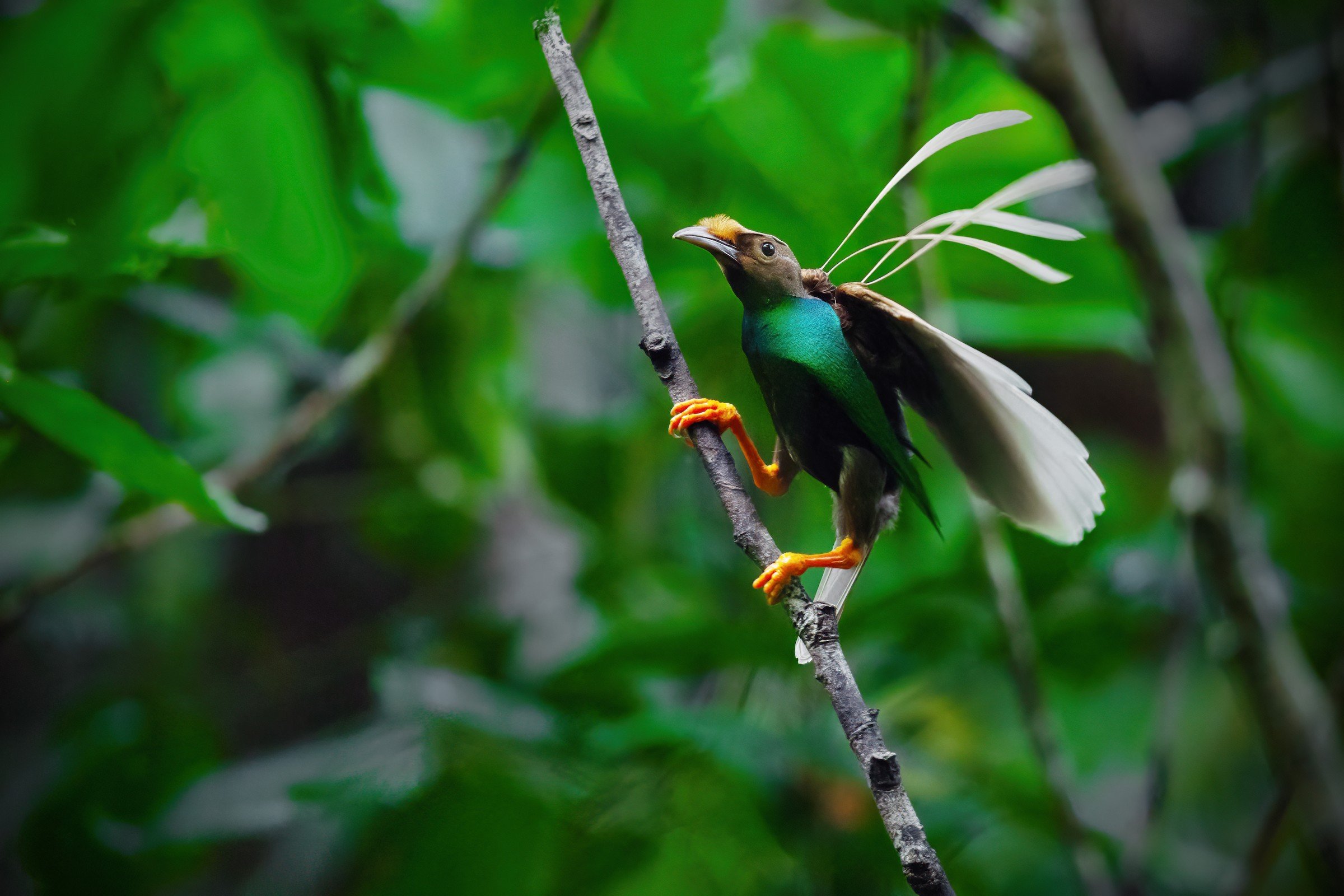
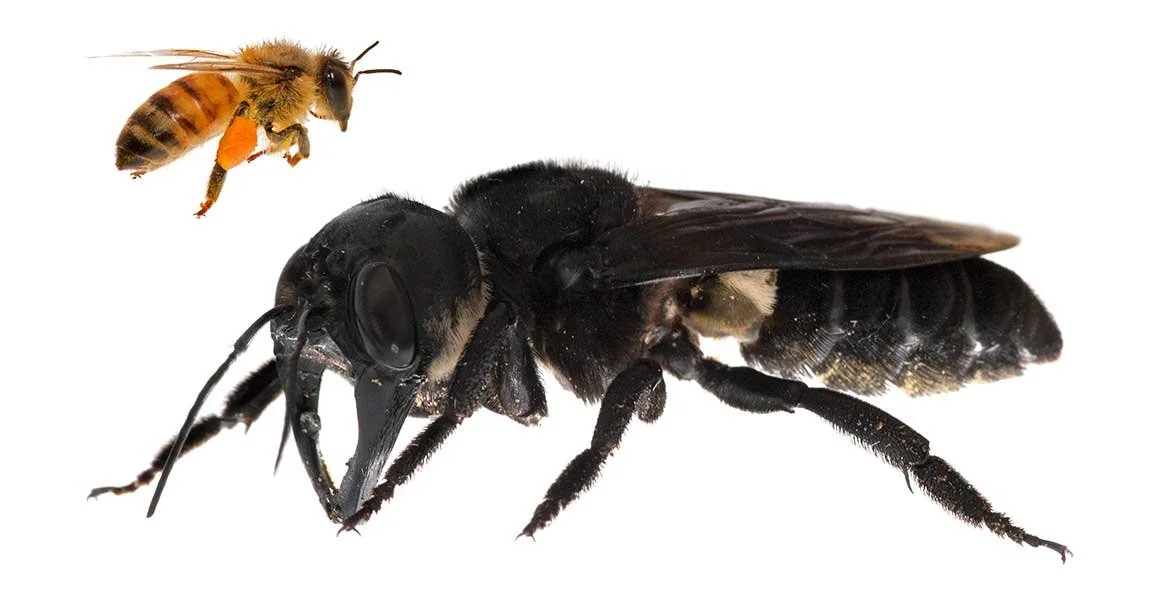
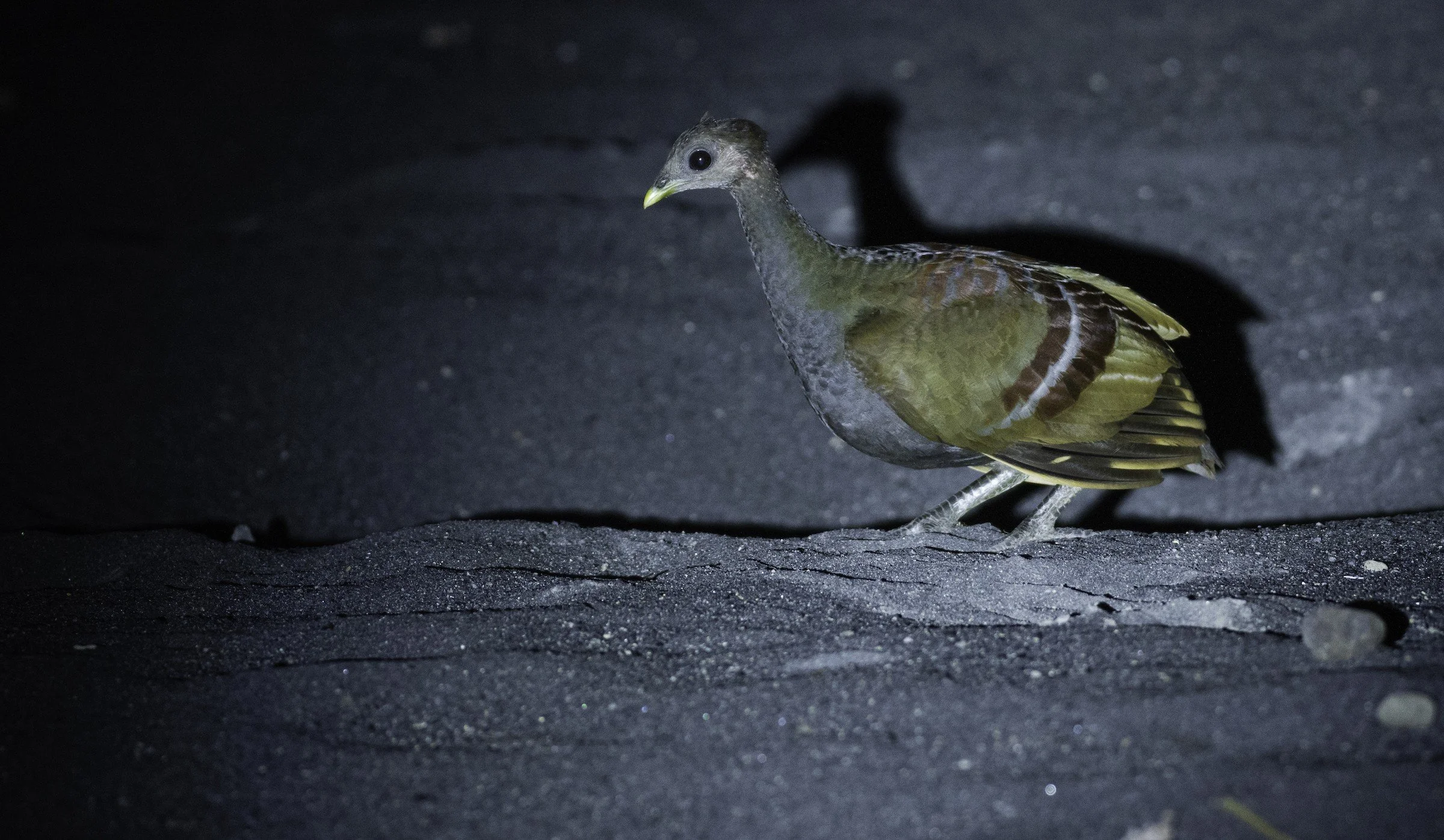

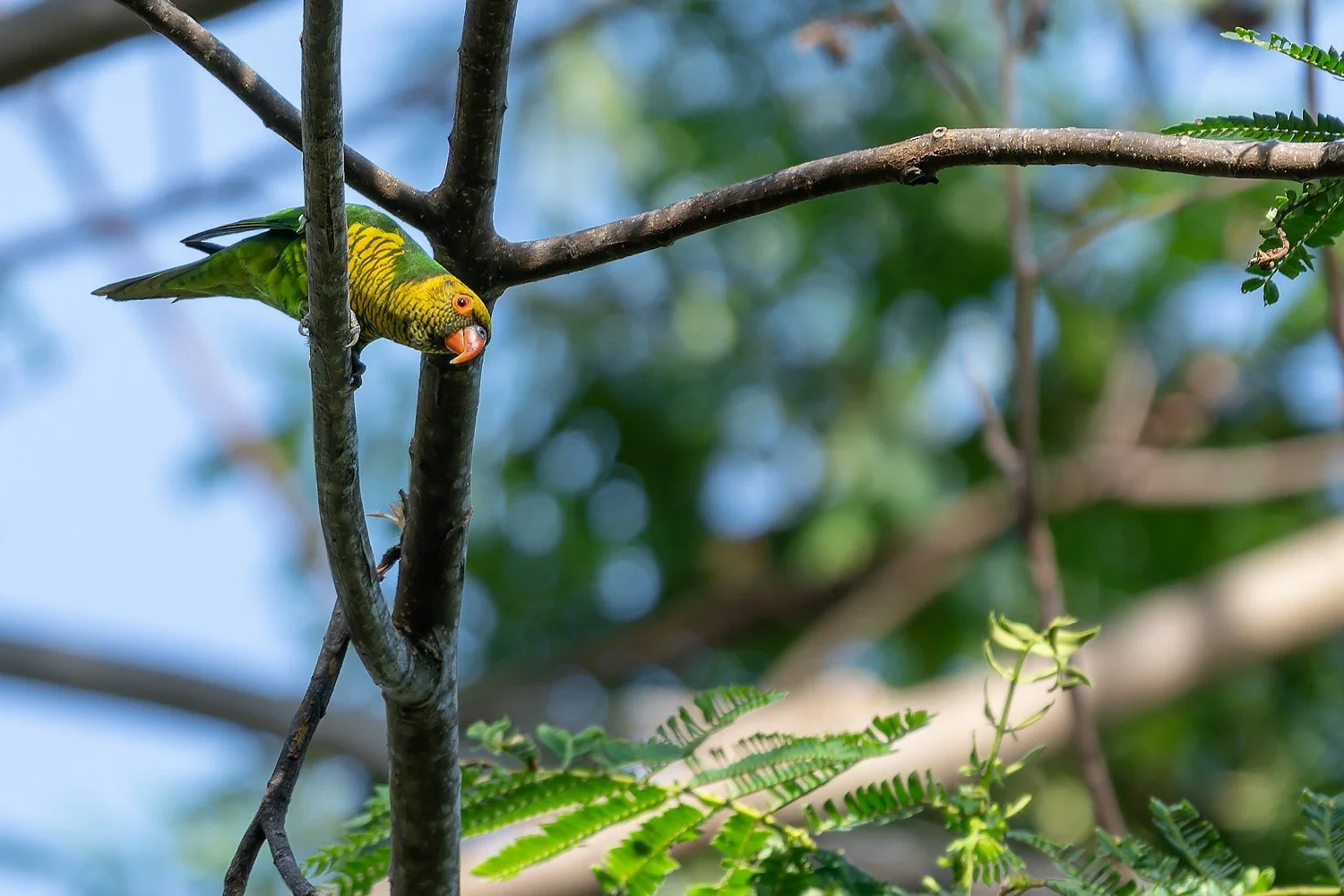
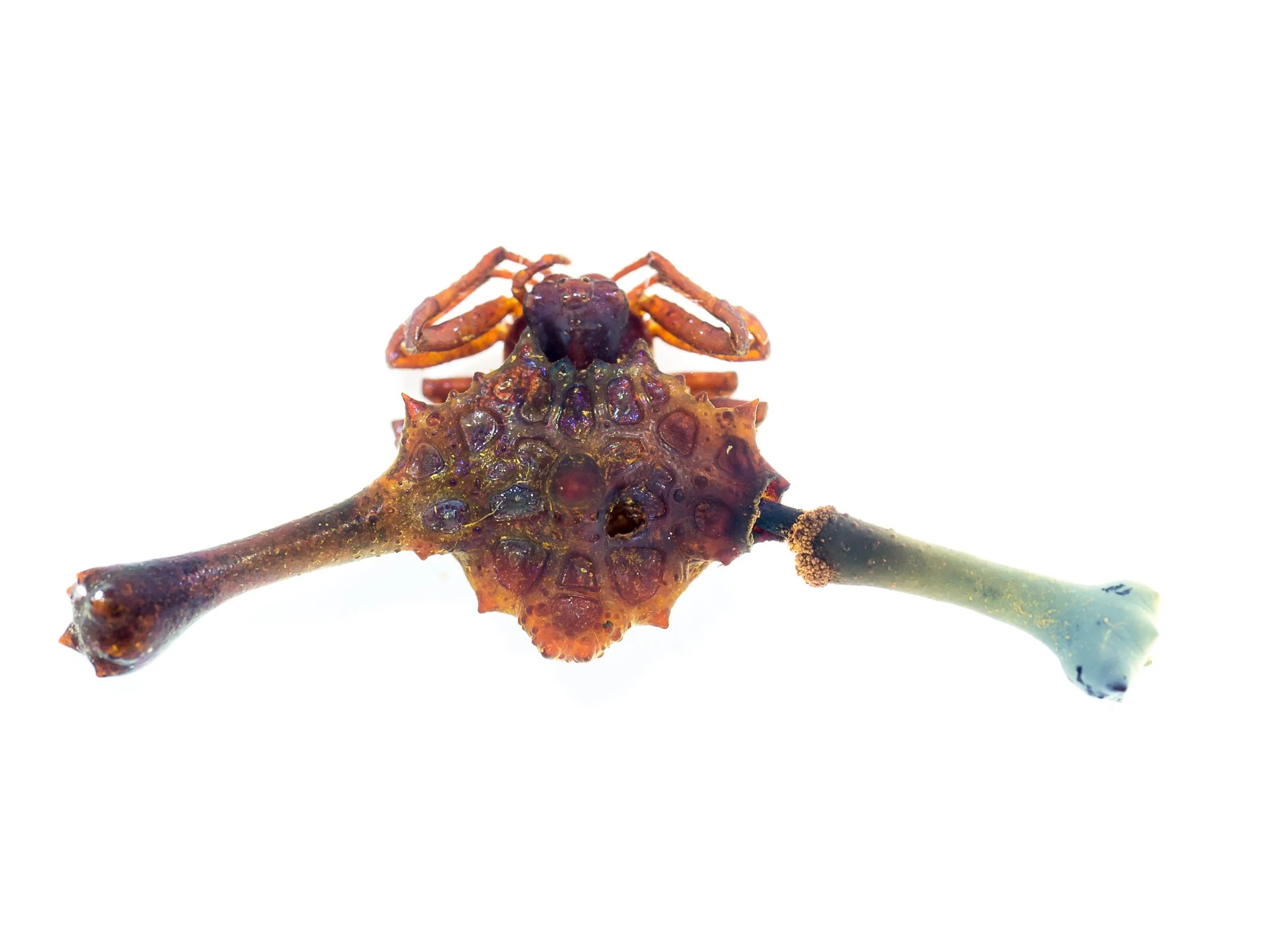
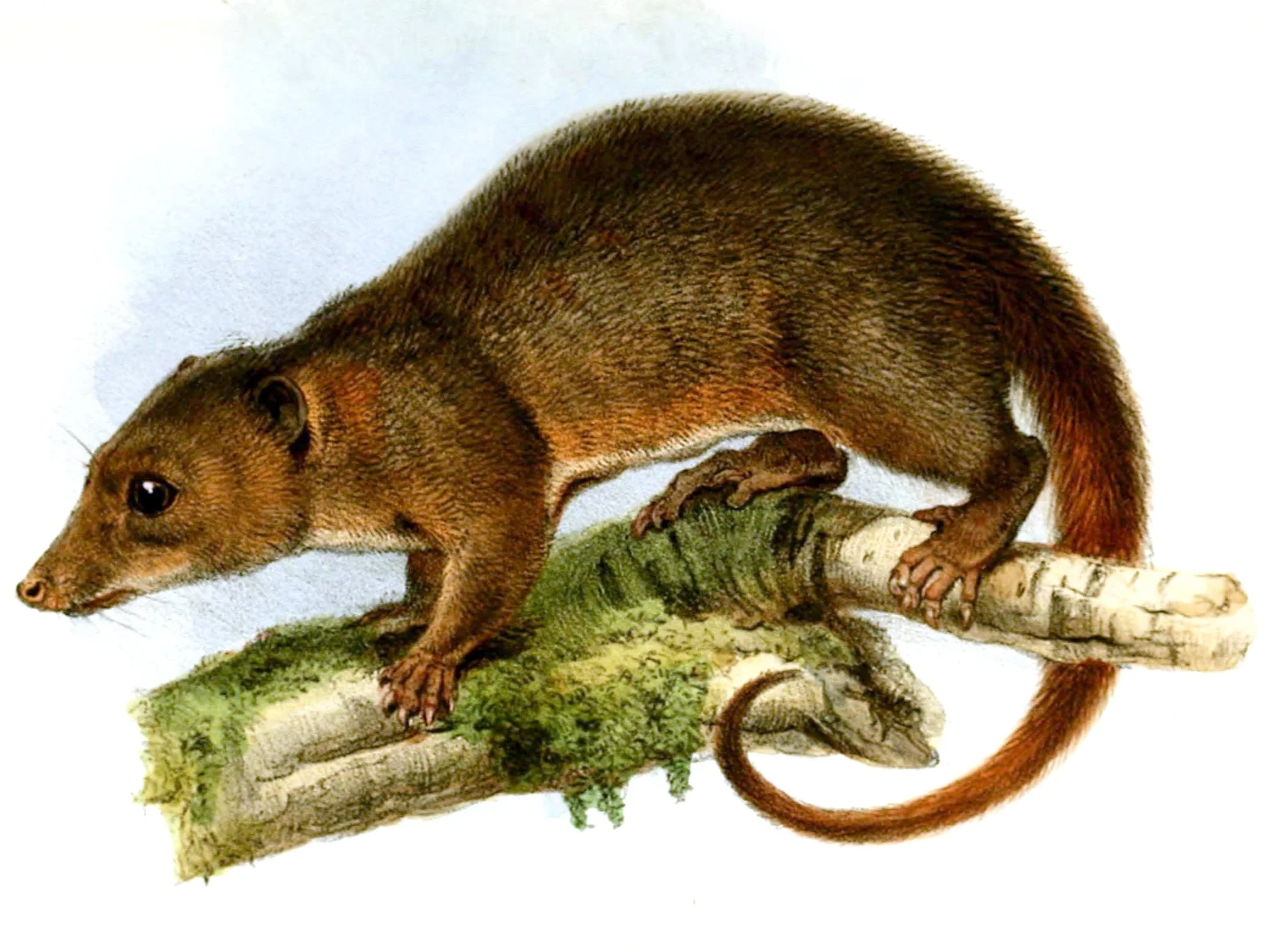
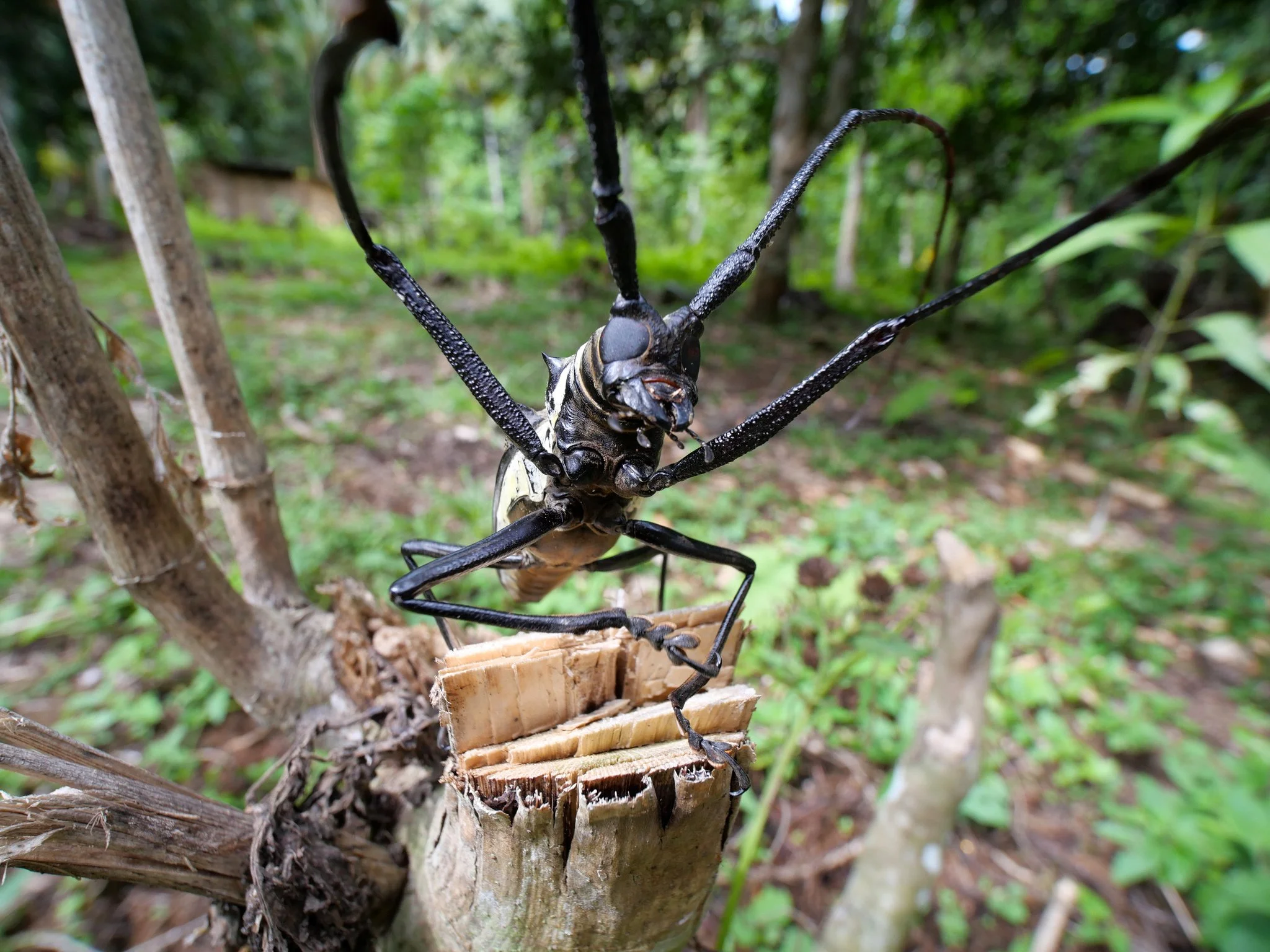
(You can learn about more of the species discovered by Wallace here!)
⁷ Primates are primarily social, with “79 to 95 percent of all primate species form[ing] groups,” but not exclusively so, as “5 percent of extant primates are classified as solitary.” (Silk & Kappeler, 2017)
Of this 5%, the majority are nocturnal species. These include the the galagos (also known as bush babies) of sub-Saharan Africa, the nocturnal lemurs (like the mouse lemurs and aye-aye) of Madagascar, and the lorisids (the pottos of Africa and lorises of South and Southeast Asia).
Why are these primates solitary?
“…the difficulties of group coordination, enhanced crypsis, or a lack of anti-predator benefits derived from grouping, together with a heavy reliance on unpredictably distributed, non-sharable resources (e.g. insects) are thought to explain the absence of group formation in these [nocturnal] species (Kappeler, 1997)”
-
THE MALAY ARCHIPELAGO, VOLUME I. (of II.) By Alfred Russel Wallace
THE MALAY ARCHIPELAGO, VOLUME II (of II.) By Alfred Russel Wallace
The Alfred Russel Wallace Memorial Fund — 'Iconic' species discovered by Alfred Russel Wallace
The Alfred Russel Wallace Memorial Fund — Plants and animals named after Wallace
Audubon Art: Oppenheimer Gallery — Early methods of specimen collection
IUCN — Bornean orangutan
WWF — Orangutan factsheet
Science Daily — Orangutan mothers help offspring to learn
Orangutan Republik Foundation —Intelligence and innovation
Sumatran Orangutan Society — Orangutan tool use
Four Paws — Forest school
BOS Australia — Jungle school
BOS Australia — Orangutan rehab
World Land Trust — COVID-19 and orangutans
Orangutan Foundation — Threats to orangutans
New England Primate Conservancy — Long-tailed macaque
Animal Diversity Web — Long-tailed macaque
Bonobo Conservation Initiative — About bonobos
The Harvard Gazette — Bonobo sociality
Prague Zoo — Wallace’s flying frog
Wired — Wallace’s giant bee
The University of Sydney — Wallace’s giant bee
On some new and little-known Spiders (Araneidea) by O. Pickard Cambridge M.A., F.R.S., &c.
Borneo Post Online — Friula wallacii