From bats living paycheck-to-paycheck to elephant seal billionaires — which species can afford to act sick, which cannot, and why?
At its core, an animal's immune system is profoundly selfish.
If you’ve ever come down with a sudden, bone-deep flu, you’ve experienced it first hand. With no regard for your social commitments, job, or family, your own body selfishly stages a systematic shutdown: you become lethargic, you lose your appetite, and you feel like isolating yourself from the world.
In biology, this is known as “sickness behaviour,” and we see it across much of the animal kingdom. Where the infection itself is a physical battle of cells and pathogens, sickness behaviour is the behavioural strategy your body deploys to win that battle.
However, according to a recent study published in Current Zoology, sickness behaviour may not be as inevitable as we think.
———
Dr. Gerardo Herrera, the lead author of the study, has repeatedly found himself sailing back to the small, uninhabited island of Partida Norte.
The transit across the Gulf of California waters is never the same. This stretch of unreliable sea can feel like a glassy swimming pool in one spot, and be deadly less than a mile away. For Herrera, the unpredictable crossing is reliably unpleasant, each time exacting a physical tax — but one he’s willing to pay.
“Personally, I am really bad at this and get seasick easily,” Herrera confesses. “I always promised not to do it again but the excitement of working with this bat made me forget it next year.”
A giant among its American peers at over six inches long, with a waterproof fawn coat and massive hind claws like thin, hydrodynamic blades — the fish-eating bat, Myotis vivesi, keeps pulling Herrera back to the island.
The species is endemic to Mexico, with most of its population spread across 35 to 45 small islands in the Gulf of California. Partida Norte — a sliver of land some 10 miles off Baja California, shaped like a wonky hourglass leaking sand — hosts its largest known maternity colony, where tens of thousands of mothers roost and raise their young. But, for a nursery, Partida Norte is hardly a hospitable place.
“The island is bare,” Herrera describes, “with no freshwater sources and completely free of any human-made facility.” Every drop of water, and every bit of shade, has to arrive by boat with Herrera and his team. The low-lying desert scrub and forests of cactus offer little protection from a sun that blazes from five in the morning until seven at night.
Along with trees, another feature the island lacks is caves. Forget the image of cavern ceilings crowded with clusters of huddled bats or canopy colonies of flapping wings. The fish-eating bats on Partida Norte roost in small groups within rocky crevices. In Herrera’s words, the “bats are under one's feet!”
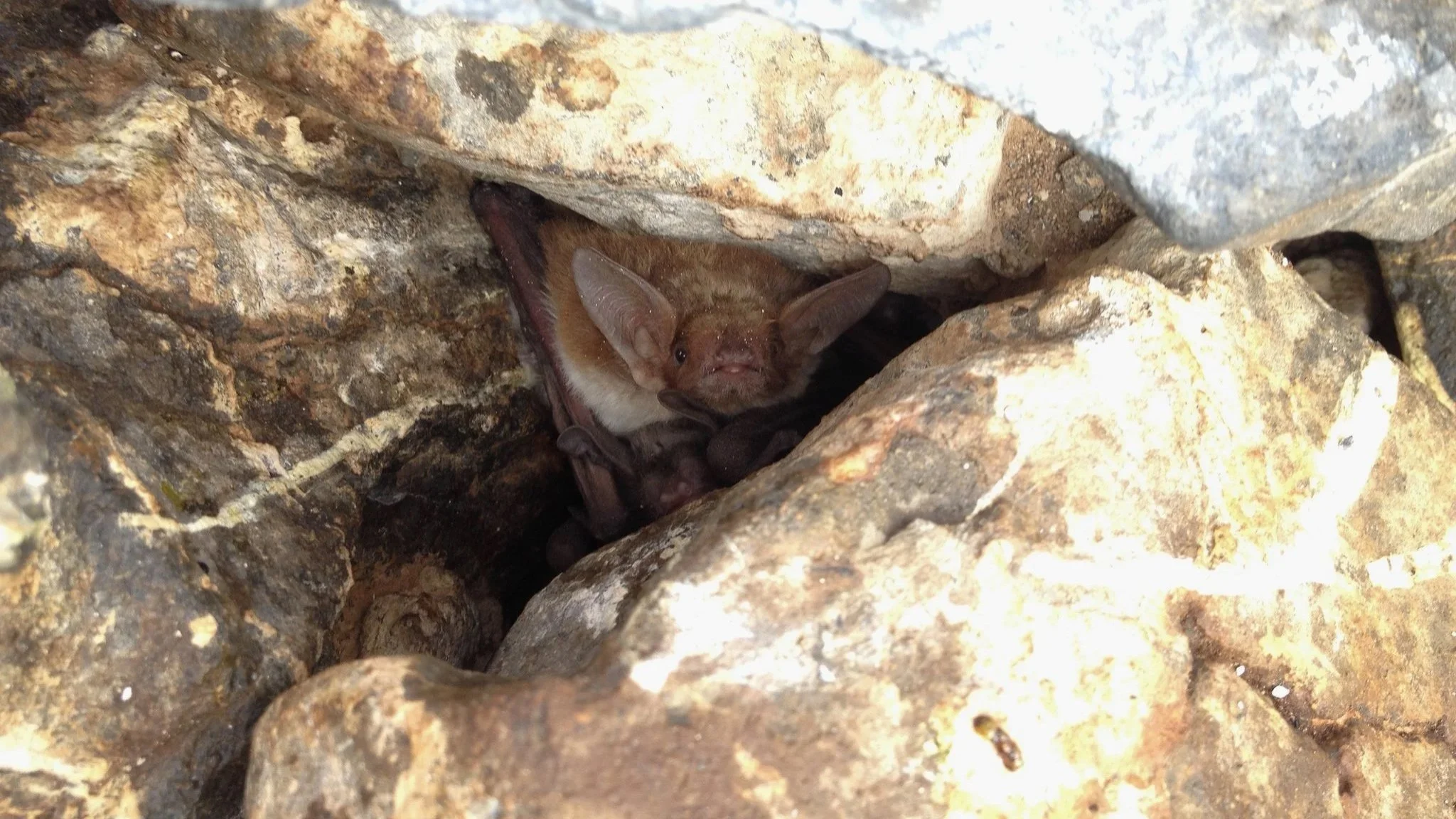
A female fish-eating bat, Myotis vivesi, with her young.
———
Herrera’s team — including veteran mammalogist Dr. José Juan Flores-Martínez and bat ecoimmunologist David Alfonso Rivera-Ruiz — established camp and resolved all the logistics of surviving on an inhospitable desert island by the time their international colleagues — Dr. Stefan Greif, Dr. Edward Hurme, and bat-tracking expert Dr. Yossi Yovel — arrived with the GPS trackers.
Now they had to fit the bats with trackers, make them “sick,” and see what they did.
But first they had to find the bats. Removing all the rocks in a delineated survey area, they carefully extracted the bats from their crevices and staked each spot with a numbered flag to ensure an exact homecoming.
Many of the captured females emerged with a pup clamped fiercely to their nipples. These youngsters are entirely dependent on their mothers, requiring frequent nursing throughout the day to survive. Because their tiny bodies lack fat reserves, even a brief interruption in feeding, or a spike in temperature, puts them at risk of starvation and dehydration.
The researchers had to work with urgency, and the utmost care.
Each mother was fitted with a matchbox-sized, waterproof GPS unit weighing less than a nickel, surgically glued between their shoulder blades. Mothers and pups were separated only briefly before being reunited in breathable cloth bags. After a short rest beneath the all-important shade, every family was returned to its respective underfoot roost.
———
By seven in the evening the scorching sun finally dipped below the horizon and Partida Norte began to wake with the sound of thousands of scratching wings. After an innocuous injection of saline solution from Herrera’s team, the tagged bats took off into the dark, to hunt.
Partida Norte is barren and small, but the seas around it are expansive and rich. Every night, these bats sweep across the black waters in loosely coordinated formations, flying inches above the sea, eavesdropping on each other’s echolocation calls to locate roiling patches of lanternfish and anchovies.
Gliding over the feeding fishes, a bat drops down its elongated hind feet, slashing the water’s surface with its scythe-like claws. It snatches its prey right out of the brine. Scooping the catch upward, it uses its tail membrane as a temporary pouch before passing the meal straight to its mouth — remaining airborne the entire time. The mother bats return to Partida Norte with bellies full and calories enough to produce milk for their young.
Lactation is the most energetically demanding period in any female mammal's life, especially taxing on such a hyper-metabolic animal as a bat. And when the mother’s energy becomes depleted, so do her milk reserves. So every night she hunts.
With the GPS data collected and downloaded, Herrera’s team now had their healthy baseline: how far and fast and for how long the bats flew under normal conditions. Now it was time for the actual experiment.
What would these mother bats do when sick?
Of course, the researchers couldn’t introduce a real pathogen to the colony. But how then do you make an animal sick without actually making it sick? The solution was lipopolysaccharide (LPS), a harmless extract derived from the cell walls of E. coli bacteria. LPS carries no live virus or bacteria, meaning it cannot replicate or cause actual tissue damage. But a bat’s immune cell receptors don’t know that.
The moment a needle delivers the dose, the mother’s immune defences go to work. Her body activates the acute phase response: the cascade of physiological and behavioural changes that accompanies the first onset of illness. Within hours, she should begin to feel sick.
———
Dr. Herrera, in collaboration with Dr. Yovel, had previously studied wild free-ranging Egyptian fruit bats under the effects of LPS. These highly social bats behaved as one would expect of a “sick” animal. They withdrew from their tightly packed huddles to roost alone, and they skipped their nightly foraging.
However, looking at the tracking data from Partida Norte, it was clear the myotis mothers did not.
Three of the four bats showed no significant decrease in total flight time, distance, or speed on the nights they were experiencing a simulated immune response (the fake LPS-induced sickness). Bat ID 3 even flew farther and for longer than she had while healthy. The one outlier, Bat ID 4, did exhibit a reduction in her overall activity, but she nonetheless flew.
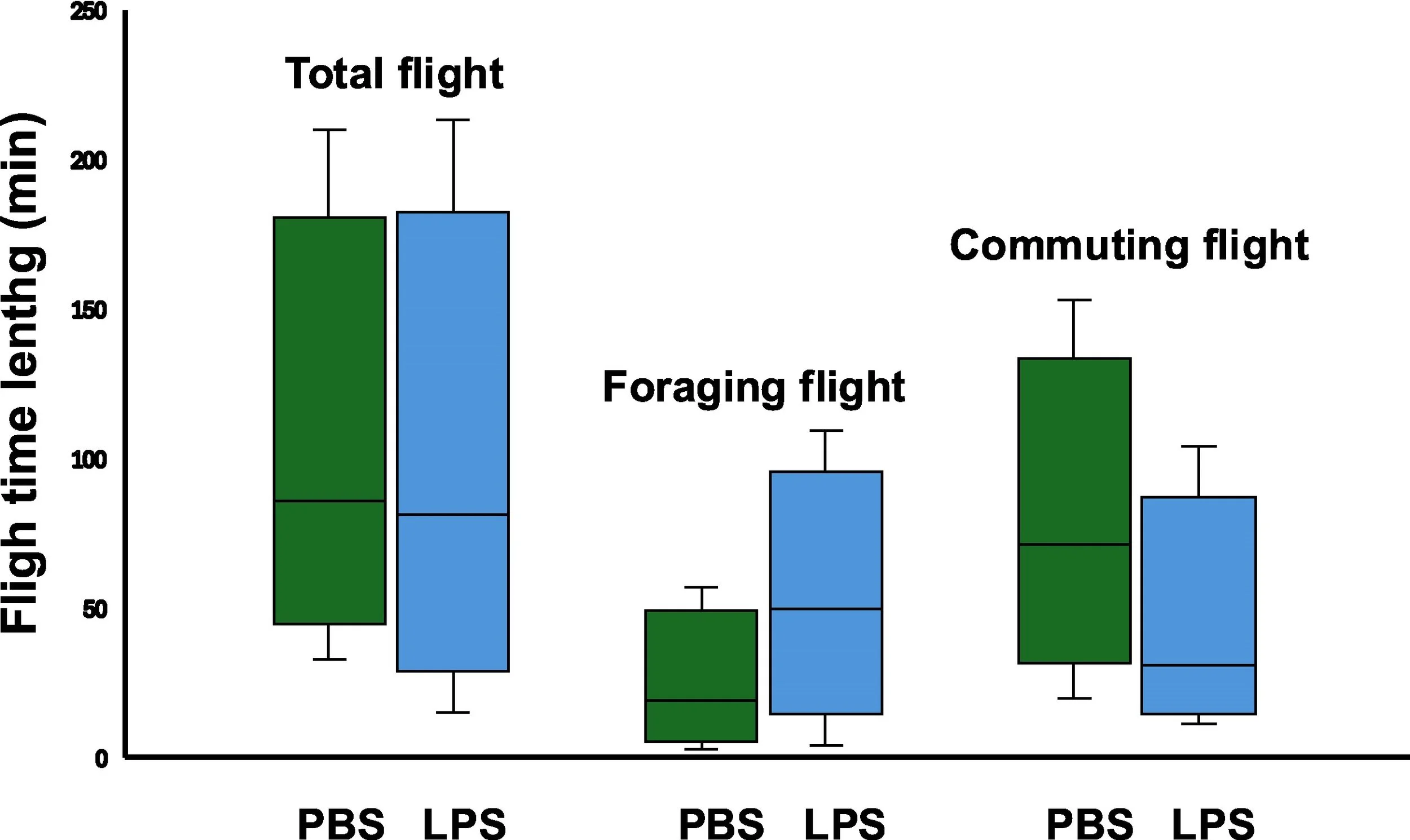
“Duration of total flight, foraging flight, and commuting flight of lactating fish-eating myotis (Myotis vivesi) administered a saline solution (PBS) and LPS. LPS was injected 3–4 days after PBS on the same individual.”
Interestingly, while most of the bats appeared to work just as hard, they also worked differently: whereas before they spent more time commuting to their foraging grounds, now they dedicated more of the night to hunting closer patches of sea. Perhaps the “sick” lactating females might have prioritised capturing prey at the very first encounter rather than wasting precious energy commuting to far-off hunting grounds. In human terms, it’s the equivalent of dragging yourself to the sub-par supermarket around the block, rather than commuting to your favourite one across town. You get what you can.
The same sentiment applied to the field work itself.
This was the first time anyone had tracked the foraging movements of wild, lactating mammals experiencing an immune response. Much of what we know about sickness behaviour comes from the controlled confines of a laboratory environment. Partida Norte and the surrounding seas are anything but controlled.
In summer, plankton blooms appear unpredictably around the island, forcing schools of fish to migrate to new feeding grounds constantly. As a result, the bats can make dramatically different foraging trips on consecutive nights. When healthy, the bats flew anywhere from 4.6 to 35.8 miles, for as little as half an hour to three-and-a-half hours. This means that bat ID 4 may have flown less because she felt sick, or because she just got lucky while hunting that night, and found fish closer to home.
That’s the trade-off of working in the wild versus the lab: there’s no neat way to control all the variables. GPS trackers detached in the surf, one mother moved roosts with her pup, and, in the end, only four bats completed both phases of the experiment. The data are complicated and hard-won, but perhaps also more representative of real life — there’s evidence that captive animals respond differently to immune challenges, with California ground squirrels, for instance, showing fever spikes in a lab but not in the wild.
Still, the sample sizes were small, and the authors warn that “cautions is warranted at interpreting our results.” This was a look through a narrow crevice. Yet even that limited view reveals something fundamental about sickness behaviour. It is not an inevitable response to illness. Sickness behaviour is flexible, and context-dependent.
“The discomfort produced by the ‘sickness’ that we induced was not enough to prevent females from foraging,” speculates Herrera, “given that they had the pressure to provide milk to their young and could not afford not getting enough nutrients.”
The choice was to go and forage through the acute phase response, or stay and rest, and risk producing too little milk for your child. Like Herrera enduring seasickness to return to Partida Norte, the mother bats appeared to push through their own “sicknesses” in order to feed their young. They seemingly ignored the selfish demands of their own immune systems.
———
The body has a hierarchy of competing demands, and its own recovery isn’t always valued highest.
When an animal falls ill, it must weigh the benefits of sickness behaviour — rest and recovery — against immediate survival and reproduction. But what determines when sickness behaviour is suppressed and when it isn’t?
“It’s hard to say whether there are generalities whereby sickness behaviour is damped in favour of other processes, as too few taxa and contexts have yet been studied,” says Dr. Lynn Martin, a world leading researcher in ecoimmunology. “One theme, though, involves life history theory.”
Life history theory is about resource management. Every organism possesses a finite budget of time and energy which must be split between competing demands: growth, maintenance, defence, and reproduction. An animal’s immune response, then, is like a dynamic economy, constantly reallocating resources according to an animal’s life history and the immediate context it finds itself in.
Across the animal kingdom, different species have different energetic bank accounts.
A capital breeder, such as an elephant seal, is a billionaire. It invests heavily in energy storage, packing away massive reserves of blubber over months or years, and then draws on that capital to gestate and nurse its calf. Herrera’s fish-eating bats, on the other hand, live paycheck-to-paycheck as extreme income breeders. They have virtually zero fat reserves, and their daily milk production — and the survival of their pups — depends entirely on the energy income they earn each night.
In regards to illness, the former can usually afford to “call in sick,” while the latter cannot.
———
Who does or does not get the luxury of recovery is heavily stratified in human society too. Many slog through the workday sick because they need the paycheck, or don't take to bed because a child depends on their care. We often think of these trade-offs as choices — even if they are made under severe constraints. When it comes to other animals, however, discussing behavioural trade-offs in terms of ‘choices’ is, more often than not, unproductive.
Ultimately, whether an animal does or doesn’t consciously choose to forgo sickness behaviour is less interesting, and far less tractable, than why it does so.
To keep things simple, let’s look at a relatively simple animal.
A mother Nicrophorus vespilloides burying beetle continues to defend and provision her larvae despite suffering an infection that shortens her lifespan by around 75 percent. What ultimately drives such an extreme personal sacrifice?
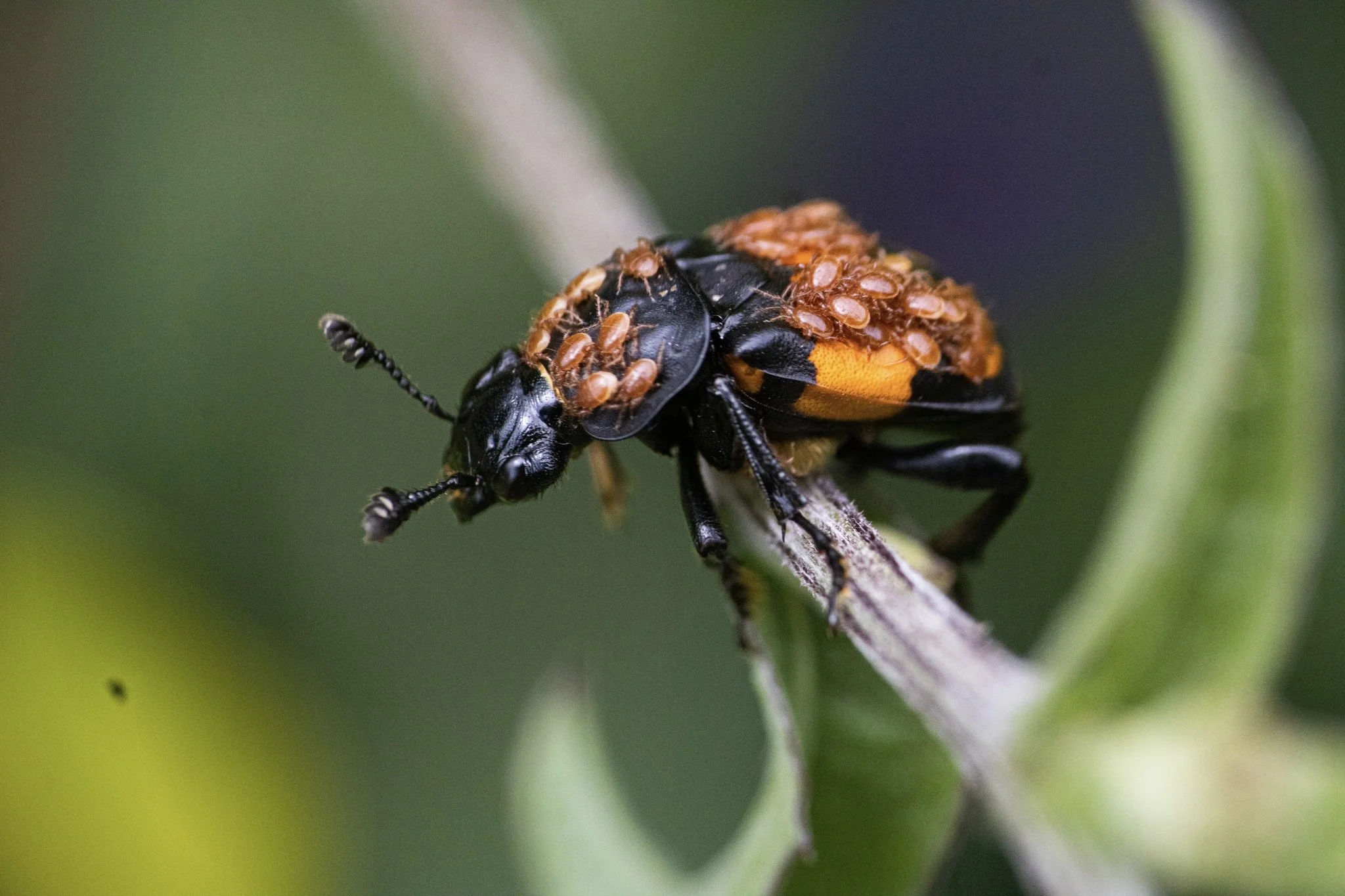
A mother Nicrophorus vespilloides burying beetle with her young.
The mother beetle inherited ‘evolved regulatory processes’ from the mothers before her, who sacrificed enough of themselves to allow their offspring to survive, but not so much that they died before their offspring reached independence. You could call such processes “calculations,” although they aren’t conscious ones. They are, however, evident in how the mother beetle’s genes are expressed.
When infected, a mother N. vespilloides down-regulates genes that benefit her own personal immunity. Conversely, she maintains or even increases the expression of genes which provide her larvae with antimicrobial protection. If her priority was to stay alive herself, this would be a poor way to do it. But natural selection does not necessarily care for the survival of the individual — or rather, it very much cares, but only to the extent that the individual staying alive allows them to pass on more genes. Sacrificing herself for her offspring is to the mother beetle’s personal benefit, in so much as it helps her more effectively pass on her genes through the survival of her children.
All animals have inherited such regulatory processes (which weigh the costs and benefits of personal recovery against other priorities, such as child rearing), but because these calculations are specific to the life-history needs of the specific animal, sickness behaviour rarely looks exactly the same between different species.
Dr. Martin points to cross-species variation in the lab.
While some kinds of animals — such as laboratory rats — fast when infected, others feast. “In the sparrows I study,” he explains, “we often see body mass gain when they are given simulated viral infections.” The exact reason behind this weight gain remains unknown, but it’s possible that spending a few days overeating, followed by radically reducing activity to conserve energy and water, can be far more adaptive than standard lethargy (at least for sparrows in a lab).
When it comes to sick fish-eating bat mothers, the most adaptive response is, seemingly, to continue hunting as usual.
“In a nutshell,” Martin summarises, “if the individual’s interests are better maximized by some other activity than sickness behavior, they’ll often forgo sickness behavior.”
———
But surely there has to be some cost. When we get sick, we don’t act sick for no reason.
In other words, is it possible to postpone sickness behaviour indefinitely?
Golden-mantled ground squirrels spend five to six months of the year in deep torpor to survive harsh temperatures and resource scarcity, dropping their core body temperatures to 1–2°C above ambient temperature to conserve energy.
Researchers injected these “sleeping” squirrels with LPS to simulate a bacterial infection. If the squirrels mounted a fever in the dead of winter, they would burn through their fat and starve. So instead, to conserve energy, their bodies completely arrested the acute immune response, and the squirrels exhibited no fever and no sickness behaviours. At least while they were in torpor.
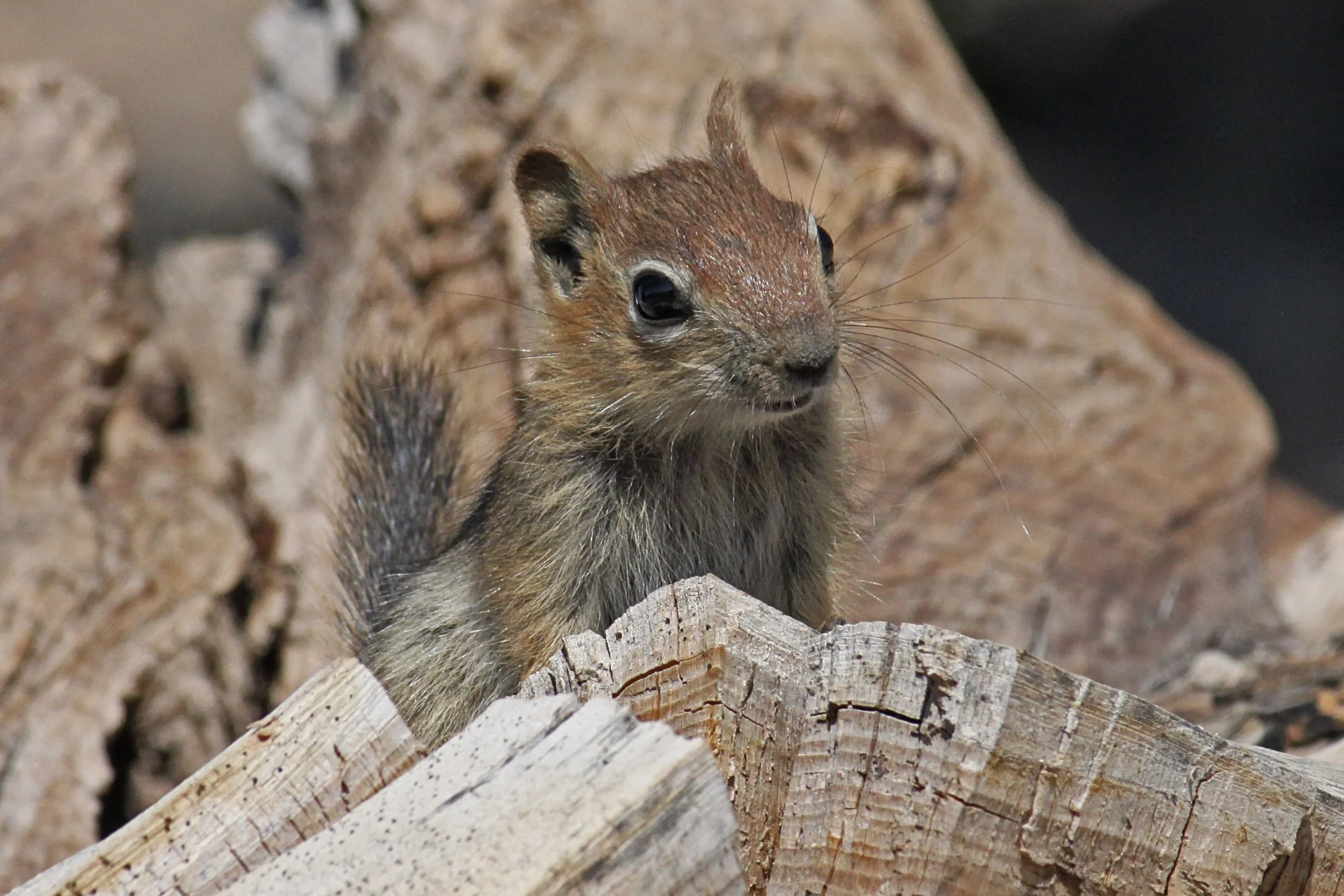
A golden-mantled ground squirrel, Callospermophilus lateralis.
Once the squirrels naturally rewarmed and roused several days later, they immediately mounted fevers, and then remained awake for far longer than usual (sometimes extending a normal 16-hour arousal to as much as 97 hours).
The immune response was suppressed for a while, but the bill still came due eventually.
The “sick” mother bats of Partida Norte lost a median of 2.0 grams over a night. However, perfectly healthy mothers lost 1.7 grams anyway — a statistically insignificant difference. The immune response cost the bats a mere 6 kilojoules, which is just 7 percent of their daily energy budget.
Hunting and lactation, it seems, are vastly more expensive than fighting this simulated illness. The bat’s (unconscious) calculation becomes: Can I afford to pay this mandatory 6 kJ infection tax and still earn enough to feed my pup? It is like deliberating over a fourteen-dollar bottle of wine at a two-hundred-dollar set-course dinner. When your costs are already that high, a 7 percent surcharge isn’t enough to make you walk away from the table. The math still works out in favour of hunting.
The transaction — hunting over rest — is clearly worth it in this case. If the price of the immune response had been higher, say 12 kilojoules or 24 kilojoules, perhaps the results would have been different.
We don’t know exactly how flexible sickness behaviour can be; how long an animal can go along its business before it is forced to rest and recover. And to design an experiment to find out would surely break countless ethical boundaries. But nature has no such rules.
———
In 2017, researchers tracked an adult female elephant seal, ID 6018, during a foraging trip after she had just finished weaning her young.
An elephant seal is an archetypal capital breeder; females build immense reserves of fat, protein, oxygen stores — and iron. This mineral is especially critical to deep-diving marine mammals, as it underpins oxygen transport and storage. During lactation, much of a mother’s capital is invested directly into their offspring through exceptionally iron-rich milk. In a very real sense, she passes much of her own diving capacity on to her pup. This also means that, by the time her pup is weaned, the mother is physiologically depleted. This capital breeder is broke.
Although ID 6018 appeared outwardly healthy, blood samples later revealed she was likely fighting an infection upon her post-weaning departure to sea.
“For sickness behavior induced during bacterial infection, a major driver of change involves iron availability,” explains Martin. “Without it, bacteria can't replicate, so a lot of the immunological change during bacterial infection involves iron sequestration.” When bacteria invade, the host's liver aggressively pulls free-floating iron out of the bloodstream and locks it away, starving the pathogens of a resource they need to grow. However, this also prevents the host’s own body from making use of it.
During the first two weeks of her trip, ID 6018 hunted half-heartedly, averaging fewer than 500 prey capture attempts a day compared to the 1,000 attempts a healthy female easily logs. Instead, she floated. While a healthy elephant seal spends around two minutes catching its breath between dives, ID 6018 remained at the surface for up to thirty minutes at a time — her iron-deficiency taking its toll on her diving abilities. She drifted further south than any other seal tracked that year, likely seeking warmer surface waters. She spent chunks of her day, sometimes up to four hours at a single stretch, just baking in the sun.
This was obvious sickness behaviour, but it was behaviour she could ill afford at the moment. As her body aggressively metabolised its remaining fat reserves just to stay alive, she lost her natural buoyancy. Each dive became more energetically expensive, which meant she hunted less. And less time hunting meant more fat loss, which made her sink even faster.
When she finally dragged herself back onto the colony beaches, she was in the poorest body condition ever recorded for an adult female elephant seal. Her body fat had withered down to just 18.3 percent (compared to the healthy average of 30 percent) and her body was so starved of resources that she was completely immunocompromised.
She crawled back into the ocean early that season, and she wasn’t seen again.
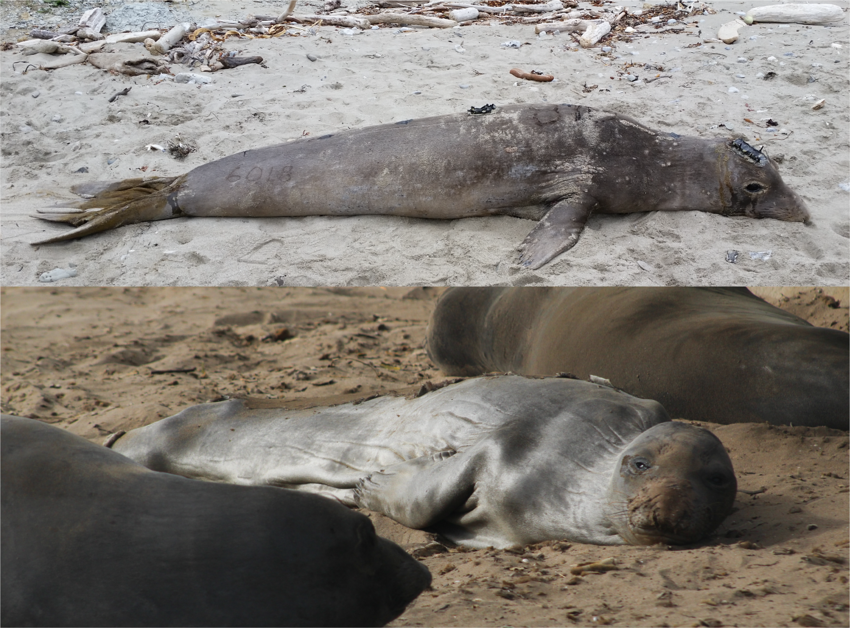
Photos of elephant seal ID 6018 two days after her arrival on shore (top), and the last day she was seen (bottom).
In regards to sickness behaviour, “Context-dependency is more the rule than the exception now,” says Dr. Martin. The reasons animals postpone sickness behaviour, the mechanisms that allow them to do so, and the costs they ultimately pay differ from species to species, individual to individual. And while some manage to balance the books — successfully prioritising immediate survival or offspring over their recovery — others hit the ceiling of their biological limits and sink into inescapable debt.
———
Dr. Herrera recalls how, during his many expeditions to the Partida Norte, local fishermen willingly traded three or four massive lobsters and a haul of delicious sea crabs for a single pack of AAA batteries.
To anyone living inland, this would be an absurd, entirely uneven transaction. But for a fisherman who fishes the sometimes-perilous Gulf of California, what many would consider a gourmet meal is less valuable than a pack of batteries, which are harder to get and needed now. The batteries are prioritised.
A similar kind of situational economy governs the natural world just as strictly as it does human commerce. A mother bat, like the fisherman, makes a trade. She is divesting of her own long-term recovery to get the caloric currency her offspring urgently needs to survive. She makes that trade because of her specific life history as an income breeder and her current status as a lactating parent roosting on a desert island, and she’ll take the consequences of the trade-off because, in the end, it’ll most likely be worth it — as it had been for her mother, and her mother’s mother before that.
Despite his sea sickness, Herrera returns to Partida Norte year after year. The mother bats keep fishing night after night. Come the end of the study, Herrera and his team checked up on the crevice roosts. The mothers were still there, each holding tightly to their pups. Each and every one of them had survived.
-
Luis Gerardo Herrera M, David Alfonso Rivera-Ruiz, José Juan Flores-Martínez, Yossi Yovel, Stefan Greif, Edward Hurme, Moms do not get sick days: lack of sickness behavior in free-ranging lactating fish-eating bats, Current Zoology, 2026;, zoag038, https://doi.org/10.1093/cz/zoag038
Moreno KR, Weinberg M, Harten L, Salinas Ramos VB, Herrera M LG, Czirják GÁ, Yovel Y. Sick bats stay home alone: fruit bats practice social distancing when faced with an immunological challenge. Ann N Y Acad Sci. 2021 Dec;1505(1):178-190. doi: 10.1111/nyas.14600. Epub 2021 Apr 19. PMID: 33876431; PMCID: PMC9290741.
Otálora-Ardila, A., Herrera M, L. G., Flores-Martínez, J. J., & Welch, K. C., Jr (2016). Metabolic Cost of the Activation of Immune Response in the Fish-Eating Myotis (Myotis vivesi): The Effects of Inflammation and the Acute Phase Response. PloS one, 11(10), e0164938. https://doi.org/10.1371/journal.pone.0164938
Melhado, G., Herrera M, L. G., & da Cruz-Neto, A. P. (2020). Bats respond to simulated bacterial infection during the active phase by reducing food intake. Journal of experimental zoology. Part A, Ecological and integrative physiology, 333(8), 536–542. https://doi.org/10.1002/jez.2399
Hernández-Arciga, U., Herrera M, L. G., Ibáñez-Contreras, A., Miranda-Labra, R. U., Flores-Martínez, J. J., & Königsberg, M. (2018). Baseline and post-stress seasonal changes in immunocompetence and redox state maintenance in the fishing bat Myotis vivesi. PloS one, 13(1), e0190047. https://doi.org/10.1371/journal.pone.0190047
Otálora-Ardila, A., Flores-Martínez, J. J., Rosales, C., Salame-Méndez, A., & Montalvo., L. G. H. (2022). Physiological and Ecological Correlates of the Cellular and Humoral Innate Immune Responses in an Insular Desert Bat: The Fish-Eating Myotis (Myotis vivesi). Diversity, 14(10), 781. https://doi.org/10.3390/d14100781
Bohn, S. J., Turner, J. M., Warnecke, L., Mayo, C., McGuire, L. P., Misra, V., Bollinger, T. K., & Willis, C. K. R. (2016). Evidence of 'sickness behaviour' in bats with white-nose syndrome. Behaviour: an international journal of behaviourial biology, 153(8), 981-1003. https://doi.org/10.1163/1568539X-00003384
Prendergast BJ, Freeman DA, Zucker I, Nelson RJ. Periodic arousal from hibernation is necessary for initiation of immune responses in ground squirrels. Am J Physiol Regul Integr Comp Physiol. 2002 Apr 1;282(4):R1054-R1062. doi: 10.1152/ajpregu.00562.2001.
Ratz, T., Monteith, K. M., Vale, P. F., & Smiseth, P. T. (2021). Carry on caring: infected females maintain their parental care despite high mortality. Behavioral ecology : official journal of the International Society for Behavioral Ecology, 32(4), 738–746. https://doi.org/10.1093/beheco/arab028
Holser, R. R., Crocker, D. E., Favilla, A. R., Adachi, T., Keates, T. R., Naito, Y., & Costa, D. P. (2023). Effects of disease on foraging behaviour and success in an individual free-ranging northern elephant seal. Conservation physiology, 11(1), coad034. https://doi.org/10.1093/conphys/coad034
-
Thanks to Dr. Gerardo Herrera for his detailed account of working with fish-eating bats on Partida Norte.
And to Dr. Lynn Martin for his expertise on ecological immunology.