

Species
*Sources for information and photos (unless they were taken by me) can be found at the bottom of each species profile or in photo captions.
A collection of animal species from around the world.

Capuchinbird
The capuchinbird is named for its resemblance to Capuchin monks, with the brown plumage around its bald head looking like the monks’ hooded robes.

Rainbow Lorikeet
Rainbow lorikeets travel in nomadic flocks, following the flowering of trees — using their brush-tipped tongues to feed on nectar and pollen. At night, they roost communally, perching close together and occasionally hanging upside down or lying on their backs, feet in the air.

Bawean Hog Deer
The Bawean hog deer is the rarest deer in the world. It's only found on the small Indonesian island of Bawean and is considered 'critically endangered' — with an estimated population of fewer than 300 individuals.

Bald Parrot
The bald parrot is a species that lacks any head feathers — apart from some sparse bristles. Endemic to the east-central Amazon, its baldness might be an adaptation for eating fruit without getting its feathers sticky.

Chacoan Peccary
The Chacoan peccary was initially described as an extinct species from fossils discovered in 1930. In the early 1970s, a living population was found in an isolated area of Paraguay — in a region known as the Gran Chaco. This species is the largest and rarest of the three living peccaries.

Central Rock-Rat
The central rock rat lives in central Australia around and among rocks — sheltering in crevices during days that can reach a blistering 50°C (122°F). Threatened by bushfires and invasive predators, its range has shrunk by around 95%.

Paradox Frog
A paradox frog tadpole can grow to be 27 centimetres (11 in) long — the largest tadpole of any frog. It eventually metamorphoses into a shrunken adult frog, only some 7 centimetres (2.7 in) long.

Madame Berthe's Mouse Lemur
Madame Berthe's mouse lemur is the smallest primate in the world. On average, it measures 10 centimetres (3.9 in) plus a 13-centimetre (5-in) tail and weighs just 33 grams (1.2 oz) — lighter than a golf ball.

Blue-eyed Ground Dove
The blue-eyed ground dove was believed to be extinct for 75 years — until twelve were rediscovered in the Brazilian Cerrado in 2015. Current population estimates range from over 250 individuals to as few as 16.
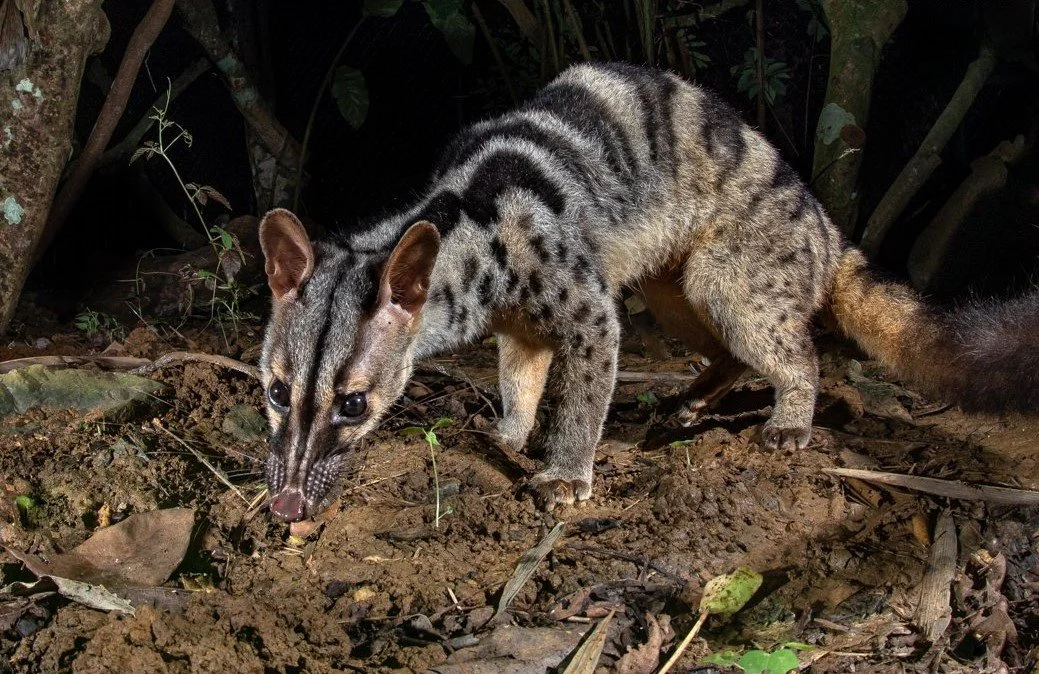
Owston's Civet
Owston's civet is a cryptic creature from the Annamite Mountains, straddling the border of Vietnam and Laos. With its skinny snout, it sniffs and searches through leaf litter for its favourite food: earthworms.

Gollum Galaxias
Gollum galaxias — with their big eyes and flattened faces — are named for their resemblance to The Hobbit and The Lord of the Rings character. These 7-centimetre (2.8 in) fish live in the southern reaches of New Zealand and are considered 'critically endangered'.

Southern Pied-Babbler
Southern pied-babblers appoint a sentinel to stand watch while the rest of the family forages on the ground. The sentinel sings a “watchman’s song" — continuously updating its family with information — and if it spots danger, its song turns into a harsh alarm.

Horned Marsupial Frog
The horned marsupial frog has the largest eggs of any living amphibian. The female carries the eggs in a pouch on her back, each in its own chamber, until they emerge as fully-formed froglets.

Iriomote Cat
The Iriomote cat occupies the smallest habitat of any wild cat on Earth — found only on Japan's southern Island of Iriomote — with its current population estimated to be around 100 individuals.

Blakiston's Fish-Owl
Blakiston's fish-owl is one of, if not the largest owl species in the world, with a wingspan reaching 2 metres (6.6 ft) and a weight exceeding 4 kilograms (8.8 lb). It is a vulnerable species — it's estimated that less than 2,000 individuals hunt the cold rivers of northeast Asia.

Japanese Pygmy Squid
The Japanese pygmy squid — one of the world’s smallest cephalopods with a mantle length of just 16 mm (0.6 in) — hunts crustaceans up to twice its size. It paralyses them, then slips its mouthparts inside their exoskeletons to slurp out their insides, leaving their shells intact.

Pheasant-tailed Jacana
Pheasant-tailed jacana females are larger than the males. The species is also polyandrous — each female mates with multiple males and, in a single season, lays up to 10 clutches that are raised by different males in her harem.

Bull-headed Shrike
The bull-headed shrike's shrieking call ('kich-kich-kich') signals the approach of fall in Japan — in some regions, farmers use its call to time their work and avoid the winter frosts. The shrike's cries also serve as warnings, staking its claim over hunting grounds.

Samurai Crab
The samurai crab's shell resembles the face of a samurai warrior. A popular theory proposed that fishermen spared the crabs with the most face-like shells, throwing them back instead — selectively breeding the species to resemble a scowling samurai. While a neat idea, it's unlikely to be true.

Turtle Frog
The turtle frog of Western Australia uses its short but muscular front arms — rather than back legs like most frogs do — to dig more than a metre (>3.3 ft) beneath the soil. Adapted to semi-arid habitats far from water, its tadpoles develop inside their eggs and hatch as tiny frogs.